Esmé Wang - The Border of Paradise
Здесь есть возможность читать онлайн «Esmé Wang - The Border of Paradise» весь текст электронной книги совершенно бесплатно (целиком полную версию без сокращений). В некоторых случаях можно слушать аудио, скачать через торрент в формате fb2 и присутствует краткое содержание. Год выпуска: 2016, Издательство: The Unnamed Press, Жанр: Современная проза, на английском языке. Описание произведения, (предисловие) а так же отзывы посетителей доступны на портале библиотеки ЛибКат.
- Название:The Border of Paradise
- Автор:
- Издательство:The Unnamed Press
- Жанр:
- Год:2016
- ISBN:нет данных
- Рейтинг книги:3 / 5. Голосов: 1
-
Избранное:Добавить в избранное
- Отзывы:
-
Ваша оценка:
The Border of Paradise: краткое содержание, описание и аннотация
Предлагаем к чтению аннотацию, описание, краткое содержание или предисловие (зависит от того, что написал сам автор книги «The Border of Paradise»). Если вы не нашли необходимую информацию о книге — напишите в комментариях, мы постараемся отыскать её.
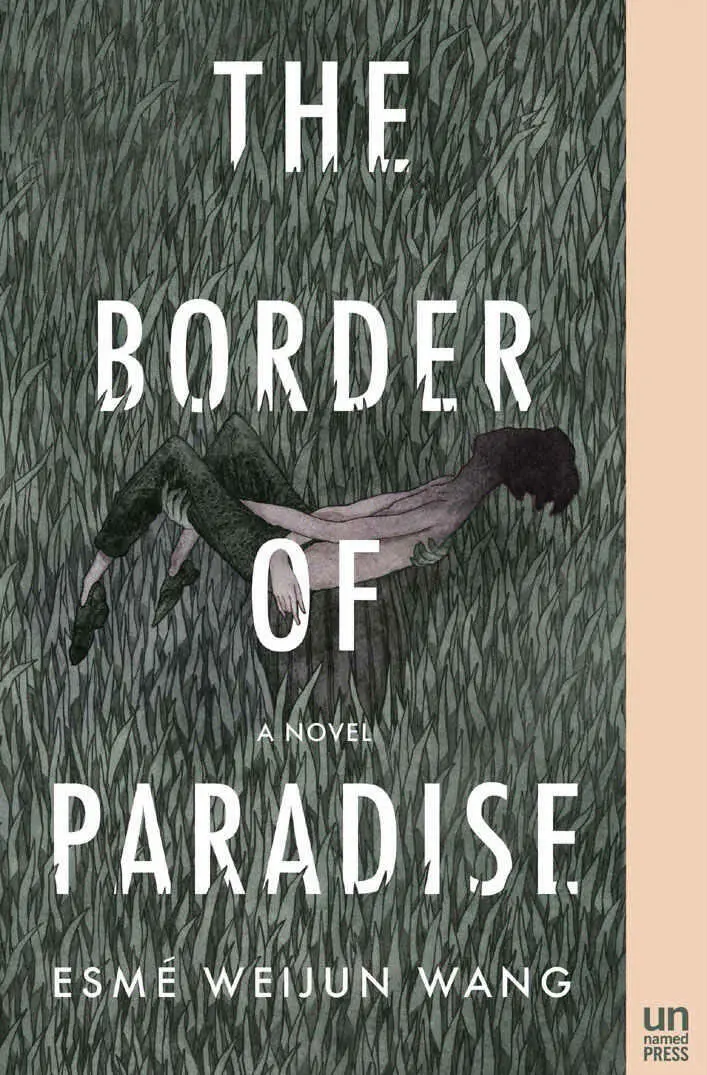
transports readers into the world of an iconoclastic midcentury family.
In booming postwar Brooklyn, the Nowak Piano Company is an American success story. There is just one problem: the Nowak’s only son, David. A handsome kid and shy like his mother, David struggles with neuroses. If not for his only friend, Marianne, David’s life would be intolerable. When David inherits the piano company at just 18 and Marianne breaks things off, David sells the company and travels around the world. In Taiwan, his life changes when he meets the daughter of a local madame — beautiful, sharp-tongued Daisy. Returning to the United States, the couple (and newborn son) buy an isolated country house in Northern California’s Polk Valley.
As David's mental health deteriorates, he has a brief affair with Marianne, producing a daughter. When Marianne appears at their doorstep, the couple's fateful decision to take the child as their own determines a tragic course of events for the entire family. Told from multiple perspectives,
culminates in heartrending fashion, as the young heirs to the Nowak fortune must confront their past and the tragic reality of their future.
The Border of Paradise — читать онлайн бесплатно полную книгу (весь текст) целиком
Ниже представлен текст книги, разбитый по страницам. Система сохранения места последней прочитанной страницы, позволяет с удобством читать онлайн бесплатно книгу «The Border of Paradise», без необходимости каждый раз заново искать на чём Вы остановились. Поставьте закладку, и сможете в любой момент перейти на страницу, на которой закончили чтение.
Интервал:
Закладка:
I don’t remember what he looked like except for the hat he wore, which was a newsboy cap of the kind that David wore sometimes to protect his head in the rain. The man on the roof would back away from the edge, and then return to it with a new enthusiasm, even peering over to such an extreme that I knew for sure he would fall, even accidentally, but he didn’t make a decision one way or another, causing people to yell things at him that I didn’t understand — to jump? or to save himself? — and I thought of Fatty’s father, Farmer Chu, who had starved his pigs and then thrown himself into their pen to die. My mother refused to say that Fatty’s father’s death was tragic because Farmer Chu was batshit insane, and if he was so crazy as to feed himself to his own pigs, he deserved to die, did he not? When people did things that she didn’t understand, my mother would always tell me that they were batshit insane, probably to keep me from doing them. I thought of Farmer Chu’s hand dangling from a pig’s mouth as I looked at the man on the roof.
David said, “He’s only three stories up.”
“Pardon?”
“Three stories. Three floors?” He gestured with his bad hand, holding it parallel to the ground and then miming the distance: one, two, three. “He won’t die. He’ll break his legs, but he won’t die.”
“So why he is doing this?”
“I suppose he wants to do something.”
“Break his legs?”
“Kill something,” David said. “But he won’t die.”
I understood the words, but not the meaning. I said, “Dangerous.”
“He’ll be all right,” he said, and started walking. I followed him two blocks to another diner, where we sat at a booth and ordered corned beef hash with fried eggs, and he ordered a strawberry milkshake for me, which was my favorite at the time. So suicide has always followed me, you see.
David wanted to go back to the brown stone house. A whim, or the sudden breeze that cut through the heat, or the four cups of black coffee had changed his mind — no, I knew that it was the man on the roof who did, or did not, die that day that pushed him back. David had been so calm, watching him. Now he was resolute about going back to his mother. In the taxi he reached over and held my hand. “My Oriental lamb,” he said, and kissed the side of my head, breathing into my hair.
We pulled up to the curb.
Mrs. Nowak answered the door again and said, “David!” I saw that she’d been crying, and had not bothered to fix her makeup. “You’ve come back,” she said. “Where did you go? I didn’t think you’d come back,” and she opened the door wider. She said, “I’ll start dinner.” It was approximately three thirty. I could barely remember the woman who had frightened me so upon first arriving at the house — a woman who had been scared out of being and left this ghost behind. “Help me cook,” she said to me. David touched my shoulder and said, “All right,” after which I pulled my skirts around me and followed Mrs. Nowak down the hall, back to the kitchen. I wondered how she could possibly cook anything in that white dress of hers.
“We’ll have an early dinner tonight,” she said, looking at the stove and the icebox, at everywhere but me. “We’ll cook David’s favorites — some old ___________ that he likes.”
She tied on a full-length pink apron without offering me a covering of my own, even though my dress was clearly more expensive than her dingy tablecloth of a garment, and we worked in silence, which was a relief. She passed me food to chop and clean, and I caught on to the essence of the dishes being prepared without trouble. There was something with pork knuckles, which she butchered expertly, and potatoes, which I washed and peeled with a paring knife. I took care to be deferential to my mother-in-law. I even avoided brushing up against her as we moved in the kitchen from the counter to the stove to the ovens, but this choreography may have been because I dreaded the feeling of her skeletal body against mine.
Still, neither of us relaxed, and finally she said, chopping in a way that punctuated her every syllable, “I-love-my-son. Do-you-un-der-stand? I do not want you here for his money. I do not want you to take ______ of him. All right?”
I kept my face blank, though what she wished to express was probably lost on me. What was I not supposed to take from him? His money? That wasn’t what I wanted; I’d had money in Kaohsiung. Was I supposed to tell her that I didn’t understand? Was it best to pretend that I did?
“Do you know? Do you know what I’m talking about? He’s ___________.” She repeated these final two words with emphasis. “Oh, for _____, what do you understand? He’s crazy. Do you understand that? Crazy. David… he’s very _____. He was _____. And if you know that, and if you’re taking _____ of him because of it, I’ll figure out a way to send you back. I don’t care if you’re married. Whatever kind of marriage you have, it’s not one I _____, and I doubt the government ______ it either.”
She watched me for a reaction, but I had none.
“I do not want to take something from your son,” I said. Crazy, that I understood. His mother seemed certain of this. Indeed, she’d been crying in our absence — but for what reason? David’s craziness, or her son’s unacceptable marriage? My own mother thought I was crazy, and to my face she’d called me a pervert and a whore. But David and I were bonded now, with our baby in my belly and rings on our fingers, and I had to remember where I was now, and how impossible it was to return to where I’d been.
(Is this the moment when my fate could have gone in a different direction? Or had the doors already closed behind me?)
As I searched for something more to say, or waited for Mrs. Nowak to say something in reply, we both heard the piano intoning its solid, clean sound. In Taiwan only people who were both wealthy and of high class owned a piano, and my mother was one but not the other. I stopped chopping onions so that I could catch the melody, which drifted like a kite on a soft wind.
Mrs. Nowak sighed. She said, “You can always tell who’s playing by the way they touch the keys.” She leaned against the counter with her eyes closed, listening. “If you’re really going to be his wife, you need to take care of him. Promise me that.”
“Yes,” I said, and I meant it.
That was the last time I saw David’s mother. It was one day, that July day in that brown stone house, when I cooked with her and made a promise that I couldn’t keep. I tried to send her some of his ashes, but they were returned to me. Apparently she had moved away from New York after David left Wellbrook, because mothers know their sons; he said something once about her being from the middle of America, and I assume that is where she went in the end, like an animal crawling into a hole to die. He called it the “heart’s land.” It sounded like a safe place to me.

Fatty had come to look for a job. She wanted to work for the Golden Lotus, and when she approached me at recruitment hours, where I sat at my usual shaved ice stand, I laughed upon seeing her plump body and misshapen arm cloaked in a buttoned blue dress. She had no redeeming physical features — not a prim, aquiline nose in the middle of that doughy face, nor a clear complexion to make up for the abundance of her body. She was simply not pretty, and also simply fat.
“Is this a joke?” I asked.
A thinly lipsticked smile. “No.”
“I seek out girls for the Golden Lotus, not pigs for the slaughter.” I waved my hand at her. “Leave me alone.”
She seated herself across from me, bringing with her the odor of a sweaty body mixed with cheap Western perfume. Who knew where she had gotten those few precious sprays? She said, “You’re Jia-Hui Chen, the mama-san’s daughter?”
Читать дальшеИнтервал:
Закладка:
Похожие книги на «The Border of Paradise»
Представляем Вашему вниманию похожие книги на «The Border of Paradise» списком для выбора. Мы отобрали схожую по названию и смыслу литературу в надежде предоставить читателям больше вариантов отыскать новые, интересные, ещё непрочитанные произведения.








Обсуждение, отзывы о книге «The Border of Paradise» и просто собственные мнения читателей. Оставьте ваши комментарии, напишите, что Вы думаете о произведении, его смысле или главных героях. Укажите что конкретно понравилось, а что нет, и почему Вы так считаете.