Esmé Wang - The Border of Paradise
Здесь есть возможность читать онлайн «Esmé Wang - The Border of Paradise» весь текст электронной книги совершенно бесплатно (целиком полную версию без сокращений). В некоторых случаях можно слушать аудио, скачать через торрент в формате fb2 и присутствует краткое содержание. Год выпуска: 2016, Издательство: The Unnamed Press, Жанр: Современная проза, на английском языке. Описание произведения, (предисловие) а так же отзывы посетителей доступны на портале библиотеки ЛибКат.
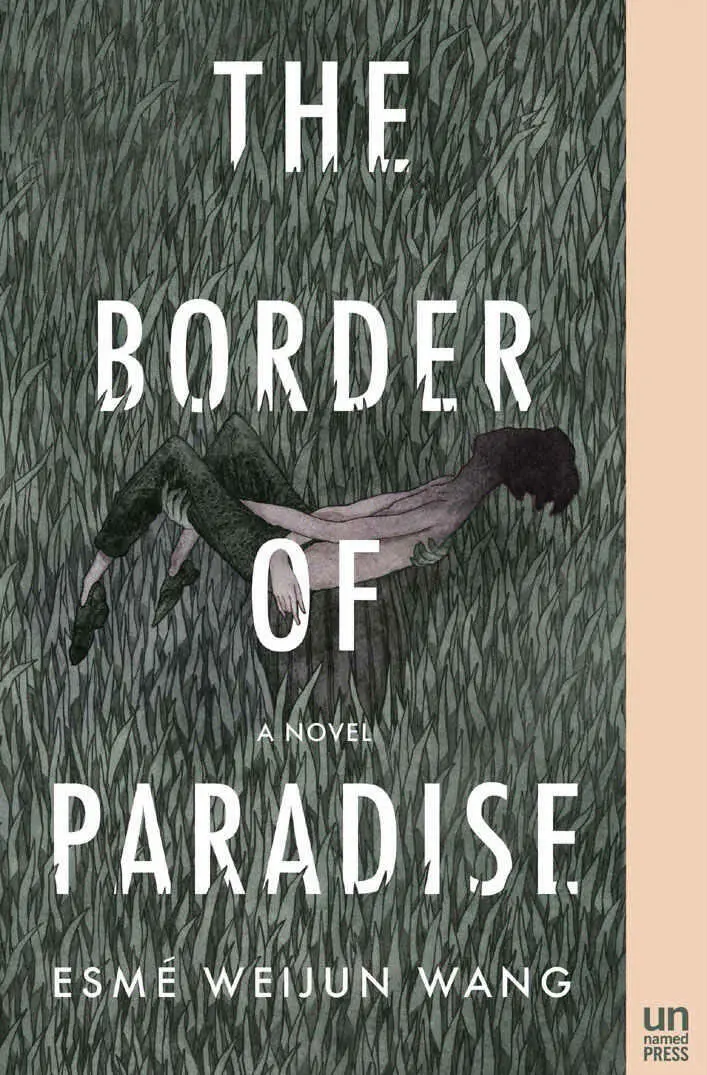
- Название:The Border of Paradise
- Автор:
- Издательство:The Unnamed Press
- Жанр:
- Год:2016
- ISBN:нет данных
- Рейтинг книги:3 / 5. Голосов: 1
-
Избранное:Добавить в избранное
- Отзывы:
-
Ваша оценка:
The Border of Paradise: краткое содержание, описание и аннотация
Предлагаем к чтению аннотацию, описание, краткое содержание или предисловие (зависит от того, что написал сам автор книги «The Border of Paradise»). Если вы не нашли необходимую информацию о книге — напишите в комментариях, мы постараемся отыскать её.
transports readers into the world of an iconoclastic midcentury family.
In booming postwar Brooklyn, the Nowak Piano Company is an American success story. There is just one problem: the Nowak’s only son, David. A handsome kid and shy like his mother, David struggles with neuroses. If not for his only friend, Marianne, David’s life would be intolerable. When David inherits the piano company at just 18 and Marianne breaks things off, David sells the company and travels around the world. In Taiwan, his life changes when he meets the daughter of a local madame — beautiful, sharp-tongued Daisy. Returning to the United States, the couple (and newborn son) buy an isolated country house in Northern California’s Polk Valley.
As David's mental health deteriorates, he has a brief affair with Marianne, producing a daughter. When Marianne appears at their doorstep, the couple's fateful decision to take the child as their own determines a tragic course of events for the entire family. Told from multiple perspectives,
culminates in heartrending fashion, as the young heirs to the Nowak fortune must confront their past and the tragic reality of their future.
The Border of Paradise — читать онлайн бесплатно полную книгу (весь текст) целиком
Ниже представлен текст книги, разбитый по страницам. Система сохранения места последней прочитанной страницы, позволяет с удобством читать онлайн бесплатно книгу «The Border of Paradise», без необходимости каждый раз заново искать на чём Вы остановились. Поставьте закладку, и сможете в любой момент перейти на страницу, на которой закончили чтение.
Интервал:
Закладка:
“Why don’t you take a look at the menu?” he said. He hadn’t asked me to look at a menu in days.
I opened it. I looked at the words. They were all the same words that I’d seen in every other diner in America. I closed it. David asked me what I wanted. The restaurant shimmered, felt dangerous. I said, “A hamburger.”
The hamburger came. It was the size of my hand, and the top had a crease like the inside bend of an elbow. Even thinking about it made my stomach lift. I looked at the limp pink tomato inside, the pale lettuce. I moved my hand from my lap as if to touch it, or to pick it up, and then, under no will of my own, the hand lifted and pushed the plate away. Whip-fast, David reached out and grabbed my wrist. This is it, I thought. I went limp with his hand wrapped around my wrist, which grabbed so tight and held me for so long that I thought my fingers would go numb. David let go. Finally he said, wearily, “I don’t understand.”
Of course he didn’t understand. We didn’t understand each other except when we were touching, and neither one of us could crawl into the guts of the other. But the pain in my arm woke me.
I said, “Our baby does not want America food.”
“Our baby doesn’t. What does our baby want? Does our baby want Taiwan’s food?”
I nodded.
He tugged at his hair. I was sure that he would leave me. The lights continued to flicker. The air filled with late-night smoke. “All right,” he said. “Well, we’re not going to get it here.” He raised his hand for the check.
Our journey, once slow and meandering, became hurried as he drove to San Francisco, the Old Golden Mountain. I drank milk in the passenger seat to survive and filled the backseat with empty bottles that tumbled and clanked at sharp turns, but I did not vomit, and he only stopped at truck stops to buy himself burgers, which he ate one-handed with ketchup dripping down his palm while driving south. We went through the never-ending grasses, which were fields, and I dreamed hazy dreams of the boy growing and snarling inside of my belly.

David persuaded the owner of the Hotel Grande Royal to let us live in the penthouse for as long as we could pay. I never saw money change hands, but we stayed in room 333 until William slipped out of me, howling, on March 8, 1955, in the four-post bed.
Our room was as extravagant as the Nowaks’ brown stone house had been. A velvety parlor beside the bedroom, crammed with knickknacks — coral-colored crystal vases, tins filled with spiced potpourri. The same delicate, reflective surfaces all over, forming mirrors upon infinite mirrors. A pink chandelier. A grandfather clock that did not chime, but loomed in a corner with a grave face. The bed was its own marvel: four-poster, king-sized, with pillows piled atop layers of custard bedding. In that bed I could lie and look up at the tin ceiling, which yielded an unfurled and floral universe. We spent more time in that bed than we did anywhere else in that suite, including the claw-footed tub, the chaise longue, or the white sofa in the parlor. I would not be surprised if, when the maids finally entered almost a year later and stripped the bed of its comforter and sheets, the women saw the shapes of our bodies burned into the mattress. Why leave? Why would we want to?
The Hotel Grande Royal was six blocks, David told me, from Chinatown. Despite our proximity, I refused to see that Oriental facsimile for fear of my heart and liver being seduced by the old dream. No, best to write down the names of the dishes on a scrap of paper and have my white husband go and bring things back for me. Best to have David bring me the dishes the baby craved: oily bags of sweet  for breakfast and
  for lunch. The first thing that he brought back was a bamboo basket of soup dumplings, and, like a mutt, I took my basket of treats to the corner. With no concern about appearances, I sat on the chaise longue and lifted a saggy dumpling to my lips, barely getting the lukewarm
  to my lips before it burst and spilled hot juice down my chin and into the space between my swelling breasts. My eyes dampened, then wept. My shoulders shook with joy. I devoured
  for three weeks, and then I craved
  , which took David three days to find; but the salt in those crumbs of fish on top of fried rice satisfied me more than that of any greasy paper boat of fries. David watched with fascination as I ate. He had eaten only street meats in Kaohsiung.
“Not salty crab?” I asked. “Not an oyster pancake?”
“No, no,” he said, “but you look so happy.”
We ate at the desk side by side. He ate his hamburgers and I ate my food from Chinatown. The food, though familiar, had a different flavor from what I was accustomed to; still, it was better than a hamburger, and I pitied David for his limited diet.
I ate and ate. My arms and legs remained slender while my belly swelled. No longer able to wear my dresses, I lounged in underwear with my hand splayed over my navel, and said that I was going to give birth to a boy the size of Formosa. In San Francisco David laughed, and I delighted in being able to create that sound with my words. He laughed like a little girl, like a tickled child; it bubbled out of him in waves. He bought a radio and we slow-danced around the parlor as I waddled; he came home with different things every day: a dictionary, magazines with bright covers, red lipstick in a fancy tube. He pulled wrapped caramels out from behind his ear. He sang to me a Polish folk song, and I mimicked, “ Matka, matka ,” while pinching his thin nose.
I redoubled my efforts to learn English, paging through the dictionary and Life magazine. I kept a notebook of new words, as I had in Kaohsiung, and studied it daily as I circled entries in the dictionary. In September David’s words, and the strings of them, came to me more clearly, and then more often. Fall passed with little fuss, accompanied by a light breeze that we allowed through the window until the end of November. By December I was large enough that my back hurt with too much standing, so we lay in bed in a valley of pillows. He’d put his hand on my belly as he spoke in low, conversational tones: “I know that one day, Daisy, you’re going to be able to speak a lot of English, and we’re going to be able to have real conversations. I’m going to be able to ask you about your family, and you’ll tell me all about what it was like for you, growing up where you did. We’re going to have a real nice life together. You, me, and the baby.”
“I now can speak English well,” I said. “I now know what you say.”
“Good.” He ran his hand up and over the hill of my stomach. “That’s very good, lamb.”
Sometimes he would bend me over the bathroom sink and make love to me from behind, tilting my face upward so that I could watch myself in the small, speckled mirror, and I was always bewildered by what I saw. The solid white shape of the man behind me, with his ghostly golden hair, as well as my own careful expression, which then, predictably, erupted into a sexualized grimace, and then I would avert my eyes for the ugliness of it. With my pleasure came ugliness. I had to remember this, and yet it did me no good.
Читать дальшеИнтервал:
Закладка:
Похожие книги на «The Border of Paradise»
Представляем Вашему вниманию похожие книги на «The Border of Paradise» списком для выбора. Мы отобрали схожую по названию и смыслу литературу в надежде предоставить читателям больше вариантов отыскать новые, интересные, ещё непрочитанные произведения.










Обсуждение, отзывы о книге «The Border of Paradise» и просто собственные мнения читателей. Оставьте ваши комментарии, напишите, что Вы думаете о произведении, его смысле или главных героях. Укажите что конкретно понравилось, а что нет, и почему Вы так считаете.