Esmé Wang - The Border of Paradise
Здесь есть возможность читать онлайн «Esmé Wang - The Border of Paradise» весь текст электронной книги совершенно бесплатно (целиком полную версию без сокращений). В некоторых случаях можно слушать аудио, скачать через торрент в формате fb2 и присутствует краткое содержание. Год выпуска: 2016, Издательство: The Unnamed Press, Жанр: Современная проза, на английском языке. Описание произведения, (предисловие) а так же отзывы посетителей доступны на портале библиотеки ЛибКат.
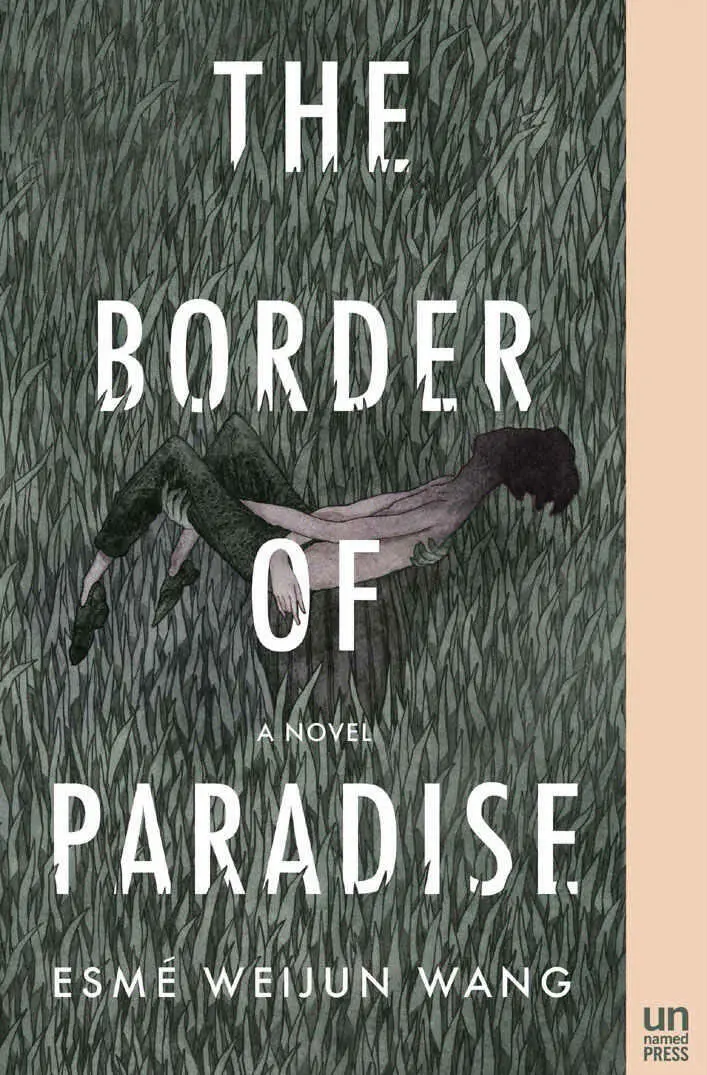
- Название:The Border of Paradise
- Автор:
- Издательство:The Unnamed Press
- Жанр:
- Год:2016
- ISBN:нет данных
- Рейтинг книги:3 / 5. Голосов: 1
-
Избранное:Добавить в избранное
- Отзывы:
-
Ваша оценка:
The Border of Paradise: краткое содержание, описание и аннотация
Предлагаем к чтению аннотацию, описание, краткое содержание или предисловие (зависит от того, что написал сам автор книги «The Border of Paradise»). Если вы не нашли необходимую информацию о книге — напишите в комментариях, мы постараемся отыскать её.
transports readers into the world of an iconoclastic midcentury family.
In booming postwar Brooklyn, the Nowak Piano Company is an American success story. There is just one problem: the Nowak’s only son, David. A handsome kid and shy like his mother, David struggles with neuroses. If not for his only friend, Marianne, David’s life would be intolerable. When David inherits the piano company at just 18 and Marianne breaks things off, David sells the company and travels around the world. In Taiwan, his life changes when he meets the daughter of a local madame — beautiful, sharp-tongued Daisy. Returning to the United States, the couple (and newborn son) buy an isolated country house in Northern California’s Polk Valley.
As David's mental health deteriorates, he has a brief affair with Marianne, producing a daughter. When Marianne appears at their doorstep, the couple's fateful decision to take the child as their own determines a tragic course of events for the entire family. Told from multiple perspectives,
culminates in heartrending fashion, as the young heirs to the Nowak fortune must confront their past and the tragic reality of their future.
The Border of Paradise — читать онлайн бесплатно полную книгу (весь текст) целиком
Ниже представлен текст книги, разбитый по страницам. Система сохранения места последней прочитанной страницы, позволяет с удобством читать онлайн бесплатно книгу «The Border of Paradise», без необходимости каждый раз заново искать на чём Вы остановились. Поставьте закладку, и сможете в любой момент перейти на страницу, на которой закончили чтение.
Интервал:
Закладка:

The lieutenant said, “You know, it’s possible to never go to the open-air market, if you eat street meats for every meal. But if you’re inclined to cook for yourself. .” And he held up his cuttlefish skewer and thrust it in an easterly direction. “Or even if you don’t cook. It’s a madhouse, but may hold some interest for a man interested in foreign cultures.” I told him that I would go. How different could a market be? What kind of blood-soaked dirt forming red-black islands, hog heads’ eyes bulging white, the stink of fish and meat attracting looping flies? I went midweek. The lieutenant insisted on coming with me. He had a taste for what he called lian wu, a type of apple, and the oranges, he said, were sugar-sweet. Hurriedly he pulled out his cap, which was not a navy-issued hat but a Detroit Tigers cap, and he adjusted the brim such that the lines in his forehead were in shadow.
The nearest market to my teahouse faced the port and was propped up by ramshackle constructions made of tin and wood, shielding leathery women and men from further sun as they sat, legs open, elbows on their knees, behind their goods, which were laid out on the ground atop blue tarps. It was loud, very loud, and the smell nearly knocked me over like the butcher’s back home, except with no ventilation and captive beneath a bell jar of heat. Everyone yelled at one another as though perpetually arguing, hollering again and again in surges of nasal noise.
After ten minutes of the lieutenant pointing out that exotic item and that unusual creature, some in buckets or flayed on tables, I had purchased exactly one bag of hard-boiled eggs stewed in soy sauce, and I’d had enough. If our olfactory senses are the most direct pathway to memory, what does it mean when every scent is strange?
Then the lieutenant stopped, grabbed my arm, and said, “There!”
He pointed at two girls at a round table, eating shaved ice. One girl was fat, the other thin. The fat girl laughed with her mouth wide open, head tilted back, her large breasts shaking beneath her blouse, and she wore sandals that exposed candy-apple-red toenails. Something was wrong with her arm. The thin girl beside her smiled, her hair tied up in a bun, exposing a long, slender neck with what was — I was sure of this — a hickey on the side. It was the only mottled and ugly thing on her otherwise flawless self. Oh, she was beautiful, of course, in a way that I didn’t understand. I was already beginning to fall for her without truly seeing. And I only sense this in hindsight, but I was filled with excitement over something foreign that could serve as a vessel inside which I could put all of my longings and hopes. I didn’t like myself. I didn’t like where I’d come from. Therefore, I was forced to like something different. It’s really no different from any other exoticism — say, the exoticism of something so beautiful that to try to describe it falls into a series of clichés: “startlingly blue eyes,” “shiny hair,” “full lips.” Beauty, if you’re like most un-truly-beautiful people, is unlike the self, with its strangeness being part of what makes it novel, and therefore pleasurable. To love something different and inexplicable is a natural state of the human condition.
She wore, as the lieutenant had explained, expensive-looking Western clothing. I assumed, wrongly, that she was a kept woman. Her breasts were the size of my fists. She had pointy elbows. Later, I would adore these elbows beyond reason. Her legs were not bare like her friend’s, and she wore white kneesocks and saddle shoes that looked as though they had been polished that morning. Her shoulder bag hung at her side, sadly drooping, cast away.
But the hickey. The hickey was dirt, it was sex. It couldn’t be brushed away, marking her till it disappeared of its own volition.
“Are they sisters?” I asked.
“They’re not sisters, no, they don’t really look anything alike,” he said. “You get used to looking at them after a while. They begin to look as different as Marilyn and Audrey.”
I thought she was beautiful, but how could I have? All that I saw was that bruise, and then my mind’s eye saw her on a bed, without her expensive clothes. That was my wife, Daisy, and her name was Jia-Hui then. They didn’t notice us. The two girls giggled and ate their shaved ice, and I continued to sink into filthy reverie until the lieutenant said, “Go talk to them. The pretty one speaks English well enough. She’s educated, somehow, despite being no better than the whores. Why, you could take her home with you this afternoon, I’m sure.”
“No,” I protested, embarrassed.
“Eighteen? Wealthy?” He nudged me with his knuckles. “Go on, go ahead. Her friend with the fucked-up arm will understand.”
Despite my refusal, the lieutenant grabbed me and pulled me toward the girls. The sight of these two tall white men rapidly approaching them caught the attention of both young women, who looked right at the lieutenant as he came forth with me in tow. Whereas the fat girl tensed and frowned, her shoulders lifting, the thin girl picked up her spoon and sank it into her bowl of ice, twirling it slowly as she waited for us to approach. Neither of them spoke.
“Do you remember me?” the lieutenant asked the thin girl, who crossed one leg over the other and brought a spoonful of ice to her mouth. Her lips glossed with sticky water. She shook her head as if she didn’t understand. She looked at the other girl and said something, and the other girl laughed.
“Let’s go,” I said to the lieutenant.
But the lieutenant was affronted, and would not come. “She knows me. This one does,” he said.
“Yeah,” the thin girl said, and it was this word, yeah, coming out of her mouth that surprised me — not yes, but the colloquial, broad yeah, as though she were Louise Bielecki on the playground, and I was holding stones.
“You slept with one of my men.”
She shrugged.
The fat girl obviously admired her, and, emboldened, said, “I work for little money. You want?”
And then the thin girl said to us, “You go away.”
The lieutenant frowned. He was a dignified sort, by most accounts; still, he was a navy officer, and in my experience of navy officers, they will brook no fools — not even a fool woman. He muttered, “China girl bitch,” before putting his hand on my shoulder, and walked us both away from them. I heard the thin girl mock, “White son of a bitch!” and both girls laughed again, the sound of a flock of proud birds.
Daisy, the baby, and I moved to Polk Valley in Northern California. It was there that I bought our small, absurdly cheap house from a man named Frank, whose parents had died in that house two weeks prior. This was in 1955, and I liked the place immediately despite its oddities. The water-stained wallpaper sometimes hovered from the wall in gluey strips. Frank and his brother had removed their parents’ furniture and goods, but for whatever reason had left the calendar collection hung, and from room to room all calendars exhibited different months and years, curling at the edges—1932, 1944, January, a sentimental and snowy December landscape that didn’t remind me of anywhere I’d ever been — and though a calendar in the middle of an entire wall, orphaned, made much less sense than a calendar beside a light switch, so it went that there were so many calendars, and all haphazardly placed. A wall in the living room lacked any paint or wallpaper. Drywall. But there were charms, too: pale and ornate molding along the crack between wall and ceiling, and around every entryway; a well-built shed; solid wood floors with dark knots; an unusually pristine stove. The house was laid out like a smaller version of the first floor of my parents’ brownstone, which may or may not have been a point of attraction. Unlike the Greenpoint house, there was no foyer, only the mouth of a short hallway that led straight down to the master bedroom. Along the left, in order: a space for a living room, a bedroom, and the kitchen/eating area. Along the right, in order: a bedroom, a bathroom, and a third bedroom.
Читать дальшеИнтервал:
Закладка:
Похожие книги на «The Border of Paradise»
Представляем Вашему вниманию похожие книги на «The Border of Paradise» списком для выбора. Мы отобрали схожую по названию и смыслу литературу в надежде предоставить читателям больше вариантов отыскать новые, интересные, ещё непрочитанные произведения.










Обсуждение, отзывы о книге «The Border of Paradise» и просто собственные мнения читателей. Оставьте ваши комментарии, напишите, что Вы думаете о произведении, его смысле или главных героях. Укажите что конкретно понравилось, а что нет, и почему Вы так считаете.