Esmé Wang - The Border of Paradise
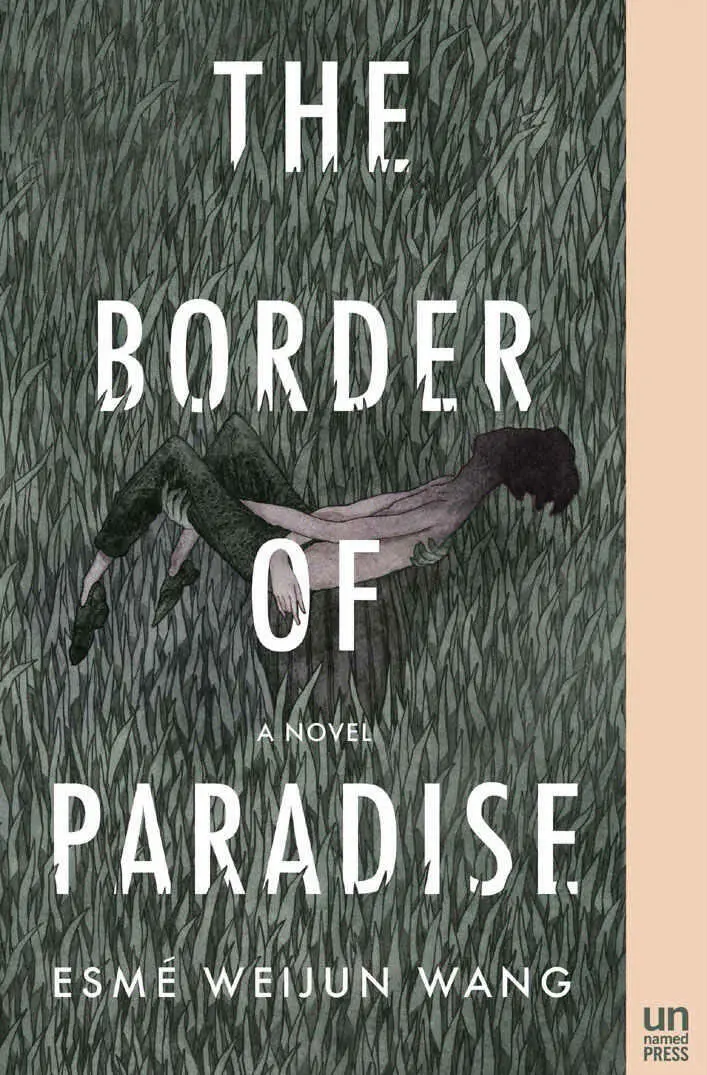
Здесь есть возможность читать онлайн «Esmé Wang - The Border of Paradise» весь текст электронной книги совершенно бесплатно (целиком полную версию без сокращений). В некоторых случаях можно слушать аудио, скачать через торрент в формате fb2 и присутствует краткое содержание. Год выпуска: 2016, Издательство: The Unnamed Press, Жанр: Современная проза, на английском языке. Описание произведения, (предисловие) а так же отзывы посетителей доступны на портале библиотеки ЛибКат.
- Название:The Border of Paradise
- Автор:
- Издательство:The Unnamed Press
- Жанр:
- Год:2016
- ISBN:нет данных
- Рейтинг книги:3 / 5. Голосов: 1
-
Избранное:Добавить в избранное
- Отзывы:
-
Ваша оценка:
The Border of Paradise: краткое содержание, описание и аннотация
Предлагаем к чтению аннотацию, описание, краткое содержание или предисловие (зависит от того, что написал сам автор книги «The Border of Paradise»). Если вы не нашли необходимую информацию о книге — напишите в комментариях, мы постараемся отыскать её.
transports readers into the world of an iconoclastic midcentury family.
In booming postwar Brooklyn, the Nowak Piano Company is an American success story. There is just one problem: the Nowak’s only son, David. A handsome kid and shy like his mother, David struggles with neuroses. If not for his only friend, Marianne, David’s life would be intolerable. When David inherits the piano company at just 18 and Marianne breaks things off, David sells the company and travels around the world. In Taiwan, his life changes when he meets the daughter of a local madame — beautiful, sharp-tongued Daisy. Returning to the United States, the couple (and newborn son) buy an isolated country house in Northern California’s Polk Valley.
As David's mental health deteriorates, he has a brief affair with Marianne, producing a daughter. When Marianne appears at their doorstep, the couple's fateful decision to take the child as their own determines a tragic course of events for the entire family. Told from multiple perspectives,
culminates in heartrending fashion, as the young heirs to the Nowak fortune must confront their past and the tragic reality of their future.
The Border of Paradise — читать онлайн бесплатно полную книгу (весь текст) целиком
Ниже представлен текст книги, разбитый по страницам. Система сохранения места последней прочитанной страницы, позволяет с удобством читать онлайн бесплатно книгу «The Border of Paradise», без необходимости каждый раз заново искать на чём Вы остановились. Поставьте закладку, и сможете в любой момент перейти на страницу, на которой закончили чтение.
Интервал:
Закладка:
But the true win was the land. “Part of the deal,” Frank said as he hunched over a piece of paper pulled from his pocket, marked up with a rudimentary pen drawing of the area, “and here are the Sierras.” We owned the house and the raggedly triangular plot, with two points along the Sierras borderland and the third point deep in the woods that had no name, as far as Frank knew. We were close to the Yuba River, he said, but it was a substantial walk. No one called it the Yuba River, he added.
“What do you call it?” I asked.
“The river. Just the river.”
Frank took his money from us and was happy, and we took the house and the land from him and were happy. In March the Sierras were still puckered with frost, but the valley had already begun to warm, the snow melting into water running riverward. I hired men from the town to improve the house. These men reminded me of men from the factory in age and heft, and they coolly accepted my money, as they no doubt saw me as a wealthy, snot-nosed interloper, probably an orphan who’d inherited a boatload of cash and would eventually turn wild beauty into beastly lawns. The men came and I played with William on the porch while Daisy brought out a tray of fresh-squeezed lemonade.
There was nothing obviously inappropriate about the way my wife behaved in front of the workers. She barely spoke to them, though her English was passable by then, and she handed them their glasses of lemonade before coming to me and saying, “I bring one glass for you.” In front of the men she kissed my waiting mouth, and set a sweaty pitcher on the steps. She sat beside me and chucked William, who sat on my lap, under the chin. We’d named him William for no specific reason other than liking the name; no lineage, no homage to Shakespeare or the conqueror. The men had taken the lemonade while silently assessing her in the way that men do. I didn’t fault them. But I didn’t fault her, either.
It started with small isolations. First we were shut up in that San Francisco penthouse, where Daisy first saw me without my human mask on and did not leave — although in hindsight I ask myself, How in the world could she have? — and next in the rural fringe of Polk Valley, America’s greatest producer during the Gold Rush, which I had chosen at random from the McNally map in the glove box. By instinct I was suspicious of how the world perceived us, so I thought a rural location would be a decent place to live our lives out in peace. A repeated survey of townsfolk demonstrated that there were, at maximum, two Negro families and one Oriental family, who, Daisy informed me, were Japanese, not Chinese. The still-fresh memory of Japanese colonialism in Taiwan gave her mixed feelings about the Okis. We had no feelings, one way or the other, about the two Negro families. We suspected that they were related to each other, as they appeared together more often than most merely friendly families, and the wife of one family had the same strong jaw as the husband of the other. We did wonder what had caused them to move to Polk Valley, which was blindingly white.
Polk Valley chiefly consists of two parallel streets: Main Street, divided into North and South, and Laurier Street, which emerges like a victorious snake from a Gordian knot of dirt roads and barely paved paths. Main and Laurier run parallel until Laurier tributaries into Main; the five blocks that follow are known as “downtown,” or simply “town.” Downtown is a hodgepodge of Old West historical buildings and saloons-turned-bars. South Main Street exits Polk Valley shortly after the town’s lone gas station, to continue in a no-man’s-land of brush and woods to Killington.
We live on a path that, as far as I can see, has no name. Our nearest neighbors, the Boones, are a half mile off, and they have never come to introduce themselves in our thirteen years of life together. I know that they’re called the Boones only because their box is the closest to ours at the end of Sycamore Road, where a clump of mailboxes holds each family’s mail. I’m not saying that Daisy and I live a monastic existence, but I’m suggesting that some vestige of that desire for solitude still thrives in me.
The reconstruction of our home took the bulk of April. We slept on the floor of the master bedroom with William between us. One night I jerked awake from a nightmare, and saw the shadow of a mouse scurrying across Daisy’s foot. I was sure that she’d notice, but she didn’t stir.
After the workers left our first major purchase was a huge, rectangular wood table — a disproportionate enormity in our small home. Like most inappropriate purchases, I hadn’t thought twice about buying it, let alone how it would get through our small doors. The table could not be dismantled, so I had the men come back and widen both the front door and the opening to the kitchen while the table stood, like an aggrieved houseguest, on the porch. Next came the bed, the mahogany bookcases and dresser, the food staples to fill the pantry, the cold goods to fill the icebox, the unmatched chairs for every room, the rugs more like carpet than the thinning Oriental rugs of my upbringing, the utensils to fill the drawers, the pots and pans, the lamps with delicate shades like butterfly wings, the lace curtains aflutter. A mix and match of the upscale, the backwoods. A home.

It bothered me that William didn’t look like me, no family resemblance at all. His hair was neither the inky black of Daisy’s nor the white blond of mine, but something in between that always reminded me of what a mutt he was, like a puppy of unknown origin, a head of hair the insignificant color of wet leaves rotting after a rainy autumn. And his face, too, was a mix of ours, but far more Oriental than mine. He had small eyes that peered out in perpetual suspicion, and though he did have jaundice as a baby, it turned out that he also had a yellow tinge to his skin as well, which Daisy claimed was my imagination; but how would she know, or be able to see it? She was blinded by adoration for her child, as any mother should be, not to mention having grown up being surrounded by individuals of the same shade. It’s the father who’s permitted to lack absolute absorption in his offspring. The fact that William didn’t look like me made me nervous, not because I feared that I’d been cuckolded, but because he was my own son and yet alien, looking like nothing I’d previously known. “Hold him,” Daisy would say, and she’d put him in my arms, and I’d become incredibly self-aware of whether I was feeling absolute love for our baby. For example, I had a fear that when she put William in my arms I would throw him out the window without realizing what I was doing, or drop him unintentionally with my arms suddenly going limp of their own accord, not out of maliciousness or evil, but because I was lukewarm to my own child, and even my body knew it.
The nervousness that I felt around William in those early years may have been another symptom of the nervousness that I was beginning to feel about my marriage. We had finally settled down in a place that we could call our own, with a family that we could call our own. I saw Daisy as exotic; I assumed that, with her improved English, we’d be able to satisfactorily live together and love each other. I naively thought that love went beyond language, but in the foothills of Polk Valley, in our little house in the woods, I struggled with the fruits of these assumptions.
And who was there to tell? I longed to speak to Matka about my loneliness, but having earned her disapproval already, I hated to admit that I might have done something wrong. This was less about my dignity, and more about my fears of her worrying over my condition. I didn’t speak to her for years, and she didn’t know that William existed until he already had a sister, though she never met either of them. She may even have forgiven me a divorce, but that wasn’t what I wanted, even if I could have had one. Daisy was, and is, an excellent wife. Her fervent pursuit of mastery over the English language put Marianne’s Latin learnings to shame. She spent her days doting over our son; when William was asleep, she would dote over me. I am ashamed to say that this made me more irritable than pleased at times. In the first year of our life in Polk Valley we went into town frequently enough that people recognized us and knew our names no matter where we went, and she accepted this notoriety without complaint, despite the funny looks she received. I cringe to think of how embarrassed I became when we went into town and she’d attempt to speak English to someone, whether it be a shopkeeper or a cashier, because the listening party certainly couldn’t understand her. I became her translator in those situations, and it humiliated me. Yet this was actually a great accomplishment on her part. She was speaking a language that wasn’t her own, in a country that wasn’t anything like her own, with an aplomb that I couldn’t manage when I’d been overseas; and she was doing it because she loved me. To this day she’ll say things like “What happen to Joan?” and I’ll say, “Who’s Joan?” to which she’ll reply, “She every time buy canned pea and bag of potato at the supermarket.” When I’m gone, she’ll still remember those people, though she’ll rarely see them, and she’ll still have our children. Of course we knew that this was coming. In San Francisco, an inkling blotting itself.
Читать дальшеИнтервал:
Закладка:
Похожие книги на «The Border of Paradise»
Представляем Вашему вниманию похожие книги на «The Border of Paradise» списком для выбора. Мы отобрали схожую по названию и смыслу литературу в надежде предоставить читателям больше вариантов отыскать новые, интересные, ещё непрочитанные произведения.




Обсуждение, отзывы о книге «The Border of Paradise» и просто собственные мнения читателей. Оставьте ваши комментарии, напишите, что Вы думаете о произведении, его смысле или главных героях. Укажите что конкретно понравилось, а что нет, и почему Вы так считаете.