Esmé Wang - The Border of Paradise
Здесь есть возможность читать онлайн «Esmé Wang - The Border of Paradise» весь текст электронной книги совершенно бесплатно (целиком полную версию без сокращений). В некоторых случаях можно слушать аудио, скачать через торрент в формате fb2 и присутствует краткое содержание. Год выпуска: 2016, Издательство: The Unnamed Press, Жанр: Современная проза, на английском языке. Описание произведения, (предисловие) а так же отзывы посетителей доступны на портале библиотеки ЛибКат.
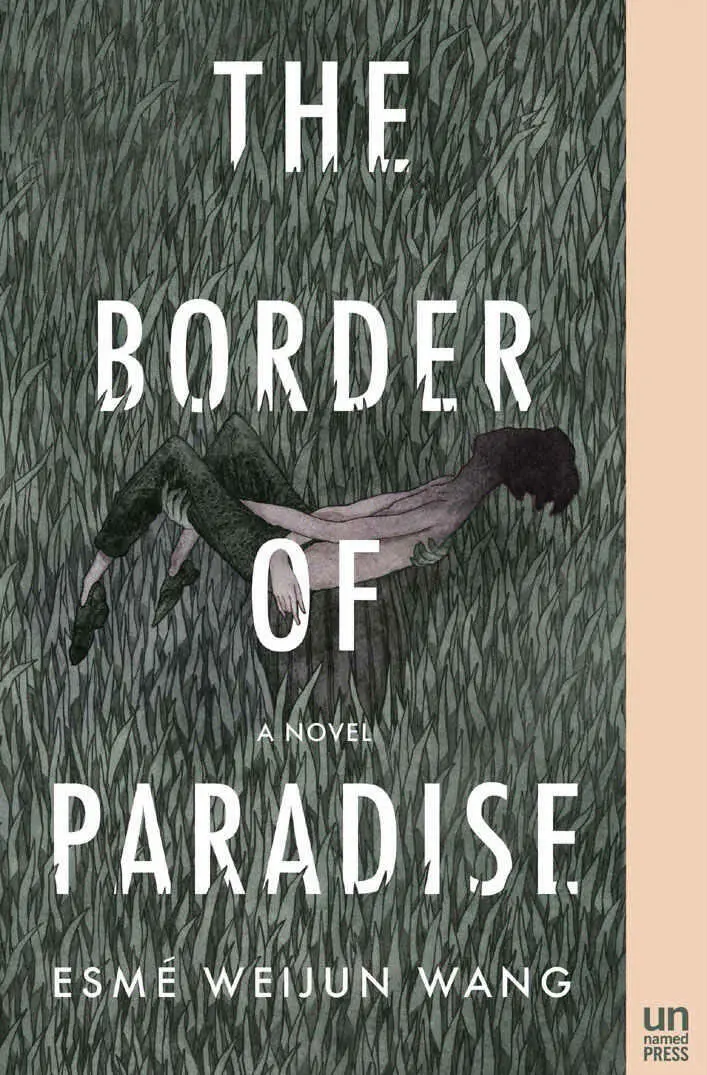
- Название:The Border of Paradise
- Автор:
- Издательство:The Unnamed Press
- Жанр:
- Год:2016
- ISBN:нет данных
- Рейтинг книги:3 / 5. Голосов: 1
-
Избранное:Добавить в избранное
- Отзывы:
-
Ваша оценка:
The Border of Paradise: краткое содержание, описание и аннотация
Предлагаем к чтению аннотацию, описание, краткое содержание или предисловие (зависит от того, что написал сам автор книги «The Border of Paradise»). Если вы не нашли необходимую информацию о книге — напишите в комментариях, мы постараемся отыскать её.
transports readers into the world of an iconoclastic midcentury family.
In booming postwar Brooklyn, the Nowak Piano Company is an American success story. There is just one problem: the Nowak’s only son, David. A handsome kid and shy like his mother, David struggles with neuroses. If not for his only friend, Marianne, David’s life would be intolerable. When David inherits the piano company at just 18 and Marianne breaks things off, David sells the company and travels around the world. In Taiwan, his life changes when he meets the daughter of a local madame — beautiful, sharp-tongued Daisy. Returning to the United States, the couple (and newborn son) buy an isolated country house in Northern California’s Polk Valley.
As David's mental health deteriorates, he has a brief affair with Marianne, producing a daughter. When Marianne appears at their doorstep, the couple's fateful decision to take the child as their own determines a tragic course of events for the entire family. Told from multiple perspectives,
culminates in heartrending fashion, as the young heirs to the Nowak fortune must confront their past and the tragic reality of their future.
The Border of Paradise — читать онлайн бесплатно полную книгу (весь текст) целиком
Ниже представлен текст книги, разбитый по страницам. Система сохранения места последней прочитанной страницы, позволяет с удобством читать онлайн бесплатно книгу «The Border of Paradise», без необходимости каждый раз заново искать на чём Вы остановились. Поставьте закладку, и сможете в любой момент перейти на страницу, на которой закончили чтение.
Интервал:
Закладка:
“We can go back to the hotel,” David said, a threat. He touched my shoulder.
Yes, I thought, let’s go back to the hotel. I thought of the bed that was more comfortable than any bed I had ever lain in, where I could fall asleep and dream a million dreams without moving a centimeter. But then Mrs. Nowak’s face went soft and sad, and she touched her son’s shoulder.
“No,” she said. Her voice sounded like the cracked shell of a tea egg, full of networked maps of where the injuries had been sustained, and then she wept, her free hand moving to her leaking eyes. “No, please stay. Don’t go. I think about you every day — where you are, if you’re okay…”
“Oh, don’t cry ,” David said, seeming more frightened than irritated. He put down his glass and wrapped his arms around her. “We won’t go.” The back of his shirt was coming untucked. “I’m fine. Really, I’m okay.”
I felt the need to vomit. I put my glass down, and everything swam. Without explaining myself I turned and walked down the hall until I found a small door, slightly open, and pushed my way inside. I ran the water to cover the sound of sickness, and then I vomited for a long while into the sink, the sour champagne burning my throat as it returned, and then I rinsed and wiped the sink with toilet paper before rinsing my mouth. When I looked in the oval mirror, I saw that my lips were pale again, and I realized that my purse was still hanging from my elbow like a forgotten limb. I threw the soiled toilet paper into the trash and reapplied my lipstick.
For the longest time I found bathrooms in America to be comical. American bathrooms, no matter where we were, seemed palatial in comparison with Taiwanese bathrooms, which were, at their best, little more than outhouses even in a wealthy home. To void oneself in this American bathroom was to sit in a jewelry box with jade-colored wallpaper. A closer look and I could see a print of tiny women with parasols. I pulled down the toilet lid and sat, not eager to return to the kitchen. My new life was broken. Everything was concealed by the secrets of language, and even that which was spoken was concealed by another layer of secrecy that I could sense on my skin but not fully understand.
By the time I returned to the kitchen, Mrs. Nowak was gone, and David was pouring himself a glass of what looked like whiskey. In my pregnant state I could smell its familiar odor from where I stood.
“Your mother is where?” I asked.
“Lying down,” he said. He raised his glass. “ Gan bei .”
I toasted him with my champagne. The tiny click made my back teeth hurt.
“Were you sick?”
“Yes.”
“I told my mother that you weren’t used to the champagne. So that she wouldn’t ______.” He pointed at my stomach. For the most part, he was good about using words that I could understand, and I was good at asking him about the ones I didn’t know. Still, we were in a place with a woman who knew him much better than I did. I didn’t have the words to pierce through my confusion. My blood mouth filled with sand.
David’s childhood bedroom was bare except for a white wooden bed and white nightstand, a white dresser, and a single poster of strange and painted shapes, which now hangs, curling, in William’s room. He said, looking around, “The __________ of my child ______.”
“What?”
“Sorry,” he said. “At home it’s easy — it’s easy for me to forget what is okay to say to you. I’m sorry about my mother. She loves me. I’ve always been close to her. Understand?”
“Yes,” I said, and sat on the bed. He sat beside me, his glass half-empty. I said, “Your mother is beautiful.”
“Well. Yes. She — in the past, people would turn their heads to look at her as we walked down the street. But she never really ______ or cared. God. All that about Jesus. I’m sorry. She has certain ideas about me.”
“Yes.”
“I came here to show her that I was okay, because I know she worries. But this has been a mistake. We can leave. We won’t eat dinner here. We’ll go back to the hotel, just the two of us.”
“Yes.”
He lay onto the bed, as if merely speaking of these possibilities exhausted him. The small amount of whiskey left in his glass, held aloft, sloshed and dripped onto the sheets. “Come here,” he said, and awkwardly lifted his glass to the nightstand.
My heart sighed. I curled up beside him in my fancy dress, avoiding the wetness of whiskey, and pressed my face into his ribs. He rubbed my head in slow circles, and I thought, I am happy, I am happy, I am happy. I inhaled the aftershave he had splashed on that morning that smelled of something dark and sour, like small animals and the color brown and himself. When we lay together there was no need to speak, and I preferred it that way because when we didn’t speak we could be any husband and wife, with no struggle in it. We lay in that bed and kissed tenderly, and then we took our set of matching luggage and left. I imagined Mrs. Nowak lying in bed with a towel over her forehead. She didn’t try to say good-bye.
David and I took a taxi back to the hotel because I didn’t like the subway, and he was hemorrhaging money in those days. David booked a new room, and then he was hungry; he liked diners to the exclusion of all else, and for the longest time I thought that all American restaurants were diners, and that all American menus contained hamburgers and french fries and malts. This particular diner was cramped with people smoking cigarettes and chatting loudly in their booths, if they were lucky enough to have a padded red booth. David and I sat in dirty-white hard-backed chairs at a sticky table.
By then my husband had tufts of hair sticking out all over, as though a dog had been chewing on his head. He no longer seemed all right about leaving the brown stone house. I imagined that he felt guilty about abandoning his mother: a sad woman who had the same mouth as he did, who likely gave him everything he wanted all of his life, and only wanted his attention and love in return. It suddenly felt selfish to leave without acknowledgment, and I pitied Mrs. Nowak, even if she had called me a souvenir.
The waitress came. “I don’t know yet,” David said. “We’ll have some coffees. Black.”
He kept looking through the menu. I looked, too, but there weren’t any pictures. The only words I recognized were hamburger and eggs, and I didn’t want either of those things. I watched him as he flipped from the front to the back, from the back to the front, and again. Finally he put down the menu. I smiled at him. I imagined that the right thing to say would be clear to me if we didn’t have a language barrier. He was staring not at me and my smile, but at something in the center of the table. When the waitress came, he took the coffee from her and drank his without waiting for it to cool. I could have said, “ 
 .” I could have said, I love you. I could have kept smiling until my face broke. I could have cried. But I didn’t know what he was thinking, and I could only guess.
“There’s nothing to eat here,” he said, and got up. He pulled his wallet out of his pocket and threw some money on the table, and I followed him out of that diner into the open air. We stood on the sidewalk, where no one could bother to move us as the crowd flowed every which way. We might have stood there until we grew roots and turned into coconut trees if not for the sudden shift in the wind, which started from a single woman sighing, shaking her head, and saying, “ ______ me,” because Americans were always muttering to themselves and sounding annoyed by unknown slights, and like all the disgruntled people before her, the woman kept walking, though she continued to wag her head from side to side. But more people noticed what she had seen, and then we, too, looked at the man on the roof across the street.
Читать дальшеИнтервал:
Закладка:
Похожие книги на «The Border of Paradise»
Представляем Вашему вниманию похожие книги на «The Border of Paradise» списком для выбора. Мы отобрали схожую по названию и смыслу литературу в надежде предоставить читателям больше вариантов отыскать новые, интересные, ещё непрочитанные произведения.











Обсуждение, отзывы о книге «The Border of Paradise» и просто собственные мнения читателей. Оставьте ваши комментарии, напишите, что Вы думаете о произведении, его смысле или главных героях. Укажите что конкретно понравилось, а что нет, и почему Вы так считаете.