Esmé Wang - The Border of Paradise
Здесь есть возможность читать онлайн «Esmé Wang - The Border of Paradise» весь текст электронной книги совершенно бесплатно (целиком полную версию без сокращений). В некоторых случаях можно слушать аудио, скачать через торрент в формате fb2 и присутствует краткое содержание. Год выпуска: 2016, Издательство: The Unnamed Press, Жанр: Современная проза, на английском языке. Описание произведения, (предисловие) а так же отзывы посетителей доступны на портале библиотеки ЛибКат.
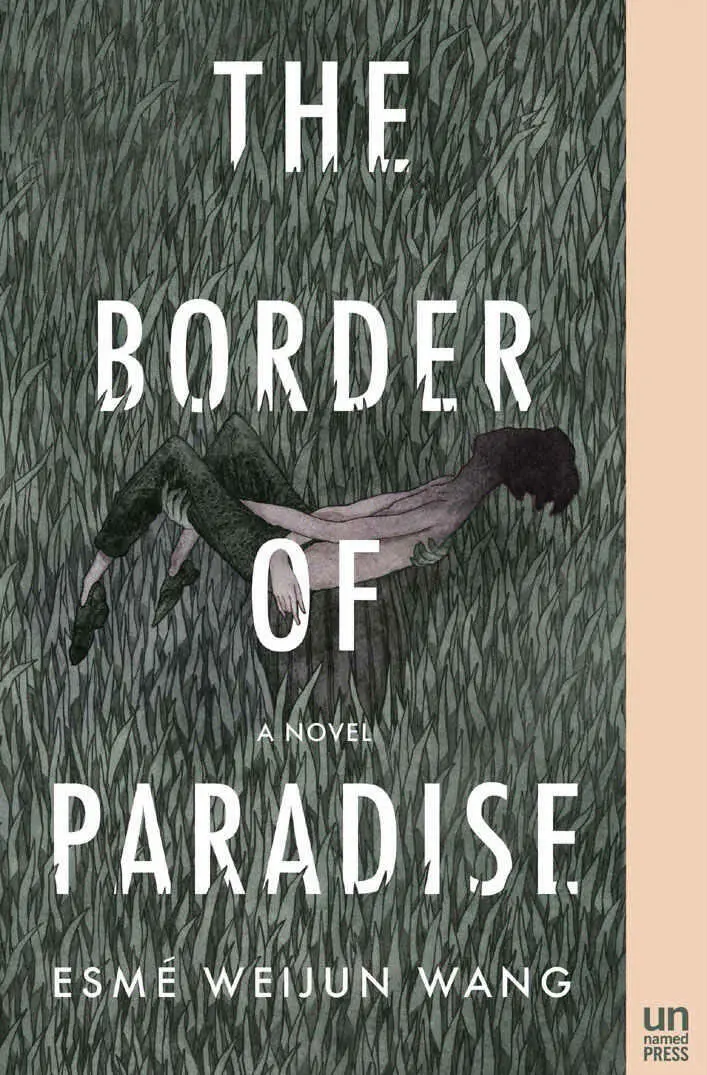
- Название:The Border of Paradise
- Автор:
- Издательство:The Unnamed Press
- Жанр:
- Год:2016
- ISBN:нет данных
- Рейтинг книги:3 / 5. Голосов: 1
-
Избранное:Добавить в избранное
- Отзывы:
-
Ваша оценка:
The Border of Paradise: краткое содержание, описание и аннотация
Предлагаем к чтению аннотацию, описание, краткое содержание или предисловие (зависит от того, что написал сам автор книги «The Border of Paradise»). Если вы не нашли необходимую информацию о книге — напишите в комментариях, мы постараемся отыскать её.
transports readers into the world of an iconoclastic midcentury family.
In booming postwar Brooklyn, the Nowak Piano Company is an American success story. There is just one problem: the Nowak’s only son, David. A handsome kid and shy like his mother, David struggles with neuroses. If not for his only friend, Marianne, David’s life would be intolerable. When David inherits the piano company at just 18 and Marianne breaks things off, David sells the company and travels around the world. In Taiwan, his life changes when he meets the daughter of a local madame — beautiful, sharp-tongued Daisy. Returning to the United States, the couple (and newborn son) buy an isolated country house in Northern California’s Polk Valley.
As David's mental health deteriorates, he has a brief affair with Marianne, producing a daughter. When Marianne appears at their doorstep, the couple's fateful decision to take the child as their own determines a tragic course of events for the entire family. Told from multiple perspectives,
culminates in heartrending fashion, as the young heirs to the Nowak fortune must confront their past and the tragic reality of their future.
The Border of Paradise — читать онлайн бесплатно полную книгу (весь текст) целиком
Ниже представлен текст книги, разбитый по страницам. Система сохранения места последней прочитанной страницы, позволяет с удобством читать онлайн бесплатно книгу «The Border of Paradise», без необходимости каждый раз заново искать на чём Вы остановились. Поставьте закладку, и сможете в любой момент перейти на страницу, на которой закончили чтение.
Интервал:
Закладка:
“Come in.”
“I — no. I do, I want to, but I don’t think I should.”
“Just come in. For God’s sake.”
“Why? What difference does it make?”
“To talk. To figure something out.”
“No, it’s all set up, I don’t have a choice. It’s my parents, I swear, it has nothing to do with how I feel.”
“You’re going to Chicago? And where will you go after Chicago?”
She wiped her eyes. “I don’t know! I don’t know anything. He said he would kill you. No matter where we went, David, he would find us.”
Quickly Marianne turned around and hustled her solid body down the stoop. I watched the back of her head and its inelegant, lopsided bun travel, bobbing slightly of its own accord, moving like a head gently agreeing yes, but it was only hope, I was frozen, it was only a dream, and I finally called out, sure that she could still hear my voice: “I love you. Write to me.”
PART II. DAVID AND JIA-HUI
WIFE OF DAVID. JIA-HUI (1954–1968)
in translation
In Mandarin the words for suicide are  . In literal terms this means “self-kill.” My husband David has self-killed and it has been four months now. I knew this would happen once I found him crashed to the floor from attempting to hang himself. I knew that it was only a matter of time.
Or yes I knew this when I was first told that he was crazy by his own mother. But who can believe one’s mother-in-law, especially when that mother-in-law refers to you as a souvenir without batting an eyelash, and burns with anger in your presence simply because you exist and have small eyes and skin with the undertone of ripe star fruit. Or yes I knew that he would  while in a penthouse suite in San Francisco, when we were surrounded by luxury and William was in my belly, and I awoke to be confronted with a floor of broken glass. I’m afraid to admit that I was ever so naïve. What other things do I not know, when I thought I knew so much?
David was the one who changed my name. It was Jia-Hui Chen until I was nineteen, and who I was then bears little resemblance to who I am now at thirty-three, with two children and a dead husband who behaved as though we had always lived in this wooden home in these woods, in this former gold mining town like an inserted memory. I am much older, for example, than the Daisy Nowak who walked into Saks Fifth Avenue in the summer of 1954. In the air-conditioned building scented with perfume I stood next to my new white husband, who was willing to spend “two thousand dollars or more” on his wife, whom he called an “Oriental lamb” not only to my ear in passionate love but to anyone willing to indulge him in listening; David, who only knew of money and not of pretty clothes; and I not knowing the ridiculousness of what two thousand American dollars meant, or the extent of David’s irrationality or wealth. But I looked at the salesgirl, whose hair was a helmet of distinct red curls, each a perfect sculpture, and I read in her round face the answer as the corners of her mouth pulled back and her eyes shot the accusation, Who do you think you are?
I emerged from the multi-mirrored dressing room in the first dress, which exposed the soft hollow above my collarbones, and fit at the waist with a full skirt. I felt the flutter that I had known when, at the bar, David first put his scarred hand on my waist. When I felt it through the silk of my dress. (Fatty asked me later if the scarred hand was worse than the white men’s thicketed arms and legs. Was it worse than their pale koi bellies, she wanted to know.) The sight of myself in the multiple mirrors, dressed like a Hollywood starlet out of a song-and-dance magazine, was like seeing a chicken with the head of a lizard. I could never become the girl that the dress was made for, but would be an entirely new creature. I smiled. The black-haired girl in the mirror smiled. Blond David grinned like a child. You think that these details are not important, but they are. In Kaohsiung, as the daughter of a mama-san, I could have had the red-haired woman’s face kicked in by thugs. But as Daisy Nowak, wife of David? I could only smile.

Who are you being an Oriental girl, the daughter of a mama-san and a mob boss father, a young woman who hunted girls to hire like a wolf in the woods.
One might think that a sixteen-year-old girl would be so young as to not have any power or authority over other females, especially ones who were older than she. Let me reassure you that this is not the case. A certain repertoire of cutting looks and bitch-mouthed retorts, plus a sharp sort of attractiveness, makes a girl like me as intimidating as any tattooed thug. Part of this was nature, but the other part was a consequence of the cutthroats who raised me. I also had an uncanny ability to see past pouting lips and clotted-on makeup, deep into whether a girl could be transformed into a bar girl and, more important, a moneymaker. I had no formula for making such a decision; it simply came to me. Another girl in my position, had she a lesser eye, might have chosen a potential bar girl with predictably appealing characteristics. But on occasion I would select a rather flat-chested girl, with the secret knowledge that her flirtatious tentacles touched not only myself, but also anyone whose favor she wished to curry, and many of my mother’s best, and most eccentric, girls came to her from my cultivated choosing. By my eighteenth birthday I was seeing up to three or four girls a day for evaluation. Some, having heard that the Golden Lotus was a more hospitable refuge than their own sorry homes, had come to meet me at the market (always in the morning, before the heat descended, and when I was at my least ill-tempered). Others I’d found while prowling the streets, searching for girls running errands for their families. I’d ask them, “You want a better life?” as they hurtled past with their baskets and bags. Leery, yet grateful for the interruption, some would slow their pace. The pretty ones knew what I was after. No one would call Fatty pretty, which is why I had given her the job that I did.
With David I was the girl who, when we returned to the White Hotel, chopped apples and oranges with a cheap knife on the hotel desk, and who said, “Fuck!” (my first English obscenity, taught to me by a sailor with an ear like  ) when juice got into a cut on her finger. And David said, “You don’t have to do that,” as I arranged them on a brand-new platter, and I said, “It is polite for your mother.” Because at the bar I was the slut who learned “Whiskey in the Jar” for the hilarity of the sailors, but I was also the girl who knew what it meant to have piety, with a mother who heaped too much pork and so many pomelos on the ancestors’ altar.
I brought that fruit platter to the Nowaks’ brown stone house. I wore a lemon-yellow sundress with an embroidered bodice and kept stopping my fingers in midstroke as I felt the thick stitching, correcting my motions so that it wouldn’t look like I was caressing myself sexually, with the platter resting in my lap and my new purse the color of fresh milk beside me. The air, which walloped us as we got out of the taxi, reminded me of home with a slap of damp heat. David put his wallet back in his pocket and moved to the trunk to take our suitcase from the driver; David, who was taller than any other man I knew and gangly, and made a swallow’s nest of his hair by yanking it when he was nervous. I reached up and smoothed it down because I loved him. David said firmly, “So let’s go ahead and do this.”
Читать дальшеИнтервал:
Закладка:
Похожие книги на «The Border of Paradise»
Представляем Вашему вниманию похожие книги на «The Border of Paradise» списком для выбора. Мы отобрали схожую по названию и смыслу литературу в надежде предоставить читателям больше вариантов отыскать новые, интересные, ещё непрочитанные произведения.









Обсуждение, отзывы о книге «The Border of Paradise» и просто собственные мнения читателей. Оставьте ваши комментарии, напишите, что Вы думаете о произведении, его смысле или главных героях. Укажите что конкретно понравилось, а что нет, и почему Вы так считаете.