Thanassis Valtinos - Orthokostá
Здесь есть возможность читать онлайн «Thanassis Valtinos - Orthokostá» весь текст электронной книги совершенно бесплатно (целиком полную версию без сокращений). В некоторых случаях можно слушать аудио, скачать через торрент в формате fb2 и присутствует краткое содержание. Год выпуска: 2016, Издательство: Yale University Press, Жанр: Современная проза, на английском языке. Описание произведения, (предисловие) а так же отзывы посетителей доступны на портале библиотеки ЛибКат.
- Название:Orthokostá
- Автор:
- Издательство:Yale University Press
- Жанр:
- Год:2016
- ISBN:нет данных
- Рейтинг книги:5 / 5. Голосов: 1
-
Избранное:Добавить в избранное
- Отзывы:
-
Ваша оценка:
Orthokostá: краткое содержание, описание и аннотация
Предлагаем к чтению аннотацию, описание, краткое содержание или предисловие (зависит от того, что написал сам автор книги «Orthokostá»). Если вы не нашли необходимую информацию о книге — напишите в комментариях, мы постараемся отыскать её.
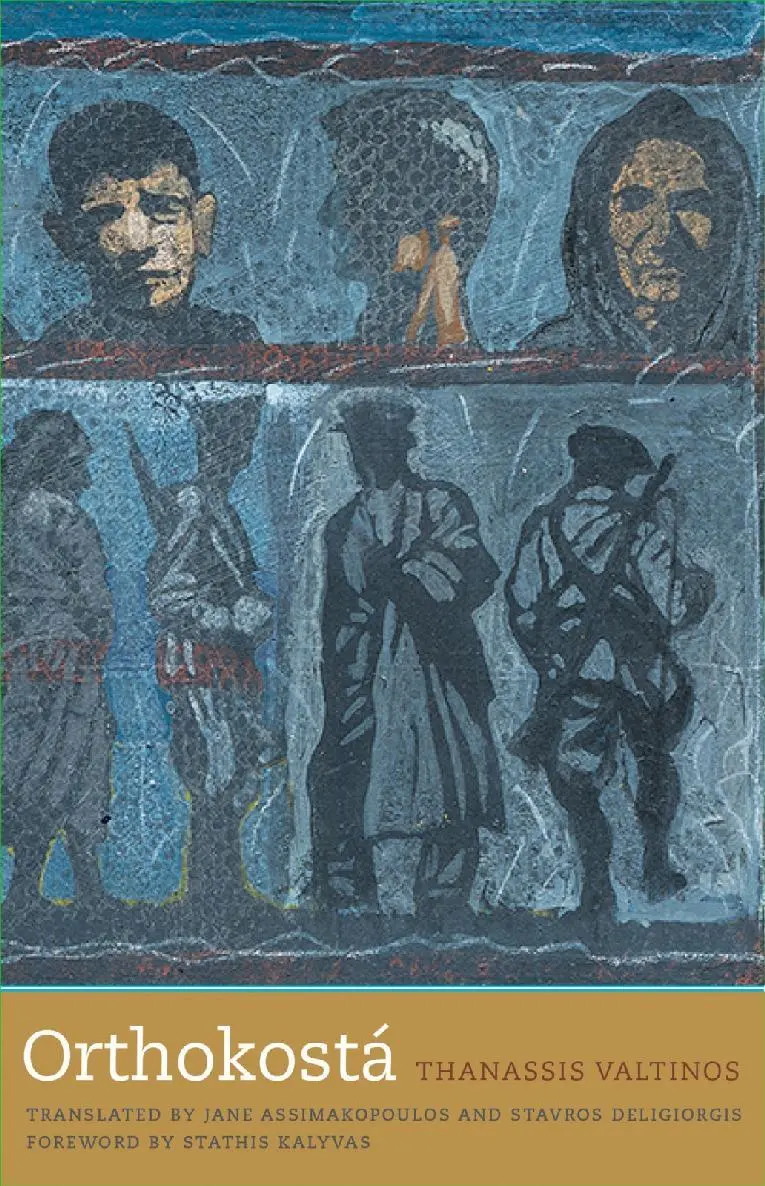
defied standard interpretations of the Greek Civil War. Through the documentary-style testimonies of multiple narrators, among them the previously unheard voices of right-wing collaborationists, Valtinos provides a powerful, nuanced interpretation of events during the later years of Nazi occupation and the early stages of the nation’s Civil War. His fictionalized chronicle gives participants, victims, and innocent bystanders equal opportunity to bear witness to such events as the burning of Valtinos’s home village, the detention and execution of combatants and civilians in the monastery of Orthokostá, and the revenge killings that ensued.
As a transforming work of literature, this book redefined established methods of fiction; as a work of revisionist history, it changed the way Greece understands its own past. Now, through this masterful translation of
, English-language readers have full access to the tremendous vitality of Valtinos’s work and to the divisive Civil War experiences that continue to echo in Greek politics and events today.
Orthokostá — читать онлайн бесплатно полную книгу (весь текст) целиком
Ниже представлен текст книги, разбитый по страницам. Система сохранения места последней прочитанной страницы, позволяет с удобством читать онлайн бесплатно книгу «Orthokostá», без необходимости каждый раз заново искать на чём Вы остановились. Поставьте закладку, и сможете в любой момент перейти на страницу, на которой закончили чтение.
Интервал:
Закладка:
— No, I was away.
— You were away. It was the twenty-fifth of November, the Feast of Saint Catherine. The day the recruits of ’47 reported for duty. Everyone was going there, and in Dragoúni the bus stopped. Down near Zoúbas’s fields. The rebels stopped it, they had set up an ambush. And they sent them back. You must know about that.
— No, who was in it?
— All the recruits of ’47. From Kastrí there was Liás Andrianákos, Grigóris Sítelis, and lots of others. All the recruits in my class. I was away. I was in Athens. I said that. But Chrysoúla was on the bus. With all the others. She was going to Trípolis to catch the airplane. And they sent them back. When they arrived at the square it was covered in snow. Thirty or forty centimeters of snow.
— The twenty-fifth of November?
— The twenty-fifth of November. On the Feast of Saint Catherine. There all the recruits who were able to ran away. Réppas’s wife took my sister. And she helped her get away. Took her off the bus. Quiet-like.
— All that happened in 1948.
— In ’48. Réppas’s wife knew someone. I don’t know who. And she managed to get her out. In the meantime the bus started out for Ayios Pétros. To take the recruits there. The driver was Mitsouliás. It arrived in Doúmos. Just before the bridge he runs the bus off the road. Says it skidded on the snow. On the ice. He pretended to be trying to get it out of the ditch, nothing. Get it out, he says to them, and I’ll take you wherever you want. So they took some of the passengers and they left. On foot. Where they went I don’t know. Four days later Chrysoúla went to Athens. The old man took her to Trípolis on foot. And he sent her on the airplane. We came back from Athens in 1949. By then the rebel insurrection was over. April 1949. It was over for good.
Chapter 31
Someone from Plátanos showed up. He says, Is your name Aryiríou? In Koubíla again. I say yes. He’d come to see about the shepherds. We had shepherds from Plátanos back then. He says, Have anything to do with Kléarhos Aryiríou? We’re relatives, I say. You on good terms? We are. I didn’t want to be giving out information to anyone from Plátanos. Oh, come on, you’re not on good terms, he tells me. You’re not leveling with me. I am. Say whatever you want, I don’t believe you. I’m sure you’re not on good terms. Kléarhos was alive then. He died maybe a year or so later. I’m going to tell you something to tell him, he says to me. I’m called Dimóyiorgas. My name’s Dimóyiorgas. If you see him, tell him Dimóyiorgas told you this: I was seventeen and he gave me a pistol, one to me and one to another man, and he told us, Finish your food then go to such and such a house in Koubíla. The key will be under the roof tiles. You’ll empty the house, you’ll take the mules, and you’ll take any men you find there with their women and bring them here to be tried. And have us all killed, in other words. And he was telling me this after so many years. And tell him something else too: When we got here we looked all over, but we didn’t find anything. Just a rooster pecking down on the threshing floor. We gave it a whack, and we killed it, and it rolled way down there, and we went and got it. And we took it to Kapetán Kléarhos and he said, So those bastards got away, did they? And that was all — he’d sent us there and that’s all we found. That’s all he said: So those bastards got away, did they?
Chapter 32
That’s who arrested me, local men, from here. Tóyias and Kléarhos. Vasílis Tóyias and Kapetán Kléarhos. They took me to Kastrí. And then they took me to Loukoú.
— To Loukoú or Orthokostá?
— To Loukoú. They put me down in the basement and started in on me. First they just slapped me around. Confess. Hey, I tell them, I never went in the army. And truth is I was a deserter back then. In 1920. 1922. When they were going to Asia Minor.
— What was your year to enlist?
— 1922. And I deserted then and there. When the army came and the central government was back I joined up. That’s when I went and enlisted. I went all the way to Thessaloníki. So there I was now in Loukoú. They put me in the basement, a filthy old basement. The next day they make me lie down, and they loop the strap from one of their rifles around my ankles, with me lying on my back. With my legs up high, bent. And they would beat me with some sticks and say, Confess.
— On the soles of your feet, is that where they beat you?
— Yes, on the soles of my feet. So there at Loukoú sometimes they’d give me food and at other times not.
— Who beat you?
— Not local men. They weren’t from here. I didn’t know them. And while I was down like that they would kick me. In the ribs, everywhere, my arm’s been out of whack ever since. They just kept at it. As long as I was still breathing.
— And what did they want you to confess to?
— Who, or which organization I was with. But what could I do, I wasn’t with any? Well, that’s what they wanted. Wanted me to confess. They wanted to make me join against my will, that’s all it was. I told you. I wasn’t about to join the army by force. So I deserted before I even enlisted, in Náfplion, and I came here and loafed around. Until we lost the war in Asia Minor and the others came and formed an army again, and then I enlisted. That’s it.
— How long did they keep you at Loukoú?
— For about a month. Then luckily things changed. They heard that the Germans were coming, and they took us away from there. I was half-crippled so they put me up on some mule. They didn’t kill me. They put me on the mule and they took us on a ways toward Ayiórghis, toward the rocks at Másklina. Meantime, the Germans were getting closer. Making their way down from Ayiasofiá, and the rebels left us in a ditch, and they all ran away. They knew the trails around there, they disappeared. All of them. Then the Germans got us, they took us to Másklina. And the next day they put us on the train for Trípolis.
— And you, they never took you to Orthokostá?
— Nope. Only to Loukoú. They had a detention camp there too, but they didn’t take me there. They had men from Sparta there. They had a koumbáros of mine from Vrésthena there. But I didn’t see them. They took me to Loukoú.
— Who was the chief at Loukoú?
— They’re dead now, all of them. Kléarhos was chief. Kléarhos was the top man. The head man. He had his brother there, he was killed too. There’s a third one still around, name of Kraterós. That’s all.
— How long did you stay in Trípolis?
— A long time. I don’t remember. A very long time. I had a brother-in-law there, and I stayed with him. Haralás. I was still limping, I stayed a long time. Those bastards. Well, one of them was my wife’s first cousin. And Tóyias, he and I were koumbároi. Vasílis. He was a nasty character, that one. And there were others, too, but those two were in charge. Kléarhos and Tóyias.
— When they burned down Kastrí where were you?
— When they burned down Kastrí. I was here. They burned down Kastrí and they took the villagers to Ayios Pétros. In case the Germans came and found us still here. I was here. In case the Germans came. Well, the kapetánios here, it was him, Kléarhos. There was someone else, Tsítsas, now he’s gone. They tell me his son’s a doctor somewhere, in Aráhova. He never came back. Their house is here, all rundown, behind the church. Now Saráfis uses it, ties his mule there. Can I get you something to drink?
— No, nothing.
— They weren’t good for anything, those men. They were worthless. They were controlled by others. And I’ll tell you something else: When they caught me they also caught a certain Hasánis. Remember him?
Читать дальшеИнтервал:
Закладка:
Похожие книги на «Orthokostá»
Представляем Вашему вниманию похожие книги на «Orthokostá» списком для выбора. Мы отобрали схожую по названию и смыслу литературу в надежде предоставить читателям больше вариантов отыскать новые, интересные, ещё непрочитанные произведения.


Обсуждение, отзывы о книге «Orthokostá» и просто собственные мнения читателей. Оставьте ваши комментарии, напишите, что Вы думаете о произведении, его смысле или главных героях. Укажите что конкретно понравилось, а что нет, и почему Вы так считаете.