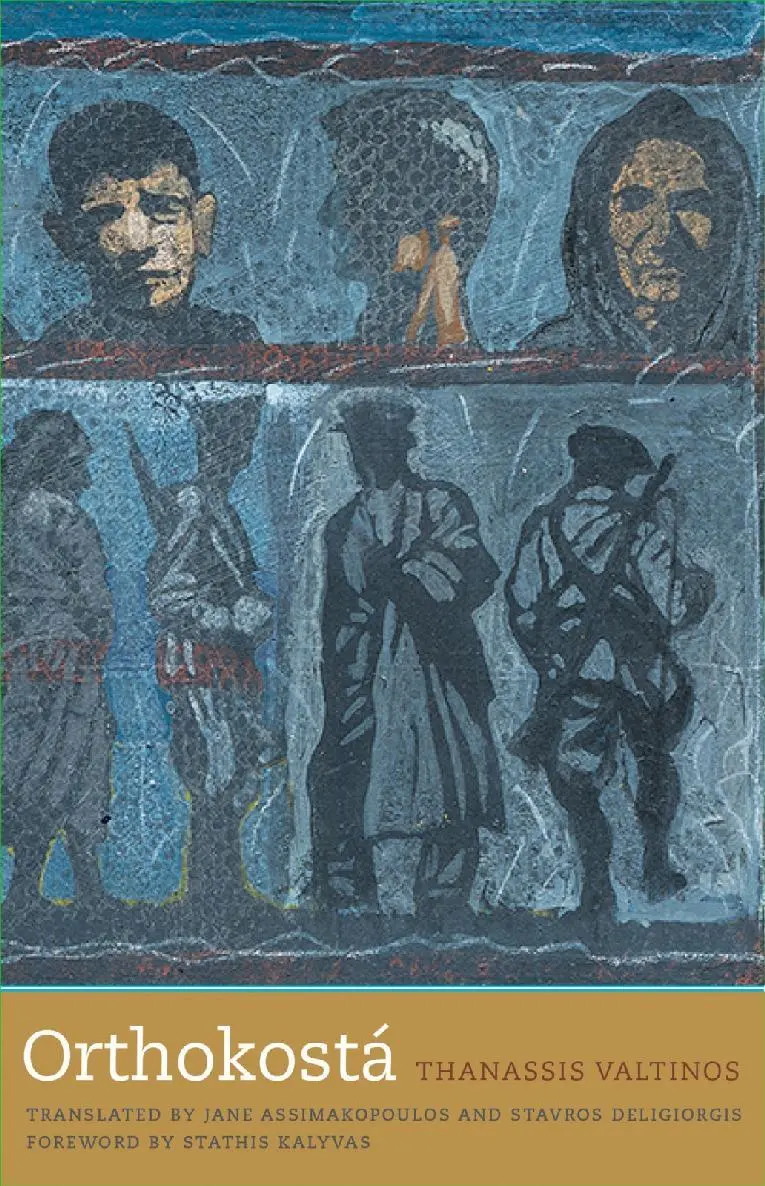
Thanassis Valtinos - Orthokostá
Здесь есть возможность читать онлайн «Thanassis Valtinos - Orthokostá» весь текст электронной книги совершенно бесплатно (целиком полную версию без сокращений). В некоторых случаях можно слушать аудио, скачать через торрент в формате fb2 и присутствует краткое содержание. Год выпуска: 2016, Издательство: Yale University Press, Жанр: Современная проза, на английском языке. Описание произведения, (предисловие) а так же отзывы посетителей доступны на портале библиотеки ЛибКат.
- Название:Orthokostá
- Автор:
- Издательство:Yale University Press
- Жанр:
- Год:2016
- ISBN:нет данных
- Рейтинг книги:5 / 5. Голосов: 1
-
Избранное:Добавить в избранное
- Отзывы:
-
Ваша оценка:
Orthokostá: краткое содержание, описание и аннотация
Предлагаем к чтению аннотацию, описание, краткое содержание или предисловие (зависит от того, что написал сам автор книги «Orthokostá»). Если вы не нашли необходимую информацию о книге — напишите в комментариях, мы постараемся отыскать её.
defied standard interpretations of the Greek Civil War. Through the documentary-style testimonies of multiple narrators, among them the previously unheard voices of right-wing collaborationists, Valtinos provides a powerful, nuanced interpretation of events during the later years of Nazi occupation and the early stages of the nation’s Civil War. His fictionalized chronicle gives participants, victims, and innocent bystanders equal opportunity to bear witness to such events as the burning of Valtinos’s home village, the detention and execution of combatants and civilians in the monastery of Orthokostá, and the revenge killings that ensued.
As a transforming work of literature, this book redefined established methods of fiction; as a work of revisionist history, it changed the way Greece understands its own past. Now, through this masterful translation of
, English-language readers have full access to the tremendous vitality of Valtinos’s work and to the divisive Civil War experiences that continue to echo in Greek politics and events today.
Orthokostá — читать онлайн бесплатно полную книгу (весь текст) целиком
Ниже представлен текст книги, разбитый по страницам. Система сохранения места последней прочитанной страницы, позволяет с удобством читать онлайн бесплатно книгу «Orthokostá», без необходимости каждый раз заново искать на чём Вы остановились. Поставьте закладку, и сможете в любой момент перейти на страницу, на которой закончили чтение.
Интервал:
Закладка:
Chapter 29
I went back to Trípolis and I reported to Lýras. A verbal report on what I saw during my one and only leave of absence. All that sordidness. In Ayios Pétros the men from Máni and the men from Corinth almost killed each other. We had a battalion of men from Corinth. They’d swiped someone’s watch, and he went and asked for it. He was the uncle or the grandfather of an officer. And he asked for the watch, and the watch was found. In the meantime they began fighting in the main square of Ayios Pétros. With the ELAS rebels right there above us. Right above us. Just looking for a chance to cut us up. I went and explained everything to Lýras. He tells me, All this can you please report it in writing, everything, from the time you went to Astros, whatever you saw? I went and wrote up a report. What the general picture was, the unruliness and the corruption. The sordidness. A situation you couldn’t control. Because of course various other forces were coming into play. A strange group of people, the down-and-out. Some of them embittered, others on the run, others, like the men from Máni, who have it in their blood, for example. At any rate. The Allied landing came soon afterward, and Kanellópoulos disembarked in the Peloponnese.
Chapter 30
How many were we? We hadn’t been issued any arms yet. We were in Trípolis. And they told us, There are rebels in Voúrvoura. Well they gave us arms, since we were from Kastrí. Just the basics, to get ourselves to Voúrvoura. A whole lot of us, I can’t remember. Vasílis Papayiorghíou, me, Petrákos, Antónis Biniáris, Miltiádis Mantás, Arapóyiannis.
— Arapóyiannis?
— Stávros. From Koútrifa. A machine-gun operator. We went to Voúrvoura. First we went to Koútrifa. We had information that the rebels had taken Arapóyiannis’s wife. But she had gone into hiding, they didn’t find her. And they burned down his house. From there we went to Voúrvoura. We spent the night there. We found the rebels inside a small church. I think in Ayía Paraskeví, across from the village. Some of our men got into position once they went up there. We had some men from Ayios Pétros with us, in our platoon. Someone named Fourtoúnis, another man named Lykoúras.
— Who was your leader?
— Our leader was Nikólas Petrákos. I think Liás Vémos was too. As second lieutenant. I don’t remember. But I do remember that I was the machine-gun ammo-belt loader. Stávros Arapóyiannis was the operator.
— How old were you then?
— Eighteen. We got them out of there. Out of the church, but they got away from us. We didn’t get close enough in time to surround them. They heard us coming. Someone fired a shot inside the village, they realized what was up. And they cleared out.
— Were there many of them?
— About eight of them. Ten. But they got away. Then we regrouped, and we went back, back to the village. We left from there. On our way to Kosána, on the road to Kosána. Just before Prophítis Ilías, they were waiting to ambush us. It was at Koúbas’s Rocks. That’s what they call the place. In Kosána, way down low. On the border between Voúrvoura and Kastrí. That’s where they set up their first ambush. They fired at us from high up, they didn’t harm us at all.
— Was it the same men who got away, or were there others?
— We don’t know. In any event, from what became clear later on, there were many rebels in the area. Because on our way to Kastrí, at the mill by the church, they had set up another ambush.
— All the way down there?
— At the church’s mill. But we were moving cautiously. And we pushed them back. Then we went down to the village. That’s when the villagers left Kastrí. Most of them for the Security Battalions. That’s when Papayiánnis left, that’s when all the men left.
— Which Papayiánnis?
— The father of Vanghélis the priest.
— Was he still alive then?
— He was.
— When did you leave?
— Before that. As soon as the German blockade was over. They were after me, I couldn’t stay put.
— Did you go down by yourself, or with which others?
— I don’t remember. A lot of us went down.
— And Papadóngonas was already in Trípolis?
— He was.
— So you went there in June?
— End of June, something like that.
— The end of June or July? When did they burn down the village? Were you here?
— They burned it down on the eve of Saint Ilías’s Day. Around the twenty-second or twenty-third of the month.
— On Saint Ilías’s Day?
— No, later. Later. Saint Ilías’s Day is July 20.
— Yes.
— The village was burned down on the twenty-third or the twenty-fourth.
— Had you men in Voúrvoura gone there before or after?
— After. No, you’re right. We’d gone there before. Before the fire. Because when we went back, that’s when our parents left. When we arrived back from Voúrvoura they left. The house was still intact. They burned it down afterward.
— When they burned it down where were you?
— When they burned it down I had enlisted. So had the others. In the Battalions. We’d been issued arms. At the time I was with a German convoy, escorting them to Meligalás. That’s where I was. When I came back Nikólas Petrákos broke the news to me. Gently. He says, Don’t get upset. They burned down your house. Well, I didn’t care all that much. I tell him, What about my family? He says, They’re alive. Well, that’s that, I said. If they burned down the house, then they burned it down. So what. Since no one was killed.
— Was the convoy you were with a transport convoy or a military one?
— We were carrying food at the time. There were also buses to Kalamáta. We escorted them as far as Meligalás.
— And you went back?
— We stayed there for a week. We stayed there for backup. Stoúpas was there.
— I think he was in Gargaliánoi.
— He went to Gargaliánoi later. Gargaliánoi and Pýlos. Because I went there also. On a second mission.
— And then you went back to Trípolis?
— Then I went back to Trípolis.
— Which other men from Kastrí were with you?
— Just a few. Because there were a lot of men in the Battalions. A group of us went along with some others from Valtétsi.
— I mean in Trípolis. Had all the men from Kastrí gone down there?
— Yes.
— Do you remember any names?
— How can I remember? They were all there, some enlisted, some not. And they left again, they went back.
— Was Kóstas Karamánis enlisted?
— Kóstas Karamánis? No he hadn’t enlisted. He was just part of the group. He went around with us. I don’t remember if he’d enlisted. I don’t remember him being armed. All those men were serving in the 2nd Civilian Intelligence Bureau.
— What do you mean by 2nd Civilian Intelligence Bureau?
— That’s where they worked. They issued orders, they were in constant touch with Papadóngonas. All those men.
— I see.
— From one bureau to the other. That’s where they did their informing. In that bureau.
— How did Mihális kill Tsígris? Do you know the story?
— Tsígris was being interrogated at the time.
— Who was Tsígris?
— A major with the Greek Army. They had forced him to join the rebels.
— From down in Yiannakópoulos, from Taygetus?
— I don’t know. I don’t know about that. At any rate, Tsígris, when he first came to Kastrí.
— He came to Kastrí?
— He did. He gathered all the men in the town square. We were sitting under the plane tree. And he gave us a beautiful speech, about resistance and liberation.
Читать дальшеИнтервал:
Закладка:
Похожие книги на «Orthokostá»
Представляем Вашему вниманию похожие книги на «Orthokostá» списком для выбора. Мы отобрали схожую по названию и смыслу литературу в надежде предоставить читателям больше вариантов отыскать новые, интересные, ещё непрочитанные произведения.


Обсуждение, отзывы о книге «Orthokostá» и просто собственные мнения читателей. Оставьте ваши комментарии, напишите, что Вы думаете о произведении, его смысле или главных героях. Укажите что конкретно понравилось, а что нет, и почему Вы так считаете.