Iosi Havilio - Paradises
Здесь есть возможность читать онлайн «Iosi Havilio - Paradises» весь текст электронной книги совершенно бесплатно (целиком полную версию без сокращений). В некоторых случаях можно слушать аудио, скачать через торрент в формате fb2 и присутствует краткое содержание. Год выпуска: 2013, Издательство: And Other Stories, Жанр: Современная проза, на английском языке. Описание произведения, (предисловие) а так же отзывы посетителей доступны на портале библиотеки ЛибКат.
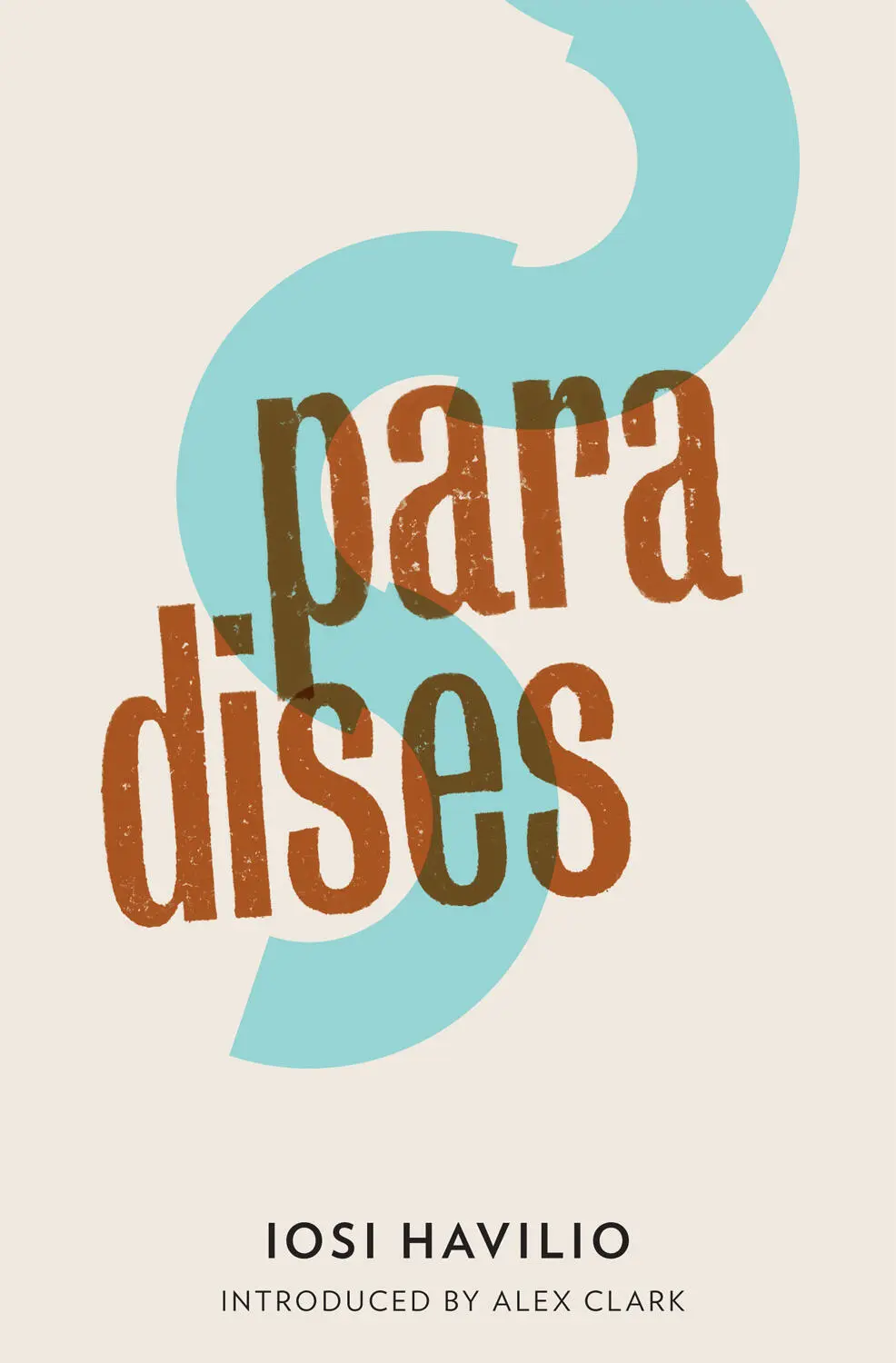
- Название:Paradises
- Автор:
- Издательство:And Other Stories
- Жанр:
- Год:2013
- ISBN:нет данных
- Рейтинг книги:3 / 5. Голосов: 1
-
Избранное:Добавить в избранное
- Отзывы:
-
Ваша оценка:
Paradises: краткое содержание, описание и аннотация
Предлагаем к чтению аннотацию, описание, краткое содержание или предисловие (зависит от того, что написал сам автор книги «Paradises»). Если вы не нашли необходимую информацию о книге — напишите в комментариях, мы постараемся отыскать её.
is an almost perfect novel." — Albert Camus's
reimagined with a female lead in in twenty-first-century Buenos Aires.
Recently widowed, a young woman leaves the countryside for Buenos Aires with her four-year-old son where she seeks to build a new life for herself. She finds work in the zoo and moves into the human zoo of a squatted tower block at the invitation of one of its residents, to whom she acts as nurse, giving morphine injections.
Paradises — читать онлайн бесплатно полную книгу (весь текст) целиком
Ниже представлен текст книги, разбитый по страницам. Система сохранения места последней прочитанной страницы, позволяет с удобством читать онлайн бесплатно книгу «Paradises», без необходимости каждый раз заново искать на чём Вы остановились. Поставьте закладку, и сможете в любой момент перейти на страницу, на которой закончили чтение.
Интервал:
Закладка:
It’s exactly a month today since I started work. I’ve never missed it, I’ve never arrived late, I’ve never objected to any task, even mopping the aisles of the reptile house one day when the cleaning staff was on strike. I think of a plausible excuse to escape: feeling unwell, toothache, an urgent matter. I can say that Simón has a fever, that’s believable, Esteban witnessed my phone beeping. Better to say I’m feeling dizzy, it’s vague yet convincing, you never know what it might be a sign of. I leave it fifteen minutes, a reasonable time for the symptoms to appear. Eloísa doesn’t persist with the messages. I suppose I have to speak to Esteban but I’m not sure, perhaps I need to see someone else, a supervisor, head of personnel. Yessica appears, back from the play area and in a state of pure ill humour. There are girls who shouldn’t be allowed to breed, she says. They should have their uteruses forcibly removed. I tell her I’m not feeling well. She raises her brows distrustfully, hand on the walkie-talkie, she avoids looking me in the eye. She exposes her gums like an angry mare. She must sense my escape plan and is objecting in advance. It takes me a while to find Esteban, before I recognise his voice on the other side of the wall. I go round and see him chatting to the polar-bear keeper, still the same subject, his only subject. This time it’s the transparent screen he’s thinking of putting in the shower. Think it’ll be expensive? he finishes saying as I interrupt the conversation, craning my neck forward with my hand raised. Is something wrong? Esteban asks. Unintentionally, I come out with a voice that is subdued, an invalid’s voice. No, it’s just that I don’t feel very well. And he, with an unworried gesture, almost affectionate, touches my shoulder without it quite being a caress and tells me to go to the sickbay. Go and see if they’ll give you something. There’s nothing for it but to do as he says. I repeat Esteban’s words in front of Yessica: I’m going to see if they’ll give me something. I don’t give her time to answer, I leave her chewing on her foul mood.
The sickbay is attached to the office where I had my first interview. The idea of bumping into the man from human resources isn’t a pleasant one. I only saw him the once but every time I remember his oily face, spiky hair and dark-circled eyes like a goblin’s, my repulsion grows. He seemed a poisonous type. As I approach, I slow down, I think several times about turning round, disappearing for a short wander and then going back to my post. I can say my dizziness passed on the way or that they gave me something and that’s that.
I knock on the sickbay door, once, nothing, second time too, the third time it opens. I’m received by a tiny woman in a white apron who can’t be more than five feet tall, wet hair, long-suffering eyes and round glasses. It’s hard to tell whether she got caught in the rain or whether she’s just had a shower and hasn’t dried herself properly. From the way she picks up the pen, but mainly from the way she drums her fingertips on the desk, I can tell straight away that she’s not going to be friendly. I’m listening, she says after asking my name and ID number. I’m feeling dizzy, a bad headache, I invent. Since when? A few hours, I say. Anything else? Fever? Cough? Muscle pain? I shake my head. Is your vision cloudy? A little, I venture. She wants to know whether I’m taking any medication, antibiotics, antihistamines, sedatives. Nothing. She asks for my arm to take my blood pressure. She inflates and deflates it in silence and without raising her eyes from her notebook says: It’s fine, bottom number’s a bit high.
Do you think you might be pregnant? Impossible, I reply and for the first time she meets my eye. A sarcastic look, I don’t understand why. Then she starts writing and remains silent for a couple of minutes. She doesn’t examine me, it’s all just words, she doesn’t use the stethoscope on the desk, nor does she take my temperature. She drops the pen, producing a metallic clatter, and speaks again: Whatever you want. I can give you something for the headache, or I’ll write an order for you to go and have some tests. It’s your body, that’s what she says, and for the second and final time she shows me that pair of bloodshot grey eyes behind the lenses.
I leave the sickbay with an order for the laboratory. I try to decipher it under the drizzle: full haemogram, haematocrit, cholesterol and urine. And on a separate sheet, HIV: While we’re at it, so you can forget about it, that’s what she said. I raise my gaze and find myself looking at a bronze statue. I bend down to read the plaque: Eduardo Holmberg. Holmberg again. In a suit and hat, between an elephant and a dwarf giraffe, a monkey on his shoulder and a scorpion on his arm.
At the entrance to the reptile house, Esteban and Yessica are waiting for me. She sent me to get some tests, I say, holding up the papers. Now? interrupts Yessica, who has definitely discovered my ruse. Go, says Esteban. Take care and let me know if there’s anything I can do. Yessica turns into fifty-something kilos of hatred.
When I’m out on the street, I text Eloísa. On my way, give me the address. The reply comes in five seconds, as if she’s doing nothing but sending text messages. To find Axel’s house, I get my bearings from one of the stallholders at the zoo door, the one with the stuffed toys. He doesn’t send me on a direct route at all. If you don’t want a lot of traipsing you have to take the subway and a bus or bus then subway. Since it’s stopped raining, I decide to do the last stretch on foot.
Where Avenida de los Incas ends or begins, I cross under a bridge and walk uphill, skirting a small plaza stippled with young jacarandas. As I approach, I try to guess which will be Axel’s house. Is it the chalet with the palm tree out front, the one with the bare brickwork, a white one with creeper-covered balconies, or the one concealed behind a very tall fence, as high as a man standing on another man’s shoulders? Right enough, it’s the one that’s hidden from view, the grounds must occupy a quarter of the block. Before ringing the bell, I notice the two signs next to the entrance. The first says: Beware of the dogs. The other one is in English:
DON’T EVEN THINK OF PARKING HERE
Eloísa’s voice rings out from the future, robotised. There’s no Who is it? Come in, she says, through the garage. And the railing slides back on its own. First, a garden with curved beds, grass shorn to the ground and a path of paving slabs leading to the garage. To reach Eloísa, who is waiting for me on the threshold of a small, half-open door, I have to go round four cars: a pickup with tinted windows, a silver convertible, a jeep and a vintage car. Further along are three bicycles hanging from a rail and a red motorbike, one of those big ones. Eloísa embraces me and kisses me on both cheeks, as if we were meeting again after many years. We climb a spiral staircase that leads to a large kitchen, immense, like a train carriage, ending in a large window overlooking the park. A couple of pines, a magnolia tree and, at the back, a covered barbecue area with a straw roof. Finally, says Eloísa. It was an effort but you came, was it difficult? I shrug. I thought you’d got lost, she continues. No, I say and I’m about to relate the sequence in the sickbay but I check myself in time.
I was going to mix a Fernet, you want one? Each of us with a glass in our hands, we leave the kitchen and settle in the everyday dining room, too luxurious to be for every day. Each wall has its picture: a mappa mundi with cheeses instead of countries, a temple with a golden cupola and a field of sunflowers. In the middle of the table there’s a dish of fruits made of rubber or wax, I can’t tell which. I grab an apple, I squeeze it slightly and bring it to my nose as if I want to smell its aroma, Eloísa laughs. She laughs at me.
Читать дальшеИнтервал:
Закладка:
Похожие книги на «Paradises»
Представляем Вашему вниманию похожие книги на «Paradises» списком для выбора. Мы отобрали схожую по названию и смыслу литературу в надежде предоставить читателям больше вариантов отыскать новые, интересные, ещё непрочитанные произведения.








Обсуждение, отзывы о книге «Paradises» и просто собственные мнения читателей. Оставьте ваши комментарии, напишите, что Вы думаете о произведении, его смысле или главных героях. Укажите что конкретно понравилось, а что нет, и почему Вы так считаете.