Iosi Havilio - Paradises
Здесь есть возможность читать онлайн «Iosi Havilio - Paradises» весь текст электронной книги совершенно бесплатно (целиком полную версию без сокращений). В некоторых случаях можно слушать аудио, скачать через торрент в формате fb2 и присутствует краткое содержание. Год выпуска: 2013, Издательство: And Other Stories, Жанр: Современная проза, на английском языке. Описание произведения, (предисловие) а так же отзывы посетителей доступны на портале библиотеки ЛибКат.
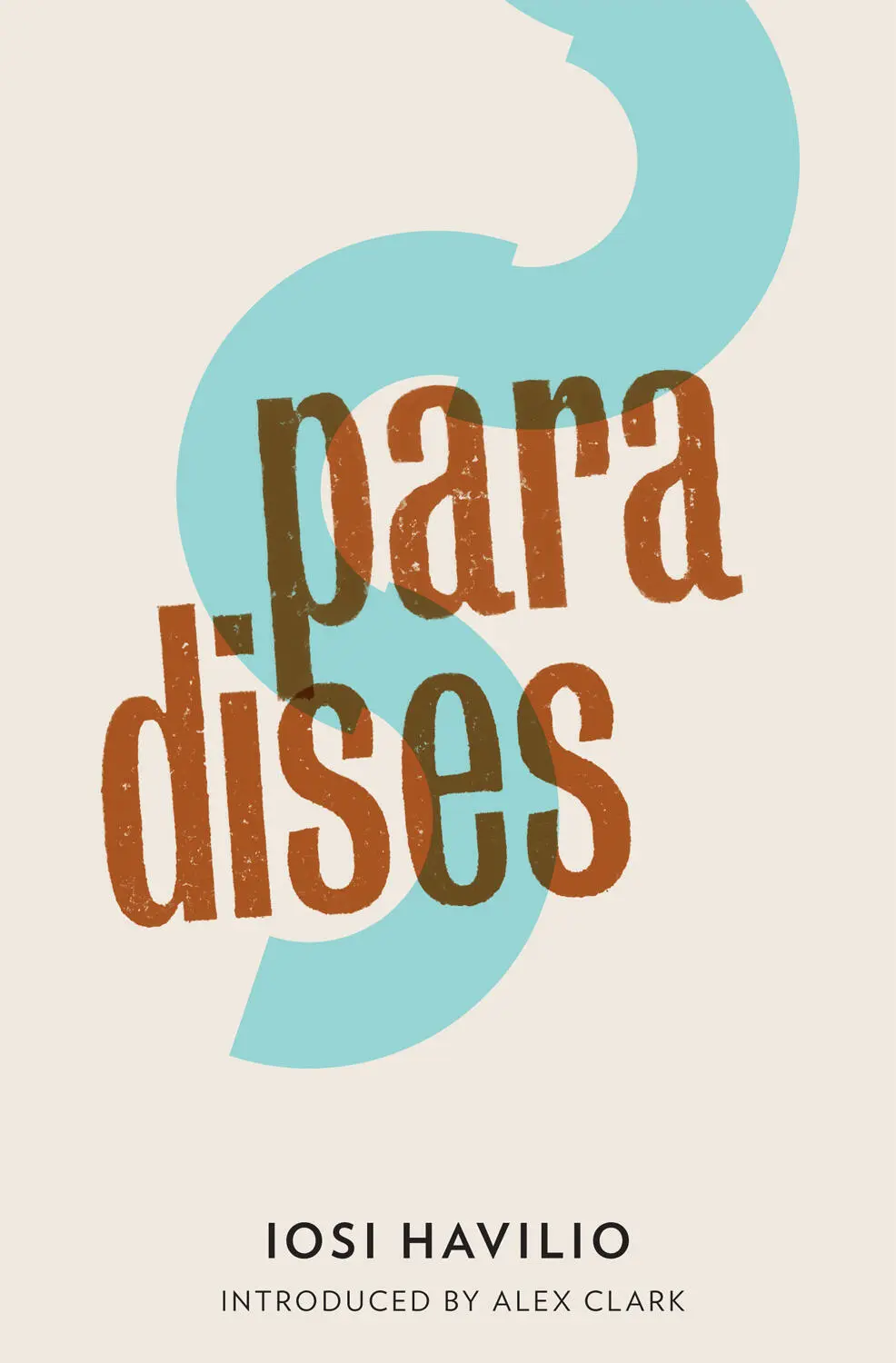
- Название:Paradises
- Автор:
- Издательство:And Other Stories
- Жанр:
- Год:2013
- ISBN:нет данных
- Рейтинг книги:3 / 5. Голосов: 1
-
Избранное:Добавить в избранное
- Отзывы:
-
Ваша оценка:
Paradises: краткое содержание, описание и аннотация
Предлагаем к чтению аннотацию, описание, краткое содержание или предисловие (зависит от того, что написал сам автор книги «Paradises»). Если вы не нашли необходимую информацию о книге — напишите в комментариях, мы постараемся отыскать её.
is an almost perfect novel." — Albert Camus's
reimagined with a female lead in in twenty-first-century Buenos Aires.
Recently widowed, a young woman leaves the countryside for Buenos Aires with her four-year-old son where she seeks to build a new life for herself. She finds work in the zoo and moves into the human zoo of a squatted tower block at the invitation of one of its residents, to whom she acts as nurse, giving morphine injections.
Paradises — читать онлайн бесплатно полную книгу (весь текст) целиком
Ниже представлен текст книги, разбитый по страницам. Система сохранения места последней прочитанной страницы, позволяет с удобством читать онлайн бесплатно книгу «Paradises», без необходимости каждый раз заново искать на чём Вы остановились. Поставьте закладку, и сможете в любой момент перейти на страницу, на которой закончили чтение.
Интервал:
Закладка:
Mercedes sits at the table and puts on some reading glasses that are too delicate for the size of his face. He opens a jotter and starts noting numbers in columns. From a box on the floor, out of my line of vision, he removes blister packs of medicines bunched up with elastic bands. He looks for something and goes back to making notes. I stand in the centre of the room drinking cold maté . Suddenly he says: And how’s the little tearaway behaving himself? Fine, fine, I say quickly although I’m not entirely sure whether he’s referring to Herbert or Simón. And Sonia, I ask for the sake of it, to fill the void. Hospital, he replies without lifting his eyes.
Searching among the thousand things on the table, Mercedes lifts a teatowel and uncovers a revolver with a black grip and silver barrel. I’m struck not so much by the weapon itself as by its size. Really chunky. Mercedes carries on searching as if nothing had happened until he realises and raises his eyes, covering the revolver with his huge hand. Don’t be scared, he says. It’s in case someone really angry turns up. I show them the shine on this and they’re suddenly tame. I smile, because of the shine part, but also because I feel that in some way he’s here to protect us. On our side. Herbert appears and Mercedes changes the music to see us off, like a boy who wants to show all his toys at once. Instead of the harps, he now plays a mix of cumbia and reggae that accompanies us to the stairs, gradually diminishing until we reach home.
Iii’m not going to cryyyy
No no no no
Iii’m not going to cryyyy
For the love of that woman
Seventeen
This place is hell, says Eloísa as soon as I close the flat door. She invites herself, as is her custom, turning up unannounced one afternoon. First we chat in the street for a while. She talks, I listen, Simón prowls about. She tells me about New Year, the party on the boat. Chaos. The idea was for us to stay moored there, but the owner, a friend of Axel’s parents, got really pissed, raised the anchor and off we went sailing down the river. And in the middle of the night we ran aground. You have no idea, we didn’t get back until five the next morning. A total blast. You’re a bitch for not coming.
Eloísa wants to see my house, is so insistent that she finally convinces me. I drop in to Tosca’s to let her know I’ll be down later for her injection and, though I’m not sure I should, I introduce Eloísa to her. Tosca beckons me, wagging her index finger: As long as they don’t stay, bring anyone you want. But don’t make a racket. Then everyone will find out and they’ll start bringing their whole clan.
How gross, says Eloísa climbing the stairs, quite loudly, so that she can be heard. No one shows their face. And once she’s inside: How can you live here? I shrug my shoulders and keep them raised, sustaining the I don’t know. Why don’t you stay with me? There’s more than enough room, she says. And I realise that while she’s talking to me she doesn’t even notice Simón playing in a corner. As if he doesn’t exist. I don’t know whether she does it on purpose or whether she genuinely forgets I’m not alone. She keeps pressing: Doesn’t it give you the creeps? I keep watching her without replying and she justifies herself: I mean, because of the filth. She wants to know how I ended up in the building. I tell her a bit: the Fénix, Canetti, Tosca, the injections, I don’t say cancer, I say illness, Tosca would say the spud. Or the big bad spud, if she’s in a very good mood. And that’s it, I conclude, things turned out this way. She goes over to the window, tries my mattress, then back on her feet she opens the bathroom door: Anyway, it’s not that bad, she says, her eyes wide, remembering something. I brought you some amazing little flowers, she says and pulls a small bundle wrapped in cellophane from her jeans pocket. She shows me the marijuana buds skewered on a little stick, she gives it to me to smell. Strong, yes. Amazing, she corrects me. I hand them back, she starts crushing the flowers with her fingers and, just like that, out of nowhere, she starts talking about her grandmother. Actually, about the wardrobe her grandmother had in her house, just like the one here, wide, enormous, with curves and cut off at the top. As I listen, I try to recall but I can’t remember whether in our previous life, three or four years ago, she ever mentioned her. I could swear she didn’t. The wardrobe was in the room where her grandparents had slept ever since they were married — in separate beds. Weird, huh? When her grandfather died, Eloísa occupied his bed whenever she stayed over. Identical, identical, it’s mad. Yes, I say and think about Jaime’s wardrobe, not exactly the same as this one but, now that I try to visualise it, quite similar. Very tall, with mothballs rolling loose along the shelves and all those clothes, ingrained with dirt, which I never dared to bag up, from the days when Jaime wore suits and had a wife. It’s probable that Jaime and Eloísa’s grandmother bought their wardrobes from the same furniture shop. The mystery is how this one came to be here. The only thing I know is that I’ll never be able to fill it. Unless I set myself that goal, to keep a promise, on a whim. With borrowed clothes, old blankets, junk.
You never called back, Eloísa complains as she lights the joint and the aroma of marijuana, the ceremony, alerts Simón, who has been ignoring us from his play corner. He raises his eyes and gradually, intrigued or out of boredom, approaches us. Eloísa takes the first drags, one short and sharp, the next long and sustained, until she runs out of air. As if shushing in reverse. She releases the smoke, becoming rather cross-eyed, coughs and finally says: What a bugger. Simón sits down on the wooden bench, we stay standing. The situation is funny, the disproportion, the ratio of strength, Simón seems like a dwarf emperor. Eloísa passes me the joint and laughs, I don’t know whether it’s at that, at something else, at everything.
As we smoke she tells me about Axel. You have no idea what that house is like. A mansion, like three normal houses, she says. Total luxury. Four cars, motorbikes, a telly like a cinema screen, a maid who cooks for them and sprays air freshener everywhere, A baby smell that kills you, she says, another employee, younger, who cleans the bathrooms, the ornaments, the bedrooms, a gardener who works Saturdays, and Axel, who’s wasted all day. Poor guy, she says. He’s attempted suicide a thousand times. Pills, speed, coke, meds, he takes anything. Didn’t you see his eyes? And his skin, like a lizard. He thinks he’s a hard bastard because he goes to the slums to buy drugs. He’s a show-off, she says.
And what are you doing there? I ask. She inhales the joint deeply and releases a cackle mixed with smoke. I don’t know, she says, just laughing my arse off. I started as an assistant for the film Axel was going to shoot but then it came to nothing. I told you, didn’t I? Actually, he keeps saying he’s going to do it, he’s always getting together with people. It’s a story about pot-head extraterrestrials. A load of nonsense. Now I’m half friend, half assistant. I keep him company so he doesn’t feel so alone, I kind of help him with life, she says, suddenly subdued, her cheeks slack. I wonder exactly what it is she does. Whether she’ll answer the phone, go shopping, pay his bills. Bathe him.
Axel’s parents, Eloísa tells me, are Jews. Good people. He’s Jewish too but his parents are much more Jewish. They have this massive house but they’re never home. They travel once or twice a year, they live in Miami. When she says Miami, Eloísa raises her voice, she gets excited. They buy and sell apartments there. They left the jewellery business here, because they have a jeweller’s, did you know? Yes, yes. Eloísa doesn’t know them, she’s only seen photos, she says they look like a couple of retards. Axel doesn’t work, he occasionally wanders in to get money, there’s another guy in charge, very old. And there’s Débora, the girlfriend, a snob, they say they’re getting married next year.
Читать дальшеИнтервал:
Закладка:
Похожие книги на «Paradises»
Представляем Вашему вниманию похожие книги на «Paradises» списком для выбора. Мы отобрали схожую по названию и смыслу литературу в надежде предоставить читателям больше вариантов отыскать новые, интересные, ещё непрочитанные произведения.








Обсуждение, отзывы о книге «Paradises» и просто собственные мнения читателей. Оставьте ваши комментарии, напишите, что Вы думаете о произведении, его смысле или главных героях. Укажите что конкретно понравилось, а что нет, и почему Вы так считаете.