Iosi Havilio - Paradises
Здесь есть возможность читать онлайн «Iosi Havilio - Paradises» весь текст электронной книги совершенно бесплатно (целиком полную версию без сокращений). В некоторых случаях можно слушать аудио, скачать через торрент в формате fb2 и присутствует краткое содержание. Год выпуска: 2013, Издательство: And Other Stories, Жанр: Современная проза, на английском языке. Описание произведения, (предисловие) а так же отзывы посетителей доступны на портале библиотеки ЛибКат.
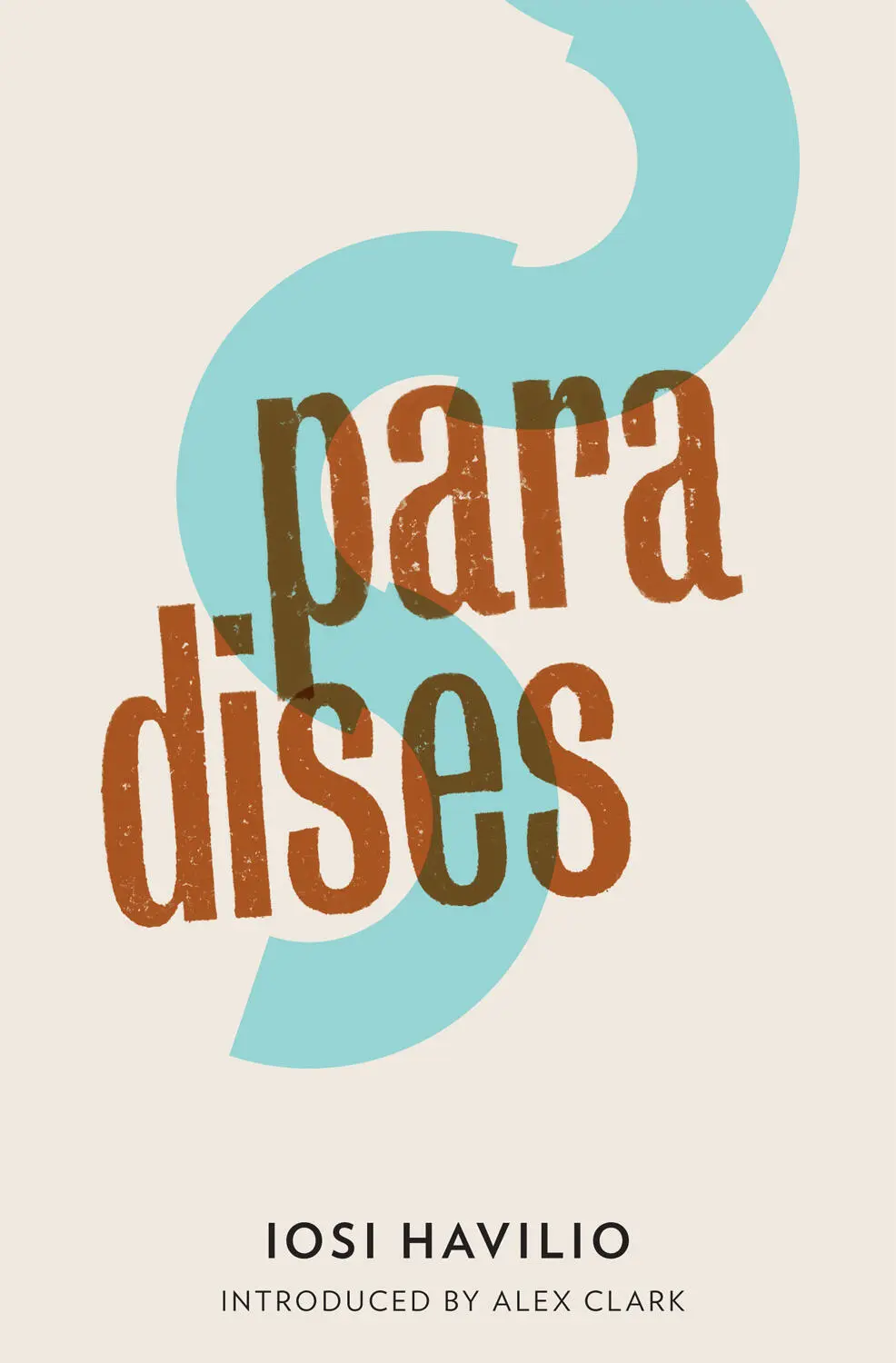
- Название:Paradises
- Автор:
- Издательство:And Other Stories
- Жанр:
- Год:2013
- ISBN:нет данных
- Рейтинг книги:3 / 5. Голосов: 1
-
Избранное:Добавить в избранное
- Отзывы:
-
Ваша оценка:
Paradises: краткое содержание, описание и аннотация
Предлагаем к чтению аннотацию, описание, краткое содержание или предисловие (зависит от того, что написал сам автор книги «Paradises»). Если вы не нашли необходимую информацию о книге — напишите в комментариях, мы постараемся отыскать её.
is an almost perfect novel." — Albert Camus's
reimagined with a female lead in in twenty-first-century Buenos Aires.
Recently widowed, a young woman leaves the countryside for Buenos Aires with her four-year-old son where she seeks to build a new life for herself. She finds work in the zoo and moves into the human zoo of a squatted tower block at the invitation of one of its residents, to whom she acts as nurse, giving morphine injections.
Paradises — читать онлайн бесплатно полную книгу (весь текст) целиком
Ниже представлен текст книги, разбитый по страницам. Система сохранения места последней прочитанной страницы, позволяет с удобством читать онлайн бесплатно книгу «Paradises», без необходимости каждый раз заново искать на чём Вы остановились. Поставьте закладку, и сможете в любой момент перейти на страницу, на которой закончили чтение.
Интервал:
Закладка:
Eloísa moved into the house about six months ago. The first night he didn’t even touch her, they watched telly until the morning, really high, then they spent the next day in bed because it was Sunday, eating and trying to fuck but he couldn’t get it up at all. Monday came, then Tuesday, a week, and she ended up staying. Now they have the occasional screw, says Eloísa, but it’s over almost before it’s begun. He puts it in and can’t last a second. I reckon he’s gay, he doesn’t want to admit it to himself, he’s dying to be fucked, you can totally tell. But he’s a good guy. He doesn’t seem like the kind to treat you like shit, although I don’t know, you never can tell. He’s strange. He goes to a psychologist three times a week, he takes sedatives and he’s always nervous, worried, it’s hard to believe with all the dosh he has.
Eloísa lights a cigarette and starts imitating Orfe, the maid who has lived in Axel’s house for forty years. She stands up, puts a cushion under her T-shirt, walks like an orang-utan, blowing saliva bubbles. Simón looks at her seriously and Eloísa tries to make him laugh. She pulls silly expressions without managing to raise a smile. Monkey face, madman face, deformed face, stretching her mouth with her fingers, zombie face, just showing the whites of her eyes, moving her ears, and finally she gets a grin out of him. Then Simón, as if annoyed at having given in, gets down from his throne and returns to shelter in his corner.
I’m hungry, says Eloísa. There isn’t much; I offer her a packet of coconut biscuits. Despite my worst fears, they’re quite good. Not crunchy, but edible. We want more. Checking the larder, which occupies a shelf in the wardrobe, Eloísa discovers a tin of peaches in syrup, which we open with a knife and a piece of tile. Three halves each, two for Simón.
Oh no, I’ve arsed up, I promised Axel I’d be back by ten to go for dinner with him at who knows whose house, says Eloísa as she taps a message into her mobile at top speed. She stands up, strokes Simón’s head in passing and hurries me to see her out. Oh, I almost forgot, she says and removes a telephone from her pocket. Here, you can’t live without a mobile. She hands me a red handset and a charger with the cable wrapped round it. The number is on the back, badly written but legible. Because I don’t reach out immediately, she takes me by the wrist and places it in the palm of my hand. Relax, take it, the house is a cemetery for phones.
Before she leaves, on the pavement: Next week there’s going to be a great party. Axel’s turning thirty, you have to come. I say yes, I although I doubt I’ll go, just so that she doesn’t insist. The word party seems so distant to me, like a fantasy.
Next to the garden boa, which I trace again in the morning, there are two branches. Two types of the Mimosaceae family, the one on the left has medium-sized, unruly leaves, the other has small, abundant foliage, similar to that of a jacaranda. I think for a moment about including them in my drawing, but no, I leave them out. The tracing functions as a sedative which is closing my eyes very slowly. With the book open on my abdomen, like the body of a dwarf with fins that embrace me, an amphibious, affectionate dwarf, I have a perfect dream, without people or animals. A sweet dream that entertains me all night, making me laugh. A dream I can’t remember at all.
Eighteen
Going against his usual urge to dismantle, Benito fixes up a sound system he found discarded on the street. Almost in a good mood, with unfamiliar enthusiasm, Tosca makes me go through her papers in search of a little disc, that’s what she calls it, of the best arias in history. Verdi, Puccini, Leoncavallo, Mozart and Bizet. I have one of the real ones, too, but I outlived it, she says and nods towards a record player covered in screws, nuts and all those strange pieces that Benito collects. As I prepare to inject her, Tosca asks me to get on with it, she wants to listen to her favourite aria. Put on number eight, she says. Do you know it? Yes, I lie, then check myself: I’m not sure. I like it, I don’t know whether it’s the music or seeing Tosca offer me her inner arm with unusual sweetness, more than sweetness, tragicomedy, in an overacted trance. I break the phial, fill the syringe, eyes on the needle sucking up the yellow liquid, and I’m transported when Tosca recites, out of time: La vita è inferno all’infelice.
Beni, play it again, says Tosca and carries on talking, this time about singers. She delays the moment of injection, she’s babbling, the happiest I’ve seen her. Not Gigli, not Caruso, not Di Stefano, Tosca points out where she keeps her shellac and vinyl records. I get up and move towards the box under the television: That one, she says, that one there. Tito Schipa. He was a friend of my father, from school. The Yanks loved him. She hands the record back to me: I don’t play those any more, they’re beautiful but not very practical. She also tells me about someone in her village who sang at funerals. La voce dei morti , that’s what they called him. A certain Vito Potenza. Potenza, Potenza, she says twice, her eyes on the ceiling, as if summoning him, as much as her swaddled neck will allow.
As well as a music lover, Tosca’s father was, in all: inventor, fascist, herbalist, businessman, Commendatore , Mason and a violent man. He was also a frustrated artist, says Tosca, rolling her ‘r’s, dramatising the word. An arrrtist. For him, listening to one of his records was a ceremony. He did it in a room at the back of the house in Flores, which they bought when they arrived in the country. An enormous house, stretching from one street to the next, never-ending. He would shut himself away, naked, or covered in a sheet, Roman-style, and spend hours with the volume up. Occasionally with a friend or relative, but almost always alone.
Mussolini was a superman, Tosca tells me her father used to say to her. Almost a Garibaldi. Poom. Ahead of his time, a martyr, a genius who kept bad company. And she searches in the drawer for a portrait she always keeps there of her father, just graduated from military school on the day the Duce visited. She says: Il Duce. She can’t find it. The drawer falls out, Tosca swears. Mixed in with the photos I’m picking up from the floor there are crumbs, rings, coins, sulphate batteries, a Cantonese restaurant menu, a lottery ticket and various knobs of used denture adhesive.
Instead of Mussolini, her father appears next to an Argentinian president to whom he was advisor. She can’t remember his name, I don’t recognise him either. Something to do with foreign trade, exporting grains. Two bald men, pale and heavy browed, in evening dress, white suit, black bow tie and with decorations pinned to their chests. Tosca becomes enthusiastic and shows me more photos, hurrying through some, lingering on others, and I’m curious to see what’s coming next. Most are of her father: boarding the corvette Esperanza , at the foot of a warplane, at a community dinner, at the wheel of a racing car, eating an ice cream in Plaza Flores. She makes no comment about the women; I’m left to wonder whether one of them could be her mother, she doesn’t even mention her. Next to a teenage Tosca, already fat, poses her sister Violeta, identical but slim, both dressed for a party in a park lit up at night. Did I tell you about Violeta, she asks and I nod, although she reminds me of the doctors and the metastasis anyway. Poor thing. The hair was the least of her troubles, she looked great in the wig, more beautiful than ever. She looked like an actress.
There are photos of Benito as a boy, the exaggerated head announcing his deformity. In an amusement park, hugging a ball, on the beach buried in the sand, sepia photos, colour prints, Polaroids. She never tells me anything about her life, whether she married or not, about Benito’s father, and I don’t dare ask. I sense something difficult, tragic, and if not tragic then sad at least. Among the photographs there’s a little picture card of the Virgin of Syracuse, a miniature replica of the poster hanging above the headboard of the bed. She tells me again about the tears, the miracle, the woman who became blind before giving birth, I don’t interrupt her or mention that she’s already told me.
Читать дальшеИнтервал:
Закладка:
Похожие книги на «Paradises»
Представляем Вашему вниманию похожие книги на «Paradises» списком для выбора. Мы отобрали схожую по названию и смыслу литературу в надежде предоставить читателям больше вариантов отыскать новые, интересные, ещё непрочитанные произведения.





Обсуждение, отзывы о книге «Paradises» и просто собственные мнения читателей. Оставьте ваши комментарии, напишите, что Вы думаете о произведении, его смысле или главных героях. Укажите что конкретно понравилось, а что нет, и почему Вы так считаете.