Iosi Havilio - Paradises
Здесь есть возможность читать онлайн «Iosi Havilio - Paradises» весь текст электронной книги совершенно бесплатно (целиком полную версию без сокращений). В некоторых случаях можно слушать аудио, скачать через торрент в формате fb2 и присутствует краткое содержание. Год выпуска: 2013, Издательство: And Other Stories, Жанр: Современная проза, на английском языке. Описание произведения, (предисловие) а так же отзывы посетителей доступны на портале библиотеки ЛибКат.
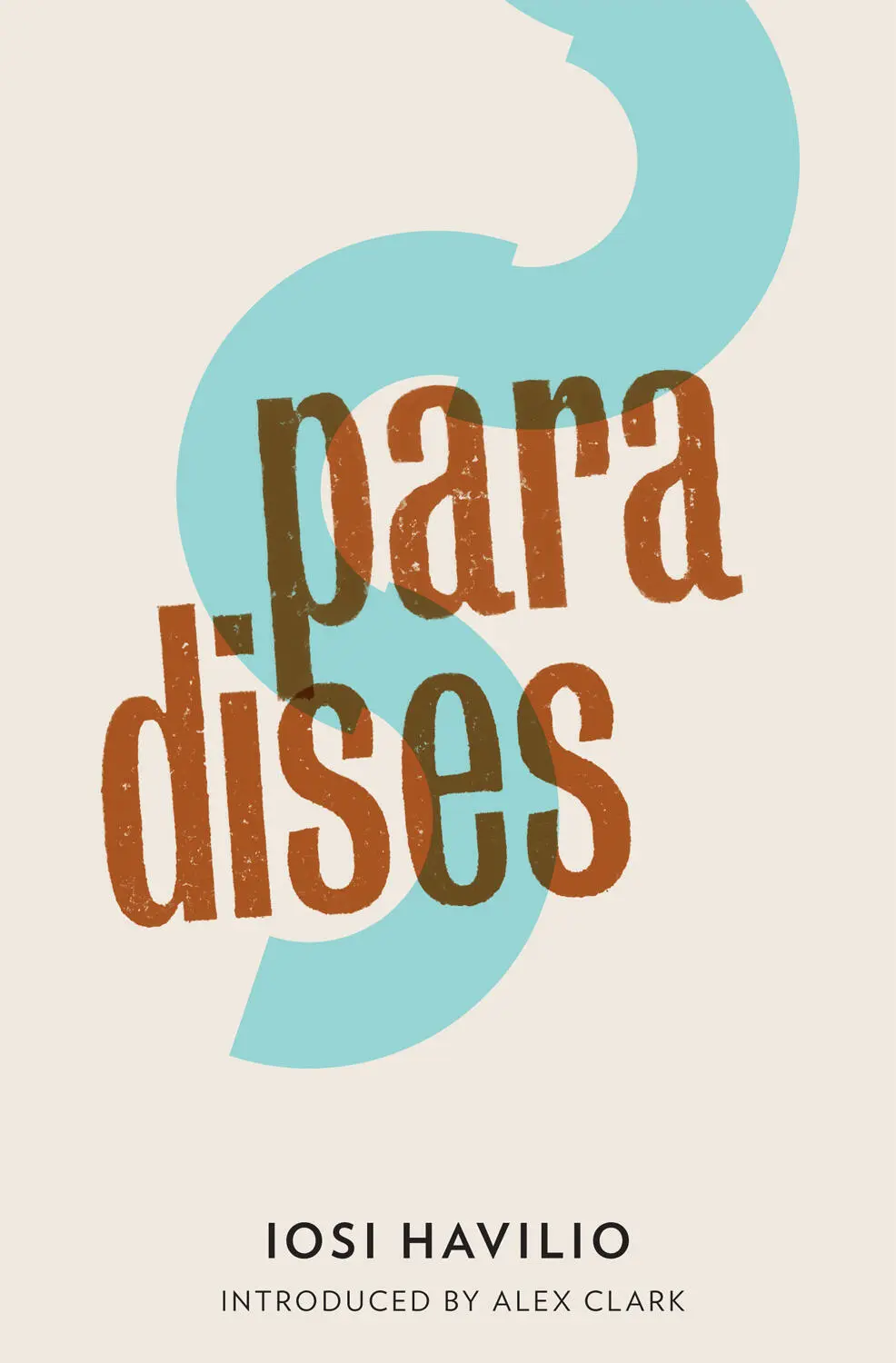
- Название:Paradises
- Автор:
- Издательство:And Other Stories
- Жанр:
- Год:2013
- ISBN:нет данных
- Рейтинг книги:3 / 5. Голосов: 1
-
Избранное:Добавить в избранное
- Отзывы:
-
Ваша оценка:
Paradises: краткое содержание, описание и аннотация
Предлагаем к чтению аннотацию, описание, краткое содержание или предисловие (зависит от того, что написал сам автор книги «Paradises»). Если вы не нашли необходимую информацию о книге — напишите в комментариях, мы постараемся отыскать её.
is an almost perfect novel." — Albert Camus's
reimagined with a female lead in in twenty-first-century Buenos Aires.
Recently widowed, a young woman leaves the countryside for Buenos Aires with her four-year-old son where she seeks to build a new life for herself. She finds work in the zoo and moves into the human zoo of a squatted tower block at the invitation of one of its residents, to whom she acts as nurse, giving morphine injections.
Paradises — читать онлайн бесплатно полную книгу (весь текст) целиком
Ниже представлен текст книги, разбитый по страницам. Система сохранения места последней прочитанной страницы, позволяет с удобством читать онлайн бесплатно книгу «Paradises», без необходимости каждый раз заново искать на чём Вы остановились. Поставьте закладку, и сможете в любой момент перейти на страницу, на которой закончили чтение.
Интервал:
Закладка:
Guiding me between the cars, Axel complains at the lack of space. Yes, I say, incapable of making any comment, not about the convertible, or the pickup, or the jeep, or the collector’s model, nor about the hanging bicycles. I could say: What lovely cars, they must be worth a fortune. But no. Axel opens a panel next to the door and presses buttons rapidly. Come back whenever you like. Yes, yes, thanks. Bye and bye. I escape quickly, without looking back. On the other side of the bridge, calmer now, standing in a queue of three at the bus stop, I receive a message from Eloísa: WHERE DID U GET TO GIRL???
Twenty
Let’s go for a walk, Iris suggests at the gate to the zoo, when we’ve already said goodbye and are about to head our separate ways. Tomorrow we have a day off, it’s the first time we’ve both been free at the same time. We can go to the river, she says and I open my arms, embracing the idea without really knowing what Iris means by river.
Too early, she comes to el Buti to pick us up for our excursion. Because Simón is still asleep and I take a while to dress him and force breakfast down him, we make her wait some twenty minutes for us. That’s probably why, for the blocks separating us from the main avenue and almost the entire bus journey, Iris remains silent, ignoring us, as if she wasn’t with us. Just in case, to spare myself a reproach, I don’t ask. Iris definitely has a strange sensitivity, unfathomable, capable of taking offence at the slightest thing. Yet at the same time she is always generous, or not so much generous, more like needy, with an urgent compulsion to share.
The bus limps forward. Along the back seat, Iris, Simón and I, in that order, receive a blast of air up our legs which, no matter how we twist our necks, we are condemned to inhale. Suddenly, we gain some speed for a few blocks only to be paralysed again in another traffic jam. Although she’s still annoyed, at least now Iris is glancing over her shoulder at me, furtively, almost friendly. No one complains, no one rebels, no one gets off to walk. Nor do we, beginning to drift off to the hum of the engine and the movement of the bus which rocks as if we were sailing.
Very suddenly, without ceremony, because we have reached the end of the route, the driver shouts from the wheel: Post office. He doesn’t exactly say post office the way anyone would say it, he aggravates and prolongs the o of office into a wild cry. We get off rather dazed, as if landing from another galaxy. Iris, who is quickest to come to her senses, leads the way to a supermarket opposite a dark plaza crammed with dwarf trees. I make out an ombú tree that must be a century old perched at the top of a slope; there are also eucalyptus, which are the tallest, a lime and a row of silk floss trees with very swollen trunks. Canetti’s lessons are still fresh in my mind. Iris takes care of the purchases, we wait for her outside, Simón making a pile with some broken floor tiles, me, my gaze lost in the distance where the trees end and everything else begins.
Cheese, bread, apples and Coca-Cola, Iris reels off as she leaves the supermarket with a plastic bag in her hand. And a salami, she adds after a pause, rather aggrieved. We return to the point where the bus dropped us, we skirt the post-office building, cross a small, bare plaza without a single tree, the antithesis of the last one. We stop at the foot of an avenue with heavy traffic: lots of buses, lorries with trailers, containers. Waiting for the lights to change, Iris covers her ears with her hands, leaning slightly so Simón can see her. Her mood has finally changed. Iris isn’t one for joking, in fact it’s an effort for her not to be serious, except when she comes undone and explodes. That must be why Simón is observing her warily.
We pass two narrow train tracks disguised by tall weeds that no one has cut for a long time; we are confounded by a roundabout with no traffic lights which we dash across, until we reach the bridge straddling the canal. A white, modern bridge with steel cables of increasing lengths just like the strings of a fabulous harp. To the right, between the old renovated docks, a group of very high towers dispute their supremacy, some of them finished, the majority still under construction. A world of cranes, scaffolding and cement mixers. There are twin buildings separated by a clearing of sky and linked by high walkways. One of those flats must be Axel’s, the one Débora is decorating for when they live together. Eloísa has been there, she described it to me drawing the shape in the air, like a semicircle with windows to the floor, the city on one side, the river on the other. She says she was returning from the casino once, with Axel and his friends, Berni, Andy and someone else, the time Axel lost something like three thousand dollars at roulette. She says that when they reached the flat they were all pretty drunk and they called Cohen, a guy who had been a tutor at Axel’s school and who is now the group’s dealer. He showed up with three girls who didn’t even look like whores who stayed until seven in the morning for two hundred pesos each. Eloísa only did drugs, she took crack from a never-ending rock, but she didn’t screw anyone, nor did Axel. How’s he going to screw if he’s a total poofter? He had two girls on top of him and still couldn’t get it up. His friends, meanwhile, Cohen and the others, fucked them frontways, backways, left their hair full of milk. Eloísa watched, she took photos, filmed little videos, that’s what she called them, little videos, and masturbated a bit. At most she touched someone’s tits. But always staying outside the game: it wasn’t worth it.
By the time we reach the ecological reserve, Simón is already hungry. Iris complains, she says we’re going to have our picnic by the riverside. He can’t wait ten minutes, she mutters between clenched teeth. It’s not a question, nor is it directed at me, it’s a statement loaded with irony. I appease Simón with a banana I’ve brought squashed in my pocket and we push on. On one side there’s a dry lake sprouting with reeds and a few swamped ducks, on the other, an embankment with commercial premises installed under an arcade. Almost all of them are shut, only a few have their grilles raised and one man is lighting up a barbecue still empty of meat, his stomach on show. There is also a group in their sixties wearing shorts and bikinis, forming a semicircle, their skin shiny, oily, tanning themselves even though they don’t look like they could get much browner.
After a brief exchange of glances, we decide to take the path to the right, a wide, muddy trail populated by cyclists, explorers, pensioners and a parade of strange characters ranging from loners to exhibitionists. Suddenly the city falls silent and the illusion of nature begins. Along the path, between the flame bushes, is a series of platforms with coin-operated telescopes like standing machine guns. Simón climbs each one and tries to manoeuvre the device. Come on, Iris will repeat, nothing but impatience.
A very slim boy, his ribs clearly visible, emerges from the reed bed scaring mosquitoes away with a white T-shirt. His face is red, too inflamed to be just from the heat. Feeling he’s being watched, for fun, he sticks out his tongue and jogs off exaggerating the movement of his arse. I seek out Iris’s eyes, she averts her gaze to the pampas grass. After twenty minutes’ walking, we turn left, uphill. With no trees to protect us, we are the inevitable target of a sun that is gradually becoming cruel.
The slope unveils the river in layers. There’s no breeze, or anything resembling one, the heat won’t back down. The water is an immobile sheet, like brown cement, cocoa paste, with no waves, not even the merest fold. Searching for a spot in the shade to settle down in, stepping among the people who arrived before us, Iris grabs me by the arm at the same time as she forces out a sentence, staring at the ground: I can’t believe it, she says twice. The second time she also swears in her own language.
Читать дальшеИнтервал:
Закладка:
Похожие книги на «Paradises»
Представляем Вашему вниманию похожие книги на «Paradises» списком для выбора. Мы отобрали схожую по названию и смыслу литературу в надежде предоставить читателям больше вариантов отыскать новые, интересные, ещё непрочитанные произведения.








Обсуждение, отзывы о книге «Paradises» и просто собственные мнения читателей. Оставьте ваши комментарии, напишите, что Вы думаете о произведении, его смысле или главных героях. Укажите что конкретно понравилось, а что нет, и почему Вы так считаете.