Iosi Havilio - Paradises
Здесь есть возможность читать онлайн «Iosi Havilio - Paradises» весь текст электронной книги совершенно бесплатно (целиком полную версию без сокращений). В некоторых случаях можно слушать аудио, скачать через торрент в формате fb2 и присутствует краткое содержание. Год выпуска: 2013, Издательство: And Other Stories, Жанр: Современная проза, на английском языке. Описание произведения, (предисловие) а так же отзывы посетителей доступны на портале библиотеки ЛибКат.
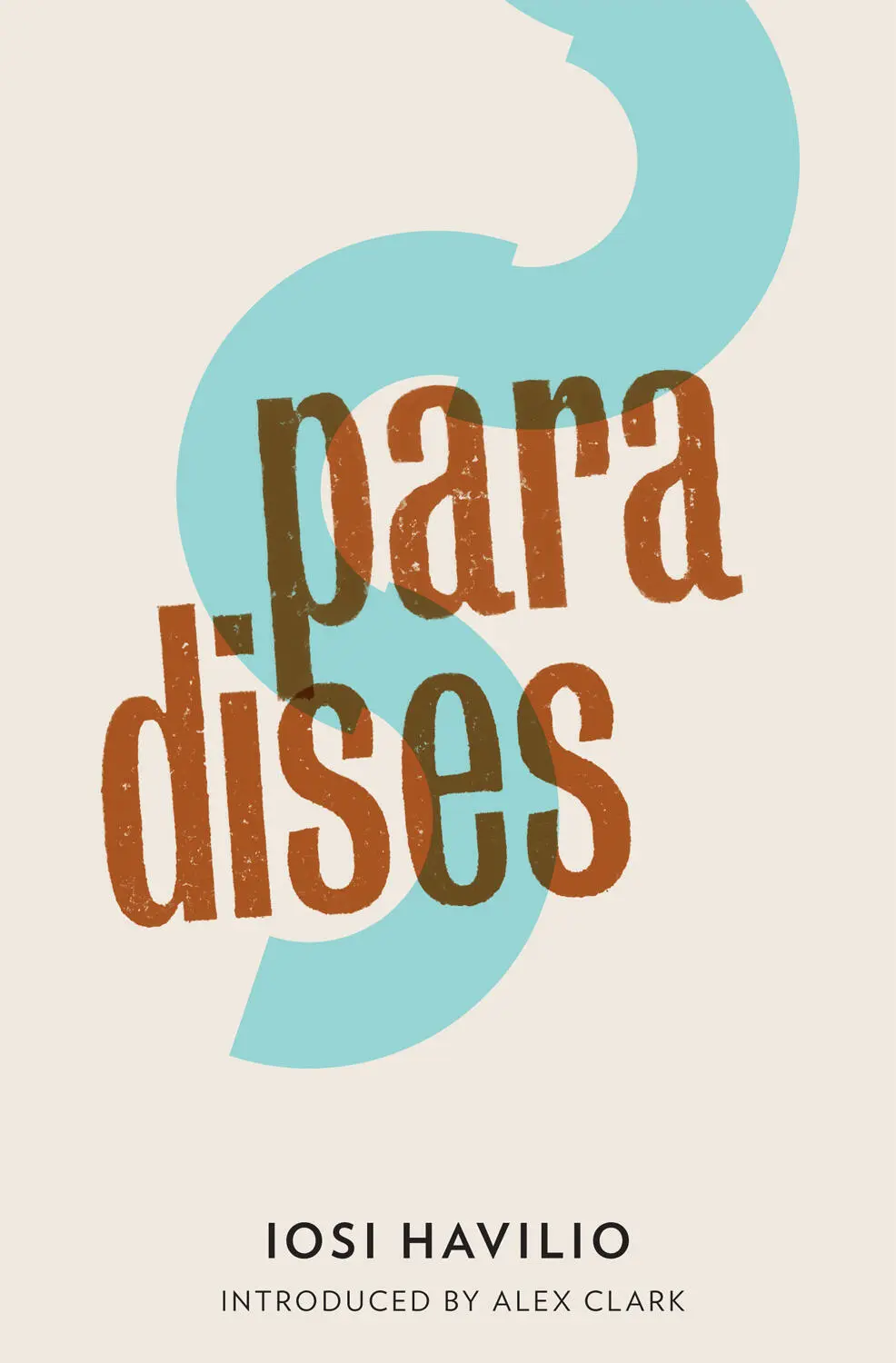
- Название:Paradises
- Автор:
- Издательство:And Other Stories
- Жанр:
- Год:2013
- ISBN:нет данных
- Рейтинг книги:3 / 5. Голосов: 1
-
Избранное:Добавить в избранное
- Отзывы:
-
Ваша оценка:
Paradises: краткое содержание, описание и аннотация
Предлагаем к чтению аннотацию, описание, краткое содержание или предисловие (зависит от того, что написал сам автор книги «Paradises»). Если вы не нашли необходимую информацию о книге — напишите в комментариях, мы постараемся отыскать её.
is an almost perfect novel." — Albert Camus's
reimagined with a female lead in in twenty-first-century Buenos Aires.
Recently widowed, a young woman leaves the countryside for Buenos Aires with her four-year-old son where she seeks to build a new life for herself. She finds work in the zoo and moves into the human zoo of a squatted tower block at the invitation of one of its residents, to whom she acts as nurse, giving morphine injections.
Paradises — читать онлайн бесплатно полную книгу (весь текст) целиком
Ниже представлен текст книги, разбитый по страницам. Система сохранения места последней прочитанной страницы, позволяет с удобством читать онлайн бесплатно книгу «Paradises», без необходимости каждый раз заново искать на чём Вы остановились. Поставьте закладку, и сможете в любой момент перейти на страницу, на которой закончили чтение.
Интервал:
Закладка:
Twenty-one
Herbert shows up with a bruised eye. A large, mature plum. Simón looks at him impressed, as do I. He allows himself to be examined, frowning with a mixture of pride and shame. I don’t ask anything, I let him speak. He says he was elbowed during a match. And he clarifies: At training. I offer him a glass of milk, he drinks it in one go, almost closing the healthy eye; the other stays alert, halfway open. Simón points at his own cheekbone, as if his hurts too. I move away, they start playing. I’m going shopping, I say. And, with one foot outside, I ask: What do you want to eat? They both shrug at the same time and they remain like that, stony, transferring the doubt from one to the other.
At the supermarket on the corner there’s a commotion of police cars and ambulances. I see it coming, first in scale, now life-size. I’m about to go and do my shopping elsewhere, but curiosity wins over and I stop behind the police cordon. Slightly further along is Mercedes, he doesn’t see me, doesn’t recognise me, or maybe that’s just the way he is, rough, laconic, not one for niceties. Looking straight ahead, concentrating, he keeps rubbing his fist over his mouth and beard. His eyes are pinned on the shop. I stand on tiptoes: behind the blue shoulders of the uniformed officers and the couple of civilians spinning like tops on their axes, I can make out the shelves, and closer to me, too close, two dead legs sheathed in pale grey jeans. A body covered hurriedly from the waist up, lying between the boxes and a Budweiser fridge. A fresh corpse covered with bin bags. As well as the trousers, you can see the gold trainers pointing in opposite directions, forming an open V. I return my gaze to Mercedes in search of complicity, an explanation. Nothing. He’s smoking, gritting his teeth, dismayed, or else it’s hatred. Whichever it is, he’s not indifferent to this particular death. I raise my eyes and escape for a minute as I observe the multicoloured sign above the shop: a collage of cities of the world, statues, towers, monuments, typical postcard images and the name of the supermarket: King Kong.
A van arrives at top speed, turning at the corner so that it’s facing in the opposite direction. Forensics Department, it says on the doors and window. Two men get out, dressed in mixed attire, without insignias or badges but with epaulettes on their shoulders and the typical haircut of security agents. Two ordinary guys, the experts. From the back of the van they remove a series of pieces of equipment which they unfold at the entrance to the supermarket. They are building the crime scene. Instead of tape, which only serves to demarcate an area, they set up frames with grey canvas, at least two metres high, forcing us from now on to guess what is happening on the other side.
Next to the screen, a short woman is setting crates filled with fruit and vegetables, oranges, apples, tomatoes, aubergines and lettuces out on the pavement. She leans them against the wall, in the sun, I don’t know whether intending to take them elsewhere or because she’s been told to transfer the fresh produce section to the street for the duration of the investigation.
I forget about the dead body. I think about the purchases I can’t make, I turn round and almost bump into Mercedes, who’s just behind me, crouching. He smiles, hands raised, as if I were about to assault him, suddenly friendly. Could it be that he genuinely didn’t see me earlier? Poor boy, an idiot, he had nothing to do with it. He tells me he knew him well and moves his fingers in a quick arpeggio near his face which that I can’t interpret: Bit of a party guy, but a good lad, eh. He tells me about the Chinese mafia as he sucks his scraped knuckles, raw flesh: If they don’t stump up the cash, they squish them like flies. They’re worse than the Peruvians, he says, they don’t even love their own children. Mercedes’ gaze is fixed on an inaccessible plane, not clouded or lost so much as prismatic. And that split personality, I now realise, is what must strike fear into people, as Tosca says.
We say goodbye with a slight bow, like monks. At the kiosk opposite I buy a bag of fusilli and a packet of spring salad. I pay and, instead of my change, the girl gives me two banana-flavoured chewing gums. I cross the street and with one foot on the kerb I stop short, off balance, with the feeling of having solved a riddle. I even pull a face saying That’s it, I’ve got it, an expression I dedicate to myself even though I can’t see it. I piece together on one single page Herbert’s black eye and Mercedes’ skinned knuckles, I imagine the sequence that connects them. The blows. The beating. In front of the door I suppose I’m equidistant from both of them. I can picture the revolver with the long barrel and the comment about its shine, Sonia too, her muteness and self-denial, the nicknames, the Chemist, Paraguay, everyone’s dealer. It’s perfectly clear, there’s no mystery or revelation. And if not? What if it’s just one of those coincidences that grab our attention every so often to entertain us?
Another day of messages from Eloísa, to which I’m not going to respond. At the zoo, the birth of a couple of young giraffes causes a small revolution. Canetti says: If I was born again and could choose, I’d be a cat.
In the evening, after the injection, syringe in hand, I think about Tosca’s offer to let me have a proper bath. A hot bath. Really hot. To kill the heat, more heat, that’s what Jaime used to say in summer whenever I pointed out that he was wearing too many clothes. It would be my first bath in the building. Generally, I take a shower in the changing room when I finish work, or in Iris’s room when I go to see her. In our flat there’s a pipe, but the head is missing. I have a small washbasin, the size of Simón; sometimes I wash myself in bits. Filling it requires two buckets of cold water and a pan of hot if you want it to be more or less lukewarm. Canetti insists that I should buy myself one of those small electric boilers; he shows me in the window of an ironmonger on the avenue, he says they work really well.
I wait for Tosca to return from her trance and when she opens her very watery eyes, as if her tear ducts have reloaded with pain or emotion at the passing of the morphine, she arches her brows ever so slightly. She doesn’t understand what I’m doing there. Because almost always, especially recently, now that we know each other quite well, once the injection is done I put away the box of phials and leave in silence. I leave her alone with her balm. Not today. I gesture with my index fingers and say: Can I take a bath? In reality I don’t manage to say anything, I barely move my lips, in solidarity with those minutes of silent relief of hers, when the drug prevents her from formulating clear words. Whenever she can’t control her eagerness to talk, her voice becomes hoarse, scratchy, like an old dog’s. Tosca shakes her hand, it’s a Yes, but also a Get out of my sight.
I can’t see Benito, not in his corner of metal oddities, nor in the hall. I knock three times before I enter the bathroom, he isn’t there either. A pool of clean water sits in the bathtub, stagnant but transparent. I turn on the tap, the water comes out at dam-force, boiling. I regulate the temperature and undress. As the steam builds, I sit on the toilet to wait, the feet, my feet, seem strange to me even though I know them from memory, my nails too, growing long and unevenly.
I stick in a finger. It’s burning. A bit more cold, I mix it and step in. There’s no curtain, I realise too late. To begin with, for a while, I keep an eye on the door, sure it will open at any moment. But nothing happens and I relax. At the height of the built-in soap dish on the wall there is a row of tiles that aren’t yellow like the rest but have enamelled figures on them. Black and white birds repeated symmetrically. The black birds stand next to an empty cage, the white ones always appear behind bars. It’s like that all the way round, black free, white caged, black free, white caged. Around the tap there are two golden cages, one open, the other not. There are infinite interpretations. The first thing that occurs to me is that, thrown out into the world, the dark bird, previously a white dove, became tinged with the colour of corruption. But it could also be that the baby crow is taking shelter in its plumage to frighten away evil. As for the other, a symbol of virtue and peace, the most obvious possibility is that it maintains its whiteness thanks to being enclosed. You could also speculate that it is suffering a punishment for clinging to a false purity. A basic but universal moral would be that neither of the two, free or captive, strong or weak, candid or perverse, can avoid disappearing eventually. I don’t know. I begin to sweat.
Читать дальшеИнтервал:
Закладка:
Похожие книги на «Paradises»
Представляем Вашему вниманию похожие книги на «Paradises» списком для выбора. Мы отобрали схожую по названию и смыслу литературу в надежде предоставить читателям больше вариантов отыскать новые, интересные, ещё непрочитанные произведения.




Обсуждение, отзывы о книге «Paradises» и просто собственные мнения читателей. Оставьте ваши комментарии, напишите, что Вы думаете о произведении, его смысле или главных героях. Укажите что конкретно понравилось, а что нет, и почему Вы так считаете.