Witi Ihimaera - Bulibasha
Здесь есть возможность читать онлайн «Witi Ihimaera - Bulibasha» весь текст электронной книги совершенно бесплатно (целиком полную версию без сокращений). В некоторых случаях можно слушать аудио, скачать через торрент в формате fb2 и присутствует краткое содержание. Год выпуска: 2016, ISBN: 2016, Издательство: Penguin Books Limited, Жанр: Современная проза, на английском языке. Описание произведения, (предисловие) а так же отзывы посетителей доступны на портале библиотеки ЛибКат.
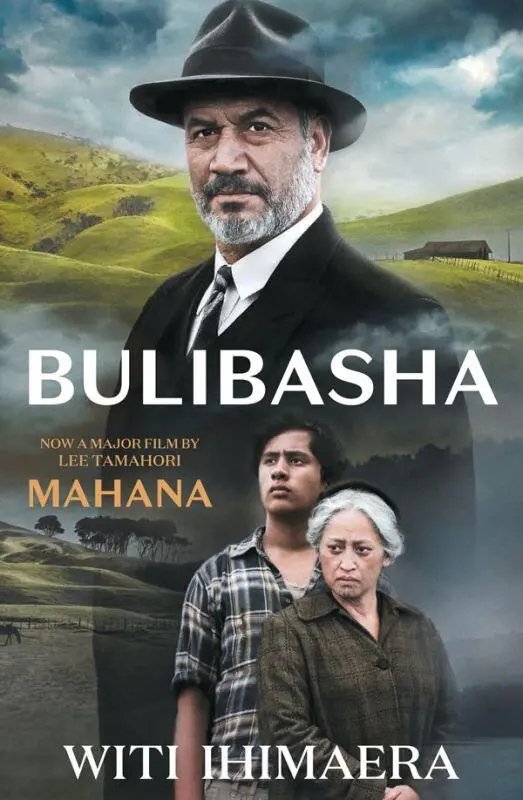
- Название:Bulibasha
- Автор:
- Издательство:Penguin Books Limited
- Жанр:
- Год:2016
- ISBN:9781742288109
- Рейтинг книги:3 / 5. Голосов: 1
-
Избранное:Добавить в избранное
- Отзывы:
-
Ваша оценка:
Bulibasha: краткое содержание, описание и аннотация
Предлагаем к чтению аннотацию, описание, краткое содержание или предисловие (зависит от того, что написал сам автор книги «Bulibasha»). Если вы не нашли необходимую информацию о книге — напишите в комментариях, мы постараемся отыскать её.
Bulibasha — читать онлайн бесплатно полную книгу (весь текст) целиком
Ниже представлен текст книги, разбитый по страницам. Система сохранения места последней прочитанной страницы, позволяет с удобством читать онлайн бесплатно книгу «Bulibasha», без необходимости каждый раз заново искать на чём Вы остановились. Поставьте закладку, и сможете в любой момент перейти на страницу, на которой закончили чтение.
Интервал:
Закладка:
‘Keep the speed at five miles an hour,’ Grandfather instructed her.
She started the car. ‘Move out!’ she called.
The men began to run in front of the car. The first half hour was easy as everybody chugged along at a steady mile every twelve minutes. After that, some of the men began to feel the strain. The horn of the De Soto blared. They had to regain their wind pretty fast. The option was to be run over by the De Soto.
Grandfather’s rationale was that if the team could run at normal speed with heavy footwear, they would run twice as fast when they had their lighter rugby boots on. He did not doubt the strength in the men’s upper bodies. Shearing, farming and fencing kept shoulders, chest and upper arms at optimum strength. Put a Mahana scrum down on a field and nothing could move it — the Mahana scrum could push the opposing scrum from one goal post to the other if it had to. The clan’s weakness, however, had always been in motive power. Sure, the Mahana backs were speedy, but they couldn’t keep the speed up. Thus the rugby team learned to apply the same tactics as the women’s hockey team — get out there, hit the other side with all you had in the first half and get all the tries you could while you still had the legs to do it. The infusion of men from the Whatu family, who had more leg power and stronger running skills, was another of Grandfather’s tactics. A third was to hope that some star centre or winger would turn up to work in the Mahana shearing gangs — Tobio had been one and Pani was the latest in line — or graduate like Mohi from junior football. The last hope was to pray to his American angel. Meantime, training was relentless. Sting was needed in the backline.
The night before the game against Hukareka, the family met with the team in the drawing room of the homestead. The atmosphere was strained. Mum was holding Dad’s hand. Pani was standing beside Miriam until Grandfather sent a message via Mohi from the throne that he should take a few steps back. Pani crimsoned.
Grandfather knelt to pray. ‘Oh God our eternal father,’ he began. ‘Tomorrow our rugby team has its big game. Succour our team and, if it be Thy will, bring victory to us, Amen.’
With a sigh, Grandfather stood up again. ‘Okay, boys, get a good night’s rest.’ He gave a slight smile. ‘Early to bed, no drink, no smoke and no sex.’
Later, while everybody was inside having a drink of cocoa, I went outside for air. I had found Grandfather’s prayer and the constant drawing of battle lines to include Heaven somewhat claustrophobic. Did everything have to include God?
I was watching the moon when Grandfather came across to me from the verandah. A mood of arrogance possessed me.
‘Why didn’t you pray for a saviour?’
‘Ae, we need a Jesse Owens,’ he laughed. His voice was good-humoured and relaxed.
I looked at him, incredulous. ‘Jesse Owens is black.’ In our church, black men could not hold the priesthood.
‘So?’ Grandfather asked, puzzled.
‘He bears the mark of the children of Ham. You wouldn’t want a man like that in your godly team, would you?’
Take that , you bastard.
‘E hara, grandson,’ Grandfather sighed. ‘Do you want a fight? You know I’m stronger.’
‘You might be stronger,’ I answered, ‘but that doesn’t make you always right.’
‘Right? What do you know about right and wrong? You live a little longer, and maybe you’ll get to be wiser.’
I wasn’t going to take that one lying down. ‘Why is it that older people always think that just because we’re younger we don’t know something? Your way of being right is to always say we are wrong, to keep us from knowing anything about the world outside Waituhi or to try to deny the world is changing. You can burn all the books you want, Grandfather, but that won’t stop us. Nor will we believe anything you say, for instance, about the mark of Ham, just because you say so. You don’t hold the power of life and death over us.’
Grandfather stared at me. ‘We are a family of God,’ he said, ‘and I am the leader. Whether you like it or not, Himiona, I lead according to my beliefs and my faith in God that we will prosper if we obey His commandments. There’s always got to be somebody who leads and others who follow. I’m the one who decides.’
‘And if I don’t like your decisions?’
A star fell from the sky.
‘Then one of us,’ Grandfather said, jabbing at me with a closed fist, ‘is going to lose.’
The next day Grandfather hired two buses so that everybody from Waituhi, including Maggie and old Uncle Pera, could come to the game. This was how he distributed his largesse. When the buses arrived at the field, Grandfather was there to greet everyone as they alighted. He was like an Italian godfather, his wife by his side, waiting while everyone kissed his hand or embraced him. I marvelled anew at his charisma.
‘They don’t play rugby like they did in our day,’ the old-timers said to Bulibasha as they stepped off the bus.
Grandfather was magnanimous. ‘Let’s see how the youngsters shape up anyway.’
Grandfather was so clever to have the old ones there. Whatever happened out on the field, nothing could damage Grandfather’s mana. If the team lost, the old ones would say, ‘There, didn’t we tell you? These young ones are not as good as Bulibasha was.’ If the team won, the old ones would say, ‘Aha! You see? It’s Bulibasha’s training that has won the game.’ He was the reference point by which all history was judged.
Just as the Waituhi crowd was seating themselves, the Hukareka supporters arrived. Rupeni Poata had travelled on the bus with his people and, as he stepped down, he offered his hand to Poppy. Laughing, she accepted his assistance and bowed prettily to him. At that instant I looked at Grandfather and Grandmother — and I saw Grandmother sway, as if she were a reed in the wind. A slight swaying motion, and that was all.
The Waituhi oldies pretended not to see the Hukareka oldies as they ascended the stand.
Uncle Pera started sniffing. ‘Can you smell anything?’ he asked Maggie.
‘Yes,’ she said. ‘It’s coming from that side of the stand.’
The Hukareka oldies weren’t going to take that. ‘Oh is that so!’ one of them replied. ‘How strange that the wind is blowing from your direction to ours. Somebody forgot to wipe their bum before they got here.’
Women could get away with saying such things in a way that men couldn’t, but Maggie’s feathers were ruffled. She scowled and was just about to reply when Zebediah Whatu said, ‘Don’t waste your time, Maggie. They’re not worth it.’
The grandstand soon divided into us and them , a definite space ran right between the two factions. I felt surrounded by refugees from an old people’s rest home.
‘Let’s get outta here,’ I muttered to Andrew.
He nodded and we raced down the steps as more Hukareka people came up. Immediately I barrelled into Tight Arse Junior and Saul, and we began to trade blows. Saul got a lucky punch in and I reeled away, but somebody caught my arm in a vice to stop me from falling. He was short, squat and ugly.
Shit, Rupeni Poata.
‘Hey, watch it, boy!’ he laughed.
I coloured and pushed away from him. My heart was thudding in my chest like a cannon. Before Rupeni Poata could say anything more, I was off and away.
Later I remembered that his face had a scar running diagonally across the left cheek. Yet, in the story that Aunt Ruth had told me, when Grandfather Tamihana stole Grandmother Ramona away it was Grandfather who was slashed across the face. I raised the question with Andrew.
He shrugged. ‘Maybe Grandfather’s scar has faded,’ he said.
Читать дальшеИнтервал:
Закладка:
Похожие книги на «Bulibasha»
Представляем Вашему вниманию похожие книги на «Bulibasha» списком для выбора. Мы отобрали схожую по названию и смыслу литературу в надежде предоставить читателям больше вариантов отыскать новые, интересные, ещё непрочитанные произведения.









Обсуждение, отзывы о книге «Bulibasha» и просто собственные мнения читателей. Оставьте ваши комментарии, напишите, что Вы думаете о произведении, его смысле или главных героях. Укажите что конкретно понравилось, а что нет, и почему Вы так считаете.