Witi Ihimaera - Bulibasha
Здесь есть возможность читать онлайн «Witi Ihimaera - Bulibasha» весь текст электронной книги совершенно бесплатно (целиком полную версию без сокращений). В некоторых случаях можно слушать аудио, скачать через торрент в формате fb2 и присутствует краткое содержание. Год выпуска: 2016, ISBN: 2016, Издательство: Penguin Books Limited, Жанр: Современная проза, на английском языке. Описание произведения, (предисловие) а так же отзывы посетителей доступны на портале библиотеки ЛибКат.
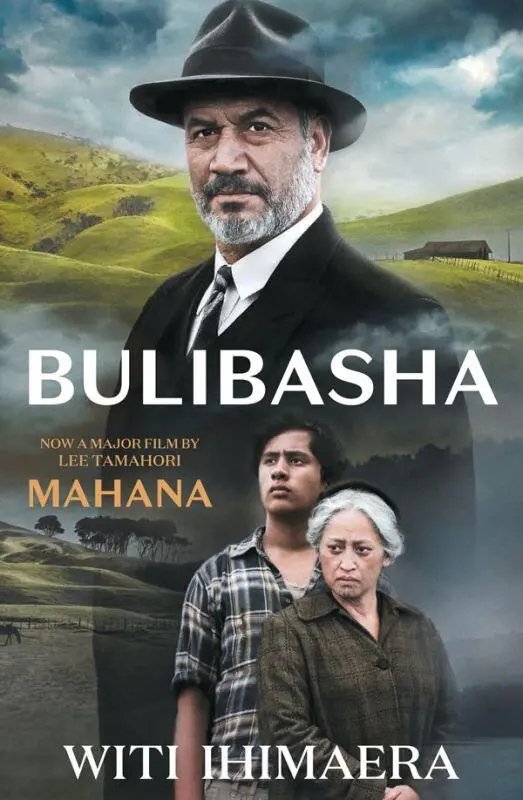
- Название:Bulibasha
- Автор:
- Издательство:Penguin Books Limited
- Жанр:
- Год:2016
- ISBN:9781742288109
- Рейтинг книги:3 / 5. Голосов: 1
-
Избранное:Добавить в избранное
- Отзывы:
-
Ваша оценка:
Bulibasha: краткое содержание, описание и аннотация
Предлагаем к чтению аннотацию, описание, краткое содержание или предисловие (зависит от того, что написал сам автор книги «Bulibasha»). Если вы не нашли необходимую информацию о книге — напишите в комментариях, мы постараемся отыскать её.
Bulibasha — читать онлайн бесплатно полную книгу (весь текст) целиком
Ниже представлен текст книги, разбитый по страницам. Система сохранения места последней прочитанной страницы, позволяет с удобством читать онлайн бесплатно книгу «Bulibasha», без необходимости каждый раз заново искать на чём Вы остановились. Поставьте закладку, и сможете в любой момент перейти на страницу, на которой закончили чтение.
Интервал:
Закладка:
He turned to Grandfather. ‘Reminds me of the time when you were his age, eh? When you jumped in to help out a senior team. Just like him, eh —’
Wheeze, cough, splutter.
‘Just like him .’
Afterwards, I said to my father Joshua, ‘Dad, I’m sorry. I don’t want to come between you and Grandfather Tamihana.’
He put a reassuring arm around me. His voice was thoughtful. ‘You’re not, son,’ he said. ‘He’s coming between me and my son.’
My father was growing up too. We turned to leave the dressing room, and there, suddenly, was Rupeni Poata. He looked amused.
‘Well done, Charlie Whatu,’ he said.
Chapter 37
Shortly after the rugby game against Hukareka the weather cracked down with a vengeance. Gone were the colours of autumn; clouds brooded greyly over our landscape. Torrential rain came across the hills behind Waituhi, wave after wave of unforgiving assault. The rain funnelled down from the backcountry, following the contours of the land towards the Waituhi Valley. There, with a whoosh of landslips and erosion, the water poured into the Waipaoa.
‘Wail-e-ree, I can hear the river call —’
My sister Glory and I would stand on the river bank, our faces whipped by the stinging rain. We had taken to singing the song from a western movie called River of No Return about a surly hero, a good-time girl and a young boy, and their adventures on a broad rolling river that roared across the screen from left to right. We felt the story had been about our river.
‘If you listen you can hear it call, sometimes it’s peaceful and sometimes wild and free —’
Mud so thick that you could walk across it surged and roared past us. Within its depths were logs as big as steamships. Trees as tall as two-storeyed houses cracked and yawed past in the yellow avalanche. Sometimes a dead sheep or horse, swollen like an obscene balloon, dipped and rolled within the water as if being basted in mud. The very ground we stood on thrummed with the turbulence of the Waipaoa. We knew that the river could be unforgiving. People trying to cross on horseback had drowned in the Waipaoa. A car had missed a bend, careered over and into its depths. Neither the car nor its driver was ever seen again. A rahui, a temporary prohibition, was placed on the river.
‘I’ve lost my love on the river, gone, gone forever down the river of no return —’
We were a young boy and his younger sister standing on the river bank, in love with the river.
One morning, Red was missing from our herd of milking cows. When Glory found her, she was down the river bank. The front part of her body was out of the water, but the back half was stuck in the mud. The river raged around her, trying to suck her in.
‘You’ve done this on purpose!’ I yelled at Red. ‘Just to make my day.’
Leaving Glory on guard, I ran back to the quarters, hitched up our stallion Pancho Villa and brought him to the river bank. I took a rope down to Red and tied it around her midriff.
‘You stupid bitch!’ I screamed at her.
‘Mooo,’ she answered unconcernedly.
To get the rope around, I had to get into the water itself. Suddenly a log or something hit me from behind. Glory screamed. Then Mum was there. She had seen me and Glory from the window of the quarters. She scrambled down the bank and joined me in the river.
‘Here,’ she cried. She had brought the whip with her.
‘Glory,’ I yelled, ‘kick Pancho Villa to pull us out now.’
Glory jumped on to Pancho Villa’s slippery back. ‘Hup!’ she screamed. ‘Hup!’
Pancho Villa whinnied and strained and pulled too quickly. The rope thwanged and Pancho Villa reared in fright.
‘Hold on, Glory!’ I thought my sister would fly off and be gone, gone to the river. But Glory caught at Pancho Villa’s mane and tried again.
‘Hup! Hup!’ My mother and I pushed Red from behind. Pancho Villa began to slip. I had to use the whip.
Dear God, direct the lash.
I laid the whip out and suddenly made it curl toward Pancho Villa’s flank. The sting was enough to make him jerk . The mud gave a slow, slurping motion as Red’s hind legs came free. She started to use her front legs to help herself out and up the bank, dragging Mum and me with her.
In all that time, not once did my mother say to let the cow go. Red was an important part of our lives. We depended on her for her good rich milk. Nor, when my mother and I emerged caked with silt and mud, was there any sentimental embrace. We had simply done our job.
My mother went back to the quarters and Glory and I carried on with the milking. Half way through, I found Glory shaking like a leaf.
‘You won’t ever leave me, will you, Simeon?’
‘No.’
I thought of her, so small, kicking Pancho Villa and no doubt saving our lives.
‘Ever ever ever?’
I held her in my arms. ‘I promise,’ I said.
Did Red thank us? Are you kidding? As I was milking her she arched her back and did a huge cowpat.
‘Next time, you drown,’ I said.
Later I went down to the river and gave a prayer of thanks to it for not taking us. Glory joined me.
‘Wail-e-ree —’
As Dad predicted, our savings dwindled fast. With Grandfather’s permission Dad left all the work at the homestead to me and went looking for work around the district.
My father was one of many men looking for itinerant work and he found knocking on doors a dispiriting business. Sometimes in the past he had been able to count on doing some fencing or horse breaking or mustering — always the worst stretch of fencing or the most vicious horses to break or the most difficult slopes to muster on — and he hoped that the quality of his work would be remembered. One night he came back with the news that he had managed to secure a one-man contract to cut scrub up the back of beyond.
The work was a six-week contract, and Dad decided to camp up there in a lean-to tent. Mum didn’t like the idea, but there was no option. Dad saddled Pancho Villa and, pulling a packhorse with all his equipment and provisions, set off into the back country. During the first two weekends Mum and I joined him in the scrubcutting, taking up with us the provisions that would continue to support him.
The third weekend Mum and I arrived in the middle of torrential rain to find the lean-to vacant and the packhorse standing by with Dad’s slasher and other equipment still tied to the saddle. My mother knew immediately that something was wrong. We rode down the track to the river.
‘Joshua? Joshu-aaa!’
My mother gave a cry. She pointed through the rain. I couldn’t make out what I was meant to be looking at. Then I saw that the track on the other side of the river had fallen away. I followed the slip and, there, at the bottom, was a small figure trapped beneath a fallen horse.
The swingbridge was down but that was no deterrent to my mother. She spurred her horse forward and into the torrent. ‘Joshua! Kei te haere atu ahau ki a koe!’ Of course I had to follow the crazy woman.
‘Hang on, Huria!’ my father cried. ‘Let the horse bring you across.’
By that time I was busy trying to keep my head above water too. I saw a bend coming up and yelled at Mum, pointing it out to her. She nodded and started to urge her horse towards a place where the water was not running so strong. We both touched ground.
‘You could have been killed,’ Dad said.
‘Well I wasn’t,’ she answered.
Two days before, Dad had been riding up to the scrub on Pancho Villa, pulling the packhorse after him. The rain was so heavy he didn’t notice the unstable track, and the ground crumbled from under him. With a whinny of fear Pancho Villa tumbled down with the landslide. Dad tried to pull the horse’s head around so that it pointed down. He thought he might be able to ride the stallion all the way to the bottom. But a sharp tree stump pierced Pancho Villa’s stomach, ripping his guts out. Bawling, Pancho Villa spun and fell, pinioning Dad beneath its weight.
Читать дальшеИнтервал:
Закладка:
Похожие книги на «Bulibasha»
Представляем Вашему вниманию похожие книги на «Bulibasha» списком для выбора. Мы отобрали схожую по названию и смыслу литературу в надежде предоставить читателям больше вариантов отыскать новые, интересные, ещё непрочитанные произведения.






Обсуждение, отзывы о книге «Bulibasha» и просто собственные мнения читателей. Оставьте ваши комментарии, напишите, что Вы думаете о произведении, его смысле или главных героях. Укажите что конкретно понравилось, а что нет, и почему Вы так считаете.