Witi Ihimaera - Bulibasha
Здесь есть возможность читать онлайн «Witi Ihimaera - Bulibasha» весь текст электронной книги совершенно бесплатно (целиком полную версию без сокращений). В некоторых случаях можно слушать аудио, скачать через торрент в формате fb2 и присутствует краткое содержание. Год выпуска: 2016, ISBN: 2016, Издательство: Penguin Books Limited, Жанр: Современная проза, на английском языке. Описание произведения, (предисловие) а так же отзывы посетителей доступны на портале библиотеки ЛибКат.
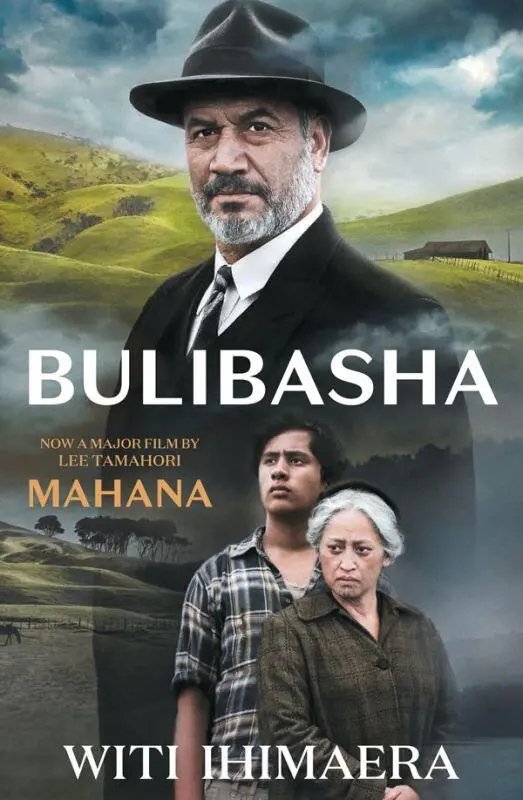
- Название:Bulibasha
- Автор:
- Издательство:Penguin Books Limited
- Жанр:
- Год:2016
- ISBN:9781742288109
- Рейтинг книги:3 / 5. Голосов: 1
-
Избранное:Добавить в избранное
- Отзывы:
-
Ваша оценка:
Bulibasha: краткое содержание, описание и аннотация
Предлагаем к чтению аннотацию, описание, краткое содержание или предисловие (зависит от того, что написал сам автор книги «Bulibasha»). Если вы не нашли необходимую информацию о книге — напишите в комментариях, мы постараемся отыскать её.
Bulibasha — читать онлайн бесплатно полную книгу (весь текст) целиком
Ниже представлен текст книги, разбитый по страницам. Система сохранения места последней прочитанной страницы, позволяет с удобством читать онлайн бесплатно книгу «Bulibasha», без необходимости каждый раз заново искать на чём Вы остановились. Поставьте закладку, и сможете в любой момент перейти на страницу, на которой закончили чтение.
Интервал:
Закладка:
‘Ko Ruaumoko e ngunguru nei —’ The L.D.S. Mahia men chanted. They were on one knee, gesticulating and slapping their chests red from every slap.
‘Au, au, aue ha, hiii .’
The crowd was going wild. Old men were leaping into the aisle to face the men on the stage, confronting them and encouraging them to greater heights of vigour.
After Manutuke and L.D.S. Mahia came Hauiti and Whangara, and Aunt Sarah had been right; spurred on by the excellence of Hukareka, all the finalists had targeted them and were really pulling out the stops. Not only that, but every time the curtains parted the stage was empty. Everyone was copying Hukareka.
‘Not fair, judge!’ Agnes Poata called. ‘They’re all pinching our act.’
Hauiti had even gone one better, incorporating the entire marae ceremonial of welcome into their entrance — a karanga by the women, followed by a haka pulling everyone on to the marae, then the action song itself.
‘E te hokowhitu atu kia kaha ra —’
The judges sat up in delight.
‘Hauiti is really good,’ said Nani Mini Tupara, who was sitting with us. She saw that Hauiti had changed their poi as well — a poi describing the coming of the canoes to Aotearoa. She burst into long applause.
‘E ki! E ki!’
This was a moment that the Maori heart lived for — when music, words and action blended in perfection and brought the past surging like a sea into the present. My heart caught in my throat in recognition and thankfulness that I owed my life to those intrepid vikings of the South Pacific. The women in Hauiti’s front row sat, using their short poi to mimic the motion of a canoe’s prow plunging through the water. In the second row the women also sat and used the medium-long poi to depict the spray from the prow. Behind the women, the men were standing with peruperu sticks making paddling motions through stormy waves.
‘Ka pai tena!’ everyone yelled.
Whangara had their work cut out to claim the stage for themselves –
‘Uia mai koia whakahuatia ake, ko wai te whare nei e? Ko Te Kani!’
By the time interval came, Aunt Sarah was looking sick. The foyer was buzzing. By common consent tonight was better than last year.
‘We can only do our best,’ Aunt Sarah said bravely as she exchanged mournful glances with the two tutors for Mangatu and Waihirere, who were also looking green at the gills.
Then the bells rang for the second half.
‘Ah well, ka ka kakakaka —’ Suddenly Aunt Sarah clutched her throat in horror. Halfway through saying goodbye to her friends, she had lost her voice.
Panic struck. The haka team relied on Aunt Sarah to set the note and volume for our items.
‘Karangatia ra, powhiritia ra,’ Mangatu sang –
Upstairs, Aunt Sarah was doing a dumb show. ‘Where’s a doctor?’ she mouthed. ‘Somebody get a doctor.’
‘Pa mai to reo aroha,’ Waihirere sang –
And there was Aunt Sarah, eyes bulging. ‘Take me to hospital. Maybe they can operate in half an hour, stitch me up and bring me back in time for our performance.’
‘Kapanapana,’ Manutuke sang –
‘I’m dying,’ Aunt Sarah whispered.
Then it was time for us to go downstairs. Aunt Sarah heaved herself from one row to the next, as if on her way to bear testimony. It was clear to the entire audience that something was wrong in the state of Mahana. With heavy hearts the haka team went backstage. Aunt Ruth distributed the capes. We tied them on. Aunt Ruth sighed and turned to Haromi. Was that a wink?
‘You better do the karanga for your mother,’ Aunt Ruth said.
Did I forget to tell you that, as far as Aunt Sarah was concerned, there was only one star — herself?
‘Oh no she won’t!’ she said, finding her voice. Have somebody else shine? Her own daughter? Get off the grass. She was her bossy self again.
‘Okay everybody, on stage .’
But what about our new entrance song! The one we had been practising so hard?
‘Everybody before us has done their entrance that way. Let’s be different.’
So it was that when the curtains swished regally aside, there we were, in our long cloaks, in a V position. I couldn’t see beyond the footlights, but the roar of approval was deafening.
Good old Mahana. Let the others be flashy. You could always count on Mahana to be solid!
We began our traditional chant. Not a muscle moved. Let other groups move if they wanted to — we were Mahana! Again there was a roar.
Then Aunt Sarah moved to the centre of the stage and let it rip. Everybody held on to their hats. The voice that could cut a ton of butter was made for the karanga. When revved up and covering all the notes from A to G, that same voice could circle the world.
Aunt Sarah was standing in the middle of the stage. To both sides of her, the wings of the V formation moved backward and forward, simulating the flying motion of a giant bird. Our long cloaks had been cleverly designed to look like black and white feathers. The women began to stamp their feet. No sound at all except for Aunt Sarah’s voice, climbing to the stars. The men began to slap their chests. Aunt Ruth joined Aunt Sarah, her voice trying to catch up to Aunt Sarah’s and finally intertwining with it to go higher into the heavens. Both men and women began to swing at the hips, our piupiu crackling like static electricity.
Haromi’s sweet soprano came out of nowhere, speeding like a sparrowhawk after Aunt Sarah and Aunt Ruth, carolling up and beyond the universe. The three voices took the lid off the Opera House.
We began to sing: ‘E Ngata e, titiro koe ki a matou —’
We lifted our arms heavenward, following after the three voices as they soared through the night sky. We searched for our ancestor among the stars and moons and, when we found him, we reached for him — Look at us, Apirana, your great work lives on.
This was our trump card. Our action song — a tribute to Ngata himself.
For a moment there was stunned silence. Then whistles of approval and foot tapping was heard throughout the hall.
The women sang — ‘Titiro atu koe e Ngata!’ The men sang — ‘E Ngata e!’
The women sang — ‘Titiro ki nga mahi ora!’
The men sang — ‘E Ngata e!’
We brought the house down.
It would be nice to report that we won. We didn’t. Neither did Hukareka. Hauiti got the palm.
However, both we and Hukareka were commended, and the Mahana action song was singled out for special praise. The judges said, ‘Mahana’s waiata a ringa showed both traditional and contemporary elements. Of particular note was the song’s tune which indicated that Mahana was not afraid to embrace the music of today’s young generation.’
For many years after, Aunt Sarah swore black and blue that even when we were practising the song she hadn’t known the tune was ‘See You Later Alligator’.
Chapter 36
That winter, the competition between Mahana and Hukareka escalated. Apart from the haka competitions and women’s hockey games there were great battles on the rugby field. When Mahana men’s rugby team were drawn to meet Hukareka senior men at Rugby Park, excitement was feverish.
Grandfather’s approach to training was merciless. Two weeks before the game against Hukareka he had the team running every night from Waituhi to Patutahi and back — in hobnail boots.
On the first night of the marathon runs the rest of the family watched and tried to keep the mood light as the men assembled on the road outside the homestead. They were nervous — with good reason. Those from whom the scrum would be chosen were in the front row of runners. They included Uncles Matiu, Maaka, Ruka, Aperahama, Ihaka and Albie, and the sons of Ihaka Mahana. Behind them were the potential backs: Dad, Pani and Mohi — a new inductee — and a good number of the Whatu clan. Grandfather Tamihana sat in the De Soto with Aunt Ruth in the driver’s seat.
Читать дальшеИнтервал:
Закладка:
Похожие книги на «Bulibasha»
Представляем Вашему вниманию похожие книги на «Bulibasha» списком для выбора. Мы отобрали схожую по названию и смыслу литературу в надежде предоставить читателям больше вариантов отыскать новые, интересные, ещё непрочитанные произведения.




Обсуждение, отзывы о книге «Bulibasha» и просто собственные мнения читателей. Оставьте ваши комментарии, напишите, что Вы думаете о произведении, его смысле или главных героях. Укажите что конкретно понравилось, а что нет, и почему Вы так считаете.