Barbara Vine - The Blood Doctor
Здесь есть возможность читать онлайн «Barbara Vine - The Blood Doctor» весь текст электронной книги совершенно бесплатно (целиком полную версию без сокращений). В некоторых случаях можно слушать аудио, скачать через торрент в формате fb2 и присутствует краткое содержание. Год выпуска: 2003, Издательство: Vintage, Жанр: Современная проза, на английском языке. Описание произведения, (предисловие) а так же отзывы посетителей доступны на портале библиотеки ЛибКат.
- Название:The Blood Doctor
- Автор:
- Издательство:Vintage
- Жанр:
- Год:2003
- ISBN:нет данных
- Рейтинг книги:4 / 5. Голосов: 1
-
Избранное:Добавить в избранное
- Отзывы:
-
Ваша оценка:
The Blood Doctor: краткое содержание, описание и аннотация
Предлагаем к чтению аннотацию, описание, краткое содержание или предисловие (зависит от того, что написал сам автор книги «The Blood Doctor»). Если вы не нашли необходимую информацию о книге — напишите в комментариях, мы постараемся отыскать её.
Barbara Vine (a.k.a. Ruth Rendell) deftly weaves this story of an eminent Victorian with a modern yarn about the embattled biographer, who is watching the House of Lords prepare to annul membership for hereditary peers and thus strip him of his position. Themes of fate and family snake throughout this teasing psychological suspense, a typically chilling tale from a master of the genre.
From Publishers Weekly
This rich, labyrinthine book by Vine (aka Ruth Rendell) concerns a "mystery in history," like her 1998 novel, The Chimney Sweeper's Boy. Martin Nanther-biographer and member of the House of Lords-discovers some blighted roots on his family tree while researching the life of his great-great-grandfather, Henry, an expert on hemophilia and physician to Queen Victoria. Martin contacts long-lost relatives who help him uncover some puzzling events in Henry's life. Was Henry a dour workaholic or something much more sinister? Vine can make century-old tragedy come alive. Still, the decades lapsed between Martin's and Henry's circles create added emotional distance, and, because they are all at least 50 years dead, we never meet Henry or his cohorts except through diaries and letters. Martin's own life-his wife's infertility and troubles with a son from his first marriage-is interesting yet sometimes intrudes on the more intriguing Victorian saga. Vine uses her own experience as a peer to give readers an insider's look into the House of Lords, at the dukes snoozing in the library between votes and eating strawberries on the terrace fronting the Thames. Some minor characters are especially vivid, like Martin's elderly cousin Veronica, who belts back gin while stonewalling about the family skeletons all but dancing through her living room. Readers may guess Henry's game before Vine is ready to reveal it, but this doesn't detract from this novel peopled by characters at once repellant and compelling.
From Library Journal
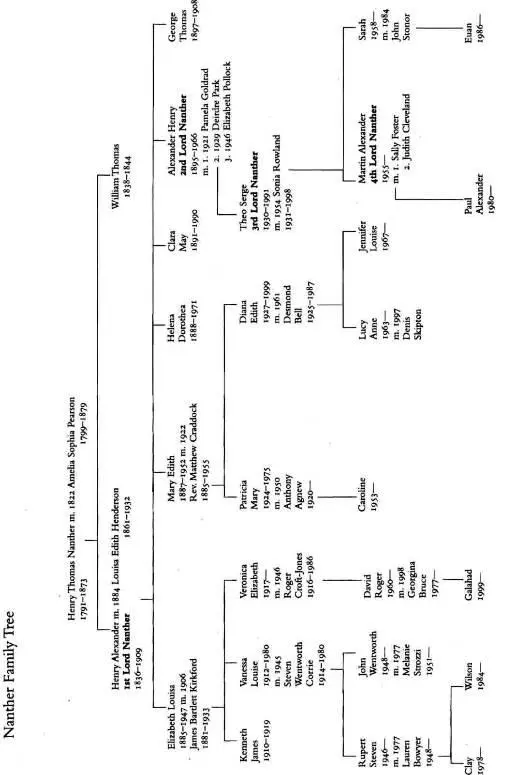
In her tenth novel writing as Barbara Vine, Ruth Rendell offers a novel of suspense based in 19th-century England and centering on deceit, murder, and various other family skeletons. Martin Nanther, the fourth Lord Nanther, has a comfortable life in present-day London as a Hereditary Peer in the House of Lords and as a historical biographer. He chooses as his most recent subject his own great-grandfather, the first Lord Nanther, physician to the royal family (Victoria and Albert) and an early noted researcher into the cause and transmission of hemophilia. The reader is taken through the family history as Martin painstakingly uncovers some not so savory bits of his own family's past. The story is dense with characters, and the author provides family trees of the two principal families, for which any reader will be eternally grateful. The story lacks the usual page-turner suspense of the Rendell/Vine novels but makes up for that with unusually detailed glimpses into Victorian life and the inner workings of the House of Parliament, which American readers will find particularly intriguing. Recommended for all public libraries. Caroline Mann, Univ. of Portland, OR
The Blood Doctor — читать онлайн бесплатно полную книгу (весь текст) целиком
Ниже представлен текст книги, разбитый по страницам. Система сохранения места последней прочитанной страницы, позволяет с удобством читать онлайн бесплатно книгу «The Blood Doctor», без необходимости каждый раз заново искать на чём Вы остановились. Поставьте закладку, и сможете в любой момент перейти на страницу, на которой закончили чтение.
Интервал:
Закладка:
‘So Clara said. He had it but it was diphtheria that he died of. That enabled Elizabeth to put it about that he only had diphtheria. But Clara knew, she’d seen his swollen joints and recognized them for what they were. She told Mary and Helena. Mary wasn’t married then but she’d picked up this old wives’ tale that a second sister couldn’t carry it if a first one did. That’s the way they thought it was in the royal family, though actually it wasn’t.’
‘Then who told Mary’s daughter Patricia?’
Lucy smiles and puts up her eyebrows. ‘I don’t know everything, Martin. I don’t know that. Maybe she got it from Clara too. Clara would only have been a bit over thirty when Patricia was born. She told me she’d had a couple of chances to marry but she hadn’t because of the haemophilia. I don’t think Helena even had the chances.’
I have to ask the awkward question. Lucy’s sitting quietly, looking rather depressed. Her face was made for smiling, for happiness, and the sadness that’s come over it ages her. She’s suddenly much older in looks than Jude, the corners of her mouth drooping and lines furrowing her forehead. Neither of us can eat any more. We’ve ordered coffee. While we wait for it I have to ask the question.
‘What made you think you might be a carrier?’
‘Everything I’ve told you I told my sister. Not immediately. When she was nearly eighteen. I was about to take the Law Society’s exams, she was at medical school. She asked me if I understood this might mean both of us were carriers or one of us was. Just because the gene had been hiding in there for a hundred years meant nothing.’
‘If it was on the X chromosome,’ I say, ‘that Mary didn’t pass on to her daughters it would have died out. But if it was on the one she did pass on…’
‘Exactly. Jenny and I hadn’t any idea of marriage then. Of course we hadn’t, this was nineteen eighty-four, we were only young. Jenny hasn’t now. She doesn’t want marriage and she doesn’t want kids and, ironically’ – she gives me a rueful smile – ‘she’s not a carrier and I am. We were both tested as soon as it was possible. I told my husband when we were thinking of marrying. That made no difference, he said, and we went ahead. I’d made up my mind to give up the idea of children but now – well, they’re just starting to do a sorting out of embryos and…’
‘Preimplantation Genetic Diagnosis,’ I say, interrupting her. ‘My wife’s having it. Today, as a matter of fact.’
‘But she can’t be a haemophilia carrier!’
‘I suppose she could be but she’s not. It’s another faulty gene she carries.’ To comfort her I say, ‘It’s worse in a way. She miscarries all the time and if our baby was born it would be – well, grossly disabled.’
‘I’m sorry,’ she says, and she really looks sorry.
‘I have a son by my first marriage.’ I don’t know why I bother to say this, why I always say it. Probably, it’s because of this ridiculous vanity I have that I don’t seem to be able to suppress, this absurd pride in the fact that I can produce a healthy child. I’m as bad as Georgie Croft-Jones, so pleased with herself because she’s almost uncontrollably fertile. I stop this nonsensical boasting and add, ‘I carry it too.’ Suddenly I long to know how Jude’s getting on, what’s happening, though nothing much can be, and no one will know anything more for another fortnight.
The coffee comes and Lucy tells me she and her husband have made one attempt to conceive a haemophilia-free child but it’s failed and they’re going to try again in a week’s time. She wants to know if the gene’s shown itself anywhere else in the family and I tell her about John Corrie. She seems strangely comforted by the fact that he’s chosen not to have children and she, as she repeats, has refused to have anything but a ‘designer baby’.
‘There’s still Caroline Agnew,’ I say, ‘Patricia’s daughter. She’s your first cousin. What’s happened to her?’
Lucy says she’s never met her. Or she may have met her when she was a baby but Caroline is ten years older and would be forty-seven by now. Jennifer had a letter from her when their mother Diana died – why Jennifer and not she, she doesn’t know. She answered the letter but heard no more.
I ask if there was any information about her in the letter. Lucy says rather dryly that if I mean, did she say whether or not she was a carrier of haemophilia, no she didn’t. It was all about her having pleasant memories of Diana and about the last time she saw her being in Clara’s flat.
‘Did your mother ever mention this?’
‘I don’t remember it. But it may have been years ago while I was away at university. We’re none of us great letter writers.’
For the past ten minutes I’ve been thinking of phoning the clinic as soon as I can get to a phone box but after I’ve said goodbye to Lucy and we’ve made one of those empty promises to keep in touch, I get in a taxi and go there instead.
There’s nothing to be done now but wait. The Long Wait, they call it at the hospital, the fourteen days between replacing the embryos and taking a pregnancy test. In our case they extend between a date in March and a date in April. There are no measures Jude can take to improve the chances of the three tiny pinhead size embryos, no vitamins to help, no supplements, though she’s supposed to avoid strenuous exercise and alcohol. She’s so desperate for this to work I think she’d happily avoid food if it would assist success. I’m desperate for it to work in order to make her happy – or keep her happy.
She’s not exactly happy now, though, for she hovers and trembles between laughter and tears, desperate sometimes for distractions from her all-absorbing ambition, then guilty because she’s superstitiously afraid that if she stops thinking about it for a single moment her indifferent womb may go back on her and reject these foetuses through lack of her wanting them enough . It’s all madness.
*
There are just eleven days to go now and she’s fine. I think about hope again, that treacherous virtue, how it fills her body and soul, revitalizes her, makes her look ten years younger, puts a spring in her step and a light in her eyes. She’s even apologizing to me for being so ‘distant’, so ‘preoccupied’. She’s not been much of a companion, not much of a wife, these past weeks, she says, but she’ll make it up to me when she knows there’s a healthy growing baby in there, and she pats her flat stomach. I’m not to worry about selling the house, we won’t have to sell the house, she’s take a second job if she has to, be some popular millionaire author’s private copy editor or, she adds vaguely, read manuscripts for someone. I reassure her and tell her I’m not worried, I know everything’s going to be all right, but that’s not the way I’m thinking. I’m thinking she doesn’t know what it’s be like holding down one job with a baby at home, let alone taking on another. If by some wild stretch of the imagination I can believe it possible, I know I’ll be at home with the child, able to do just enough work of some kind or other to pay a nanny. But, naturally, I don’t say any of this. The days when we told each other our inmost thoughts are gone, when we were honest with each other, or as honest as people ever are. I’m even reluctant to tell her of the latest Henry developments. How can I tell a woman – my wife – who carries a faulty gene, about my discoveries of women who carry faulty genes? She knows I’ve met my cousin Lucy but she didn’t want to know more, she didn’t ask and I didn’t tell her.
I haven’t told her about Tenna and my belief that Barbla Maibach came from there. What’s the point? Whether the PGD works or not I obviously can’t go there. I understand she wants me with her. And I’ll stay as long as that’s what she wants. Damn Tenna. Bugger Tenna. I do tell David but he’s not very interested. These genealogists don’t seem to care much about personalities, birthplaces, historical oddities, only about names and dates.
Читать дальшеИнтервал:
Закладка:
Похожие книги на «The Blood Doctor»
Представляем Вашему вниманию похожие книги на «The Blood Doctor» списком для выбора. Мы отобрали схожую по названию и смыслу литературу в надежде предоставить читателям больше вариантов отыскать новые, интересные, ещё непрочитанные произведения.





Обсуждение, отзывы о книге «The Blood Doctor» и просто собственные мнения читателей. Оставьте ваши комментарии, напишите, что Вы думаете о произведении, его смысле или главных героях. Укажите что конкретно понравилось, а что нет, и почему Вы так считаете.