Barbara Vine - The Blood Doctor
Здесь есть возможность читать онлайн «Barbara Vine - The Blood Doctor» весь текст электронной книги совершенно бесплатно (целиком полную версию без сокращений). В некоторых случаях можно слушать аудио, скачать через торрент в формате fb2 и присутствует краткое содержание. Год выпуска: 2003, Издательство: Vintage, Жанр: Современная проза, на английском языке. Описание произведения, (предисловие) а так же отзывы посетителей доступны на портале библиотеки ЛибКат.
- Название:The Blood Doctor
- Автор:
- Издательство:Vintage
- Жанр:
- Год:2003
- ISBN:нет данных
- Рейтинг книги:4 / 5. Голосов: 1
-
Избранное:Добавить в избранное
- Отзывы:
-
Ваша оценка:
The Blood Doctor: краткое содержание, описание и аннотация
Предлагаем к чтению аннотацию, описание, краткое содержание или предисловие (зависит от того, что написал сам автор книги «The Blood Doctor»). Если вы не нашли необходимую информацию о книге — напишите в комментариях, мы постараемся отыскать её.
Barbara Vine (a.k.a. Ruth Rendell) deftly weaves this story of an eminent Victorian with a modern yarn about the embattled biographer, who is watching the House of Lords prepare to annul membership for hereditary peers and thus strip him of his position. Themes of fate and family snake throughout this teasing psychological suspense, a typically chilling tale from a master of the genre.
From Publishers Weekly
This rich, labyrinthine book by Vine (aka Ruth Rendell) concerns a "mystery in history," like her 1998 novel, The Chimney Sweeper's Boy. Martin Nanther-biographer and member of the House of Lords-discovers some blighted roots on his family tree while researching the life of his great-great-grandfather, Henry, an expert on hemophilia and physician to Queen Victoria. Martin contacts long-lost relatives who help him uncover some puzzling events in Henry's life. Was Henry a dour workaholic or something much more sinister? Vine can make century-old tragedy come alive. Still, the decades lapsed between Martin's and Henry's circles create added emotional distance, and, because they are all at least 50 years dead, we never meet Henry or his cohorts except through diaries and letters. Martin's own life-his wife's infertility and troubles with a son from his first marriage-is interesting yet sometimes intrudes on the more intriguing Victorian saga. Vine uses her own experience as a peer to give readers an insider's look into the House of Lords, at the dukes snoozing in the library between votes and eating strawberries on the terrace fronting the Thames. Some minor characters are especially vivid, like Martin's elderly cousin Veronica, who belts back gin while stonewalling about the family skeletons all but dancing through her living room. Readers may guess Henry's game before Vine is ready to reveal it, but this doesn't detract from this novel peopled by characters at once repellant and compelling.
From Library Journal
In her tenth novel writing as Barbara Vine, Ruth Rendell offers a novel of suspense based in 19th-century England and centering on deceit, murder, and various other family skeletons. Martin Nanther, the fourth Lord Nanther, has a comfortable life in present-day London as a Hereditary Peer in the House of Lords and as a historical biographer. He chooses as his most recent subject his own great-grandfather, the first Lord Nanther, physician to the royal family (Victoria and Albert) and an early noted researcher into the cause and transmission of hemophilia. The reader is taken through the family history as Martin painstakingly uncovers some not so savory bits of his own family's past. The story is dense with characters, and the author provides family trees of the two principal families, for which any reader will be eternally grateful. The story lacks the usual page-turner suspense of the Rendell/Vine novels but makes up for that with unusually detailed glimpses into Victorian life and the inner workings of the House of Parliament, which American readers will find particularly intriguing. Recommended for all public libraries. Caroline Mann, Univ. of Portland, OR
The Blood Doctor — читать онлайн бесплатно полную книгу (весь текст) целиком
Ниже представлен текст книги, разбитый по страницам. Система сохранения места последней прочитанной страницы, позволяет с удобством читать онлайн бесплатно книгу «The Blood Doctor», без необходимости каждый раз заново искать на чём Вы остановились. Поставьте закладку, и сможете в любой момент перейти на страницу, на которой закончили чтение.
Интервал:
Закладка:
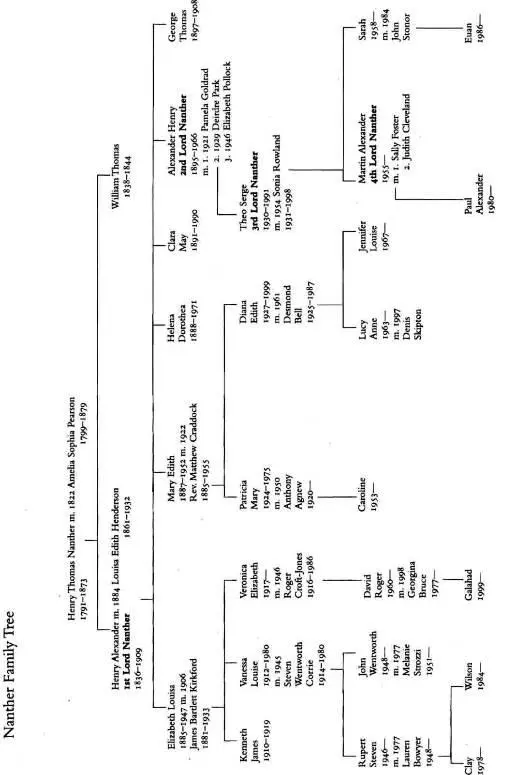
Isn’t the fact that they knew of the family inheritance the true reason behind Helena and Clara’s decision not to marry? I haven’t done any research but I keep looking at my copy ofDavid’s amended tree, pondering and wondering. In the Quendon-Henderson line it doesn’t go back any further than Barbla Maibach and the man she married, Thomas Dornford. David, temporarily indifferent to genealogy, couldn’t find their forebears or he hasn’t yet tried. Barbla married Thomas and they had a daughter called Luise. They had three sons too. Next to one of them David has put the initials ‘d.y.’ for ‘died young’ and beside the others only question marks. He hasn’t christian names for any of them. Luise married William Quendon and had two daughters and a son, Louisa, William and Maria. Louisa was my great-grandmother Edith’s mother and Henry’s mother-in-law. What happened to Maria isn’t clear. William died aged seven. Of haemophilia is what I guessed when I was trying to prove Henry a murderer but it’s only a guess. Louisa married Samuel Henderson and became the mother of Lionel, Eleanor and Edith.
Did William Quendon meet his German (or German-christian- named ) bride Luise in this country or in Europe? When did he go to Germany or Austria, and why? People didn’t pop across to Europe a dozen times a year in 1830 the way they do now, unless they were rich or grand or both, in which case they might have done the Grand Tour. Perhaps he was and perhaps he did. When I do get back into my research I shall have to look into this. I roll up the tree. It’s no more use to me now.
I miss the House of Lords. Not in the recesses. Over Christmas and the New Year as well as in the slack times I barely noticed my banishment but now, at the end of February, when the House is getting busy again and the politics pages of newspapers are full of altercations among peers, bons mots from Earl Russell and quips from Lord McKay of Ardbrecknish, I feel great spasms of nostalgia and a real sense of the gates of paradise shut in my face. Not that it seemed much like paradise when I was in there, staying late at night to do a self-imposed duty, supporting a party I didn’t belong to and whose whip I hadn’t taken. I’ve given up taking Hansard, but I can’t resist reading the papers.
I miss walking in through the Peers’ Entrance, hanging my coat on the Nanther peg, mounting the great staircase, dropping into the Printed Paper Office to pick up the order paper and the amendments to a bill. But most of all I miss entering the Chamber, making a court bow to the mysterious invisible Cloth of Estate and taking my place on the cross-benches. Well, maybe not most of all. I greatly miss my expenses, which, because I haven’t been in there since the beginning of November, would have amounted to not far short of five thousand pounds.
PGD is going to cost us £2,500 a go. And very likely there will be at least two goes.
Both Lachlan and Stanley Farrow have invited me into the House for dinner. I’ve said a regretful no. I’ve done it once and I don’t feel like doing it again, facing the embarrassment of hanging about and waiting for them to find me in some area of the Palace open to the public. I can’t face walking into the dining room and having to pause and chat with a dozen old acquaintances, not to mention sitting tight, and pretending to read the menu when the division bell rings and they go off to vote. So do I wish I was back there? Not entirely. Sometimes not at all. But perhaps what I do wish is that I’d never been in there in the first place, for I’m no adherent to the theory that it’s better to have loved and lost than never to have loved at all.
The House was a club to me as well as a legislative assembly. I do still have the right to book a table in the guest dining room once a month , but I suppose I’m too proud to avail myself of it and invite David in for a drink or a meal when he phones and says he wants to talk to me. Jude won’t have the Croft-Joneses to dinner here at the moment and I don’t blame her. She says it’s not that she minds seeing the Holy Grail or hearing about the coming child, but that she’s embarrassed by the way Georgie goes on, the pride she takes in conceiving ‘without trying’ and in that weedy owlish David’s potency. So we must meet outside, in a pub or something, and he selects the Prince Alfred in Formosa Street.
He’s there before me, drinking red wine, not being a beer man, and he launches straight into a request that Jude and I consider selling our house to them. Jude, apparently, in spite of her embarrassment at Georgie’s boasting, has told her about the PGD. This doesn’t exactly delight me as I don’t much want the Croft-Joneses thinking we’re on our uppers. I tell David I’m not thinking of selling. If Jude has a couple of children – I say it airily, great actor that I am – I’ll need a big house. This takes him aback. His wife or mine must have given him the idea I’d jump at the chance. I take advantage of his silence to apologize for springing haemophilia on him and I explain how it’s impossible for him and Georgie to have affected children. Of course it’s not impossible, Georgie might herself be a carrier or a spontaneous mutation might take place in her cells, but I say nothing of this, only that he can’t pass the family gene on.
‘I’ve talked to my GP,’ he says. ‘He said what you said, only with expertise.’
Thanks. I ask him if this has put his mind at rest and he says it has, especially with the new baby on the way. Has he spoken to his mother again? Apparently, she phoned him, indignantly wanting to know where I’d got the idea from that her ancestors were German. She won’t have it Barbla was anything but English, though she doesn’t know, she’s trusting to her instincts. She hates Germans even more than she hates Russians and Japanese, and come to that, the French, she has done all her life. He says that she’s told him William Quendon met his wife Luise in this country. Her father, Thomas Dornford, was a jeweller in Hatton Garden. Her mother Barbla had died in childbirth, giving birth to her second daughter, but David hasn’t put her death date into his tree because he doesn’t know it, and Veronica didn’t know it. Nor did she know precisely where Thomas Dornford met Barbla Maibach.
Yesterday was the day. I managed it with some difficulty and, going into no details, it didn’t take long. I suppose I’d worked myself up into such a state of horror at the prospect that the reality couldn’t have possibly been so bad. The ancient hospital sample was the first pornography I’ve looked at since I was eighteen and I think it was the same magazine. Jude’s eggs were taken and now we wait to know what can be grown out of the mix. I’ve decided I don’t want to hear how many of the embryos whose cells they test have the abnormality – remember my sperm may carry it too – and Jude doesn’t want to know either. All we want, all she wants, is to know they’ve found some healthy ones ready for implantation.
What would Henry think if he could know? Would he be fascinated, approving, delighted at this culminating breakthrough in a series of steps to put an end to inherited disorders? Or resentful that it didn’t happen a hundred years before? Would his pleasure be overwhelmed by his knowledge of the suffering men and women used to endure from their inability to limit their families or prevent abnormality? Would he think of children like his son George who, with these techniques, would in a few years from now never again be born?
Strangely enough, I feel a lot better now the deed’s done or the die cast or whatever. Presumably, since there’s nothing in Jude’s reproductive process that makes her miscarry, only the fact that she carries damaged foetuses, once she’s pregnant with a sound one she’ll carry it to term. Or am I being naïve and ignorant? Does the implantation itself conduce to the foetus aborting? I don’t know and I don’t want to know. If I tell myself often enough that I want this child, I’m going to want it in the very nature of things. I reason it’s a bit like the Alexander Technique. Repeat commands to the body often enough – ‘let the neck be free’, ‘the head to go forwards and upwards’ – and it will automatically respond. The same with the mind, surely. I want this baby, I want this baby, I even want three babies…
Читать дальшеИнтервал:
Закладка:
Похожие книги на «The Blood Doctor»
Представляем Вашему вниманию похожие книги на «The Blood Doctor» списком для выбора. Мы отобрали схожую по названию и смыслу литературу в надежде предоставить читателям больше вариантов отыскать новые, интересные, ещё непрочитанные произведения.





Обсуждение, отзывы о книге «The Blood Doctor» и просто собственные мнения читателей. Оставьте ваши комментарии, напишите, что Вы думаете о произведении, его смысле или главных героях. Укажите что конкретно понравилось, а что нет, и почему Вы так считаете.