Barbara Vine - The Blood Doctor
Здесь есть возможность читать онлайн «Barbara Vine - The Blood Doctor» весь текст электронной книги совершенно бесплатно (целиком полную версию без сокращений). В некоторых случаях можно слушать аудио, скачать через торрент в формате fb2 и присутствует краткое содержание. Год выпуска: 2003, Издательство: Vintage, Жанр: Современная проза, на английском языке. Описание произведения, (предисловие) а так же отзывы посетителей доступны на портале библиотеки ЛибКат.
- Название:The Blood Doctor
- Автор:
- Издательство:Vintage
- Жанр:
- Год:2003
- ISBN:нет данных
- Рейтинг книги:4 / 5. Голосов: 1
-
Избранное:Добавить в избранное
- Отзывы:
-
Ваша оценка:
The Blood Doctor: краткое содержание, описание и аннотация
Предлагаем к чтению аннотацию, описание, краткое содержание или предисловие (зависит от того, что написал сам автор книги «The Blood Doctor»). Если вы не нашли необходимую информацию о книге — напишите в комментариях, мы постараемся отыскать её.
Barbara Vine (a.k.a. Ruth Rendell) deftly weaves this story of an eminent Victorian with a modern yarn about the embattled biographer, who is watching the House of Lords prepare to annul membership for hereditary peers and thus strip him of his position. Themes of fate and family snake throughout this teasing psychological suspense, a typically chilling tale from a master of the genre.
From Publishers Weekly
This rich, labyrinthine book by Vine (aka Ruth Rendell) concerns a "mystery in history," like her 1998 novel, The Chimney Sweeper's Boy. Martin Nanther-biographer and member of the House of Lords-discovers some blighted roots on his family tree while researching the life of his great-great-grandfather, Henry, an expert on hemophilia and physician to Queen Victoria. Martin contacts long-lost relatives who help him uncover some puzzling events in Henry's life. Was Henry a dour workaholic or something much more sinister? Vine can make century-old tragedy come alive. Still, the decades lapsed between Martin's and Henry's circles create added emotional distance, and, because they are all at least 50 years dead, we never meet Henry or his cohorts except through diaries and letters. Martin's own life-his wife's infertility and troubles with a son from his first marriage-is interesting yet sometimes intrudes on the more intriguing Victorian saga. Vine uses her own experience as a peer to give readers an insider's look into the House of Lords, at the dukes snoozing in the library between votes and eating strawberries on the terrace fronting the Thames. Some minor characters are especially vivid, like Martin's elderly cousin Veronica, who belts back gin while stonewalling about the family skeletons all but dancing through her living room. Readers may guess Henry's game before Vine is ready to reveal it, but this doesn't detract from this novel peopled by characters at once repellant and compelling.
From Library Journal
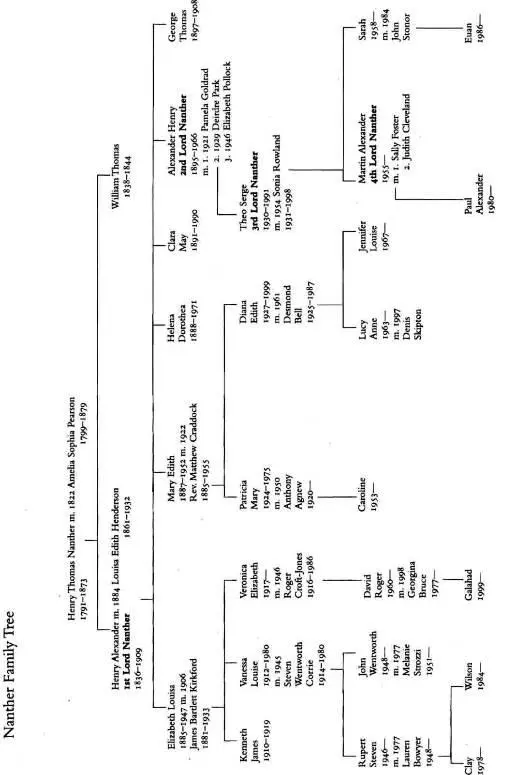
In her tenth novel writing as Barbara Vine, Ruth Rendell offers a novel of suspense based in 19th-century England and centering on deceit, murder, and various other family skeletons. Martin Nanther, the fourth Lord Nanther, has a comfortable life in present-day London as a Hereditary Peer in the House of Lords and as a historical biographer. He chooses as his most recent subject his own great-grandfather, the first Lord Nanther, physician to the royal family (Victoria and Albert) and an early noted researcher into the cause and transmission of hemophilia. The reader is taken through the family history as Martin painstakingly uncovers some not so savory bits of his own family's past. The story is dense with characters, and the author provides family trees of the two principal families, for which any reader will be eternally grateful. The story lacks the usual page-turner suspense of the Rendell/Vine novels but makes up for that with unusually detailed glimpses into Victorian life and the inner workings of the House of Parliament, which American readers will find particularly intriguing. Recommended for all public libraries. Caroline Mann, Univ. of Portland, OR
The Blood Doctor — читать онлайн бесплатно полную книгу (весь текст) целиком
Ниже представлен текст книги, разбитый по страницам. Система сохранения места последней прочитанной страницы, позволяет с удобством читать онлайн бесплатно книгу «The Blood Doctor», без необходимости каждый раз заново искать на чём Вы остановились. Поставьте закладку, и сможете в любой момент перейти на страницу, на которой закончили чтение.
Интервал:
Закладка:
But I’m feeling better and able to get back to Henry research properly. To this end I’ve got out my Bulloch and Fildes and I’m checking that it’s possible for haemophilia to lie dormant for several generations in cases when only female children are born. And it seems that it is, though in most cases the gene doesn’t really lie dormant at all. Male children are born, they have haemophilia and they die young from it. In my own family we find William Quendon (probably) succumbing to it at the age of seven and later on Kenneth Kirkford doing the same, at the age of nine. While I’m going through the various tables, David phones. I ask after Georgie. She, as always, is fine, and the Holy Grail is fine and what do I think of Yseult as a name if the expected one is a girl? Not much, I say. No one will be able to pronounce it. I didn’t know how to pronounce it myself until I heard him do it and then spell it out.
After that I go back to Bulloch and Fildes. Jude is in bed already. She’s sleeping away the time, she says, until they implant in her the healthy embryos. I scan the tables, all the statistics from Tenna and the neighbouring villages the haemophilia investigators compiled. And it’s then it happens. The name jumps out at me from all the other names: Maibach. And not just Maibach but Barbla Maibach. It can’t be my one, my great-great-great-great-grandmother, the date’s too early even for her, being back in the early eighteenth century, but it’s a collateral ancestress of hers, her father’s sister or aunt maybe. I must have seen it a dozen times before, I’ve been through these lists so often, but of course I’d no reason to notice it. There are a lot of other Barblas. It seems to be a local name, or a local diminutive of Barbara.
At least one of my questions is answered. Edith Nanther’s great-grandmother wasn’t German, she was Swiss. And she came from an area of Switzerland well-known for its concentration of haemophiliacs and haemophilia carriers. How on earth did she get to England and marry Thomas Dornford? People didn’t leave the Safiental. That was the point, that was why in-breeding perpetuated haemophilia, carriers marrying ‘bleeders’ and producing whole families of afflicted offspring. Bulloch and Fildes says:
The Village of Tenna as described by Hoessli lies on the south-eastern slopes of Piz Riein in the Canton [sic] Graubünden and consisted of several widely separated groups of houses scattered over the meadow slopes. Communication between these houses and the outside world must be established over broken and in many places dangerous tracts. At the time Hoessli wrote, there were no driving roads, the journey having to be made on foot, and a traveller would require four to six hours to reach Versam…
It tells me to consult the accompanying map, so I do, but it’s small, basic and not much help. I find our heavy world atlas and turn to the Switzerland page. Hoessli, a doctor practising in Thusis, was writing about the area in 1877, probably getting on for a hundred years after Thomas Dornford’s visit or Barbla Maibach’s escape, and then conditions would presumably have been worse. Why does the passage ring a bell with me? Why does the name Versam ring a bell? I don’t know, but perhaps it’s only because some friend went skiing there and sent us a postcard. The canton is Grisons and the nearest big town is Chur, and it doesn’t look very big on the map.
I must go there. That’s my immediate reaction. Look at the records, the archives. I must go there when the snows have gone. Say in late April or May. Then of course I know I can’t, it’s not possible, for Jude will either be in the early stages of pregnancy with these current implants or preparing for the next lot.
My difficulty about going to Philadelphia was solved by John Corrie coming here to me. I can’t expect the entire population of a Swiss village to pop over, bringing their archives with them. I can’t go and they can’t come, but I must go.
29
I don’t recognize Lucy when she comes into the restaurant. Of course I’ve never seen her before, though I’ve seen a photograph of her as a child, and somehow I expect the Nanther face and colouring to have taken over as she grew up. It hasn’t. She’s a plumpish little woman, blonde and very pretty, wearing a pale lilac suit with a short skirt that shows off her excellent legs.
‘Lucy,’ she says, and holds out her hand. ‘How do you do?’
The other hand has a wedding ring on it and a big diamond engagement ring. Her voice isn’t like her, but rich, low and dark. When we spoke on the phone that first time I wasn’t sure for a moment if this was a woman or a man. I tell her it’s very nice of her to agree to meet me like this and offer her a drink. She smiles, asks for white wine and studies the menu with the enthusiasm of someone fond of her food.
‘Did you know our great-great-grandfather was a solicitor? He was called Samuel Henderson and it was his daughter married Henry Nanther.’
She nods. ‘I know quite a bit about the family.’
‘From your mother?’
‘My mother never talked about her ancestors. What I know I got from Great-aunt Clara.’
For some reason I’m very surprised. Clara has had her own importance for me, deriving from that strange letter from her to Alexander which Sarah sent me, the one in which she calls her father ‘Henry Nanther’ and mentions the woman he kept in Primrose Hill. The fact that she was great-aunt to quite a few other people never seemed to have impinged on my consciousness. ‘You knew her?’
‘Not until a few years before she died.’
That explains it. When I found Lucy in David’s tree I would have remembered if Clara had ever mentioned her. But I never saw Clara after Helena died and she became too infirm to continue living alone in that big house. She had gone off – of her own free will, my father would never have coerced her or even tried to persuade her – to live in sheltered housing, her small flat with its alarm that summoned the warden, its daily help and its aids to getting about the rooms and taking baths. I feel a twinge of conscience because I’d never asked after her that I can remember, and though she’d been kind to me – I recall the teas she gave us on those occasional Sunday afternoons – I’d never expressed a desire or a duty to visit her. But I was away at university, living as students live, and I didn’t think of these things. Yet Lucy had gone to see her, must have got to know her quite well. Why?
Wine is poured and our order is taken. ‘My mother used to visit her a bit,’ Lucy says. ‘You do know who my mother was, don’t you? Diana Bell, born Craddock, the second daughter of Henry and Edith’s second daughter. Jennifer and I were at boarding school but we did see Clara. I don’t want to give the impression we often went, I don’t suppose we did above, say, four or five times. Mum took us once in the school holidays. Then Jenny and I went a couple of times without her. Clara had been in that flat of hers for years by then, she was well into her nineties, but she could still more or less look after herself and she was absolutely compos mentis. Very bright, actually. Very clever.’
‘Clara?’
She gives me a shrewd look. It’s one of those looks feminists give men they think are making groundless assumptions about women. I’m not really, I’m not that sort of man, but I recognize the look. It sits oddly on her Marilyn Monroe face but accords with her voice when she says, ‘Why not Clara? If she didn’t become anything, if she didn’t have a profession or make much of her life, that wasn’t her fault. She didn’t get the chance. She wanted to be a doctor. I don’t suppose you knew that.’
‘I did, as a matter of fact. It’s in one of your grandmother’s letters to her sister Elizabeth Kirkford.’
Читать дальшеИнтервал:
Закладка:
Похожие книги на «The Blood Doctor»
Представляем Вашему вниманию похожие книги на «The Blood Doctor» списком для выбора. Мы отобрали схожую по названию и смыслу литературу в надежде предоставить читателям больше вариантов отыскать новые, интересные, ещё непрочитанные произведения.





Обсуждение, отзывы о книге «The Blood Doctor» и просто собственные мнения читателей. Оставьте ваши комментарии, напишите, что Вы думаете о произведении, его смысле или главных героях. Укажите что конкретно понравилось, а что нет, и почему Вы так считаете.