Barbara Vine - The Blood Doctor
Здесь есть возможность читать онлайн «Barbara Vine - The Blood Doctor» весь текст электронной книги совершенно бесплатно (целиком полную версию без сокращений). В некоторых случаях можно слушать аудио, скачать через торрент в формате fb2 и присутствует краткое содержание. Год выпуска: 2003, Издательство: Vintage, Жанр: Современная проза, на английском языке. Описание произведения, (предисловие) а так же отзывы посетителей доступны на портале библиотеки ЛибКат.
- Название:The Blood Doctor
- Автор:
- Издательство:Vintage
- Жанр:
- Год:2003
- ISBN:нет данных
- Рейтинг книги:4 / 5. Голосов: 1
-
Избранное:Добавить в избранное
- Отзывы:
-
Ваша оценка:
The Blood Doctor: краткое содержание, описание и аннотация
Предлагаем к чтению аннотацию, описание, краткое содержание или предисловие (зависит от того, что написал сам автор книги «The Blood Doctor»). Если вы не нашли необходимую информацию о книге — напишите в комментариях, мы постараемся отыскать её.
Barbara Vine (a.k.a. Ruth Rendell) deftly weaves this story of an eminent Victorian with a modern yarn about the embattled biographer, who is watching the House of Lords prepare to annul membership for hereditary peers and thus strip him of his position. Themes of fate and family snake throughout this teasing psychological suspense, a typically chilling tale from a master of the genre.
From Publishers Weekly
This rich, labyrinthine book by Vine (aka Ruth Rendell) concerns a "mystery in history," like her 1998 novel, The Chimney Sweeper's Boy. Martin Nanther-biographer and member of the House of Lords-discovers some blighted roots on his family tree while researching the life of his great-great-grandfather, Henry, an expert on hemophilia and physician to Queen Victoria. Martin contacts long-lost relatives who help him uncover some puzzling events in Henry's life. Was Henry a dour workaholic or something much more sinister? Vine can make century-old tragedy come alive. Still, the decades lapsed between Martin's and Henry's circles create added emotional distance, and, because they are all at least 50 years dead, we never meet Henry or his cohorts except through diaries and letters. Martin's own life-his wife's infertility and troubles with a son from his first marriage-is interesting yet sometimes intrudes on the more intriguing Victorian saga. Vine uses her own experience as a peer to give readers an insider's look into the House of Lords, at the dukes snoozing in the library between votes and eating strawberries on the terrace fronting the Thames. Some minor characters are especially vivid, like Martin's elderly cousin Veronica, who belts back gin while stonewalling about the family skeletons all but dancing through her living room. Readers may guess Henry's game before Vine is ready to reveal it, but this doesn't detract from this novel peopled by characters at once repellant and compelling.
From Library Journal
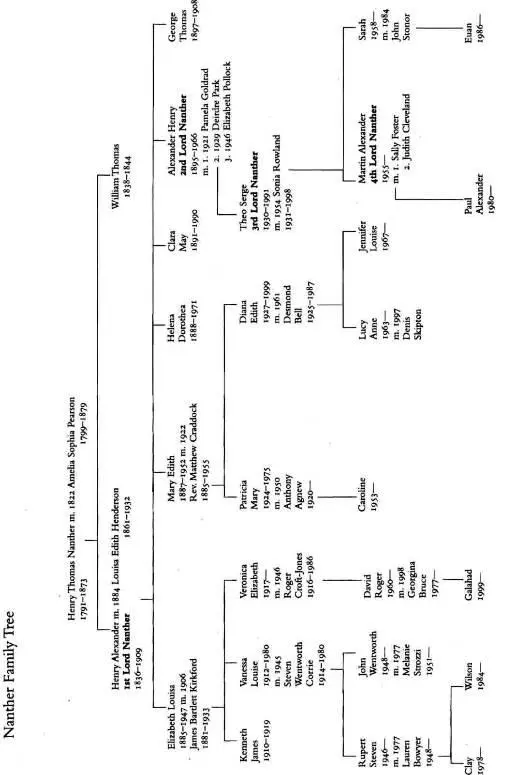
In her tenth novel writing as Barbara Vine, Ruth Rendell offers a novel of suspense based in 19th-century England and centering on deceit, murder, and various other family skeletons. Martin Nanther, the fourth Lord Nanther, has a comfortable life in present-day London as a Hereditary Peer in the House of Lords and as a historical biographer. He chooses as his most recent subject his own great-grandfather, the first Lord Nanther, physician to the royal family (Victoria and Albert) and an early noted researcher into the cause and transmission of hemophilia. The reader is taken through the family history as Martin painstakingly uncovers some not so savory bits of his own family's past. The story is dense with characters, and the author provides family trees of the two principal families, for which any reader will be eternally grateful. The story lacks the usual page-turner suspense of the Rendell/Vine novels but makes up for that with unusually detailed glimpses into Victorian life and the inner workings of the House of Parliament, which American readers will find particularly intriguing. Recommended for all public libraries. Caroline Mann, Univ. of Portland, OR
The Blood Doctor — читать онлайн бесплатно полную книгу (весь текст) целиком
Ниже представлен текст книги, разбитый по страницам. Система сохранения места последней прочитанной страницы, позволяет с удобством читать онлайн бесплатно книгу «The Blood Doctor», без необходимости каждый раз заново искать на чём Вы остановились. Поставьте закладку, и сможете в любой момент перейти на страницу, на которой закончили чтение.
Интервал:
Закладка:
Jude and I don’t make love. She’s afraid to disturb things. No one’s told her to abstain but she’s heard stories. And wishing for more with her than holding her in my arms, I’m reminded of something a woman once said to me about love. She was my girlfriend after my divorce and before I met Jude. One night she said to me that there ought to be something more for human beings who were in love, something else , not talk and being together which was friendship, nor lovemaking which was lust, but some quite other thing only discoverable when in that transcendent state. She seemed almost resentful that it didn’t exist or she couldn’t find it, she was angry – with what? God? Life? I didn’t understand at all. What we had was quite good enough for me. But I wasn’t in love. Not then. I’ve remembered what she said and I understand now, I want what she wanted and, like her, I can’t find it.
30
It’s fizzled out. Neither with a bang nor even a whimper. Jude had three embryos in there two weeks ago and now there’s nothing. They’ve vanished in blood and not even much of that. The test simply showed negative, no blue line. Is she as unhappy, as shattered, as she’s been on previous occasions? I don’t know. I can’t tell. For a whole day she was quiet and remote, a shadow of a woman, not staring or weeping or angry, but silently reading a manuscript she’d brought home with her. Unusually for her, she didn’t comment on it, say a word about its worth or otherwise, and when she reached the final page, she closed it and laid it aside.
Of course she’ll try again. When she broke her silence she said so. It was the first thing she said. I expected it, I’d have been astonished if she’d said anything else. Hope had come in, of course, hope had reared its ugly head and whispered to me that maybe she’s had enough, she’s resigned herself to being childless, she’s realized there can be more, or other things, to life than having kids. She’s had enough of lying on tables with her legs strung up, being poked at and probed. But the realist in me that counters hope told me to be my age, have a bit of sense. And when she said it I nodded and smiled and covered her hand with mine. I kissed her. I said I knew she’d succeed one day. I swear I didn’t think about having to masturbate over that magazine again but I did think about the money. Another two and a half K up the spout, was what I thought. And then she said something wonderful, but not till next day, it was so sweet and so bloody kind I could have wept.
‘Shall we go to Switzerland first?’
I just stare at her. Then I ask her how she knew I wanted to go.
‘David told me. Oh, on the phone, before I wasn’t pregnant any more. He said something about he supposed you’d be off to Switzerland in May when the snows were gone and would I ask you if you’d like him to go with you.’
‘God forbid.’
‘I’m sorry, I forgot to give you the message.’
‘You’ve had other things on your mind,’ I say.
So we’re going, Jude and I. When we come back we’ll do the egg and sperm thing again. The date we fix on is 5 May, a Friday, a flight to Zurich and from there the train to Chur. Jude says the alpine meadows will be in flower. She wants to see the precious stones collection in Chur Town Council Chamber. This is the first time for months I’ve seen her enthusiastic about anything, and although I know a lot of it is assumed for my sake, this makes me even more grateful. When Paul arrives unexpectedly in the evening we’re sitting surrounded by maps – I’ve been down to Daunt’s to buy them – and I’m consulting my Baedeker’s Switzerland , descendant of the one Henry took with him on his alpine travels in the 1870s.
There’s no reason, I suppose, why she shouldn’t tell him. I’d just prefer her not to. He’s such a glutton for disappointment, for failure, for striving that comes to nothing.
‘How do they do it?’ he says, meaning the mechanics of PGD.
I’ve started to ask why we have to go into that, a fatal remark that makes his lips twitch, but Jude answers him and, for once, he looks embarrassed. It’s not the extraction of her eggs that does it but the idea of his father having to produce sperm. Like all his generation, he assumes we get treatment on the NHS, or if he doesn’t he says nothing about the cost. Unlike them or many of them, he’s uninterested in money, works for it if he needs it and never asks for a loan.
‘Will you try again?’
‘When we come back from Switzerland,’ I tell him and he asks why we’re going.
No one in his world ever goes to Switzerland. They go to Central Africa or Thailand or Cuba. I can’t explain to him because I don’t exactly know myself. To see the village my great-grandmother’s great-grandmother came from seems an inadequate explanation, and anyway I don’t know if it’s the right one. Her genes have undergone a lot of dilution in nearly two hundred years. I suppose the truth is I’m expecting some world-shaking or biography-shaking revelation. I tell him vaguely it’s for Henry research and he accepts this without demur. He’s come for a drink before he meets a couple of friends at some club on Tottenham Court Road, though I’d have thought that whatever this club doesn’t offer, unlimited drink will be available. While he’s drinking a gin and tonic and Jude and I have wine, he says in that threatening manner he sometimes puts on that he may come to stay for his last few days before going back to Bristol after the Easter break. Jude and I say enthusiastically that we’d love that and he smiles in an enigmatic way.
Does any father have a happy, easy relationship with a son of his age?
Henry made no more diary entries after George died. If he wrote any letters none has survived. He seems to have seldom left the house. His second daughter Mary, already busy with her good works, teaching Sunday School, sewing for the church bazaar, wrote in July to her married sister Elizabeth Kirkford:
George’s death has dreadfully affected poor Father. Mother is always so brave and strong, she has rallied, comes to matins regularly with me and has paid some calls and visits and is beginning to take up her photography again, but Father is as greatly felled by the blow as on the day it happened. We all know he has not always been the easiest of men. When I was younger I remember how I envied girls who had more affectionate, even indulgent, parents, and I know you did too, Lizzie, but if you were here now you could not but be moved by his wretchedness, his dreadful grief. Clara asked me the other day if I thought he would have been as cast down if it was one of us who had passed on. You know how awkward and tactless she is. Naturally, I told her she should not ask such a question, but I did ask it of myself privately. Father was seventy-two in February but he looks ten years more. Mother seems unperturbed. She looks after him as she always has but without, as far as I can tell, giving him any special attention…
Henry died in the following January. Only one more letter about his condition prior to his death remains but somehow I don’t think he rallied or returned to his former pursuits. He was a few weeks short of his seventy-third birthday. Most people would choose to die in their beds if they had a choice, even if this means a husband or wife waking in the morning to find a dead body beside them. Henry, it seems, had stopped going to bed. Mary is writing in October:
I wasn’t aware Mother and Father are no longer sharing a room until a noise from along the passage awakened me at three yesterday morning. It was the sound of some heavy object falling and it seemed to come from Father’s study. As you know, I moved into your room after you married and that shares a wall with the study. Uncertain how best to act, I put on my dressing gown and went to investigate. Imagine my surprise to find Father there, neither fully dressed nor in his night clothes but wearing a smoking jacket I have never seen before over trousers and shirt. He was seated at his desk, staring at the inkwell which he must somehow have knocked on to the floor. You will remember the inkwell, it is the blue glass silver-mounted one University College Hospital gave him on some occasion, perhaps his sixtieth birthday. Fortunately, there was no ink in it, it had long run dry, testimony to Father’s inability to work this past year and more. He asked me – quite gently for him! – what I was doing and I said I had heard a noise. Pick that up for me, will you? he said in the same quiet polite tone, And now go back to bed. Good night.
Читать дальшеИнтервал:
Закладка:
Похожие книги на «The Blood Doctor»
Представляем Вашему вниманию похожие книги на «The Blood Doctor» списком для выбора. Мы отобрали схожую по названию и смыслу литературу в надежде предоставить читателям больше вариантов отыскать новые, интересные, ещё непрочитанные произведения.





Обсуждение, отзывы о книге «The Blood Doctor» и просто собственные мнения читателей. Оставьте ваши комментарии, напишите, что Вы думаете о произведении, его смысле или главных героях. Укажите что конкретно понравилось, а что нет, и почему Вы так считаете.