Barbara Vine - The Blood Doctor
Здесь есть возможность читать онлайн «Barbara Vine - The Blood Doctor» весь текст электронной книги совершенно бесплатно (целиком полную версию без сокращений). В некоторых случаях можно слушать аудио, скачать через торрент в формате fb2 и присутствует краткое содержание. Год выпуска: 2003, Издательство: Vintage, Жанр: Современная проза, на английском языке. Описание произведения, (предисловие) а так же отзывы посетителей доступны на портале библиотеки ЛибКат.
- Название:The Blood Doctor
- Автор:
- Издательство:Vintage
- Жанр:
- Год:2003
- ISBN:нет данных
- Рейтинг книги:4 / 5. Голосов: 1
-
Избранное:Добавить в избранное
- Отзывы:
-
Ваша оценка:
The Blood Doctor: краткое содержание, описание и аннотация
Предлагаем к чтению аннотацию, описание, краткое содержание или предисловие (зависит от того, что написал сам автор книги «The Blood Doctor»). Если вы не нашли необходимую информацию о книге — напишите в комментариях, мы постараемся отыскать её.
Barbara Vine (a.k.a. Ruth Rendell) deftly weaves this story of an eminent Victorian with a modern yarn about the embattled biographer, who is watching the House of Lords prepare to annul membership for hereditary peers and thus strip him of his position. Themes of fate and family snake throughout this teasing psychological suspense, a typically chilling tale from a master of the genre.
From Publishers Weekly
This rich, labyrinthine book by Vine (aka Ruth Rendell) concerns a "mystery in history," like her 1998 novel, The Chimney Sweeper's Boy. Martin Nanther-biographer and member of the House of Lords-discovers some blighted roots on his family tree while researching the life of his great-great-grandfather, Henry, an expert on hemophilia and physician to Queen Victoria. Martin contacts long-lost relatives who help him uncover some puzzling events in Henry's life. Was Henry a dour workaholic or something much more sinister? Vine can make century-old tragedy come alive. Still, the decades lapsed between Martin's and Henry's circles create added emotional distance, and, because they are all at least 50 years dead, we never meet Henry or his cohorts except through diaries and letters. Martin's own life-his wife's infertility and troubles with a son from his first marriage-is interesting yet sometimes intrudes on the more intriguing Victorian saga. Vine uses her own experience as a peer to give readers an insider's look into the House of Lords, at the dukes snoozing in the library between votes and eating strawberries on the terrace fronting the Thames. Some minor characters are especially vivid, like Martin's elderly cousin Veronica, who belts back gin while stonewalling about the family skeletons all but dancing through her living room. Readers may guess Henry's game before Vine is ready to reveal it, but this doesn't detract from this novel peopled by characters at once repellant and compelling.
From Library Journal
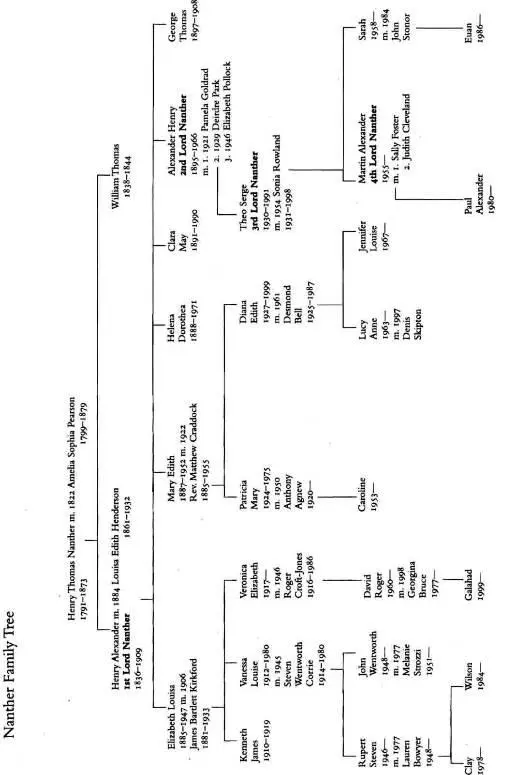
In her tenth novel writing as Barbara Vine, Ruth Rendell offers a novel of suspense based in 19th-century England and centering on deceit, murder, and various other family skeletons. Martin Nanther, the fourth Lord Nanther, has a comfortable life in present-day London as a Hereditary Peer in the House of Lords and as a historical biographer. He chooses as his most recent subject his own great-grandfather, the first Lord Nanther, physician to the royal family (Victoria and Albert) and an early noted researcher into the cause and transmission of hemophilia. The reader is taken through the family history as Martin painstakingly uncovers some not so savory bits of his own family's past. The story is dense with characters, and the author provides family trees of the two principal families, for which any reader will be eternally grateful. The story lacks the usual page-turner suspense of the Rendell/Vine novels but makes up for that with unusually detailed glimpses into Victorian life and the inner workings of the House of Parliament, which American readers will find particularly intriguing. Recommended for all public libraries. Caroline Mann, Univ. of Portland, OR
The Blood Doctor — читать онлайн бесплатно полную книгу (весь текст) целиком
Ниже представлен текст книги, разбитый по страницам. Система сохранения места последней прочитанной страницы, позволяет с удобством читать онлайн бесплатно книгу «The Blood Doctor», без необходимости каждый раз заново искать на чём Вы остановились. Поставьте закладку, и сможете в любой момент перейти на страницу, на которой закончили чтение.
Интервал:
Закладка:
I said good night to him and in the morning I determined to ask Mother if he frequently spent nights in the study. For the past six months, she said in her cool unperturbed way. He can’t sleep, he doesn’t want to disturb me. How silent he must have been, all those nights, Lizzie, how still, so as not to have wakened me …
It was in the study that Edith found him dead on the morning of 21 January 1909. The time was nine-thirty a.m. She went to look for him when he hadn’t appeared either in their room to dress himself or at the breakfast table. I owe all my knowledge of Henry’s behaviour in the months prior to his death and that death itself to Mary’s letters and once again I’m thankful for the sisters’ hoarding instincts. Once her mother had told her and her sisters, Helena and Clara, Mary sent telegrams to Elizabeth in Yorkshire and to Alexander, at Harrow. Later that day she wrote to Elizabeth:
You will have heard by now that poor Father passed away last night or in the early hours of this morning. A massive heart attack was the cause, according to Dr Starkey. Well, Lizzie, a heart attack may have been the final blow but he died of grief. Perhaps Mother knows that too for she keeps saying over and over that it is a merciful release. She certainly cannot mean from bodily pain and illness, for though he had had heart trouble it had never seemed very serious.
Of course you won’t attend the funeral. None of us females will and it would be specially unwise for you in your condition…
This may mean that Elizabeth is pregnant, maybe she was, but if so she must have miscarried because Kenneth, her first child, wasn’t born till July 1910 and Henry died in January 1909. Kenneth would be Henry’s second haemophilic descendant, his mother the first of the known carriers in her generation, and perhaps another feature of the merciful release was that Henry would never know. Did he suspect in those final grief-stricken weeks of his life while his daughter was apparently pregnant? He must have.
He had written nothing for ten years. Or, rather, the attempts he made at his definitive work, his magnum opus , came to grief or he destroyed what he had done. I incline to this view, for I’ve searched for it in those trunks just as I’ve searched for the notebook – the very possibly non-existent notebook – and found nothing. The end of his life was blighted by the sickness of his younger son. In the trunks are some of George’s exercise books, which his father kept and obviously intended to be seen by a future generation. He was evidently a clever and gifted boy, accomplished at his lessons in a way no child would be today. I’ll amend that and say instead he’d been taught things no present-day child would be taught at so young an age and had proved himself equal to them. Caesar’s Invasion of Britain , which I remember struggling to make sense of at twelve, George read and understood when he was seven. A year before he died he was learning Greek. He seemed to have read all the plays of Shakespeare – in bowdlerized versions – Paradise Lost and a good deal of Browning and Tennyson. Two years before the Greek began he was learning algebra and evidently enjoying it.
Henry’s love for his son must have been increased and enhanced by his intellectual brilliance. That enemy of mine, Hope, that ugly woman in the painting who sits on top of the world with a towel round her head, would have invaded Henry’s dreams and made him believe that with the best care and watchfulness George stood a chance of growing up, of fulfilling his potential, of entering some demanding profession. It might even be that in the next few years a cure would be found. Not by him, alas, it was too late for that, but by some up-and-coming physician who had the advantages of modern science at his disposal. These were the kind of hopes the Tsarina had, Princess Beatrice had. They were doomed to the bitterest of all disappointments.
His mother’s photographs show George as a good-looking boy too, if you let yourself see past the sickness and the suffering. He’d have grown up a handsomer man than Alexander. And how could a father not love a son who described him to his sisters as ‘sweetest and kindest’, as ‘the best father in the world’?
Henry’s funeral took place at St Mark’s, Hamilton Terrace, and he was buried at Kensal Green beside George. Thinking of that makes me wonder once again who it is that puts flowers – now, still, when all his nearest are dead and gone – on the grave that holds the bones of father and son.
31
Everyone makes sneering remarks about cuckoo clocks and chocolate whenever Switzerland’s mentioned. They forget, or don’t know, what a beautiful country it is. Quite as beautiful, I’m sure, as Cuba or Thailand, and the cosy image is misplaced as well. How can a place be cosy when it has some of the grandest mountains in Europe?
Another truism is that all its trains run on time. So they do but that’s hardly a fault, and they run at the same times on Saturdays and Sundays as on weekdays. Ours is a double-decker that travels along the southern shore of the Walensee. Thickly wooded hills, some crowned with castles, rise from the flat plain, and after the Bad Ragaz the high mountains begin. We arrive in Chur exactly when we’re supposed to and have a taxi to our hotel in the centre of the town. They’ve given us a white bedroom with a polished wood floor, painted furniture and a four-poster bed hung with tie-on cream cotton curtains. Fat white duvets are piled on the bed, the window is wide open and it’s all very fresh and bright and quiet.
There’s a narrow street outside the window and a clothes shop opposite whose name makes Jude laugh. It’s called La Donna Cinderella. We walk back to the station in the late afternoon sunshine and check on the train we’ll take tomorrow and the bus which meets it. Dinner is at a big hotel, the Duc de Rohan, very elegant with eighteenth-century French furniture and good food. It starts to pour with rain and we have a taxi back to our hotel. We make love and it’s good, in spite of the double foolproof protection, and afterwards Jude says, in the calmest most cheerful tone imaginable, would I have a vasectomy after we’ve got our baby?
At the moment I can’t think of anything I’d like more. I wish I could have one now . But naturally I say none of this, only that of course I will, and she’s happy. She puts her arms round me and says I do understand, don’t I, but she’d never feel at ease if she thought she’d a chance of conceiving another – and there she pauses a bit before she goes on to say, ‘one of those faulty ones, sick ones, I lost’.
I suppose I realize for the first time how she’s felt about this. She’s so beautiful, so physically nearly perfect, and yet her body makes disabled foetuses, maybe deformed foetuses. I understand now how she could turn against lovemaking, against the act that produces these abortions. She says she’s ashamed of her own body and I tell her I love her body, I love her. I tell her with perfect truth that I’ve never loved her so much.
But I wake in the night, too hot under the huge puffy duvet, and as I throw half of it off me, I start thinking about Elizabeth Kirkford and Patricia Agnew and Diana Bell and Veronica and I wonder if they felt that way, if in each pregnancy they feared producing a son whose blood behaved with monstrous unnaturalness. When daughters came instead, did they fear they were only passing on to the next generation the burden of terror and anxiety they carried? And what of the women of Tenna, all these Ursulas and Annas and, indeed, Barblas? It’s hard to say how much they knew, but in A Treasury of Human Inheritance a certain Dr Thormann, writing in 1837, refers to ‘this great family of bleeders’ in Tenna. Women must have seen their sisters, their cousins, their neighbours, give birth to children who suffered severe and often fatal haemorrhages and felt about their physical selves as Jude feels.
Читать дальшеИнтервал:
Закладка:
Похожие книги на «The Blood Doctor»
Представляем Вашему вниманию похожие книги на «The Blood Doctor» списком для выбора. Мы отобрали схожую по названию и смыслу литературу в надежде предоставить читателям больше вариантов отыскать новые, интересные, ещё непрочитанные произведения.





Обсуждение, отзывы о книге «The Blood Doctor» и просто собственные мнения читателей. Оставьте ваши комментарии, напишите, что Вы думаете о произведении, его смысле или главных героях. Укажите что конкретно понравилось, а что нет, и почему Вы так считаете.