Barbara Vine - The Blood Doctor
Здесь есть возможность читать онлайн «Barbara Vine - The Blood Doctor» весь текст электронной книги совершенно бесплатно (целиком полную версию без сокращений). В некоторых случаях можно слушать аудио, скачать через торрент в формате fb2 и присутствует краткое содержание. Год выпуска: 2003, Издательство: Vintage, Жанр: Современная проза, на английском языке. Описание произведения, (предисловие) а так же отзывы посетителей доступны на портале библиотеки ЛибКат.
- Название:The Blood Doctor
- Автор:
- Издательство:Vintage
- Жанр:
- Год:2003
- ISBN:нет данных
- Рейтинг книги:4 / 5. Голосов: 1
-
Избранное:Добавить в избранное
- Отзывы:
-
Ваша оценка:
The Blood Doctor: краткое содержание, описание и аннотация
Предлагаем к чтению аннотацию, описание, краткое содержание или предисловие (зависит от того, что написал сам автор книги «The Blood Doctor»). Если вы не нашли необходимую информацию о книге — напишите в комментариях, мы постараемся отыскать её.
Barbara Vine (a.k.a. Ruth Rendell) deftly weaves this story of an eminent Victorian with a modern yarn about the embattled biographer, who is watching the House of Lords prepare to annul membership for hereditary peers and thus strip him of his position. Themes of fate and family snake throughout this teasing psychological suspense, a typically chilling tale from a master of the genre.
From Publishers Weekly
This rich, labyrinthine book by Vine (aka Ruth Rendell) concerns a "mystery in history," like her 1998 novel, The Chimney Sweeper's Boy. Martin Nanther-biographer and member of the House of Lords-discovers some blighted roots on his family tree while researching the life of his great-great-grandfather, Henry, an expert on hemophilia and physician to Queen Victoria. Martin contacts long-lost relatives who help him uncover some puzzling events in Henry's life. Was Henry a dour workaholic or something much more sinister? Vine can make century-old tragedy come alive. Still, the decades lapsed between Martin's and Henry's circles create added emotional distance, and, because they are all at least 50 years dead, we never meet Henry or his cohorts except through diaries and letters. Martin's own life-his wife's infertility and troubles with a son from his first marriage-is interesting yet sometimes intrudes on the more intriguing Victorian saga. Vine uses her own experience as a peer to give readers an insider's look into the House of Lords, at the dukes snoozing in the library between votes and eating strawberries on the terrace fronting the Thames. Some minor characters are especially vivid, like Martin's elderly cousin Veronica, who belts back gin while stonewalling about the family skeletons all but dancing through her living room. Readers may guess Henry's game before Vine is ready to reveal it, but this doesn't detract from this novel peopled by characters at once repellant and compelling.
From Library Journal
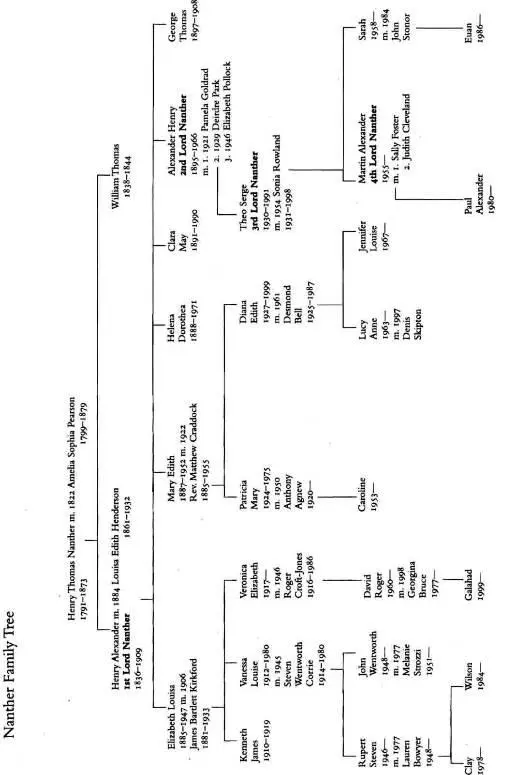
In her tenth novel writing as Barbara Vine, Ruth Rendell offers a novel of suspense based in 19th-century England and centering on deceit, murder, and various other family skeletons. Martin Nanther, the fourth Lord Nanther, has a comfortable life in present-day London as a Hereditary Peer in the House of Lords and as a historical biographer. He chooses as his most recent subject his own great-grandfather, the first Lord Nanther, physician to the royal family (Victoria and Albert) and an early noted researcher into the cause and transmission of hemophilia. The reader is taken through the family history as Martin painstakingly uncovers some not so savory bits of his own family's past. The story is dense with characters, and the author provides family trees of the two principal families, for which any reader will be eternally grateful. The story lacks the usual page-turner suspense of the Rendell/Vine novels but makes up for that with unusually detailed glimpses into Victorian life and the inner workings of the House of Parliament, which American readers will find particularly intriguing. Recommended for all public libraries. Caroline Mann, Univ. of Portland, OR
The Blood Doctor — читать онлайн бесплатно полную книгу (весь текст) целиком
Ниже представлен текст книги, разбитый по страницам. Система сохранения места последней прочитанной страницы, позволяет с удобством читать онлайн бесплатно книгу «The Blood Doctor», без необходимости каждый раз заново искать на чём Вы остановились. Поставьте закладку, и сможете в любой момент перейти на страницу, на которой закончили чтение.
Интервал:
Закладка:
We sit down at a table outside a café and order coffee. ‘If she was born after 1791,’ Jude says, ‘you won’t be able to find her. And she could have been. She could have been born in 1792 or 3 and still be Louisa Henderson’s grandmother. She’d be about forty-five. It’s quite possible to be a grandmother at forty-five and even more likely then.’
‘Then whose daughter was she? Not Hans’s. He only had the one child, Magdalena, and he died when she was two.’
‘There was another brother, wasn’t there?’
‘Magdalena senior had three sons. One of them bled to death at the age of six. Hans grew up and married and fathered Magdalena junior but died young. Ofhaemophilia? We don’t know. If he had it Magdalena would be bound to be a carrier. But it would be unusual for the three sons of a carrier all to have haemophilia, so it’s likely Magdalena senior’s third son didn’t have it.’
It seems like a dead end. I try to dismiss it from my mind for the time being. We eat a big lunch and go back to the hotel to sleep, make love, sleep again. In the evening we wander about the town holding hands. Like young lovers, we stroll along the river bank, stop to kiss, then go into a bar and drink wine, finally we find somewhere to have dinner. By then it’s quite late and we’re going back to Tenna in the morning, but it can’t be helped. It’s a long time since I’ve seen Jude so happy and relaxed.
32
I’m tired but it takes me a long while to fall asleep. I suppose there are too many things going round and round in my head. Versam’s been mentioned a lot since we arrived here, we’ve even been there en route to Tenna, and now at last I remember why it rings a bell with me. Or I think I do. Though I’ve brought Bulloch and Fildes with me, I could hardly bring the stacks of Henry correspondence, and I’m pretty sure it’s in a letter Henry wrote to Couch or Fetter or someone that the name Versam occurs. The context, I think, is a long walk he made from there to a village in the Safiental. The figure of twenty miles is given, I think, though I can’t be sure of this. But if it is, is the village Tenna? Even if Romansch was never spoken there? And I remember something else, or I think I do. That line from Hoessli about the climate of Tenna which Henry quotes directly in that same letter. ‘The combination of a long day’s sun and a dry atmosphere renders the village a healthy one…’ Unfortunately, I can’t be quite sure of any of this without seeing the letter and that’s at home in its appropriate folder on my work table.
Of course, I’m now even more wide awake. I lie here thinking that the missed chance of speaking Romansch would weigh very little with Henry against the possibility of visiting the village made notorious among haematologists for its preponderance of ‘bleeder families’. Even though Bulloch and Fildes wasn’t to be published for another thirty years, he’d have read their sources, he’d read Hoessli, so they’d both have been well-known to him. Perhaps he was staying in Chur. It may even be that he didn’t know how relatively near Tenna was until he was there, reading his Baedeker. Still, I can’t check any of this until I get home. I can only speculate.
Life is so unexciting in Tenna that the arrival of the bus in the late morning is an event. It’s even more of an event when strangers are expected on it. Several people are waiting outside the Gemeindehaus to welcome us. We’re escorted into the shop and given coffee and cakes. The white mist that looks like cloud when you’re lower down the mountain spreads its pall over Tenna and today it’s wet, condensing on our hands and faces and making us shiver. We walk through it up to the Rösslihaus but when it’s in sight I already have a pre-vision I’m going to be disappointed because there’s no car a castle dweller is likely to drive outside it.
Hot chocolate and shortbread are provided to console us. Mrs Tauber couldn’t come because one of her children is unwell and the new nanny hasn’t yet arrived. I’m given her address and phone number and told she’s a doctor, though she hasn’t practised since she was married. But this leads me to think she may know something about the haemophillia and also won’t get uptight about its existence in Tenna. It’s when I’ve finished writing down the phone number from Jude’s dictation that I look up and see the eggs. They must have been here on Saturday but I didn’t notice them. They’re all red or brown or dark green with a white pattern on them of flowers and leaves or a more abstract design. Mrs Walther – she must have a first name but no one uses it or tells us what it is – says, and Jude translates, that the white isn’t painted on. What happens is that the whole egg is painted dark red or some other colour and the white design is etched out of it with a sharp tool. That is, the white is the natural colour of the egg under the paint. Eggs. The symbol of continuing life, eggs holding the X chromosome, ready to pass on beauty or ugliness, health or sickness, long life or rapid death.
According to Jude, Mrs Walther is as disappointed as I am at her castle-dweller friend failing to turn up, but she has the added problem of feeling guilty about it. Jude reassures her, it’s not her fault, these things happen. We may as well give it all up and go home, though the bus doesn’t leave till four. Then Mrs Walther apparently has a brainwave and presents us with an egg each, compensatory eggs. She’s decorated them herself, a ginger-brown one for Jude with a white lily on it, and a red one for me with a wreath of flowers. ‘Typical Tenna,’ she says, smiling, and even I can understand her. She packs the eggs into individual boxes because they’re fragile and we have a long way to go.
The mist has lifted so after we’ve had lunch at the Alpenblick – goulash again but different vegetables – we spend the afternoon going for a long walk along mountain paths and admiring the stupendous views. The bus comes on time, of course, and we go back to Versam and thence to Chur. The effect of all this has been to make me feel a bit of a fool and I ask myself what I really hoped for. Who now alive, after all, is going to know or care what happened to a young peasant woman born in the eighteenth century? If indeed she came from here. For all I know there may be Maibachs all over Switzerland, all over Germany and Austria for that matter. It would be a different story if, like Mrs Tauber, she’d lived in a castle, if she’d been well-born. I realize, as I’m getting out of the train at Chur station, that I’ve based my conviction about Barbla coming from here on the fact that, according to Bulloch and Fildes, a Maibach family lived here. But maybe they came from Nuremberg or Innsbruck, maybe Veronica has been right all along and they weren’t Maibachs at all, but Maybacks from Manchester and my woman had the fairly common English christian name of Barbara.
If we get up very early tomorrow morning and take an early train to Zurich we could be flying to London before lunch, but we’re booked on a five-thirty flight in the afternoon and we may as well stick with that. Besides, Jude likes it here. She wants to linger a while in the oldest town in Switzerland, eat in a good restaurant tonight and visit the Rhaetian Museum in the morning. She’s a relentless museum visitor and no holiday is complete for her without ‘doing’ as many of them as she can find. We unpack the painted eggs and Jude says they must be a symbol of hope and of the child she’s sure will be born next year. She knows what I think of hope but she doesn’t say so.
The museum visit completed, we take a mid-morning train to Zurich and get there in time for lunch, but we still have two or three hours before we need to leave for the airport. The Bahnhofstrasse, according to Baedeker, is one of the finest shopping streets in Europe, but Jude doesn’t want to go shopping, which is just as well considering the state of our finances. She wants to go to more museums.
Читать дальшеИнтервал:
Закладка:
Похожие книги на «The Blood Doctor»
Представляем Вашему вниманию похожие книги на «The Blood Doctor» списком для выбора. Мы отобрали схожую по названию и смыслу литературу в надежде предоставить читателям больше вариантов отыскать новые, интересные, ещё непрочитанные произведения.




Обсуждение, отзывы о книге «The Blood Doctor» и просто собственные мнения читателей. Оставьте ваши комментарии, напишите, что Вы думаете о произведении, его смысле или главных героях. Укажите что конкретно понравилось, а что нет, и почему Вы так считаете.