Barbara Vine - The Blood Doctor
Здесь есть возможность читать онлайн «Barbara Vine - The Blood Doctor» весь текст электронной книги совершенно бесплатно (целиком полную версию без сокращений). В некоторых случаях можно слушать аудио, скачать через торрент в формате fb2 и присутствует краткое содержание. Год выпуска: 2003, Издательство: Vintage, Жанр: Современная проза, на английском языке. Описание произведения, (предисловие) а так же отзывы посетителей доступны на портале библиотеки ЛибКат.
- Название:The Blood Doctor
- Автор:
- Издательство:Vintage
- Жанр:
- Год:2003
- ISBN:нет данных
- Рейтинг книги:4 / 5. Голосов: 1
-
Избранное:Добавить в избранное
- Отзывы:
-
Ваша оценка:
The Blood Doctor: краткое содержание, описание и аннотация
Предлагаем к чтению аннотацию, описание, краткое содержание или предисловие (зависит от того, что написал сам автор книги «The Blood Doctor»). Если вы не нашли необходимую информацию о книге — напишите в комментариях, мы постараемся отыскать её.
Barbara Vine (a.k.a. Ruth Rendell) deftly weaves this story of an eminent Victorian with a modern yarn about the embattled biographer, who is watching the House of Lords prepare to annul membership for hereditary peers and thus strip him of his position. Themes of fate and family snake throughout this teasing psychological suspense, a typically chilling tale from a master of the genre.
From Publishers Weekly
This rich, labyrinthine book by Vine (aka Ruth Rendell) concerns a "mystery in history," like her 1998 novel, The Chimney Sweeper's Boy. Martin Nanther-biographer and member of the House of Lords-discovers some blighted roots on his family tree while researching the life of his great-great-grandfather, Henry, an expert on hemophilia and physician to Queen Victoria. Martin contacts long-lost relatives who help him uncover some puzzling events in Henry's life. Was Henry a dour workaholic or something much more sinister? Vine can make century-old tragedy come alive. Still, the decades lapsed between Martin's and Henry's circles create added emotional distance, and, because they are all at least 50 years dead, we never meet Henry or his cohorts except through diaries and letters. Martin's own life-his wife's infertility and troubles with a son from his first marriage-is interesting yet sometimes intrudes on the more intriguing Victorian saga. Vine uses her own experience as a peer to give readers an insider's look into the House of Lords, at the dukes snoozing in the library between votes and eating strawberries on the terrace fronting the Thames. Some minor characters are especially vivid, like Martin's elderly cousin Veronica, who belts back gin while stonewalling about the family skeletons all but dancing through her living room. Readers may guess Henry's game before Vine is ready to reveal it, but this doesn't detract from this novel peopled by characters at once repellant and compelling.
From Library Journal
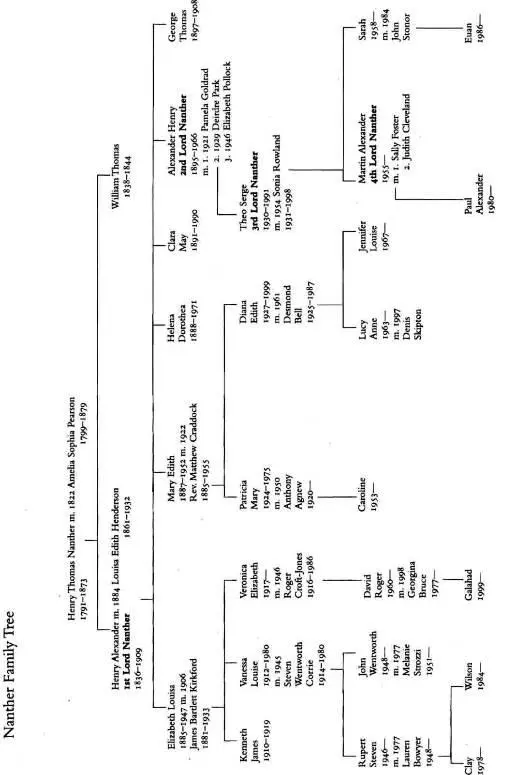
In her tenth novel writing as Barbara Vine, Ruth Rendell offers a novel of suspense based in 19th-century England and centering on deceit, murder, and various other family skeletons. Martin Nanther, the fourth Lord Nanther, has a comfortable life in present-day London as a Hereditary Peer in the House of Lords and as a historical biographer. He chooses as his most recent subject his own great-grandfather, the first Lord Nanther, physician to the royal family (Victoria and Albert) and an early noted researcher into the cause and transmission of hemophilia. The reader is taken through the family history as Martin painstakingly uncovers some not so savory bits of his own family's past. The story is dense with characters, and the author provides family trees of the two principal families, for which any reader will be eternally grateful. The story lacks the usual page-turner suspense of the Rendell/Vine novels but makes up for that with unusually detailed glimpses into Victorian life and the inner workings of the House of Parliament, which American readers will find particularly intriguing. Recommended for all public libraries. Caroline Mann, Univ. of Portland, OR
The Blood Doctor — читать онлайн бесплатно полную книгу (весь текст) целиком
Ниже представлен текст книги, разбитый по страницам. Система сохранения места последней прочитанной страницы, позволяет с удобством читать онлайн бесплатно книгу «The Blood Doctor», без необходимости каждый раз заново искать на чём Вы остановились. Поставьте закладку, и сможете в любой момент перейти на страницу, на которой закончили чтение.
Интервал:
Закладка:
Keeping an eye on her, though she never wakes once she’s in a deep sleep, I sit up, switch on the bedlamp and open the Bulloch and Fildes I’ve brought with me. I turn to page 255. ‘The combination of a long day’s sun and a dry atmosphere renders the village a healthy one,’ Hoessli wrote, and at once I recognize the line. Where else have I read it? The Tenna population was on average 150. Poverty was unknown. Organic heart disease, scurvy and purpura were never seen, though inhabitants were prone to bronchitis, pneumonia and pleurisy. That’s familiar too, from some other source.
Hoessli was by no means the first to research haemophilia in Tenna. Thormann published his findings as early as 1837. Another well-known compiler of haemophilia records was Grandidier who produced a monograph on Tenna in 1855 while a Dr Vieli, a physician at Rhazuns with an ancient family castle on the Rhine, contributed his observations to Grandidier’s work. In their time many haemophiliac males remained in the area but when Hoessli arrived in 1877 all were dead. No one could say, of course, how many haemophilia carriers remained.
In the year of Henry’s death, a man called Ludwig Pincus quoted a newspaper paragraph that the girls of the Graubünden area where Tenna is, had refused to marry on account of the disease. His investigations found that there was no truth in this statement, it was a fabrication, but a doctor in the hospital at Chur discovered two cases of abstentions from marriage for this reason. In Tenna itself there had been no cases of haemophilia for thirty years.
I’ve read all this before, of course, and struggled through the tables of inheritance and the lists of Tenna people who had, or might have had or carried or died of, haemophilia. They are exhausting to decipher and somehow unmemorable except for the case histories which shock or dismay. ‘Was called to Robert, aged one year and ten months, for epistaxis [nosebleeding]. Desired to plug the anterior and posterior nares [nostrils], but was resisted by the parents, who said the haemorrhage invariably lasted some days. Robert lay absolutely quiet, as if he recognized the danger of his condition. The blood slowly dropped from clots about his nares. The haemorrhage stopped spontaneously in five days. Robert is a bright strong boy, though spare. His skin is thin and transparent… Cuts or knocks are immediately followed by uncontrollable haemorrhage.’ Was it like this for George Nanther? Did his parents have to witness this? The doctor goes on to tell what happened when Robert injured his throat with a stick. ‘The blood was found issuing from the palate at no particular place. It was arrested but broke out again next day and continued all night. Blood was vomited…’ Robert’s ultimate fate isn’t chronicled but after a long catalogue of haematomas, swellings, bleeding and pain, the doctor leaves him, aged ten, with one damaged leg permanently affected, and goes on to his next case history. He mentions, among many others, six sisters of whom four gave birth to haemophiliacs, a family of whom there were nine haemophiliacs in three generations and a boy who died at the age of five after bleeding for six weeks.
George Nanther, Kenneth Kirkford, John Corrie… I put out the light and lie wakeful in the dark thinking of Henry and Edith discovering, when he was perhaps nine or ten months old, that their younger son was a haemophiliac, and I wonder how they did. Perhaps his nappy pin scratched him. Or maybe he was older than that and walking and had his first fall. It doesn’t matter how. Henry would have been scarcely able to believe his eyes, that he who had studied the bleeding disease all his life should be cursed with its appearance in his own family…
It’s a cloudy brightish morning. There’s snow on the mountains but perhaps there always is. Shreds of cloud drift across their lower slopes. The train takes us along the banks of the Walensee, then beside a wide rushing river, the Rabiusa, its water dove grey and its beaches grey sand. Lilies-of-the-valley are growing on the embankment, cow parsley and buttercups in the fields. Used to the kind of thing that happens at home, I can’t believe a bus will be waiting at Versam to take us up the mountain, though we’ve been assured it will be there – and it is. It climbs up a road where every flower seems to be coming into bloom, violets and daisies and more lily-of-the-valley, then there are hairpin bends and we look down into a mist-filled valley with a river flowing through it on which people are canoeing, shooting the rapids. Orchards are in blossom and the fields are full of yellow daisies. I’d promised Jude flowers, so I’m happy to see plenty. She tells me their names, says they’re wild orchids and geraniums, forget-me-nots and Solomon’s seal.
I should have realized that if there’s cloud on the mountains, once we get up there and penetrate it we’ll find ourselves in thick mist. And that’s what has happened. We’re in the midst of it. The second bus, a small one, takes us to Tenna. And it’s very cold up here. The mist is white and drifting and it puts a touch of ice on the skin. Luckily we’ve brought warm jackets. We’re outside the village shop, a little supermarket of the kind you find all over Europe, and we go in and buy ourselves warming chocolate bars. The shopkeeper, who speaks quite good English, knows who we are and why we’re here. Everyone in the village will know, of course. The historian we’re to meet will be waiting for us, she says, and she points out her house, halfway up the next ridge of the mountain. I tell her we’d like to see the church first and, eating our chocolate, we make our way up there.
It’s a pretty church, about as different from St Mark’s, Hamilton Terrace, as you can imagine. All they have in common is that they both have spires. Tenna church is white, its tower and spire adjoining it but not standing at the end of the nave as ours would. Both are roofed in grey slate. We go in, where it’s marginally warmer, and look at the fifteenth-century wall paintings, but it’s the churchyard I’m more interested in and the graves. I’m rewarded and disappointed, both at the same time. Rewarded because many of the names recorded by the Vieli-Grandidier-Hoessli triumvirate are here, people called Gartmann and Joos and Buchli. Disappointed because these Tenna residents all died fairly recently, there’s no one left from the nineteenth century. There’s no Maibach at all but a couple of Barblas are here and this surprises me. I’d thought it was a diminutive of Barbara but it seems to be a name in its own right, a Safiental name.
Someone’s waving to us from just down the hillside. It’s the postman who’s married to the shopkeeper and is also the keeper of the archives. I’ve already been told the archives are incomplete and that the period I’m interested in is missing. Someone borrowed the church books – we’d call them the parish registers – twenty years ago and they’ve never been returned. The postman doesn’t speak much English but he’s very happy to speak German to Jude. She translates and tells me the books that cover a great deal of the nineteenth century and quite a lot of the twentieth are missing. I can’t understand how they came to let these documents out of their sight, let alone have them disappear, but I don’t say so. Missing archives are noted in Bulloch and Fildes, so losing church books seems to have often gone on in Tenna. Jude interprets that the ones they have cover from 1666 to 1791. Are these any good to me?
‘The trouble is,’ I say, ‘that I don’t know.’
And I don’t. A Magdalena Maibach is listed in Bulloch and Fildes, among the Hoessli findings, as being born in 1721. She had several sons, two of whom merit no further mention, and they are not even named, while the third is listed as dying at the age of six, nachdem das Blut ihm alles ausgelofen, ist es in Gott entschlafen (after all his blood had run from him, he went to sleep in God). So this Magdalena must have been a carrier. She may be a forebear of my Barbla. But when was Barbla born? David Croft-Jones doesn’t know any more than he knows the birth date of her daughter Luise. I have to work this backwards. Edith Nanther was born in 1861 and her mother Louisa Henderson in 1837. So her mother Luise Quendon née Dornford may have been born any time between, say, 1800 and 1821, which makes it possible for her mother Barbla to have been born – when? If I had to guess I’d put her late in the eighteenth century or the first years of the nineteenth, and the archives for those years are missing.
Читать дальшеИнтервал:
Закладка:
Похожие книги на «The Blood Doctor»
Представляем Вашему вниманию похожие книги на «The Blood Doctor» списком для выбора. Мы отобрали схожую по названию и смыслу литературу в надежде предоставить читателям больше вариантов отыскать новые, интересные, ещё непрочитанные произведения.





Обсуждение, отзывы о книге «The Blood Doctor» и просто собственные мнения читателей. Оставьте ваши комментарии, напишите, что Вы думаете о произведении, его смысле или главных героях. Укажите что конкретно понравилось, а что нет, и почему Вы так считаете.