Barbara Vine - The Blood Doctor
Здесь есть возможность читать онлайн «Barbara Vine - The Blood Doctor» весь текст электронной книги совершенно бесплатно (целиком полную версию без сокращений). В некоторых случаях можно слушать аудио, скачать через торрент в формате fb2 и присутствует краткое содержание. Год выпуска: 2003, Издательство: Vintage, Жанр: Современная проза, на английском языке. Описание произведения, (предисловие) а так же отзывы посетителей доступны на портале библиотеки ЛибКат.
- Название:The Blood Doctor
- Автор:
- Издательство:Vintage
- Жанр:
- Год:2003
- ISBN:нет данных
- Рейтинг книги:4 / 5. Голосов: 1
-
Избранное:Добавить в избранное
- Отзывы:
-
Ваша оценка:
The Blood Doctor: краткое содержание, описание и аннотация
Предлагаем к чтению аннотацию, описание, краткое содержание или предисловие (зависит от того, что написал сам автор книги «The Blood Doctor»). Если вы не нашли необходимую информацию о книге — напишите в комментариях, мы постараемся отыскать её.
Barbara Vine (a.k.a. Ruth Rendell) deftly weaves this story of an eminent Victorian with a modern yarn about the embattled biographer, who is watching the House of Lords prepare to annul membership for hereditary peers and thus strip him of his position. Themes of fate and family snake throughout this teasing psychological suspense, a typically chilling tale from a master of the genre.
From Publishers Weekly
This rich, labyrinthine book by Vine (aka Ruth Rendell) concerns a "mystery in history," like her 1998 novel, The Chimney Sweeper's Boy. Martin Nanther-biographer and member of the House of Lords-discovers some blighted roots on his family tree while researching the life of his great-great-grandfather, Henry, an expert on hemophilia and physician to Queen Victoria. Martin contacts long-lost relatives who help him uncover some puzzling events in Henry's life. Was Henry a dour workaholic or something much more sinister? Vine can make century-old tragedy come alive. Still, the decades lapsed between Martin's and Henry's circles create added emotional distance, and, because they are all at least 50 years dead, we never meet Henry or his cohorts except through diaries and letters. Martin's own life-his wife's infertility and troubles with a son from his first marriage-is interesting yet sometimes intrudes on the more intriguing Victorian saga. Vine uses her own experience as a peer to give readers an insider's look into the House of Lords, at the dukes snoozing in the library between votes and eating strawberries on the terrace fronting the Thames. Some minor characters are especially vivid, like Martin's elderly cousin Veronica, who belts back gin while stonewalling about the family skeletons all but dancing through her living room. Readers may guess Henry's game before Vine is ready to reveal it, but this doesn't detract from this novel peopled by characters at once repellant and compelling.
From Library Journal
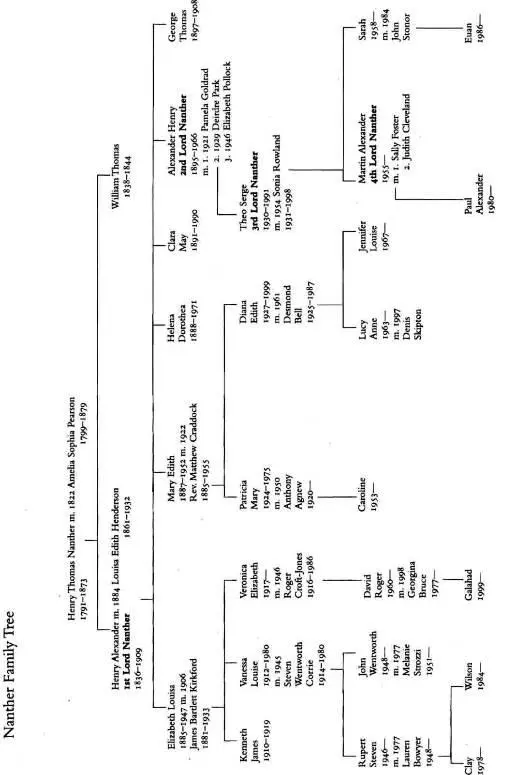
In her tenth novel writing as Barbara Vine, Ruth Rendell offers a novel of suspense based in 19th-century England and centering on deceit, murder, and various other family skeletons. Martin Nanther, the fourth Lord Nanther, has a comfortable life in present-day London as a Hereditary Peer in the House of Lords and as a historical biographer. He chooses as his most recent subject his own great-grandfather, the first Lord Nanther, physician to the royal family (Victoria and Albert) and an early noted researcher into the cause and transmission of hemophilia. The reader is taken through the family history as Martin painstakingly uncovers some not so savory bits of his own family's past. The story is dense with characters, and the author provides family trees of the two principal families, for which any reader will be eternally grateful. The story lacks the usual page-turner suspense of the Rendell/Vine novels but makes up for that with unusually detailed glimpses into Victorian life and the inner workings of the House of Parliament, which American readers will find particularly intriguing. Recommended for all public libraries. Caroline Mann, Univ. of Portland, OR
The Blood Doctor — читать онлайн бесплатно полную книгу (весь текст) целиком
Ниже представлен текст книги, разбитый по страницам. Система сохранения места последней прочитанной страницы, позволяет с удобством читать онлайн бесплатно книгу «The Blood Doctor», без необходимости каждый раз заново искать на чём Вы остановились. Поставьте закладку, и сможете в любой момент перейти на страницу, на которой закончили чтение.
Интервал:
Закладка:
‘Women could,’ she says, ‘but it was difficult, it would have been quite a battle. Too much for poor Clara, I’m sure.’ She looks up as our first course comes. ‘My sister’s a doctor, she’s a paediatrician.’ That makes the second of Henry’s descendants to enter the medical profession. ‘The last time we saw Clara was the year before she died, in nineteen eight-nine. Jennifer must have been twenty-two or three and doing her training. Clara was so pleased that Jennifer was doing what she couldn’t do.’
We’ve wandered a long way from the point and I have to get her back to it. I have to concentrate my mind on this pretty girl (a term she wouldn’t like) and the food and adding information to my stock of Henry knowledge instead of what I’m doing, which is thinking about Jude in the clinic, having healthy embryos implanted. Two weeks after today we’ll know. They’ll do a pregnancy test and if it’s positive… I’m about as far from the point myself as can be and Lucy’s talking happily away, apparently oblivious of me, about her sister’s brilliance at medical school, the accolades she’s had from all sorts of people – just like Henry in fact. She’s glad, their mother lived long enough to see Jennifer’s success.
So far, on the phone or here, haemophilia hasn’t been mentioned. And now I’m face to face with her I’m shy about mentioning it. I suddenly think I haven’t handled this very well. She’s told me she’s a carrier. ‘Have you—’ I begin hesitantly, ‘have you any children?’
‘Not yet.’ She says it sharply and looks me in the eye. Suddenly her voice and her manner soften and she says, ‘Look, can I call you Martin?’
‘What else?’ I say. I’m considerably taken aback.
‘I don’t know, only you’re a lord, aren’t you?’
Lords were two a penny where I used to be every day. I never get used to other people being overawed by a peer’s title. ‘You’re my cousin. Please call me Martin.’
‘OK, Martin. You asked if I had children because of the haemophilia, didn’t you?’
I nod.
She takes a sip of her wine, rather more than a sip. ‘I haven’t. Not yet.’
‘What made you have yourself tested? Did your mother tell you?’
She laughs at that. ‘What, as part of the facts of life lesson? The home sex education? I don’t remember our ever having any of that. Mum never said a word.’
‘Did she know?’
‘She said not. When I asked her, that is. Then she refused to believe it. She simply wouldn’t have it discussed.’
I tell her that her aunt Patricia knew. She must have, in order to write that letter to Veronica.
‘Ah, yes,’ she says. ‘But did she admit to herself she might be a carrier? I don’t think so. There was a sort of wishful thinking going on. I don’t know if you know there was a theory in the family that if one sister was a carrier the next one wouldn’t be, though the third one might and so on. Absolute rubbish, of course, but my grandmother Mary believed it. At least, according to Clara, she did.’
I begin to see the light. ‘You found out from Clara?’
‘That’s right. Didn’t I say? It wasn’t far from us, where she lived, only Ealing, and we were in Chiswick. Teenage kids like talking to very old people, you know, they feel closer to them than to the generation above theirs. Clara had masses of photographs and a great fund of stories about living in that house in St John’s Wood all that time ago. She remembered going to suffragette meetings and the fight to get votes for women and how angry her dad was when he found out. One day – I must have been eighteen or nineteen by then – she told me about the haemophilia. It wasn’t done spitefully or in a sensational sort of way, she hesitated quite a bit before she did, she said she’d given it a lot of thought and it had been preying on her mind.’
‘You mean she thought her sister Mary as likely to have been a carrier as her sister Elizabeth?’
‘I shouldn’t but I’d like another glass of wine, please.’ I’ve been dilatory and I apologize. Just at that moment the waiter comes up and refills our glasses. I can see Lucy is finding this talk a bit of a strain. She plainly isn’t going to finish her main course and she sets down her knife and fork. ‘Clara said,’ she goes on, ‘that when she was a girl, while her father was alive and after his death, she tried to read some of his books. It’s sad, really, very sad, this poor woman desperate for knowledge and having the means of getting it denied her all the time. Her mother was practically illiterate, you know. All she could do was paint bad pictures and take photographs. Mary was terribly churchy, always running around doing good works in the parish, and Helena – well, Helena sewed. Apparently, the house was crammed with stuff Helena had sewn, embroidery or whatever.’ Lucy pauses, says, ‘I’m sorry, I can’t eat any more. My appetite always goes when I talk about it.’
‘The haemophilia,’ I say gently.
‘Yes. She read her father’s books, she was interested and she got to know quite a lot. She was only seventeen when her brother George died but she knew what was wrong with him, she knew it wasn’t tuberculosis.’
‘You mean George’s mother didn’t? His other sisters didn’t?’
‘Clara said no one ever talked about it. She’d seen George bleed when he hurt himself the way no one else she’d ever seen bleed. She’d seen him in bed for weeks on end just because he’d fallen over.’
I ask if she’d never tried to discuss it with other members of the family.
‘She was scared of her dad. They all were – except George. If anyone said they wanted to know something but they daren’t ask Father, George would laugh and say why not. Father was the sweetest kindest man, who’d never said a cross word to him. He was the best father in the world.’
I shake my head in astonishment. I’m reproaching myself for never talking to Clara, for never securing all this for myself.
‘Clara did eventually ask her mother,’ Lucy says. ‘She said something like, George has haemophilia, hasn’t he? Why do you all say it’s consumption? That was the word they used, consumption. Edith just said – quite nicely apparently, she never lost her temper, raised her voice, got cross – she just said she didn’t know what Clara was talking about. Women didn’t understand these things. Her father knew best. In the end, a couple of weeks before George died, she did ask her father. It must have taken a lot of courage.’
‘What did he say?’
‘He was distraught over George. He hadn’t long to live himself. She came to him in his study, knocked on the door of course. He asked her in and what she wanted. She told me all this, it was sort of printed on her memory. She asked him if she was right and George was a haemophiliac. Henry got to his feet, and said very coldly. “Never speak of this again.” He pointed to the door and said, “Now go!” ’
We’re both silent for a moment, then Lucy says, ‘George died two weeks afterwards. He was in the garden and he fell down some steps. Clara said he developed a huge sort of contusion on his head. His knee where he’d fallen was swollen like a balloon. That’s how she put it, like a balloon. He seems to have died of some sort of stroke. Henry shut himself up in his study for three days. He didn’t eat. He had a carafe of water in there. No one knew if he came out in the night or if he slept. He came out for the funeral and wept right through the service. Edith brought him home, made him go to bed and sent for the doctor. She could do anything with him, but no one else could.’
Poor Henry. Poor Henry, loving someone deeply at last. ‘I’m taking it for granted Kenneth Kirkford, Elizabeth’s son, had haemophilia.’
Читать дальшеИнтервал:
Закладка:
Похожие книги на «The Blood Doctor»
Представляем Вашему вниманию похожие книги на «The Blood Doctor» списком для выбора. Мы отобрали схожую по названию и смыслу литературу в надежде предоставить читателям больше вариантов отыскать новые, интересные, ещё непрочитанные произведения.





Обсуждение, отзывы о книге «The Blood Doctor» и просто собственные мнения читателей. Оставьте ваши комментарии, напишите, что Вы думаете о произведении, его смысле или главных героях. Укажите что конкретно понравилось, а что нет, и почему Вы так считаете.