Barbara Vine - The Blood Doctor
Здесь есть возможность читать онлайн «Barbara Vine - The Blood Doctor» весь текст электронной книги совершенно бесплатно (целиком полную версию без сокращений). В некоторых случаях можно слушать аудио, скачать через торрент в формате fb2 и присутствует краткое содержание. Год выпуска: 2003, Издательство: Vintage, Жанр: Современная проза, на английском языке. Описание произведения, (предисловие) а так же отзывы посетителей доступны на портале библиотеки ЛибКат.
- Название:The Blood Doctor
- Автор:
- Издательство:Vintage
- Жанр:
- Год:2003
- ISBN:нет данных
- Рейтинг книги:4 / 5. Голосов: 1
-
Избранное:Добавить в избранное
- Отзывы:
-
Ваша оценка:
The Blood Doctor: краткое содержание, описание и аннотация
Предлагаем к чтению аннотацию, описание, краткое содержание или предисловие (зависит от того, что написал сам автор книги «The Blood Doctor»). Если вы не нашли необходимую информацию о книге — напишите в комментариях, мы постараемся отыскать её.
Barbara Vine (a.k.a. Ruth Rendell) deftly weaves this story of an eminent Victorian with a modern yarn about the embattled biographer, who is watching the House of Lords prepare to annul membership for hereditary peers and thus strip him of his position. Themes of fate and family snake throughout this teasing psychological suspense, a typically chilling tale from a master of the genre.
From Publishers Weekly
This rich, labyrinthine book by Vine (aka Ruth Rendell) concerns a "mystery in history," like her 1998 novel, The Chimney Sweeper's Boy. Martin Nanther-biographer and member of the House of Lords-discovers some blighted roots on his family tree while researching the life of his great-great-grandfather, Henry, an expert on hemophilia and physician to Queen Victoria. Martin contacts long-lost relatives who help him uncover some puzzling events in Henry's life. Was Henry a dour workaholic or something much more sinister? Vine can make century-old tragedy come alive. Still, the decades lapsed between Martin's and Henry's circles create added emotional distance, and, because they are all at least 50 years dead, we never meet Henry or his cohorts except through diaries and letters. Martin's own life-his wife's infertility and troubles with a son from his first marriage-is interesting yet sometimes intrudes on the more intriguing Victorian saga. Vine uses her own experience as a peer to give readers an insider's look into the House of Lords, at the dukes snoozing in the library between votes and eating strawberries on the terrace fronting the Thames. Some minor characters are especially vivid, like Martin's elderly cousin Veronica, who belts back gin while stonewalling about the family skeletons all but dancing through her living room. Readers may guess Henry's game before Vine is ready to reveal it, but this doesn't detract from this novel peopled by characters at once repellant and compelling.
From Library Journal
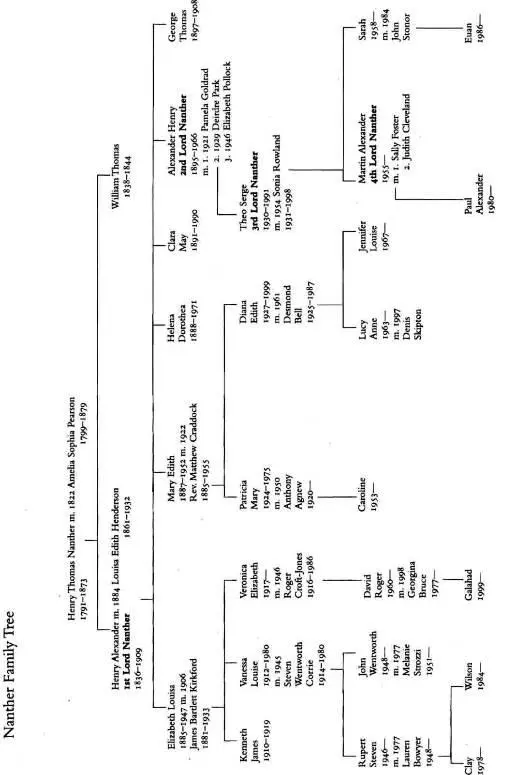
In her tenth novel writing as Barbara Vine, Ruth Rendell offers a novel of suspense based in 19th-century England and centering on deceit, murder, and various other family skeletons. Martin Nanther, the fourth Lord Nanther, has a comfortable life in present-day London as a Hereditary Peer in the House of Lords and as a historical biographer. He chooses as his most recent subject his own great-grandfather, the first Lord Nanther, physician to the royal family (Victoria and Albert) and an early noted researcher into the cause and transmission of hemophilia. The reader is taken through the family history as Martin painstakingly uncovers some not so savory bits of his own family's past. The story is dense with characters, and the author provides family trees of the two principal families, for which any reader will be eternally grateful. The story lacks the usual page-turner suspense of the Rendell/Vine novels but makes up for that with unusually detailed glimpses into Victorian life and the inner workings of the House of Parliament, which American readers will find particularly intriguing. Recommended for all public libraries. Caroline Mann, Univ. of Portland, OR
The Blood Doctor — читать онлайн бесплатно полную книгу (весь текст) целиком
Ниже представлен текст книги, разбитый по страницам. Система сохранения места последней прочитанной страницы, позволяет с удобством читать онлайн бесплатно книгу «The Blood Doctor», без необходимости каждый раз заново искать на чём Вы остановились. Поставьте закладку, и сможете в любой момент перейти на страницу, на которой закончили чтение.
Интервал:
Закладка:
‘Would discovering his prospective bride was a haemophilia carrier be a reason?’
She asks if there’s any evidence for it and I say that there is. My explanation comes out a bit diffidently because I can tell she’s thinking of what she carries herself but she’s also thinking things are very different today, so she smiles and says I’m on the right track. We drink the champagne and go out to eat and it’s like old times. I can’t help noticing that as we go downhill there’s always the occasional good evening when we’re like we used to be, but even these are a fraction paler, a little bit less fervent, the mutual love growing infinitesimally weaker. The lovemaking that follows is good because I force myself to forget how it used to be.
I spend the morning reading the rest of the letters and get nowhere. Mary Craddock writes to her sister Elizabeth Kirkford in 1936 about a holiday she and her husband intend to take in Torquay, but that and Eleanor’s letter from Manaton are the only references to Devon in any of the correspondence. After lunch I go off to consult the Public Records. It takes me hours but I don’t find much. Or not much in the way of answers to my questions.
I do discover that Abel Bightford, Albert’s father, died in early 1885, not much more than a year after his son’s execution. He was only forty-three. Both the sisters married but not men whose family names occur anywhere in the letters or diaries. Jane Bightford and her sister Maria Mollick had fourteen siblings, but again none of them was connected to names appearing in any Henry documents. Harold Clive had been born at Livesey Place but his wife Anne came from London. Before her marriage she had been called Dixon and her birth had taken place in Wimpole Street.
This establishes some sort of link with Henry but a tenuous one considering that she was born in 1829, some forty-three years before he set up in practice there. Still, I’ll follow it up.
The Clives had no children. Nor, of course, did the single lady, Beatrice Withycombe, who appears to have been their friend. She was born in Tavistock and died there. If she was a distant cousin of Henrys there’s nothing to show it. The only point of interest is that her grandmother’s maiden name was Brewer, which brings me a feverish excitement at first, but as far as I can trace it back, from a completely different family from the Brewers of Euston (or, come to that, the Lord Brewer who bought my robe). Sir James Thripp was born in Highgate, seems to have lived in Richmond from the evidence of the births of his children there, and was married to a woman who had been a Justinia Gould.
If Henry paid Albert Bightford to kill Eleanor it looks as if he must have become acquainted with him on the platform at North Road, Plymouth when Bightford carried his bags from the train. But if he paid a visit to Plymouth, wouldn’t he have noted it somewhere in his diary for 1883? It was just the sort of thing he did note. No emotion, not a scrap of feeling, insight, observation, but only economical comment on journeys he made or was about to make. And he was very fond of trains. But would he have recorded this trip if during the course of it he set Bightford up as his hitman? No, but he would surely have noted down that he was about to make the trip, not knowing then that he would encounter Bightford on the station platform.
The difficulty here is that it’s preposterous. I try to imagine it and I can’t. Here is this respectable and distinguished gentleman, a Knight and royal physician, forty-seven years old, probably wearing a tailcoat and high silk hat, suddenly taking it into his head that the youth who’s humping his luggage would make a suitable murderer of his young fiancée. So he gets the youth’s name and address and that same evening leaves his hotel or the private house where he’s staying, pops round to Mrs Mollick’s, and conspires with the youth to bump off Eleanor, paying him fifteen quid in advance. It won’t do. It won’t do for a moment. However it may have happened, if it happened, it wasn’t like that.
Jude has alerted me to another difficulty. If Henry murdered Eleanor to remove the possibility of his becoming the father of haemophiliac children, why on earth did he stick around and marry her sister? For there was absolutely no reason why, simply because Eleanor was a carrier, her sister wouldn’t be. Two of Queen Victoria’s daughters were carriers as were two of the daughters of her daughter Alice of Hesse. Henry knew this better than anyone. And we now know that Edith was a carrier. The argument might be that he didn’t kill Eleanor because he suspected she was a carrier, but because he’d fallen in love with her sister. I find this as preposterous as the theory that he met Bightford on a station platform.
The whole thing is a mystery because as it stands it involves people behaving out of their natures, the way people don’t behave. They don’t do such things. I present myself with an account of what I think would have happened, given the cast of characters. Henry saw Eleanor in the street, fell in love with her, found out who she was and rigged up the mugging of her father to get to know her. This I can just about accept. He engages himself to Eleanor, then finds out from her mother that she bruises and bleeds easily and that Louisa Henderson had a brother who died young from haemophilia. Immediately he realizes that his fiancée may be a carrier. But he doesn’t plot to kill her. His whole way of life, upbringing and training, respectability and reputation, recoil from such an act. Anyway, it wouldn’t cross his mind. He must extricate himself from the engagement.
This is tricky, especially since he’s already stood up Olivia, and he postpones the interviews he must have with Eleanor and her father. Meanwhile, Eleanor is murdered in a train by a crazy boy, suffering from clinical depression or schizophrenia. That lets Henry out. Free, he can do the decent thing and commiserate with the bereaved parents. And the bereaved sister.
Out of the frying pan and into the fire, he marries that sister? No. Never. It’s absurd. But he did.
Henry’s practice was in Wimpole Street and Anne Clive was born there, seven houses apart. So the houses were not very far from each other. She was twenty-one when she married Harold Clive and that was in 1850, by which time it appears her family no longer lived there, since her father Richard Dixon died the following year in a house in Bloomsbury. I can’t neglect this sort of thing, though I’m coming increasingly to believe Henry had nothing to do with the murder. Jude, on the other hand, is adamant that he did. But she hates him, in so far as you can hate a man who died half a century before you were born. I don’t mind what she believes, I’m just so pleased she can talk about something other than ova and sperm quality and multiple births.
‘You do realize, don’t you,’ she says, ‘that you don’t absolutely know what this talk Louisa Henderson had with Henry was about? All you know is from his diary that she had a consultation with him. It may not have been about her daughter. She may have thought she’d got cancer herself, she may have had a haemorrhage or she may even have just had a bad nosebleed. God knows, I’ve had enough bleeds and I’m not a carrier of haemophilia. Why shouldn’t she just have asked him about something like I’ve had?’
It’s true. I’d made what I thought was an intelligent guess. I’d no evidence.
‘How old was she? Forty-five? Forty-six? She could have thought she was pregnant. Or having the menopause. You’ve thought this up because you can’t think of any other way Henry might have suspected Eleanor was a carrier.’
‘There was the bruising too.’
‘Yes, but she mentions it in a letter to her sister Edith, not to Henry. She could have told him but you don’t know that she did. You’re adapting the facts to fit your theory.’
Читать дальшеИнтервал:
Закладка:
Похожие книги на «The Blood Doctor»
Представляем Вашему вниманию похожие книги на «The Blood Doctor» списком для выбора. Мы отобрали схожую по названию и смыслу литературу в надежде предоставить читателям больше вариантов отыскать новые, интересные, ещё непрочитанные произведения.






Обсуждение, отзывы о книге «The Blood Doctor» и просто собственные мнения читателей. Оставьте ваши комментарии, напишите, что Вы думаете о произведении, его смысле или главных героях. Укажите что конкретно понравилось, а что нет, и почему Вы так считаете.