Barbara Vine - The Blood Doctor
Здесь есть возможность читать онлайн «Barbara Vine - The Blood Doctor» весь текст электронной книги совершенно бесплатно (целиком полную версию без сокращений). В некоторых случаях можно слушать аудио, скачать через торрент в формате fb2 и присутствует краткое содержание. Год выпуска: 2003, Издательство: Vintage, Жанр: Современная проза, на английском языке. Описание произведения, (предисловие) а так же отзывы посетителей доступны на портале библиотеки ЛибКат.
- Название:The Blood Doctor
- Автор:
- Издательство:Vintage
- Жанр:
- Год:2003
- ISBN:нет данных
- Рейтинг книги:4 / 5. Голосов: 1
-
Избранное:Добавить в избранное
- Отзывы:
-
Ваша оценка:
The Blood Doctor: краткое содержание, описание и аннотация
Предлагаем к чтению аннотацию, описание, краткое содержание или предисловие (зависит от того, что написал сам автор книги «The Blood Doctor»). Если вы не нашли необходимую информацию о книге — напишите в комментариях, мы постараемся отыскать её.
Barbara Vine (a.k.a. Ruth Rendell) deftly weaves this story of an eminent Victorian with a modern yarn about the embattled biographer, who is watching the House of Lords prepare to annul membership for hereditary peers and thus strip him of his position. Themes of fate and family snake throughout this teasing psychological suspense, a typically chilling tale from a master of the genre.
From Publishers Weekly
This rich, labyrinthine book by Vine (aka Ruth Rendell) concerns a "mystery in history," like her 1998 novel, The Chimney Sweeper's Boy. Martin Nanther-biographer and member of the House of Lords-discovers some blighted roots on his family tree while researching the life of his great-great-grandfather, Henry, an expert on hemophilia and physician to Queen Victoria. Martin contacts long-lost relatives who help him uncover some puzzling events in Henry's life. Was Henry a dour workaholic or something much more sinister? Vine can make century-old tragedy come alive. Still, the decades lapsed between Martin's and Henry's circles create added emotional distance, and, because they are all at least 50 years dead, we never meet Henry or his cohorts except through diaries and letters. Martin's own life-his wife's infertility and troubles with a son from his first marriage-is interesting yet sometimes intrudes on the more intriguing Victorian saga. Vine uses her own experience as a peer to give readers an insider's look into the House of Lords, at the dukes snoozing in the library between votes and eating strawberries on the terrace fronting the Thames. Some minor characters are especially vivid, like Martin's elderly cousin Veronica, who belts back gin while stonewalling about the family skeletons all but dancing through her living room. Readers may guess Henry's game before Vine is ready to reveal it, but this doesn't detract from this novel peopled by characters at once repellant and compelling.
From Library Journal
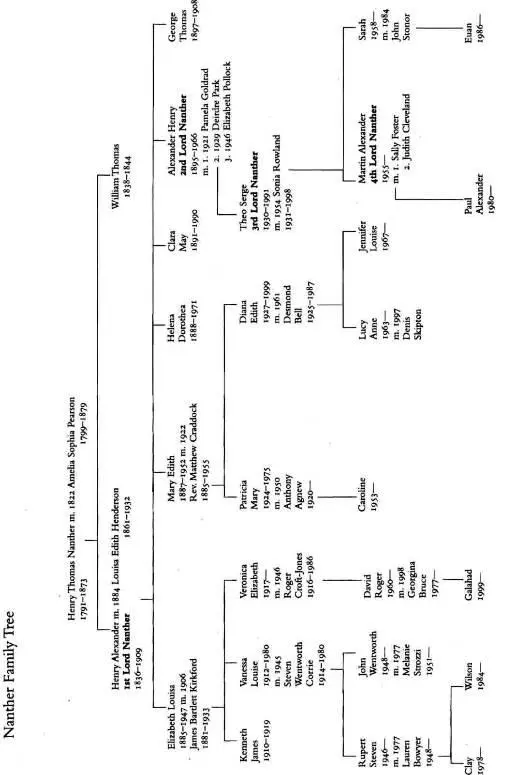
In her tenth novel writing as Barbara Vine, Ruth Rendell offers a novel of suspense based in 19th-century England and centering on deceit, murder, and various other family skeletons. Martin Nanther, the fourth Lord Nanther, has a comfortable life in present-day London as a Hereditary Peer in the House of Lords and as a historical biographer. He chooses as his most recent subject his own great-grandfather, the first Lord Nanther, physician to the royal family (Victoria and Albert) and an early noted researcher into the cause and transmission of hemophilia. The reader is taken through the family history as Martin painstakingly uncovers some not so savory bits of his own family's past. The story is dense with characters, and the author provides family trees of the two principal families, for which any reader will be eternally grateful. The story lacks the usual page-turner suspense of the Rendell/Vine novels but makes up for that with unusually detailed glimpses into Victorian life and the inner workings of the House of Parliament, which American readers will find particularly intriguing. Recommended for all public libraries. Caroline Mann, Univ. of Portland, OR
The Blood Doctor — читать онлайн бесплатно полную книгу (весь текст) целиком
Ниже представлен текст книги, разбитый по страницам. Система сохранения места последней прочитанной страницы, позволяет с удобством читать онлайн бесплатно книгу «The Blood Doctor», без необходимости каждый раз заново искать на чём Вы остановились. Поставьте закладку, и сможете в любой момент перейти на страницу, на которой закончили чтение.
Интервал:
Закладка:
Albert Bightford was by now twenty years old. He appears to have led a solitary and dour existence, portering by day but speaking little to his fellow station employees, returning to his aunt’s house, eating his evening meal and retiring early to bed. There was a working men’s club in North Road at the time but Bightford did not visit its premises nor attend its meetings. Several of his fellows at the station invited him to partake of refreshment with them in the local hostelry but he always refused. It was remarked upon that he was never once heard to call any of them by their names. Even the station master, an august personage in these circles, who was addressed as ‘Sir’ was not so called by Bightford. He complained from time to time of pain in his back and of the peremptory way passengers spoke to him. Otherwise, he hardly spoke.
It sounds to our more empathetic twenty-first century ears as if Albert was suffering from chronic depression. Perhaps he’d been depressed for years but things were worse now he was separated from his family, his old home and the friends he perhaps had at Livesey Place. He knew no one but this aunt in Plymouth, he had no girl and no friends. Anyone in his situation today would call up sympathy and perhaps help from many quarters, he would be less isolated, he could have sought training for a trade and once over eighteen, lived on benefit until he got a job. Or that’s how it looks. Maybe it’s not that easy, but it’s certainly easier than it was in Victorian England.
Of course, from this distance in time and with so little evidence it’s hard to tell. Luke gives no help. Depression to him is a hollow place between hills. Albert may have suffered from something deeper and sadder than depression. It’s possible he was schizophrenic. The contemporary attitude would have been to tell him to pull himself together, be a man, that work and bettering oneself are what matter. A working man can’t have ‘nerves’ like the gentry, like a young lady. Over the distance of a hundred and twenty years one’s heart goes out to Albert Bightford, lonely and confused and in pain.
He was rude to his fellows and silent with the passengers. One day in early October 1883, when the express drew into North Road from London, a man called Sir James Thripp, of Caraman House, Plymbridge, alighted from a first-class carriage and told Albert to bring his bags out to his brougham that had come to meet the train. Albert said nothing but obeyed.
Later he said that his back had been painful. Whatever the cause, he dropped one of Sir James’s leather grips on the platform, for which Sir James, justifiably but perhaps harshly, reproved him with the words, ‘Look sharp, you damned fool! There are breakables in that bag and you shall pay to the last farthing if any are broken.’ Whereupon Bightford set down the luggage he was carrying and replied in a loud carrying tone, ‘Call yourself a gentleman? If there is any fool here it is yourself!’
Very evidently he’d reached breaking point and he broke. So also did a glass case of rare butterflies Sir James was bringing home, for what purpose no one seems to know. The whole matter was reported at once to the station master, who was probably delighted to have a reason for getting rid of Albert. Nothing more seems to have been said about paying for the broken butterfly case.
Albert went home to Mrs Mollick. What happened between them isn’t known. He seems to have stayed with her for rather more than a week, during which time he left the house only to loiter, mostly in silence, about the station platforms. Finally, he was told to leave and not come back. While Eleanor Henderson was enjoying herself at her aunt’s, talking of her forthcoming wedding, appreciating the luxury of the house and walking (and bruising herself) with her cousins, Albert was either closeted with his, constantly berated perhaps for his conduct and no doubt repeatedly asked what he was going to do next, or hanging about North Road station. Mrs Mollick seems to have been a sharp-tongued woman who ‘stood no nonsense’. However it was, after nine days, she turned him out, telling him to go home to his parents. Albert protested that he couldn’t walk so far, he was ill and in constant pain. She insisted and he left her house at about ten on the morning of 20 October.
What was wrong with Albert’s back? It sounds like a slipped disc. Or possibly he’d damaged his spine even more seriously. Young boys in the Nazi concentration camps, forced to move heavy machinery or carry loads, often did damage to their backs which, if they survived, lasted into old age. No doubt a similar thing happened to Victorian youths who were set to manual work without thought that they might be too young and too vulnerable for it. Did Bightford have baggage of his own to carry? We’re not told, but he could hardly have taken up more or less permanent residence with Mrs Mollick and brought no belongings with him. Perhaps this particular morning was breaking point rather than when he was rude to Sir James Thripp. He is out in the street, in pain, carrying his own luggage, unable to get home and, in any case, afraid to confront his father. When the London express drew into Plymouth he gets on it. Meaning to go where, do what? No one knows. It’s likely he didn’t know himself.
Apparently, he bought a ticket to London, Paddington, so he intended to get as far as that. This last rail journey he ever made was also the first time in his life he’d ever been in a train. He sat in a third-class carriage – but not for long. It’s not known what made him get up and walk through the train, complaining to anyone who’d listen that he’d been unfairly dismissed from his portering job. It was atypical behaviour for this morose and usually silent young man. Mental disturbance changes people’s characters and this has to be the answer. I suppose.
The train passed through Newton Abbot, Teignmouth and Dawlish, followed the few miles of beautiful route along the South Devon coast and approached within a dozen miles of Exeter. Albert Bightford entered the carriage where Eleanor sat alone.
Here Stewart Luke digresses to give some family background. To him, writing in Edwardian times, long before women ceased to be defined by the men connected to them, the most important thing about Eleanor is her link with the eminent Dr Nanther. He continually refers to him as Lord Nanther, though Henry wasn’t ennobled until thirteen years later. He gets his degrees and orders wrong (describing him as KCVO, an order of chivalry not instituted until 1896), his position in Queen Victoria’s household and his age, describing him as being forty-five at the time of the murder. But he obviously reveres him. Brilliant Henry. Courtly Henry. Although he calls Eleanor ‘the unfortunate young lady’ and expresses suitable Edwardian shocked horror at the mode and manner of her death, it’s Henry’s loss he dwells on, the blighting of Henry’s happiness and Henry’s amazing devotion to the Henderson family after the loss of his ‘betrothed’.
No attempt is made to account for Bightford’s strangling Eleanor. Motive, of course, is of little significance in British justice. Perhaps, even then, people knew how hard it is to explain human actions, why any of us do the seemingly inexplicable things we do. Psychology and psychiatry can account for some of them but not all. The great mystery remains. Albert Bightford had no girlfriend, had apparently never had one. Was he attracted to Eleanor and did he make an advance which she repelled? He pulled the scarf from her neck – did he do so during an attempt at an embrace? Or did she insult him as Sir James had? Not when he dropped something of hers but when he tried to confide his miseries to her? ‘He saw red,’ Luke writes, using the old bullfighting metaphor not very helpfully. Why he makes no attempt to explain. Albert strangled Eleanor, opened the door or just the window, and threw her body from the train.
Читать дальшеИнтервал:
Закладка:
Похожие книги на «The Blood Doctor»
Представляем Вашему вниманию похожие книги на «The Blood Doctor» списком для выбора. Мы отобрали схожую по названию и смыслу литературу в надежде предоставить читателям больше вариантов отыскать новые, интересные, ещё непрочитанные произведения.










Обсуждение, отзывы о книге «The Blood Doctor» и просто собственные мнения читателей. Оставьте ваши комментарии, напишите, что Вы думаете о произведении, его смысле или главных героях. Укажите что конкретно понравилось, а что нет, и почему Вы так считаете.