Barbara Vine - The Blood Doctor
Здесь есть возможность читать онлайн «Barbara Vine - The Blood Doctor» весь текст электронной книги совершенно бесплатно (целиком полную версию без сокращений). В некоторых случаях можно слушать аудио, скачать через торрент в формате fb2 и присутствует краткое содержание. Год выпуска: 2003, Издательство: Vintage, Жанр: Современная проза, на английском языке. Описание произведения, (предисловие) а так же отзывы посетителей доступны на портале библиотеки ЛибКат.
- Название:The Blood Doctor
- Автор:
- Издательство:Vintage
- Жанр:
- Год:2003
- ISBN:нет данных
- Рейтинг книги:4 / 5. Голосов: 1
-
Избранное:Добавить в избранное
- Отзывы:
-
Ваша оценка:
The Blood Doctor: краткое содержание, описание и аннотация
Предлагаем к чтению аннотацию, описание, краткое содержание или предисловие (зависит от того, что написал сам автор книги «The Blood Doctor»). Если вы не нашли необходимую информацию о книге — напишите в комментариях, мы постараемся отыскать её.
Barbara Vine (a.k.a. Ruth Rendell) deftly weaves this story of an eminent Victorian with a modern yarn about the embattled biographer, who is watching the House of Lords prepare to annul membership for hereditary peers and thus strip him of his position. Themes of fate and family snake throughout this teasing psychological suspense, a typically chilling tale from a master of the genre.
From Publishers Weekly
This rich, labyrinthine book by Vine (aka Ruth Rendell) concerns a "mystery in history," like her 1998 novel, The Chimney Sweeper's Boy. Martin Nanther-biographer and member of the House of Lords-discovers some blighted roots on his family tree while researching the life of his great-great-grandfather, Henry, an expert on hemophilia and physician to Queen Victoria. Martin contacts long-lost relatives who help him uncover some puzzling events in Henry's life. Was Henry a dour workaholic or something much more sinister? Vine can make century-old tragedy come alive. Still, the decades lapsed between Martin's and Henry's circles create added emotional distance, and, because they are all at least 50 years dead, we never meet Henry or his cohorts except through diaries and letters. Martin's own life-his wife's infertility and troubles with a son from his first marriage-is interesting yet sometimes intrudes on the more intriguing Victorian saga. Vine uses her own experience as a peer to give readers an insider's look into the House of Lords, at the dukes snoozing in the library between votes and eating strawberries on the terrace fronting the Thames. Some minor characters are especially vivid, like Martin's elderly cousin Veronica, who belts back gin while stonewalling about the family skeletons all but dancing through her living room. Readers may guess Henry's game before Vine is ready to reveal it, but this doesn't detract from this novel peopled by characters at once repellant and compelling.
From Library Journal
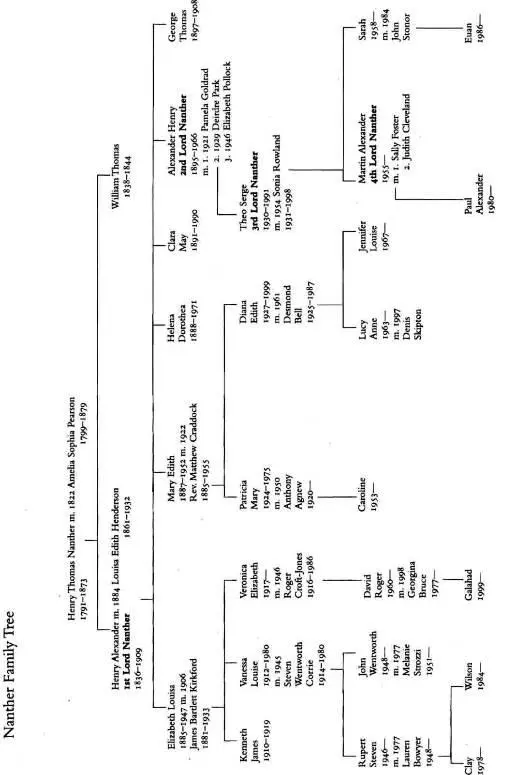
In her tenth novel writing as Barbara Vine, Ruth Rendell offers a novel of suspense based in 19th-century England and centering on deceit, murder, and various other family skeletons. Martin Nanther, the fourth Lord Nanther, has a comfortable life in present-day London as a Hereditary Peer in the House of Lords and as a historical biographer. He chooses as his most recent subject his own great-grandfather, the first Lord Nanther, physician to the royal family (Victoria and Albert) and an early noted researcher into the cause and transmission of hemophilia. The reader is taken through the family history as Martin painstakingly uncovers some not so savory bits of his own family's past. The story is dense with characters, and the author provides family trees of the two principal families, for which any reader will be eternally grateful. The story lacks the usual page-turner suspense of the Rendell/Vine novels but makes up for that with unusually detailed glimpses into Victorian life and the inner workings of the House of Parliament, which American readers will find particularly intriguing. Recommended for all public libraries. Caroline Mann, Univ. of Portland, OR
The Blood Doctor — читать онлайн бесплатно полную книгу (весь текст) целиком
Ниже представлен текст книги, разбитый по страницам. Система сохранения места последней прочитанной страницы, позволяет с удобством читать онлайн бесплатно книгу «The Blood Doctor», без необходимости каждый раз заново искать на чём Вы остановились. Поставьте закладку, и сможете в любой момент перейти на страницу, на которой закончили чтение.
Интервал:
Закладка:
I’m not there to hear it, of course. Not at first. This is the first time I’ve been back since they chucked me out in November. I vowed then never to return, whatever the circumstances, but I’ve come back. I need a reason to get out of the house, Alma Villa I mean, to get away from the claustrophobic atmosphere of talk of eggs and implants and multiple births. I’m ashamed of thinking this way, of course I am, but I’m weary of being ashamed, weary of the self-reproach with which I lash myself when at home. Coming here is a change. And there’s another reason for it. I have to get back to Henry but I can no longer talk to Jude about him and the mysteries in his life. She doesn’t care, she doesn’t want to know. She pretends, she puts on a show of listening but it’s as if she says to herself, I’ll give him five minutes of this – I see her looking at her watch – and then we’ll return to the important thing, to reality . Her life now is the hugely wonderful crowning achievement she sees herself approaching, the giving of birth. What does it matter if everything is subsumed in this, career, home, me, sex, love, friends, conversation, fun? The purpose of woman’s existence is to give birth, carry on the race. And now she can do it. Thanks to the wonders of medical science she can have not just one healthy baby but two or even three. No wonder she thinks of nothing else.
So when Lachlan asked me to dinner I thought, I’ll try Henry out on him. He, at least, doesn’t want babies. He’s had six. First, though, I have the embarrassment I knew I’d have of sidling in at the Peers’ Entrance, uttering a greeting in response to the doorkeeper’s cheerful, ‘Good evening, my Lord,’ and sitting humbly down on the bench at the back where visitors wait. I’m too weary of self-reproach to remind myself that I voted for it, I approved it. Anyway, I don’t have to put up with it for long, as Lachlan appears on the stroke of six-thirty.
With his walrus face and landowner’s manner, he looks the last person to vote for the repeal of Section 28 but he’s going to. His appearance is deceptive. I recall our conversation about Richard Hamilton and Lachlan’s assertion that all men are a bit ‘queer’. Now he says homosexuality is inborn. You’re ‘that way’ or you’re not and no amount of promotion or encouragement will change you. I’m not in the mood for hearing any more about genetics just at the moment and I’m pretty sure I won’t be in the Chamber where crusty ancient hereditaries (some of the élite and elected ninety-two) are blithely confusing homosexuals and paedophiles. I’m allowed to sit on the steps of the throne where I haven’t sat since I was a boy of twelve. Someone next to me I’ve never seen before – he may be a young hereditary or a peer’s eldest son – whispers that he’s gay himself and that Earl Russell has just made the best speech he’s ever heard in the House in favour of repeal. Just my luck, I say aggrievedly, not to have been here to have heard it.
But I don’t like sitting here. It embarrasses me. Like one of those gay schoolboys Government speakers say suffer from bullying under Section 28, I feel everyone is singling me out and staring. It’s a relief when Lachlan gets up and goes out at the end by the throne and I can follow him.
It’s just like old times. The Opposition have mustered their troops, peers who never come in except when heavily whipped, and here they are hastening through the Prince’s Chamber with their wives that they’ve brought in to dinner. You’d have to be an expert to know the House had been reformed at all.
Lachlan buys me a glass of red wine and himself a whisky. I can’t reciprocate, of course. I can’t pay for dinner or share the cost. I’m no longer eligible to pay for anything in here and I ought to be pleased. Another forty or fifty quid will be saved towards anti-SMA procedures. I seriously think for a moment of telling Lachlan all about it but as quickly dismiss the idea. Instead I revert to Henry.
‘So what do you think? I mean, about the coincidence?’
He always speaks slowly and with steady precision, in the Chamber and out of it. ‘How common an affliction is haemophilia?’
I don’t know the answer. ‘The only figures I’ve got are for the United States.’ They’re the ones John Corrie gave me. ‘About fifteen thousand people out of whatever their population is – two hundred and fifty million? – are haemophiliacs.’
‘A rare disease then.’
‘The incidence has been much higher in communities largely cut off from the rest of the world, such as alpine valleys in Switzerland. And it seems to be more common among Teutonic people and Jewish people. There used to be a theory, which could be false, that haemophiliacs and carriers were more fertile than others.’
I tell him about Henry’s youngest child George, his mysterious illness, the references to his ill-health in his sisters’ letters, Alternative Henry’s cryptic allusions to it, the family’s conspiracy of silence. Why? Why?
‘He was a medico at University College Hospital? Could the lady he married have been his patient?’
‘Women don’t really have haemophilia,’ I say. ‘They have bleeding disorders but I can’t imagine a Victorian woman going to a doctor with something like that, a problem she’d just cope with at home. Besides, Henry didn’t meet the Hendersons by that route. He got to know them because he came to Samuel Henderson’s aid when he was attacked in the street.’
Suddenly I remember who Samuel’s attacker was. Jimmy Ashworth Dawson’s brother-in-law, someone Henry very likely paid to do the deed or else we’re up against another coincidence. But it’s time to go in for dinner where the talk buzzes with Section 28 and people keep coming up to our table to greet me, to ask how I’m getting on, some to say what a shame I can’t vote, they need me. The debate has been going on for more than four hours and they’re still slogging it out.
Lachlan’s been looking at some of the notes I’ve made. ‘He engages himself to Henderson’s elder daughter, the girl who bruises easily? You mention that here. Significant, is it?’
‘I don’t know. Some haemophilia carriers – they’re called symptomatic carriers – have mild bleeding problems, excessive bruising, nosebleeds, that sort of thing. The family seems to be aware of Eleanor’s propensity to bruising. If Henry knew of it he might have suspected she was a carrier. But on the other hand, she could have had a far commoner disorder like Von Willebrand’s disease or epistaxis. That he happened by chance to fall in love with a girl who was a haemophilia carrier would have struck him, as it does us, as too huge a coincidence to be viable.’
‘He didn’t marry her, did he?’
‘He would have done. She was murdered.’
There’s to be no more talk of this because a Tory pal of Lachlan’s comes to the table and sits down in the third chair, after only the most perfunctory request to ask if he may. The rest of the meal passes against a background of Lachlan and the pal arguing, not particularly amicably, as to whether homosexuals are born or made. ‘Did you hear the one,’ says the pal, ‘about the queer who went to a psychiatrist and said his mother made him a homosexual? The psychiatrist said, if I get her the wool will she make me one too?’
Nobody laughs. I think of Richard Hamilton and Henry and wonder. Can there be a gene of homosexuality, carried on one of a woman’s X chromosomes? If there is they haven’t found it yet. It’s nine o’clock and I see on the monitor that the minister Lord Whitty is on his feet.
Lachlan says, ‘Would you mind if we went back?’
I suppose I can get used to the steps of the throne. The discomfort ought to distract me from the humiliation and perhaps it will. As soon as I’ve sat down Lady Young, whose amendment this is, gets up, speaks for a few moments and says she’s going to divide the House. I hear what the Deputy Speaker says with new ears. I’ve never noticed what a resonant piece of prose it is.
Читать дальшеИнтервал:
Закладка:
Похожие книги на «The Blood Doctor»
Представляем Вашему вниманию похожие книги на «The Blood Doctor» списком для выбора. Мы отобрали схожую по названию и смыслу литературу в надежде предоставить читателям больше вариантов отыскать новые, интересные, ещё непрочитанные произведения.






Обсуждение, отзывы о книге «The Blood Doctor» и просто собственные мнения читателей. Оставьте ваши комментарии, напишите, что Вы думаете о произведении, его смысле или главных героях. Укажите что конкретно понравилось, а что нет, и почему Вы так считаете.