Barbara Vine - The Blood Doctor
Здесь есть возможность читать онлайн «Barbara Vine - The Blood Doctor» весь текст электронной книги совершенно бесплатно (целиком полную версию без сокращений). В некоторых случаях можно слушать аудио, скачать через торрент в формате fb2 и присутствует краткое содержание. Год выпуска: 2003, Издательство: Vintage, Жанр: Современная проза, на английском языке. Описание произведения, (предисловие) а так же отзывы посетителей доступны на портале библиотеки ЛибКат.
- Название:The Blood Doctor
- Автор:
- Издательство:Vintage
- Жанр:
- Год:2003
- ISBN:нет данных
- Рейтинг книги:4 / 5. Голосов: 1
-
Избранное:Добавить в избранное
- Отзывы:
-
Ваша оценка:
The Blood Doctor: краткое содержание, описание и аннотация
Предлагаем к чтению аннотацию, описание, краткое содержание или предисловие (зависит от того, что написал сам автор книги «The Blood Doctor»). Если вы не нашли необходимую информацию о книге — напишите в комментариях, мы постараемся отыскать её.
Barbara Vine (a.k.a. Ruth Rendell) deftly weaves this story of an eminent Victorian with a modern yarn about the embattled biographer, who is watching the House of Lords prepare to annul membership for hereditary peers and thus strip him of his position. Themes of fate and family snake throughout this teasing psychological suspense, a typically chilling tale from a master of the genre.
From Publishers Weekly
This rich, labyrinthine book by Vine (aka Ruth Rendell) concerns a "mystery in history," like her 1998 novel, The Chimney Sweeper's Boy. Martin Nanther-biographer and member of the House of Lords-discovers some blighted roots on his family tree while researching the life of his great-great-grandfather, Henry, an expert on hemophilia and physician to Queen Victoria. Martin contacts long-lost relatives who help him uncover some puzzling events in Henry's life. Was Henry a dour workaholic or something much more sinister? Vine can make century-old tragedy come alive. Still, the decades lapsed between Martin's and Henry's circles create added emotional distance, and, because they are all at least 50 years dead, we never meet Henry or his cohorts except through diaries and letters. Martin's own life-his wife's infertility and troubles with a son from his first marriage-is interesting yet sometimes intrudes on the more intriguing Victorian saga. Vine uses her own experience as a peer to give readers an insider's look into the House of Lords, at the dukes snoozing in the library between votes and eating strawberries on the terrace fronting the Thames. Some minor characters are especially vivid, like Martin's elderly cousin Veronica, who belts back gin while stonewalling about the family skeletons all but dancing through her living room. Readers may guess Henry's game before Vine is ready to reveal it, but this doesn't detract from this novel peopled by characters at once repellant and compelling.
From Library Journal
In her tenth novel writing as Barbara Vine, Ruth Rendell offers a novel of suspense based in 19th-century England and centering on deceit, murder, and various other family skeletons. Martin Nanther, the fourth Lord Nanther, has a comfortable life in present-day London as a Hereditary Peer in the House of Lords and as a historical biographer. He chooses as his most recent subject his own great-grandfather, the first Lord Nanther, physician to the royal family (Victoria and Albert) and an early noted researcher into the cause and transmission of hemophilia. The reader is taken through the family history as Martin painstakingly uncovers some not so savory bits of his own family's past. The story is dense with characters, and the author provides family trees of the two principal families, for which any reader will be eternally grateful. The story lacks the usual page-turner suspense of the Rendell/Vine novels but makes up for that with unusually detailed glimpses into Victorian life and the inner workings of the House of Parliament, which American readers will find particularly intriguing. Recommended for all public libraries. Caroline Mann, Univ. of Portland, OR
The Blood Doctor — читать онлайн бесплатно полную книгу (весь текст) целиком
Ниже представлен текст книги, разбитый по страницам. Система сохранения места последней прочитанной страницы, позволяет с удобством читать онлайн бесплатно книгу «The Blood Doctor», без необходимости каждый раз заново искать на чём Вы остановились. Поставьте закладку, и сможете в любой момент перейти на страницу, на которой закончили чтение.
Интервал:
Закладка:
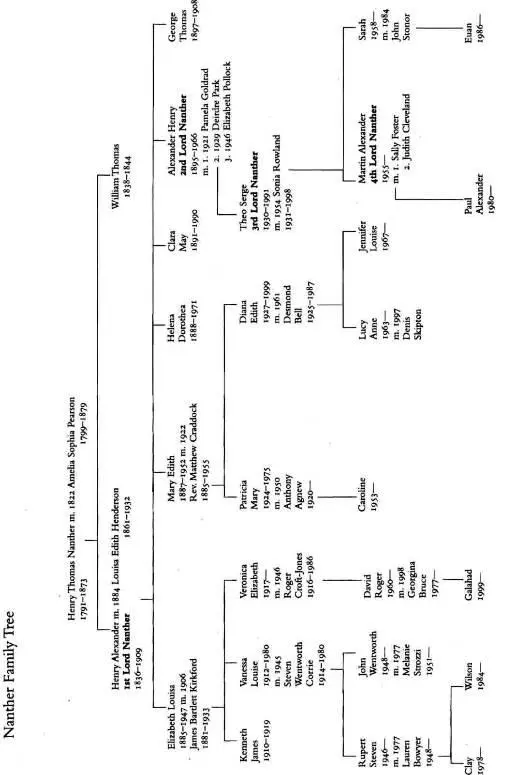
The train comes. I put the improvised tree back into my pocket and concentrate on gene therapy and what it would have meant to people such as Prince Leopold and Veronica’s brother Kenneth and the Tsarevich, who suffered so much pain and fear before, in the case of the first two, their disease killed them. My mind wanders to Jude and the tests she’s been having. I’m not usually the kind of person who fantasizes worst-case scenarios but it does occur to me that there may be some genetic disorder to account for all these miscarriages. Is that what they’ve been testing for?
What a strange thing it is to be like Veronica, proud of yourself for not carrying genes of disability and ashamed of yourself for carrying them. Look at me, she’s saying, I who am pure and healthy and perfect, I who have perfect children. Yet nothing could be further from her own volition or beyond her control. Both known carrier and apparent non-carrier are in a state of utter innocence and, moreover, of ignorance too. For I’ve read somewhere that all of us have in our DNA about twelve defective genes we are capable of passing on to our descendants, but the chances are we know nothing of them. They lie dormant, as they have lain in the bodies of mankind and animals for millennia. They will never show themselves unless we reproduce with someone whose DNA matches ours in some tiny particular, the reason that lies behind incest taboos and strictures in all faiths against marrying close relations.
In my mind I’ve been condemning Veronica for assuming she isn’t a haemophilia carrier on the strength of having had one son with normal blood. But there’s no difference between this attitude of hers and mine when I tell myself Jude’s miscarriages are nothing to do with me, my genes are all right, Paul proves it. I’m behaving like Veronica, congratulating myself on my purity without any foundation for doing so. I too have one son, an only child, just as Vanessa had one son – until she had a second one. Veronica and I act as if we created ourselves in the image of God instead of being the result of thousands of years of mixing and selecting and rejecting and surviving.
24
Christmas is past. Paul decided to come and spend it with us and things went rather well, due perhaps to his bringing his nice new girlfriend with him. I realized I’d never talked to him about what I do, apart from what I did in the House of Lords, and realized too that if I had, this might have saved our relationship. So I told him about the Nanthers and the haemophilia; he was interested and, for once, not scathing. It helped a lot that Sam, the girlfriend, is a medical student and fascinated by gene therapy and its potential. They both know a man who’s a haemophiliac and is now HIV positive through being given a transfusion of infected blood.
To my surprise Jude talked about her own tests, and was completely open and frank about them. She gets the results next week. Everything shuts down over Christmas and the New Year, especially this one, the start of a new millennium, so she’s had to wait a long while. Mine are due to be done about the same time. At least I know she’s taken to heart the sternly delivered advice not to attempt to conceive again yet. Her attraction for me, once so overwhelming, is back. There were an awful few days – or nights – when a kind of panic seized me that with her, in bed, in the dark perhaps, I’d have to fantasize, run in front of my unseeing eyes some self-involving video, as at the end of our relationship I did with Sally. But there was no dark, the lights were on as they mostly are for us, and her beauty and her essential Jude-ness worked their magic, and I think it was the same as it always was. I think so.
*
David Croft-Jones is furious with me for mentioning John Corrie to his mother. I ‘undertook’, he says, not to do this. I remind him that when he asked for an undertaking I didn’t answer him and then I add that whatever his mother may have said to him since, she was perfectly happy to talk about it once she’d got over her initial awkwardness. Georgie is saying something in the background – no doubt about Veronica’s general unreasonableness – and David is mollified. He wants to hear my version and can he come round? I can’t very well say no. Of course it turns out that Veronica has let something out about haemophilia in the family, but been cryptic and secretive and now he wants to hear the truth of it. He’s seriously worried. It was the first he’s heard of it, it’s ‘devastated’ him, and Georgie wants to know if any more children they might have could be haemophiliacs.
‘Absolutely not,’ tell him. ‘It’s not even known if your mother has the gene and if she has she didn’t pass it on to you. It’s died out in your branch.’
‘So you say,’ he says rather rudely. ‘I shall check it out. I shall ask my GP. All this has been a shock.’ He talks about our family’s inheritance as if it were a small animal, a hamster maybe, that has escaped and is lurking somewhere. ‘Where is it now, this haemophilia? Is it hidden in someone’s blood? What’s happened to it?’
It’s on the tip of my tongue to tell him to ask his GP. After all, he doesn’t believe me. But I don’t. I answer quite mildly that it may not have begun with a mutation in his grandmother’s genes but earlier and his great-aunt and mine, Mary Craddock, may have also carried it. Therefore, so may either of her daughters, Patricia and Diana, and hence her granddaughters, Caroline, Lucy and Jennifer. Always precise and didactic in these matters, he says in rather a peevish tone that ‘those girls’ are his second cousins just as they are mine. He and his mother were invited to Lucy’s wedding in 1997. Diana wrote to them, urging them to come on the grounds that though they’d never met the bride they were family and families should ‘stick together’.
‘Then you’ll have her address.’
‘No, I won’t. I must have lost it.’ Then he adds, surprisingly, ‘I could have her traced for you. If that’s what you want.’
Could he really? Perhaps he’s more important in the Home Office than I thought or perhaps any of them can do this sort of thing. Of course I readily accept.
‘It would be useful to me too,’ he says. ‘She may have a child by now that I could put in my tree.’
‘Did you go to the wedding?’
‘What wedding?’
‘Lucy’s.’
‘Good God, no. All they asked us for was to get a present. I never believed all that family rubbish.’ He’s his mother’s son.
‘And Diana’s dead now?’
‘She died last year. My mother told me.’
I ask him how his mother knew, seeing she isn’t in touch with either Lucy or Jennifer or their cousin Caroline. He says she saw the announcement in the death columns of the Daily Telegraph , of which she’s apparently an avid reader.
Whether he went to his GP I didn’t ask and he volunteered no information but he traced Lucy Skipton much more quickly than I’d expected. I phoned her and she’s agreed to meet me. Time was but is no longer when I could have taken her to lunch in the House of Lords. She’s a solicitor with a firm near the Law Courts, so I suggest a restaurant in a street just off Aldwych. I wonder if she knows she’s in the same profession as her great-great-grandfather and, incidentally, as my father. How astounded, how disbelieving, Samuel Henderson would have been if he’d known one of his female descendants was following in his footsteps. More shades of Earl Ferrers’ speech with its diatribe against possible judges ‘drawn from the serried ranks of the ladies’ and women eating their way like acid into the professions.
Our date is a fortnight away. I haven’t told her much, only that I’m writing Henry’s biography, but she didn’t need any more. She knows quite a bit about Henry from being an inveterate reader of biographies of eminent Victorians, in many of which he’s mentioned. Lucy is thirty-six, about a year younger than Jude. I’m looking forward to our meeting in a way I didn’t look forward to seeing John Corrie or renewing my acquaintance with Veronica. In fact, I’m impatient about it because she’s told me something on the phone I didn’t expect.
Читать дальшеИнтервал:
Закладка:
Похожие книги на «The Blood Doctor»
Представляем Вашему вниманию похожие книги на «The Blood Doctor» списком для выбора. Мы отобрали схожую по названию и смыслу литературу в надежде предоставить читателям больше вариантов отыскать новые, интересные, ещё непрочитанные произведения.





Обсуждение, отзывы о книге «The Blood Doctor» и просто собственные мнения читателей. Оставьте ваши комментарии, напишите, что Вы думаете о произведении, его смысле или главных героях. Укажите что конкретно понравилось, а что нет, и почему Вы так считаете.