Barbara Vine - The Blood Doctor
Здесь есть возможность читать онлайн «Barbara Vine - The Blood Doctor» весь текст электронной книги совершенно бесплатно (целиком полную версию без сокращений). В некоторых случаях можно слушать аудио, скачать через торрент в формате fb2 и присутствует краткое содержание. Год выпуска: 2003, Издательство: Vintage, Жанр: Современная проза, на английском языке. Описание произведения, (предисловие) а так же отзывы посетителей доступны на портале библиотеки ЛибКат.
- Название:The Blood Doctor
- Автор:
- Издательство:Vintage
- Жанр:
- Год:2003
- ISBN:нет данных
- Рейтинг книги:4 / 5. Голосов: 1
-
Избранное:Добавить в избранное
- Отзывы:
-
Ваша оценка:
The Blood Doctor: краткое содержание, описание и аннотация
Предлагаем к чтению аннотацию, описание, краткое содержание или предисловие (зависит от того, что написал сам автор книги «The Blood Doctor»). Если вы не нашли необходимую информацию о книге — напишите в комментариях, мы постараемся отыскать её.
Barbara Vine (a.k.a. Ruth Rendell) deftly weaves this story of an eminent Victorian with a modern yarn about the embattled biographer, who is watching the House of Lords prepare to annul membership for hereditary peers and thus strip him of his position. Themes of fate and family snake throughout this teasing psychological suspense, a typically chilling tale from a master of the genre.
From Publishers Weekly
This rich, labyrinthine book by Vine (aka Ruth Rendell) concerns a "mystery in history," like her 1998 novel, The Chimney Sweeper's Boy. Martin Nanther-biographer and member of the House of Lords-discovers some blighted roots on his family tree while researching the life of his great-great-grandfather, Henry, an expert on hemophilia and physician to Queen Victoria. Martin contacts long-lost relatives who help him uncover some puzzling events in Henry's life. Was Henry a dour workaholic or something much more sinister? Vine can make century-old tragedy come alive. Still, the decades lapsed between Martin's and Henry's circles create added emotional distance, and, because they are all at least 50 years dead, we never meet Henry or his cohorts except through diaries and letters. Martin's own life-his wife's infertility and troubles with a son from his first marriage-is interesting yet sometimes intrudes on the more intriguing Victorian saga. Vine uses her own experience as a peer to give readers an insider's look into the House of Lords, at the dukes snoozing in the library between votes and eating strawberries on the terrace fronting the Thames. Some minor characters are especially vivid, like Martin's elderly cousin Veronica, who belts back gin while stonewalling about the family skeletons all but dancing through her living room. Readers may guess Henry's game before Vine is ready to reveal it, but this doesn't detract from this novel peopled by characters at once repellant and compelling.
From Library Journal
In her tenth novel writing as Barbara Vine, Ruth Rendell offers a novel of suspense based in 19th-century England and centering on deceit, murder, and various other family skeletons. Martin Nanther, the fourth Lord Nanther, has a comfortable life in present-day London as a Hereditary Peer in the House of Lords and as a historical biographer. He chooses as his most recent subject his own great-grandfather, the first Lord Nanther, physician to the royal family (Victoria and Albert) and an early noted researcher into the cause and transmission of hemophilia. The reader is taken through the family history as Martin painstakingly uncovers some not so savory bits of his own family's past. The story is dense with characters, and the author provides family trees of the two principal families, for which any reader will be eternally grateful. The story lacks the usual page-turner suspense of the Rendell/Vine novels but makes up for that with unusually detailed glimpses into Victorian life and the inner workings of the House of Parliament, which American readers will find particularly intriguing. Recommended for all public libraries. Caroline Mann, Univ. of Portland, OR
The Blood Doctor — читать онлайн бесплатно полную книгу (весь текст) целиком
Ниже представлен текст книги, разбитый по страницам. Система сохранения места последней прочитанной страницы, позволяет с удобством читать онлайн бесплатно книгу «The Blood Doctor», без необходимости каждый раз заново искать на чём Вы остановились. Поставьте закладку, и сможете в любой момент перейти на страницу, на которой закончили чтение.
Интервал:
Закладка:
It has just gone half-past five. The sun passes early over the yard arm in Cheltenham. I accept sherry, hoping it’s not the sort served by Violet Farrow, and get a big schooner full of the cream variety, no doubt so that she can have a big one too. ‘Will this be in your book?’
‘I don’t know. Probably. Does it matter?’
‘What d’you mean, does it matter?’
‘I mean, is it important now that so many family members are dead?’
‘I suppose,’ she says grudgingly, ‘it might be a relief to talk about it. Perhaps you didn’t realize, I’ve had no one, but no one at all , I could tell. David wouldn’t have been interested.’ Out comes another nautical metaphor. ‘It’s pull up the ladder, Jack, I’m all right with him. I suppose it’s understandable. He would have known Galahad couldn’t be affected. Oh dear, I do feel such a fool every time I have to use that absurd name.’ She’s been stalling but she knows it’s no use. Now she’s speaking in a small young voice like that happy child she once was. ‘What do you want to know?’
I try to match her tone in diffidence. ‘I asked – well, about your brother.’
‘I was only two when he died. I don’t remember him. I only know I did have a brother.’ For some reason she looks guilty. ‘It was diphtheria he died of but he’d always been ill. Once he fell over and bled from grazed knees for two days. That got better but the joints inside didn’t. Arthropathy is what they call what he had.’
‘If you can’t remember him how do you know?’
‘My mother told me. Not till I was going to get married.’ She lifts her head and looks at me. In ten minutes she’s aged and become a very old woman. ‘I was engaged to this John’s father. Did you know that?’ I nod. ‘I suppose Georgina saw fit to pass that on. He jilted me for my sister. When I first got engaged my mother told me there was haemophilia in the family. Men got it, women conducted it, that’s what she said. If I got married I might have a son with haemophilia like Kenneth and she was going to tell Steven. It was her duty, she said, to tell Steven. If I’d known the suffering she’d endured with Kenneth I wouldn’t even want to get married.
‘It was a great shock. Imagine it, a young girl, happy and carefree. I was in the WAAF and loved every minute of it. I was in love with Steven.’ She’s in the swing of it now. She wants to talk, let it all come out. ‘Imagine being told a thing like that. It made me hate my mother. I made her promise not to tell Steven and she said she wouldn’t so long as I promised to tell him myself. Well, I never did. I never got the chance. My sister stole him. I don’t know how she did but I suspect witchcraft. Oh, yes, you needn’t look like that, she had some strange beliefs, the stars ruling our lives, horoscopes and all that. It was funny, though, wasn’t it? It’s just struck me, the irony if that’s the word. Maybe if he’d married me his children would have been all right. David is, couldn’t be healthier. But Steven married my sister and God punished him. They were both punished. Vanessa never knew, our mother never told her, she didn’t get the chance. How old is this John?’
‘Over fifty, I think.’
She says brutally, ‘Why is he still alive?’
‘They can do a lot for haemophilia these days.’ I press on. ‘Was that what your cousin Patricia meant when she wrote congratulating you on David’s being all right? It wasn’t about Down’s Syndrome at all, it was about haemophilia?’
She nods, says sharply, ‘I’m not one of these conductors.’
The fact that she’s had one son without the faulty gene proves nothing. I don’t say this aloud. ‘But you thought you might be. Was that why you waited so long to have a child?’ I realize this is a rather over-the-top question. ‘I’m sorry, I don’t mean to be impertinent.’
‘Bit late for that, isn’t it?’ She sniffs. ‘My mother had frightened me. She died a year after I got married. I didn’t grieve. I just thought, now she can’t tell anyone.’
‘Tell anyone what? That there was haemophilia in the family?’
She shrugs. A yes or a no? ‘I wanted a child. Why shouldn’t I? It was my right. When I got married to David’s father, to Roger that is, I told my mother I’d told him. I’d done it and she wasn’t to mention the subject. We’d agreed not to have children, though the fact was we’d agreed to no such thing. I never had told him, I dared not. Then my mother died and I felt I’d been let off the hook. But I wanted a child.’ She leans towards me. ‘My grandmother had had four girls before she had a son and my mother had two girls to one boy, my aunt Mary had two girls. And if it’s the man determines the sex of a child it would be all right because Roger had four sisters. I reasoned I’d have a girl.’
I interrupt. ‘A girl might have been a carrier.’
‘That would have been her problem, wouldn’t it? Not mine.’ Her callousness is chilling. I try to imagine being in Georgie’s shoes and nearly shudder. ‘It took a long time. Conceiving a child, I mean. I’d almost given up and then I found I was pregnant.’ She looks at me with a mixture of defiance and triumph. ‘I didn’t worry. I felt it in my bones I wasn’t a conductor. David was born, a perfect, beautiful and absolutely normal little boy. Patricia wrote me that ridiculous letter. I don’t even know how she knew I’d had a son, let alone that he was a perfect child. I suppose her sister Diana told her. I was quite friendly with Diana then – until she let me down, that is. She was just one in a long line of treacherous women.’
I don’t know what Diana did and I don’t want to. ‘Where did this haemophilia come from?’
‘Don’t ask me. I’m not a doctor.’
I say slyly, ‘I think you know quite a lot about it, though.’
‘I used to read a lot about Queen Victoria and the Tsarevich and all those royals who had it. Where did their haemophilia come from? Not one of Queen Victoria’s ancestors had it, it started with her. It must have started with my mother.’
Because I think – wrongly – that news of hopeful breakthroughs will please her, I tell her as much as I understand of John Corrie’s research, how carriers can now be detected and embryos examined to establish whether they carry the ‘bleeder’ gene. This would mean that in a couple of generations haemophilia could be eliminated.
‘I shan’t benefit, shall I?’
‘Your cousins’ children and grandchildren might.’
She shows more interest. ‘Diana’s dead now but she had two children, you know. Both girls. I see you knew that.’ She’s disappointed, thwarted of scoring off me. ‘I can’t remember their names, something typical of the time they were born. They’ll be in their thirties now.’
‘They may be carriers.’
‘They’re not descendants of my mother’s so they can’t be.’
I don’t comment on this. It’s based on an assumption, not evidence. I thank her for the tea, leave half the sherry – I’m pretty sure she’ll finish it when I’ve gone – and fetch my coat. She tells me as she sees me off that she has no objection to my putting all of this in my book, now I’ve wormed it out of her, I’m welcome. After all, as she strangely puts it, she’s nothing to be ashamed of, she’s not a carrier.
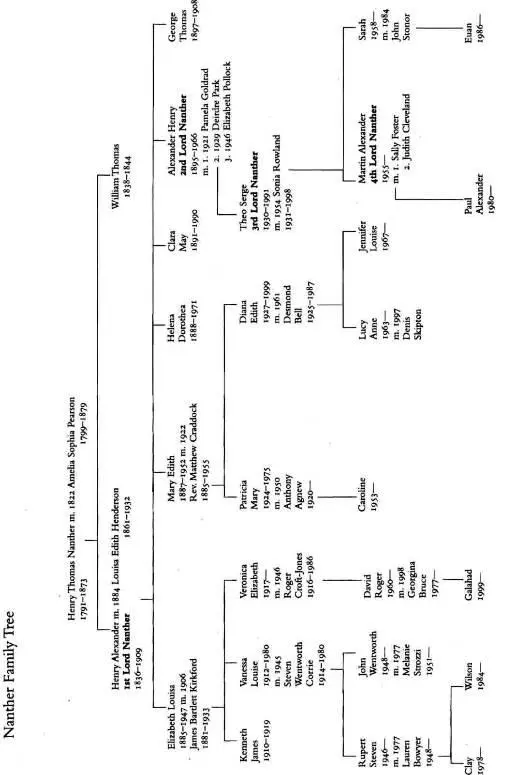
It’s past seven. The rain has cleared and it’s turning cold. I’ve half an hour to wait for a train. I sit for a while and then I walk up and down the platform and think about haemophilia. On the back of a bill I find in my pocket I draw from memory part of David’s family tree, starting with Henry and Edith. I write in the names of their first four children, the girls Elizabeth, Mary, Helena and Clara. If the gene mutation started with Elizabeth only her descendants can be affected, as her son Kenneth was and as is her grandson John Corrie. But if Mary’s children, grandchildren and possibly great-grandchildren, or one of those people, is or are affected, the mutation can’t have occurred in Elizabeth because her sister’s descendants also have the faulty gene. So it must have occurred further back.
Читать дальшеИнтервал:
Закладка:
Похожие книги на «The Blood Doctor»
Представляем Вашему вниманию похожие книги на «The Blood Doctor» списком для выбора. Мы отобрали схожую по названию и смыслу литературу в надежде предоставить читателям больше вариантов отыскать новые, интересные, ещё непрочитанные произведения.





Обсуждение, отзывы о книге «The Blood Doctor» и просто собственные мнения читателей. Оставьте ваши комментарии, напишите, что Вы думаете о произведении, его смысле или главных героях. Укажите что конкретно понравилось, а что нет, и почему Вы так считаете.