Barbara Vine - The Blood Doctor
Здесь есть возможность читать онлайн «Barbara Vine - The Blood Doctor» весь текст электронной книги совершенно бесплатно (целиком полную версию без сокращений). В некоторых случаях можно слушать аудио, скачать через торрент в формате fb2 и присутствует краткое содержание. Год выпуска: 2003, Издательство: Vintage, Жанр: Современная проза, на английском языке. Описание произведения, (предисловие) а так же отзывы посетителей доступны на портале библиотеки ЛибКат.
- Название:The Blood Doctor
- Автор:
- Издательство:Vintage
- Жанр:
- Год:2003
- ISBN:нет данных
- Рейтинг книги:4 / 5. Голосов: 1
-
Избранное:Добавить в избранное
- Отзывы:
-
Ваша оценка:
The Blood Doctor: краткое содержание, описание и аннотация
Предлагаем к чтению аннотацию, описание, краткое содержание или предисловие (зависит от того, что написал сам автор книги «The Blood Doctor»). Если вы не нашли необходимую информацию о книге — напишите в комментариях, мы постараемся отыскать её.
Barbara Vine (a.k.a. Ruth Rendell) deftly weaves this story of an eminent Victorian with a modern yarn about the embattled biographer, who is watching the House of Lords prepare to annul membership for hereditary peers and thus strip him of his position. Themes of fate and family snake throughout this teasing psychological suspense, a typically chilling tale from a master of the genre.
From Publishers Weekly
This rich, labyrinthine book by Vine (aka Ruth Rendell) concerns a "mystery in history," like her 1998 novel, The Chimney Sweeper's Boy. Martin Nanther-biographer and member of the House of Lords-discovers some blighted roots on his family tree while researching the life of his great-great-grandfather, Henry, an expert on hemophilia and physician to Queen Victoria. Martin contacts long-lost relatives who help him uncover some puzzling events in Henry's life. Was Henry a dour workaholic or something much more sinister? Vine can make century-old tragedy come alive. Still, the decades lapsed between Martin's and Henry's circles create added emotional distance, and, because they are all at least 50 years dead, we never meet Henry or his cohorts except through diaries and letters. Martin's own life-his wife's infertility and troubles with a son from his first marriage-is interesting yet sometimes intrudes on the more intriguing Victorian saga. Vine uses her own experience as a peer to give readers an insider's look into the House of Lords, at the dukes snoozing in the library between votes and eating strawberries on the terrace fronting the Thames. Some minor characters are especially vivid, like Martin's elderly cousin Veronica, who belts back gin while stonewalling about the family skeletons all but dancing through her living room. Readers may guess Henry's game before Vine is ready to reveal it, but this doesn't detract from this novel peopled by characters at once repellant and compelling.
From Library Journal
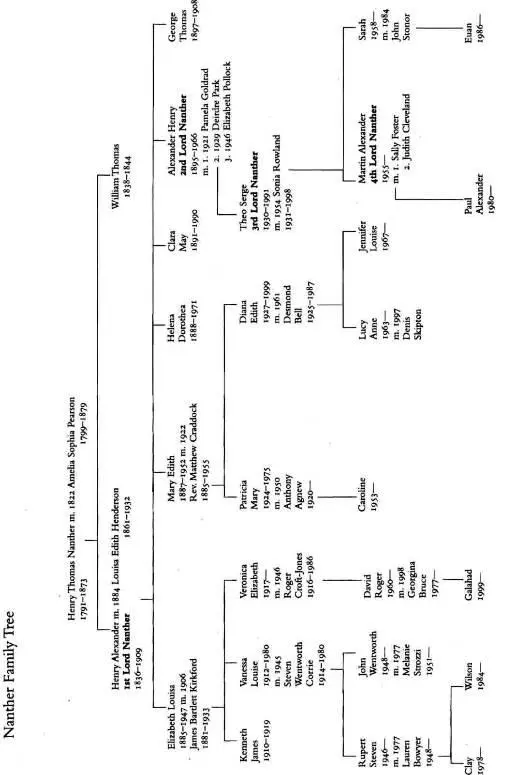
In her tenth novel writing as Barbara Vine, Ruth Rendell offers a novel of suspense based in 19th-century England and centering on deceit, murder, and various other family skeletons. Martin Nanther, the fourth Lord Nanther, has a comfortable life in present-day London as a Hereditary Peer in the House of Lords and as a historical biographer. He chooses as his most recent subject his own great-grandfather, the first Lord Nanther, physician to the royal family (Victoria and Albert) and an early noted researcher into the cause and transmission of hemophilia. The reader is taken through the family history as Martin painstakingly uncovers some not so savory bits of his own family's past. The story is dense with characters, and the author provides family trees of the two principal families, for which any reader will be eternally grateful. The story lacks the usual page-turner suspense of the Rendell/Vine novels but makes up for that with unusually detailed glimpses into Victorian life and the inner workings of the House of Parliament, which American readers will find particularly intriguing. Recommended for all public libraries. Caroline Mann, Univ. of Portland, OR
The Blood Doctor — читать онлайн бесплатно полную книгу (весь текст) целиком
Ниже представлен текст книги, разбитый по страницам. Система сохранения места последней прочитанной страницы, позволяет с удобством читать онлайн бесплатно книгу «The Blood Doctor», без необходимости каждый раз заново искать на чём Вы остановились. Поставьте закладку, и сможете в любой момент перейти на страницу, на которой закончили чтение.
Интервал:
Закладка:
23
True to David’s prediction Veronica has invited me to tea. I’d have liked to have Jude with me on this trip. We could have had a weekend in the Cotswolds and I could have left her behind briefly in the hotel at Stow while I went to Cheltenham. But Jude won’t. She makes several excuses where one would do, so I know she doesn’t really want to come. It’s too expensive, she says, we can’t afford holiday weekends. Besides, on the Friday she’s due to have tests done to see if she’s got some recessive gene that causes these miscarriages. It’s after she’s hinted that I may have to have a similar test that she says she’d rather stay at home, she’s been up there too often anyway to the Cheltenham Literary Festival.
And she needs the car, so I go by train. It’s twenty minutes’ walk from the station to Veronica’s and as I stroll along (because I’m early) I think about genes and wonder what this test is, telling myself in the base way we talk to our inner selves, that there can’t be much wrong with me, I’ve fathered a healthy child. Perhaps I should phone John Corrie and ask him to explain. But I’ll have the test first, to please Jude.
Instead of one of the pretty Georgian terraces that abound here, Veronica lives in a nineteen-seventyish ‘town house’ with picture windows and an integral garage. She’s been watching or listening for my arrival, for she answers the door faster than she could have done if she hadn’t been just inside it. Great care has gone into her appearance. Her hair is newly tinted, her nails freshly painted and she’s dressed in what I’d guess is the latest fashion for women some forty years younger than she, a sort of padded skirt and jumper with frayed edges. I’ll describe her clothes to Jude who’ll tell me if I’m right. David was quite correct about the sumptuous tea. Veronica has provided smoked salmon sandwiches, scones with jam and cream, flapjacks, carrot cake and shortbread. Now I shan’t have to eat dinner, always supposing I could get it, on the train.
While we eat, she talks family history, which must be her own bland, diluted, expurgated version of events, for no collection of human beings in any age could be quite so virtuous, conformist and dull as she makes out the Nanthers and the Kirkfords to be. Henry, as she’s told me before, she never knew. Her grandmother Edith she remembers as being particularly tolerant of what children did but not as playing with her or even having much time for her. She had other things to occupy her, which Veronica can well understand, her photography, her painting, and she’s sure Edith was ‘as happy as the day is long’. As to her appearance, Veronica believes that ‘in those days women always looked their age’. Her grandmother never went out without a hat. Her once copious blonde hair was white and thin, worn in a ‘bun’ on the back of her head. She was a churchgoer and Veronica remembers the vicar of St Mark’s coming to tea at Alma Villa.
I interrupt here and ask her about the engagement ring, expecting her to say she doesn’t remember and that children never notice things like that. But she does remember and no, her grandmother never wore any rings but her plain gold wedding band. Of course this may mean no more than that she found the wearing of rings a nuisance. Many women do. On the other hand, it may be that she resented Henry’s handing on to her the ring he bought for her sister and discarded it as soon as he was dead.
Veronica’s own mother and her aunt Mary were both very good looking, the reason no doubt for their getting husbands in an era when young men were in short supply. She seems to have forgotten – deliberately? – that her mother married eight years before the Great War started. Veronica’s childhood was idyllic, her father James Kirkford a saint, who never complained though suffering badly from arthritis in his foreshortened leg. She speaks always as if she’d been an only child. I wait until she’s finished and we’ve finished tea and I’m about to mention John Corrie when she suggests I might like to ‘see over’ the house and garden. This is the last thing I want to do but I submit with a good grace.
The place is oppressively neat but there seem to be more cupboards and chests than is usual and these, I suppose, are the repositories of all those letters and photographs and maybe David’s early scholarly efforts. We go up two flights of stairs, pausing to look at a bedroom and a bathroom and another bedroom, this one rather creepily already decorated for Galahad’s future occupancy with sailing boats on the walls and fish on the curtains. Has she mapped out a marine career for him? She tells me airily she’s sure he’ll be coming to stay quite often with his ‘gran’ and, of course, on his own. Perhaps it’s natural or a kind of life assurance that she speaks as if she were sixty instead of over eighty. The garden is depressingly neat, everything clipped or shaved, shrubs, though quite mature, retaining their labels and name tags. Do I think she has room for a swing or maybe one of those, what-are-they-called, climbing frames? I begin to see her as pathetic, which I never did before.
We go back indoors and I’m fast getting the impression she’s anticipating my departure. In the next ten minutes, at any rate. What is there left to do? He’s eaten his tea, seen over the house, heard his family history. Her smile is growing strained. Would I like to see the letters David wrote her while at boarding school? His first ‘compositions’? Photographs of herself and David and her husband? Perhaps later, I say. That makes her impatient, she’s probably got her favourite television serial coming on in half an hour. I sit tight, keep my eyes on her but not searchingly, and ask if she knows who John Corrie is.
She’s one of those people who blush when surprised and it’s not becoming. ‘I suppose he’s my nephew. Why?’
‘I do need to talk about this, Veronica. I’m sorry if it’s painful.’ The blush is fading. She looks displeased but I plunge ahead. ‘You do know your sister is dead?’
‘I heard,’ she says, though not how she heard. From Steven Corrie, the faithless fiancé? I’m going to avoid mentioning him.
‘Her son John is a scientist. He does research into gene therapy.’ Now it’s coming. ‘For haemophilia.’
The blush is back. She sits very upright, pressing her knees together. I perceive her distress in her breathing, which I can hear regularly rise and fall. I say, ‘He is himself a haemophiliac.’
‘No!’ The negative comes quick and sharp like a gunshot.
‘I’m afraid yes.’
Strange things are happening. I’m trying to read the way she’s thinking, the options her mind is dealing with. If she really doesn’t understand, if it’s new to her, she’ll ask me what haemophilia is. Something wrong with the blood, she’ll say, but she’s never known anyone… She’s silent, turning possibilities over. Then she says, ‘Where does it come from?’
I don’t want to tell her John’s theory. If I do the discussion could shut down. So instead of talking of a mutation, I say he doesn’t know, but it must somehow be through his mother. Her face shows me she knows much more than she’s told me so far. There’s a family secret here, hidden for God knows what reason, but known, I suspect, to some, though not all, of its female members. She may throw me out or at least ask me to leave if I put this question but I take the risk.
‘What did your brother Kenneth die of, Veronica?’
No answer. She’s not looking at me any more but down into her lap. Astonishingly, she says, ‘Would you like a drink? Sherry or gin or something? I’m going to have one. After all, as my husband used to say, the sun is over the yard arm.’
Читать дальшеИнтервал:
Закладка:
Похожие книги на «The Blood Doctor»
Представляем Вашему вниманию похожие книги на «The Blood Doctor» списком для выбора. Мы отобрали схожую по названию и смыслу литературу в надежде предоставить читателям больше вариантов отыскать новые, интересные, ещё непрочитанные произведения.





Обсуждение, отзывы о книге «The Blood Doctor» и просто собственные мнения читателей. Оставьте ваши комментарии, напишите, что Вы думаете о произведении, его смысле или главных героях. Укажите что конкретно понравилось, а что нет, и почему Вы так считаете.