Barbara Vine - The Blood Doctor
Здесь есть возможность читать онлайн «Barbara Vine - The Blood Doctor» весь текст электронной книги совершенно бесплатно (целиком полную версию без сокращений). В некоторых случаях можно слушать аудио, скачать через торрент в формате fb2 и присутствует краткое содержание. Год выпуска: 2003, Издательство: Vintage, Жанр: Современная проза, на английском языке. Описание произведения, (предисловие) а так же отзывы посетителей доступны на портале библиотеки ЛибКат.
- Название:The Blood Doctor
- Автор:
- Издательство:Vintage
- Жанр:
- Год:2003
- ISBN:нет данных
- Рейтинг книги:4 / 5. Голосов: 1
-
Избранное:Добавить в избранное
- Отзывы:
-
Ваша оценка:
The Blood Doctor: краткое содержание, описание и аннотация
Предлагаем к чтению аннотацию, описание, краткое содержание или предисловие (зависит от того, что написал сам автор книги «The Blood Doctor»). Если вы не нашли необходимую информацию о книге — напишите в комментариях, мы постараемся отыскать её.
Barbara Vine (a.k.a. Ruth Rendell) deftly weaves this story of an eminent Victorian with a modern yarn about the embattled biographer, who is watching the House of Lords prepare to annul membership for hereditary peers and thus strip him of his position. Themes of fate and family snake throughout this teasing psychological suspense, a typically chilling tale from a master of the genre.
From Publishers Weekly
This rich, labyrinthine book by Vine (aka Ruth Rendell) concerns a "mystery in history," like her 1998 novel, The Chimney Sweeper's Boy. Martin Nanther-biographer and member of the House of Lords-discovers some blighted roots on his family tree while researching the life of his great-great-grandfather, Henry, an expert on hemophilia and physician to Queen Victoria. Martin contacts long-lost relatives who help him uncover some puzzling events in Henry's life. Was Henry a dour workaholic or something much more sinister? Vine can make century-old tragedy come alive. Still, the decades lapsed between Martin's and Henry's circles create added emotional distance, and, because they are all at least 50 years dead, we never meet Henry or his cohorts except through diaries and letters. Martin's own life-his wife's infertility and troubles with a son from his first marriage-is interesting yet sometimes intrudes on the more intriguing Victorian saga. Vine uses her own experience as a peer to give readers an insider's look into the House of Lords, at the dukes snoozing in the library between votes and eating strawberries on the terrace fronting the Thames. Some minor characters are especially vivid, like Martin's elderly cousin Veronica, who belts back gin while stonewalling about the family skeletons all but dancing through her living room. Readers may guess Henry's game before Vine is ready to reveal it, but this doesn't detract from this novel peopled by characters at once repellant and compelling.
From Library Journal
In her tenth novel writing as Barbara Vine, Ruth Rendell offers a novel of suspense based in 19th-century England and centering on deceit, murder, and various other family skeletons. Martin Nanther, the fourth Lord Nanther, has a comfortable life in present-day London as a Hereditary Peer in the House of Lords and as a historical biographer. He chooses as his most recent subject his own great-grandfather, the first Lord Nanther, physician to the royal family (Victoria and Albert) and an early noted researcher into the cause and transmission of hemophilia. The reader is taken through the family history as Martin painstakingly uncovers some not so savory bits of his own family's past. The story is dense with characters, and the author provides family trees of the two principal families, for which any reader will be eternally grateful. The story lacks the usual page-turner suspense of the Rendell/Vine novels but makes up for that with unusually detailed glimpses into Victorian life and the inner workings of the House of Parliament, which American readers will find particularly intriguing. Recommended for all public libraries. Caroline Mann, Univ. of Portland, OR
The Blood Doctor — читать онлайн бесплатно полную книгу (весь текст) целиком
Ниже представлен текст книги, разбитый по страницам. Система сохранения места последней прочитанной страницы, позволяет с удобством читать онлайн бесплатно книгу «The Blood Doctor», без необходимости каждый раз заново искать на чём Вы остановились. Поставьте закладку, и сможете в любой момент перейти на страницу, на которой закончили чтение.
Интервал:
Закладка:
They started taking the blood from my arm and his. Mine was ordinary but his was a much darker richer red. The nurse held the glass bottle it was flowing into up to the light and a doctor looked at it and said you could see that it carried a gene of aristocracy. A son of this man would be noble and sit in a gathering of lords, as would his grandson and his great-grandson and all his descendants for ever. But when Henry’s bottle was full his blood wouldn’t stop coming out. It overflowed, it splashed on to the floor, it began draining his body dry. He sat up, he got up and shouted at them to stop it, to staunch the flow, didn’t they know he had haemophilia? Did they want him to bleed to death? I woke up then, half-expecting to find myself in a bloody bed, as I’d been before, but I was alone in clean white sheets.
I fetched Jude home. There’s no point in her staying in bed. She’s not ill. It’s just, as she says in a voice of simulated practicality, brisk and philosophical, that she’s a perfectly healthy woman who’s four times conceived a child and four times lost it in a flood of blood. It’s ridiculous to make a fuss, the same thing’s happened to other women and they’ve had healthy babies in the end. She’s only thirty-seven, there’s heaps of time. I find this determined cheerfulness harder to take than her grief. It’s a stance which is bravely assumed in advance of her first counselling session. This is to take place at the end of the week. I want to know what a counsellor can possibly say to her that I can’t or that she doesn’t know already. Or is she just doing the politically correct thing?
‘I’d like to know what an outsider thinks,’ she says, ‘someone who doesn’t know me or you.’
I suppose it can’t do any harm. But I keep thinking of how she deceived me over the conception of this recent, lost child. That feeling went into abeyance while she was pregnant and was happy and confident but now it’s returned and I think of how she could do it again. I’d like to ask her to promise me not to try for a baby for the six months the obstetrician advises, but we’ve never asked each other for promises and this is no time to begin. Something else has happened which worries me more than anything else.
There have been articles in the papers about whether a husband or partner should be present at the birth of his child or not. For a good many years now it’s been received wisdom that he should be. I was with Sally when Paul was born. It was taken for granted by both of us that I would be, I don’t remember any discussion about it, she’d go into the maternity hospital when her labour started and I’d either go with her or she’d contact me at work – I was in publishing then – and I’d come straightaway. Now the gynaecologist who’s written these newspaper pieces says it’s a bad idea for various reasons. One is that men get distressed by the woman’s pain, another that men make inappropriate conversation and the third, the one that’s enraging the feminist lobby, that seeing the process of birth diminishes the woman’s sexual attractiveness. Her man will never feel quite the same about her again.
I can’t say I was affected like that. But by the time Paul was born Sally and I were already becoming alienated, we both realized we’d made a bad mistake. Her sexual appeal for me had practically gone by then. But it’s not far off the experience of the birth-attending man which is troubling me now. I feel a shift in Jude’s attraction for me, only ‘attraction’ is the wrong word. I’d rather say my total, utterly compelling, absolutely exclusive, almost obsessive, passion for her. That’s what it was and putting it in the past tense like that gives me physical pain. I’ve never seen her give birth, worse luck, but I’ve seen too much these past months, years, too much blood and mess, heard too much talk of hazardous wombs and dilated cervixes and menstrual anomalies, and the accumulation of it has done something to the curious mechanism of attraction. Appalling of me, isn’t it? Callous and insensitive, the worst kind of male attitude. I know all that and it makes no difference. There is no one to whom I could say this, no intimate friend. I couldn’t say a word of it to Jude, my dear love whose only offence is that she wants to be a mother, in line, it seems to her, with every other woman in the world.
I couldn’t say to anyone what this has revealed to me, that I know now why men want virgins, the untouched, the pure. In order to make them impure, sullied, bloody? Perhaps. I know why Orthodox Jews submit their women to purification rituals after childbirth. But I don’t want to learn these unpalatable things. I want my passion for my wife back, not this tender, pitying, brotherly love.
22
While I don’t believe in the coincidence, I can’t find anything to put in its place. Perhaps it doesn’t matter. I’m thinking of my last chapter – so very far off being written – and saying something like:
Only one of Henry Nanther’s descendants followed in his footsteps and became a doctor of medicine. John Wentworth Corrie, son of his granddaughter Vanessa Kirkford and her American husband Stephen Wentworth Corrie, is at the time of writing the JGP Fellow and a research geneticist at the University of Pennsylvania. By coincidence he is himself a haemophiliac, the result of a mutation in his mother’s gene, and gene therapy to haemophilia A is his particular study.
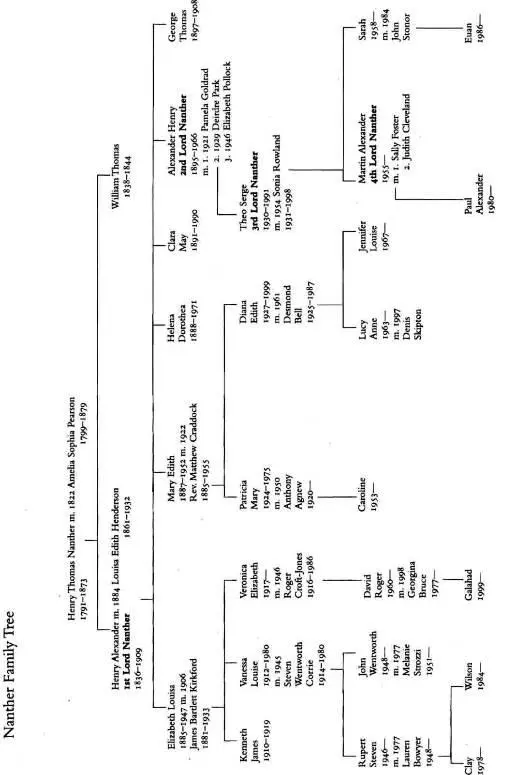
I don’t like it much. Also it reminds me that I don’t know if it’s true about John Corrie being the only descendant to have a career in medicine. I must check. For instance, what does John’s brother Rupert do? I should have asked but I was too stunned by the coincidence to think of it. Then there are Caroline, Lucy and Jennifer, granddaughters of Henry’s second daughter Mary and as much my second cousins as John and David, but I know very little about them. All I know is that they’re on David’s tree. They may all have husbands or partners, they may have children, and one of them may be a doctor of medicine, a nurse, a radiographer, the chairman of a health authority or a paramedic. Jude’s willing enough to ask the Croft-Joneses to supper (which means dinner eaten in the kitchen) and doesn’t mind their bringing the Holy Grail. This time she was more discreet and didn’t say a word about her pregnancy to Georgie, so there’ll be no hard-to-take commiseration.
I’ve had another idea that doesn’t seem to have occurred to John. Or if it did he didn’t mention it. Why was the mutation assumed to have taken place in Vanessa’s gene? Why not in that of her mother Elizabeth Kirkford, née Nanther? John would say I know very little about haemophilia but I’m learning and it seems to me from studying the brochure that a male’s condition may owe as much to an alteration in the grandmother’s genetic make-up as in the mother’s. If this were so both Vanessa and Veronica may have been carriers . Of course, the coincidence then would be even greater, for it would mean that one of Henry’s daughters had a gene mutation which made her a carrier of the very disease, the rare disease, which was the subject of his life’s work.
Galahad has become an engaging baby. He’s a constant smiler. It’s as if he’s discovered what a charming habit smiling is and how it calls forth approval, indeed from his parents ecstasy, so that he can’t do it often enough. He laughs too, a bubbling quite musical sound inspired by anything bright or shiny brought within his orbit. At nearly six months he’s sitting up and, according to Georgie, about to begin crawling. He seems not to have inherited his father’s rather sullen temperament nor his mother’s volatility but is a sunny soul, happy and placid. Veronica, gone this past month but far from forgotten, has told Georgie that placidity and ‘good’ behaviour in a baby bode ill for its intelligence. Bright people are diabolically naughty in infancy, as David was.
Читать дальшеИнтервал:
Закладка:
Похожие книги на «The Blood Doctor»
Представляем Вашему вниманию похожие книги на «The Blood Doctor» списком для выбора. Мы отобрали схожую по названию и смыслу литературу в надежде предоставить читателям больше вариантов отыскать новые, интересные, ещё непрочитанные произведения.





Обсуждение, отзывы о книге «The Blood Doctor» и просто собственные мнения читателей. Оставьте ваши комментарии, напишите, что Вы думаете о произведении, его смысле или главных героях. Укажите что конкретно понравилось, а что нет, и почему Вы так считаете.