Barbara Vine - The Blood Doctor
Здесь есть возможность читать онлайн «Barbara Vine - The Blood Doctor» весь текст электронной книги совершенно бесплатно (целиком полную версию без сокращений). В некоторых случаях можно слушать аудио, скачать через торрент в формате fb2 и присутствует краткое содержание. Год выпуска: 2003, Издательство: Vintage, Жанр: Современная проза, на английском языке. Описание произведения, (предисловие) а так же отзывы посетителей доступны на портале библиотеки ЛибКат.
- Название:The Blood Doctor
- Автор:
- Издательство:Vintage
- Жанр:
- Год:2003
- ISBN:нет данных
- Рейтинг книги:4 / 5. Голосов: 1
-
Избранное:Добавить в избранное
- Отзывы:
-
Ваша оценка:
The Blood Doctor: краткое содержание, описание и аннотация
Предлагаем к чтению аннотацию, описание, краткое содержание или предисловие (зависит от того, что написал сам автор книги «The Blood Doctor»). Если вы не нашли необходимую информацию о книге — напишите в комментариях, мы постараемся отыскать её.
Barbara Vine (a.k.a. Ruth Rendell) deftly weaves this story of an eminent Victorian with a modern yarn about the embattled biographer, who is watching the House of Lords prepare to annul membership for hereditary peers and thus strip him of his position. Themes of fate and family snake throughout this teasing psychological suspense, a typically chilling tale from a master of the genre.
From Publishers Weekly
This rich, labyrinthine book by Vine (aka Ruth Rendell) concerns a "mystery in history," like her 1998 novel, The Chimney Sweeper's Boy. Martin Nanther-biographer and member of the House of Lords-discovers some blighted roots on his family tree while researching the life of his great-great-grandfather, Henry, an expert on hemophilia and physician to Queen Victoria. Martin contacts long-lost relatives who help him uncover some puzzling events in Henry's life. Was Henry a dour workaholic or something much more sinister? Vine can make century-old tragedy come alive. Still, the decades lapsed between Martin's and Henry's circles create added emotional distance, and, because they are all at least 50 years dead, we never meet Henry or his cohorts except through diaries and letters. Martin's own life-his wife's infertility and troubles with a son from his first marriage-is interesting yet sometimes intrudes on the more intriguing Victorian saga. Vine uses her own experience as a peer to give readers an insider's look into the House of Lords, at the dukes snoozing in the library between votes and eating strawberries on the terrace fronting the Thames. Some minor characters are especially vivid, like Martin's elderly cousin Veronica, who belts back gin while stonewalling about the family skeletons all but dancing through her living room. Readers may guess Henry's game before Vine is ready to reveal it, but this doesn't detract from this novel peopled by characters at once repellant and compelling.
From Library Journal
In her tenth novel writing as Barbara Vine, Ruth Rendell offers a novel of suspense based in 19th-century England and centering on deceit, murder, and various other family skeletons. Martin Nanther, the fourth Lord Nanther, has a comfortable life in present-day London as a Hereditary Peer in the House of Lords and as a historical biographer. He chooses as his most recent subject his own great-grandfather, the first Lord Nanther, physician to the royal family (Victoria and Albert) and an early noted researcher into the cause and transmission of hemophilia. The reader is taken through the family history as Martin painstakingly uncovers some not so savory bits of his own family's past. The story is dense with characters, and the author provides family trees of the two principal families, for which any reader will be eternally grateful. The story lacks the usual page-turner suspense of the Rendell/Vine novels but makes up for that with unusually detailed glimpses into Victorian life and the inner workings of the House of Parliament, which American readers will find particularly intriguing. Recommended for all public libraries. Caroline Mann, Univ. of Portland, OR
The Blood Doctor — читать онлайн бесплатно полную книгу (весь текст) целиком
Ниже представлен текст книги, разбитый по страницам. Система сохранения места последней прочитанной страницы, позволяет с удобством читать онлайн бесплатно книгу «The Blood Doctor», без необходимости каждый раз заново искать на чём Вы остановились. Поставьте закладку, и сможете в любой момент перейти на страницу, на которой закончили чтение.
Интервал:
Закладка:
He takes me into the conference centre bar, a Stakis Hotel kind of place now filling up with biochemists or whatever they are. A television screen, hanging up in one corner, is showing the State Opening, focusing on the Leader of the House carrying the Cap of Maintenance, a kind of hat that symbolizes the hold one of the early Edwards had on Normandy and Aquitaine and now our retention of the Channel Islands. The ceremony is coming to an end, the Queen has spoken, the Chamber is emptying and the camera moves. A film star who’s also a peeress swans down a crimson corridor in long gown and pearl tiara. They are all going off to have lunch in the Cholmondeley Room.
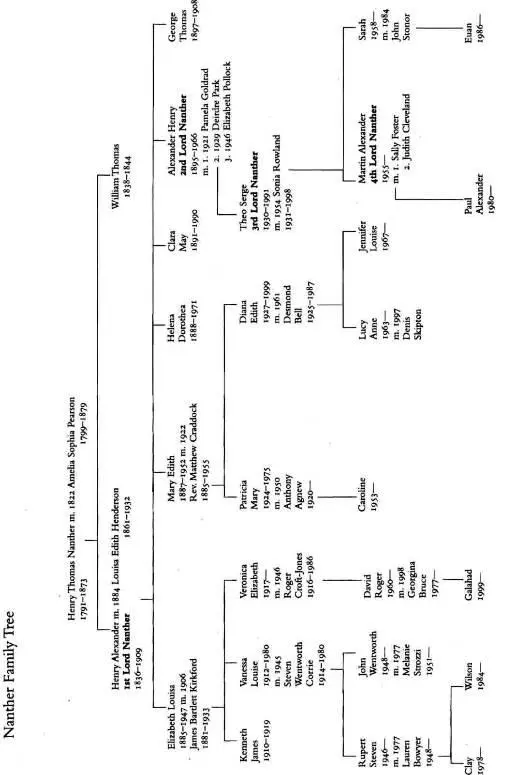
No one but me in this bar is looking at the screen, they’re all drinking and talking genetics. I’d have bet anyone willing to take me on that John would drink sparkling water or Coke but I’m wrong and while I have red wine he has a gin and tonic. He knows very little about the family history we share and seems never to have shown any interest until this moment. Would I draw him a plan? I tell him I can do better than that as I’ve furnished myself with a photocopy of David Croft-Jones’s genealogical table. He’s delighted and pores over it while helping himself to nuts and crisps.
‘I suppose you know the story,’ I say, ‘of how your mother stole her sister’s fiancé and ran away to marry him in secret?’
He doesn’t and for a moment he looks disconcerted as if not knowing whether to take this with a smile or intense seriousness. Then he raises his eyebrows, silently asking for more. I tell him what I know. He’s never heard any of it before. ‘Mom’s been dead nearly twenty years,’ he says. ‘She and Dad died within a few months of each other in 1980. They were so devoted, one of them couldn’t go on living without the other.’
‘He was engaged to your aunt Veronica first.’ Remembering her, I grin to myself. ‘I think he made a wise choice.’
This makes him laugh. ‘And here’s this great-grandfather you’re writing about. I’m really happy to have his book. Did he write any more?’
‘Quite a few. He was one of the leading authorities of the day. Hadn’t you heard of him?’
‘I remember Mom saying her grandpa was a doctor and attended the royal family, that’s about all.’
‘Nothing about blood diseases?’
He shakes his head. He’s found himself and me on the tree. ‘May I add my wife and my brother and his wife and their kids?’ In a very small neat hand he writes after his own name, ‘m. 1977 Melanie Strozzi,’ in the blank space beside his name, ‘Rupert Steven, b.1946, m. 1977 Lauren May Bowyer’ and under their names, ‘Clay, b. 1978 and Wilson, b. 1984’.
He himself is a childless man. I don’t seem to come across many. ‘What exactly is this research you do?’
His grin is the scientist’s smile, the not quite patronizing smile of one learned in an abstruseness he knows his audience haven’t a clue about. ‘How much do you know about haemophilia?’
I think I know a lot, but daren’t say so to him. ‘The basics, I suppose.’
‘The focus of my research is targeting Factor Eight gene therapy in haemophilia A. I’ll explain. You know what the epidermis is, the outermost compartment of the skin? Right. The epidermis is a good target because it’s highly accessible and able to secrete gene products into the bloodstream. I’ve carried out experiments with mice – I’m trying to clarify this for you – and results suggest that the epidermis can synthesize functional Factor Eight which can then enter the systemic circulation.’
‘Yes,’ I say.
‘There are problems. The transgenic mouse model has limitations. But my results demonstrate that a localized area of skin alone can serve as a source of Factor Eight and support the feasibility of cutaneous gene therapy. Now I’m looking ahead to the best ways of delivering Factor Eight to the epidermis. Shall we go and grab ourselves some lunch?’
The screen’s still showing the State Opening. The one o’clock news has started and it’s the principal item. I go into the dining room with a picture of red robes and flashing diamonds still printed on my retinas. A buffet lunch is laid out. I help myself to chicken and various other cold meats and salad. John has curry and rice and chicken and spinach, all on the same plate. For a moment it looks as if he’s going to lead me to take my place at a table where twenty delegates to this conference are already sitting, but he’s only stopped to exchange pleasantries with a woman in a red trouser suit and an older man who looks important. It’s a bit like the long table in the House where I’ll never sit again.
John and I are lucky. Most people seem to want to sit with their fellows and gossip or maybe swap theories, so we have no difficulty in finding places in the embrasure of a bay window with a view of the grounds. I’m not very hungry and wonder how I’ll get through what’s on my plate but John attacks his food with enthusiasm. Ever since he told me he knew no more about Henry than that he was a doctor in attendance on the royal family, a question’s been hovering in the back of my mind. I postponed asking it while he was describing the nature of his research and now, just as I’m planning how to phrase it, he begins telling me how haemophilia is inherited, something I already know.
‘Look, I’ll write this down for you,’ he says. ‘Or better still, we’ll pick up a brochure from the US National Hemophilia Foundation on the way out. That’ll give an explanation for the layman.’ Suddenly he shows an unexpected sensitivity. ‘I’m really sorry, I guess all this talk of blood and sperm and whatever could put you off your food.’
‘It’s not that.’ I make myself take a mouthful of chicken and mayonnaise-covered roquette. ‘It’s – well, if it wasn’t being Henry Nanther’s great-grandson, what was it drew you to researching haemophilia? I mean, he was the great haemophilia expert of his day. You’re researching his subject yet you didn’t know it was his subject?’
I’m noticing something else about him. He has about as completely an open and honest face as I’ve ever seen on anyone. He’s transparent. Now he stops eating and laughs. The answer I get stuns me. Possibilities leap out and dance up and down like floaters when you turn away from a bright light.
‘I’m a haemophiliac,’ he says.
‘It’s very different than it once was. I haven’t a severe form. The risk is internal bleeding that can lead to arthropathy – that’s joint damage – and that’s prevented by infusions of Factor Eight or Factor Nine. When I was a kid I had to be hospitalized for infusions, but in 1965 there was a medical breakthrough. Dr Judith Graham Pool discovered cryoprecipitate.’
I’m staring at him, not I hope open-mouthed.
‘That’s the factor-rich component of the blood. It meant less fluid had to be transfused into the patient and by the early seventies you could get it in freeze-dried form which made it possible to infuse at home. I never had any joint damage. You could say these discoveries came just in time for me. There are a lot more clotting factor products and there’s prophylactic treatment.’
‘And your gene therapy.’
‘And my gene therapy, as you say. I use a product for mild to moderate haemophilia A called desmopressin acetate, DDAVP. There’s genetic testing too. But in my case if I’d had kids there’d not have been much point. Any daughter of a haemophiliac is a carrier, so mine would inevitably have been one. I chose not to reproduce but luckily I married a woman who already had two kids by her first marriage.’
‘But how did it come to you?’ I wish I knew the language better. I’m sure I’m using all the wrong terms and I start with a mistake I ought to know better than to make. ‘Who did you inherit it from? Was your father a haemophiliac?’
Читать дальшеИнтервал:
Закладка:
Похожие книги на «The Blood Doctor»
Представляем Вашему вниманию похожие книги на «The Blood Doctor» списком для выбора. Мы отобрали схожую по названию и смыслу литературу в надежде предоставить читателям больше вариантов отыскать новые, интересные, ещё непрочитанные произведения.





Обсуждение, отзывы о книге «The Blood Doctor» и просто собственные мнения читателей. Оставьте ваши комментарии, напишите, что Вы думаете о произведении, его смысле или главных героях. Укажите что конкретно понравилось, а что нет, и почему Вы так считаете.