Barbara Vine - The Blood Doctor
Здесь есть возможность читать онлайн «Barbara Vine - The Blood Doctor» весь текст электронной книги совершенно бесплатно (целиком полную версию без сокращений). В некоторых случаях можно слушать аудио, скачать через торрент в формате fb2 и присутствует краткое содержание. Год выпуска: 2003, Издательство: Vintage, Жанр: Современная проза, на английском языке. Описание произведения, (предисловие) а так же отзывы посетителей доступны на портале библиотеки ЛибКат.
- Название:The Blood Doctor
- Автор:
- Издательство:Vintage
- Жанр:
- Год:2003
- ISBN:нет данных
- Рейтинг книги:4 / 5. Голосов: 1
-
Избранное:Добавить в избранное
- Отзывы:
-
Ваша оценка:
The Blood Doctor: краткое содержание, описание и аннотация
Предлагаем к чтению аннотацию, описание, краткое содержание или предисловие (зависит от того, что написал сам автор книги «The Blood Doctor»). Если вы не нашли необходимую информацию о книге — напишите в комментариях, мы постараемся отыскать её.
Barbara Vine (a.k.a. Ruth Rendell) deftly weaves this story of an eminent Victorian with a modern yarn about the embattled biographer, who is watching the House of Lords prepare to annul membership for hereditary peers and thus strip him of his position. Themes of fate and family snake throughout this teasing psychological suspense, a typically chilling tale from a master of the genre.
From Publishers Weekly
This rich, labyrinthine book by Vine (aka Ruth Rendell) concerns a "mystery in history," like her 1998 novel, The Chimney Sweeper's Boy. Martin Nanther-biographer and member of the House of Lords-discovers some blighted roots on his family tree while researching the life of his great-great-grandfather, Henry, an expert on hemophilia and physician to Queen Victoria. Martin contacts long-lost relatives who help him uncover some puzzling events in Henry's life. Was Henry a dour workaholic or something much more sinister? Vine can make century-old tragedy come alive. Still, the decades lapsed between Martin's and Henry's circles create added emotional distance, and, because they are all at least 50 years dead, we never meet Henry or his cohorts except through diaries and letters. Martin's own life-his wife's infertility and troubles with a son from his first marriage-is interesting yet sometimes intrudes on the more intriguing Victorian saga. Vine uses her own experience as a peer to give readers an insider's look into the House of Lords, at the dukes snoozing in the library between votes and eating strawberries on the terrace fronting the Thames. Some minor characters are especially vivid, like Martin's elderly cousin Veronica, who belts back gin while stonewalling about the family skeletons all but dancing through her living room. Readers may guess Henry's game before Vine is ready to reveal it, but this doesn't detract from this novel peopled by characters at once repellant and compelling.
From Library Journal
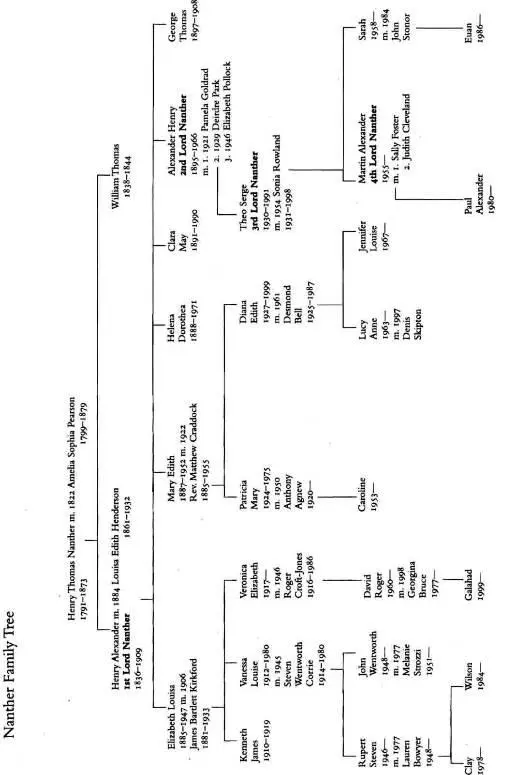
In her tenth novel writing as Barbara Vine, Ruth Rendell offers a novel of suspense based in 19th-century England and centering on deceit, murder, and various other family skeletons. Martin Nanther, the fourth Lord Nanther, has a comfortable life in present-day London as a Hereditary Peer in the House of Lords and as a historical biographer. He chooses as his most recent subject his own great-grandfather, the first Lord Nanther, physician to the royal family (Victoria and Albert) and an early noted researcher into the cause and transmission of hemophilia. The reader is taken through the family history as Martin painstakingly uncovers some not so savory bits of his own family's past. The story is dense with characters, and the author provides family trees of the two principal families, for which any reader will be eternally grateful. The story lacks the usual page-turner suspense of the Rendell/Vine novels but makes up for that with unusually detailed glimpses into Victorian life and the inner workings of the House of Parliament, which American readers will find particularly intriguing. Recommended for all public libraries. Caroline Mann, Univ. of Portland, OR
The Blood Doctor — читать онлайн бесплатно полную книгу (весь текст) целиком
Ниже представлен текст книги, разбитый по страницам. Система сохранения места последней прочитанной страницы, позволяет с удобством читать онлайн бесплатно книгу «The Blood Doctor», без необходимости каждый раз заново искать на чём Вы остановились. Поставьте закладку, и сможете в любой момент перейти на страницу, на которой закончили чтение.
Интервал:
Закладка:
As we were walking here I warned Jude not to tell Barry and Roma about the baby. ‘Would I?’ she says.
There are all sorts of things I could say, such as, ‘You did last time’ or ‘You told Georgie last time,’ but I don’t because last time isn’t to be mentioned. She’s even said that we’re to behave as if last time didn’t happen and nor did the time before that or the time before that. We have to forget ‘old unhappy far-off things’ and act as if this is the first time she’s conceived.
I’ve apologized profoundly for ungracious behaviour, for making a fuss about not being told. I’ve been forgiven. And she hasn’t said a word to these two. No doubt she’s sensed that she’s dealing with a very different pair from David and Georgie. Barry and Roma have no children either separately or together. Children are what other people have, though they don’t understand why. Roma is a painfully thin blonde with a strained stretched face and long bony legs, famous name shoes on her long bony feet. Her jewellery is breathtaking, huge diamonds encrusting rings, earrings, a necklace and a bracelet. They flash under the matching chandelier and make small spots of light dance up and down the walls.
Jude is drinking sparkling water. She’s worried about that champagne we had the other day with the Croft-Joneses and the wine she drank at the restaurant afterwards. Will the baby be harmed? Why was she so criminally foolhardy as to drink when even then she knew she was pregnant? I remind her (I’ve told her before) about all the whisky my mother drank when she was pregnant with me and all the cigarettes she smoked, and about Sally’s fondness for beer and the occasional joint, but she’s not reassured. She just thinks my mother and my first wife were criminally foolhardy too, but their excuse is that they knew no better. Anyway, she’s indulging copiously in fizzy water now which may account for her glum expression, though Dreadnought’s conversation about buying a car on the Internet is as likely to be responsible.
At last, at a quarter to ten Roma comes back and says, ‘Madame est servie,’ in a phony French accent. The food is quite good because it’s obviously all been bought from Harrods food hall – part of the ₤30,000 expenditure? – and heated up in the microwave. Somehow I feel that this is more successful than Roma’s cooking would be. I drink too much, not because I’ve a tendency to alcoholism or Barry’s wine is specially nice, but because I’m bored. Drinking doesn’t alleviate boredom but it gives you something else to think about, such as how not to fall off your chair and how to keep your speech from slurring. On the way home, which doesn’t happen, which we’re quite unable to make happen, before half-past midnight, Jude tells me, but very gently and kindly, that I’m drunk.
‘Good,’ I say, ‘then perhaps they won’t invite us again.’
‘Do you think it’s bad for me to stay up so late now?’
I tell her I don’t see how it can be bad if it doesn’t happen often. I apologize again for being drunk, for being cross on Wednesday, for lacking the enthusiasm I ought to feel about the baby. She says she knows it’s just ‘my way’, a statement I don’t understand but am too fuddled to analyse. On our doorstep she opens her bag to get the key and pulls out a piece of paper she meant to give me last night but forgot all about. It’s the fax from John Corrie.
I’m too far gone to read it and I fall into bed, already half-asleep or, at any rate, half-conscious. At four I’m awake again with banging head, pounding heart and dry mouth. After I’ve drunk several pints of water from the kitchen tap I take an alka seltzer and four aspirins, so it’s not till late Sunday morning that I’m fit to look at the fax.
He begins, Hi, Cousin! Which puts me off from the start. This is because, says Jude, I’m a stuffy old peer and a snob. I don’t deny it but think to myself that if Corrie had had a PhD in the arts he’d have begun, ‘ Hi, Coz ’ and that would have been worse.
Hi, Cousin!
I definitely am your cousin, first, second or third, I’m not sure which but I expect you will. My mother was Vanessa Kirkford but I didn’t know much about ancestors, family etc. till your fax came. All I knew was that my cousin was a lord in the UK.
Mom never talked about her family except to mention there was an aristocratic branch. I knew great-grandpa Henry was an MD and something to do with the royals, but not that he worked on diseases of the blood. As to following in his footsteps, it is pure coincidence that I am involved in a similar line of study. I am the JGP Fellow here at Penn and the focus of my research is targeting Factor VIII gene therapy to the epidermis. Sort of meaningless, I guess, to the layman but pretty exciting pioneering work to us here.
I am fifty-one years old and have been married to my wife Melanie (a psychologist) for over twenty years. We have no children but she has two, Craig and Lisbet, by her first marriage. Our home is in Media, Pa. Do you ever come to the US of A? It would be good to meet with you.
Cordially,
John
I find all this deeply unsatisfying. John Corrie – older than Lachlan thought – must mean that he too is researching blood disease but not because Henry did. It seems too big a coincidence to be credible. I pour myself another glass of water – that’s the fifth I’ve drunk since I got up – and Jude comes in. She gives me a reassuring kiss on the cheek and a pat on the shoulder. Being a complete louse, I feel a hot and bitter surge of resentment. I want to go to the States, I want to talk to this new cousin, stay in his house in Media, wherever that may be, get the answers I need. But I can’t because Jude’s going to have a baby. I can’t leave her even for two nights. And actually, she’s not going to have a baby, she’s going to have a miscarriage. She always does.
Even thinking this is outrageous. I ought to want to stay with my pregnant wife. Any other man would. I’m an unnatural monster. I hug Jude and kiss her and tell her a whole string of lies about how happy I am for her and how it’s going to be fine this time. She seems to believe me, I suppose she wants to. She’s going to make coffee and then take me out for a hangover-curative walk. I go into the study and look up this Factor VIII in the medical dictionary. It takes me a long time because I don’t know where to start looking, but eventually I find it and discover that it’s a clotting factor, one of many allied substances numbered I to XII, missing from the blood of haemophiliacs.
So John Corrie’s not only researching blood disease but the same blood disease as his great-grandfather Henry. And he expects me to believe it’s coincidence?
20
The first hereditary peers’ elections take place today and tomorrow. These are for those ready to serve as Deputy Speakers and other office holders, and everyone in the House who has taken the Oath, life peers and hereditaries alike, may vote. There’s a polling station set up which is mystifying to some ancient hereditaries. Some of them have never cast a vote in their lives. Their fathers died and they inherited their titles before they were twenty-one, the then age of majority, therefore being banned from returning a member to the House of Commons. So now a polling station is as alien to them as this House would be to their tenants and they’ve no idea what to do with a ballot paper. When I consider that these timid tyros won’t just have to put a cross in a slot but choose fifteen from the candidates and number them in order of preference, I wonder not how many ballot papers will be spoilt but how many will get through at all.
Ballot papers, we’re told, will be invalidated if any number is used more than once, any number is missed out or the paper is illegible or ambiguous. The idea of ambiguity intrigues me and, going into the polling room with Lachlan, I speculate as to whether some will put down three ones or others number all thirty-three candidates.
Читать дальшеИнтервал:
Закладка:
Похожие книги на «The Blood Doctor»
Представляем Вашему вниманию похожие книги на «The Blood Doctor» списком для выбора. Мы отобрали схожую по названию и смыслу литературу в надежде предоставить читателям больше вариантов отыскать новые, интересные, ещё непрочитанные произведения.





Обсуждение, отзывы о книге «The Blood Doctor» и просто собственные мнения читателей. Оставьте ваши комментарии, напишите, что Вы думаете о произведении, его смысле или главных героях. Укажите что конкретно понравилось, а что нет, и почему Вы так считаете.