Barbara Vine - The Blood Doctor
Здесь есть возможность читать онлайн «Barbara Vine - The Blood Doctor» весь текст электронной книги совершенно бесплатно (целиком полную версию без сокращений). В некоторых случаях можно слушать аудио, скачать через торрент в формате fb2 и присутствует краткое содержание. Год выпуска: 2003, Издательство: Vintage, Жанр: Современная проза, на английском языке. Описание произведения, (предисловие) а так же отзывы посетителей доступны на портале библиотеки ЛибКат.
- Название:The Blood Doctor
- Автор:
- Издательство:Vintage
- Жанр:
- Год:2003
- ISBN:нет данных
- Рейтинг книги:4 / 5. Голосов: 1
-
Избранное:Добавить в избранное
- Отзывы:
-
Ваша оценка:
The Blood Doctor: краткое содержание, описание и аннотация
Предлагаем к чтению аннотацию, описание, краткое содержание или предисловие (зависит от того, что написал сам автор книги «The Blood Doctor»). Если вы не нашли необходимую информацию о книге — напишите в комментариях, мы постараемся отыскать её.
Barbara Vine (a.k.a. Ruth Rendell) deftly weaves this story of an eminent Victorian with a modern yarn about the embattled biographer, who is watching the House of Lords prepare to annul membership for hereditary peers and thus strip him of his position. Themes of fate and family snake throughout this teasing psychological suspense, a typically chilling tale from a master of the genre.
From Publishers Weekly
This rich, labyrinthine book by Vine (aka Ruth Rendell) concerns a "mystery in history," like her 1998 novel, The Chimney Sweeper's Boy. Martin Nanther-biographer and member of the House of Lords-discovers some blighted roots on his family tree while researching the life of his great-great-grandfather, Henry, an expert on hemophilia and physician to Queen Victoria. Martin contacts long-lost relatives who help him uncover some puzzling events in Henry's life. Was Henry a dour workaholic or something much more sinister? Vine can make century-old tragedy come alive. Still, the decades lapsed between Martin's and Henry's circles create added emotional distance, and, because they are all at least 50 years dead, we never meet Henry or his cohorts except through diaries and letters. Martin's own life-his wife's infertility and troubles with a son from his first marriage-is interesting yet sometimes intrudes on the more intriguing Victorian saga. Vine uses her own experience as a peer to give readers an insider's look into the House of Lords, at the dukes snoozing in the library between votes and eating strawberries on the terrace fronting the Thames. Some minor characters are especially vivid, like Martin's elderly cousin Veronica, who belts back gin while stonewalling about the family skeletons all but dancing through her living room. Readers may guess Henry's game before Vine is ready to reveal it, but this doesn't detract from this novel peopled by characters at once repellant and compelling.
From Library Journal
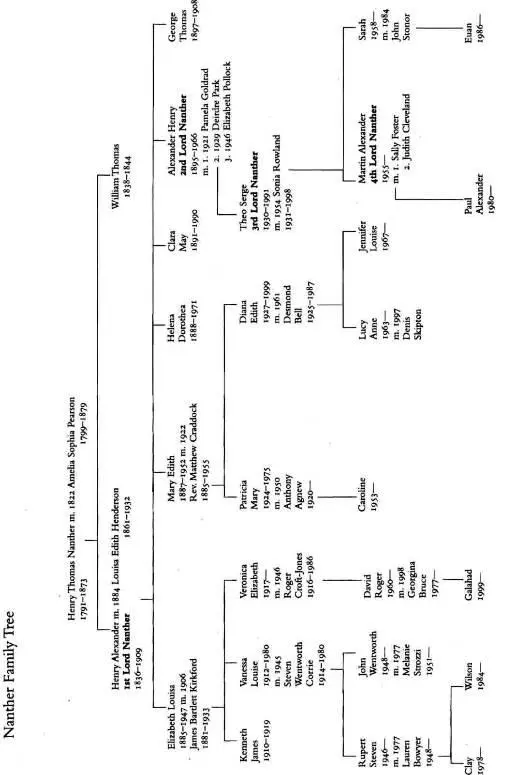
In her tenth novel writing as Barbara Vine, Ruth Rendell offers a novel of suspense based in 19th-century England and centering on deceit, murder, and various other family skeletons. Martin Nanther, the fourth Lord Nanther, has a comfortable life in present-day London as a Hereditary Peer in the House of Lords and as a historical biographer. He chooses as his most recent subject his own great-grandfather, the first Lord Nanther, physician to the royal family (Victoria and Albert) and an early noted researcher into the cause and transmission of hemophilia. The reader is taken through the family history as Martin painstakingly uncovers some not so savory bits of his own family's past. The story is dense with characters, and the author provides family trees of the two principal families, for which any reader will be eternally grateful. The story lacks the usual page-turner suspense of the Rendell/Vine novels but makes up for that with unusually detailed glimpses into Victorian life and the inner workings of the House of Parliament, which American readers will find particularly intriguing. Recommended for all public libraries. Caroline Mann, Univ. of Portland, OR
The Blood Doctor — читать онлайн бесплатно полную книгу (весь текст) целиком
Ниже представлен текст книги, разбитый по страницам. Система сохранения места последней прочитанной страницы, позволяет с удобством читать онлайн бесплатно книгу «The Blood Doctor», без необходимости каждый раз заново искать на чём Вы остановились. Поставьте закладку, и сможете в любой момент перейти на страницу, на которой закончили чтение.
Интервал:
Закладка:
But in the cab that’s taking me along the Mall and past Buckingham Palace I put all this maudlin harking back behind me once more, and ask myself what it is I think I’m going to get from John Corrie. Something, I decide, something I don’t expect. There’s no reason behind this, it’s a gut feeling, my intuition, which Jude once told me during a quarrel that I don’t possess. I want it to be world-shaking, I want it to be my breakthrough.
19
The Earl of Burford is the son and heir to the 14th Duke of St Albans, a direct descendant of Charles II by Nell Gwynn. He’s a young man with fair hair and a beard. The story goes that when Nell had her baby she took him onto a bridge over a river, held him over the parapet and threatened to drop him unless the King promised to make him a duke.
During questions Burford’s been sitting on the steps of the throne, as is his right, and just as business is about to begin he leaps up, jumps on to the Woolsack and shouts, ‘This Bill, drafted in Brussels, is treason! What we are witnessing is the abolition of Britain. Before us lies the wasteland. No Queen! No culture! No sovereignty! No freedom! Stand up for your Queen and country and vote this Bill down!’
Lord Onslow, always to the rescue and often suppressing incorrect behaviour, does his best to pull the bearded fanatic off, but he’s past sixty and Lord Burford is thirty-four. I can’t help remembering how Onslow said at the start of the Bill that he’d behave like a football hooligan to ensure that ‘whatever comes after me is much much better’. He’s put that behind him now. It takes two doorkeepers to grab Burford but by then he’s done what he came to do and quite gracefully allows himself to be escorted out by Black Rod. Of course the whole House, which is packed for the last day of the Bill, is convulsed and gasping. None of that will find its way into Hansard, which will no doubt record it as an ‘interruption’. I hear later that a reception committee of the media was awaiting Lord Burford, who is destined for a couple of days of the fame he’s never had before.
This is our last formal opportunity to debate the measure. All that will remain will be for the Bill to return with Commons amendments but no one thinks there’ll be a serious attempt to defeat the Bill again. Lady Jay is certainly treating the House as if this is farewell time, saying to hereditaries that the hour has come to say ‘thank you and goodbye’.
Barry Dreadnought has wasted no time. The woman he lives with phoned Jude this evening and gave her so many dates to choose from that she couldn’t get out of it and picked next Saturday.
‘Get it over,’ she says on the phone to me at the House.
‘I thought you were so set against it,’ I say.
I’ve never included Jude in that category of people who pass their lives teetering between ‘highs’ and ‘lows’ but she seems to be on a high at present, laughing at nothing, uttering joyful gasps and singing in the shower. Now, when she says she’s changed her mind, she wants to go, it will be ‘good for a laugh’ she giggles and adds that she doesn’t really care, she’s feeling so good this simply doesn’t affect her. ‘Shall I call Roma back and tell her we can’t?’
‘Roma?’
‘That’s her name. I know, it’s like the capital of Italy or a perfume or something – so what?’
I’m not sure I can cope with all this ebullience. I tell her that now she’s accepted we’ll go and I ring off, feeling like a mean-minded curmudgeon. Of course I’ve forgotten to ask her if she got a fax at work from John Corrie, but it’s a bit early to expect one yet. I go back into the Chamber where throughout the afternoon we’ve had a number of amendments on the composition of the interim House. It’s past five-thirty now.
This is deliberate time-wasting, to hold up the Bill as long as can be. A Labour life peer, Lord Peston, angers the opposition by comparing what’s going on to a debating society ‘beloved by sixth formers’. He believes the House should become an elected assembly and says he won’t stand for election and, rather than ‘clinging to the furniture’, is quite willing to go when the need arises. Most hereditaries aren’t in the least willing to go, including among them Lord Ferrers, who looks every inch the general and commanding officer he never was. If Wellington looked like that it’s no wonder we won the Battle of Waterloo. His amendment proposes that life peers should be elected by their fellow life peers, a democratic process that would make everyone legitimate, and he calls for a division.
‘I just want to see all the noble Lords on the Benches opposite,’ he says, ‘traipse through the Division Lobby in order not to be elected.’
So we traipse – a wonderful old word my grandfather Alexander used to use – through the Not Content lobby, lifers and hereditaries alike, and disagree to the amendment, having wasted another three hours. Instead of going back into the Chamber I leave the House, resolving to come back later and vote on the passing of the Bill. On the tube home – I deny myself the luxury of a cab this time – I take my thoughts as well as myself away from the Upper House and transfer them to John Corrie. If the reply I get from him is at all interesting why shouldn’t I go to Philadelphia and talk to him face-to-face? After all, I’m going to have to set out Henry’s theories on diseases of the blood as best I can. It won’t be possible to write his life without an exposition of his discoveries in the field of haemophilia, for instance. Do I, at this stage, even know precisely how haemophilia is inherited? To put it in layman’s terms, how the gene pattern works? John Corrie will know. Even if these diseases aren’t his speciality, as they probably aren’t, he’s an MD and he’s got a PhD in something to do with genes. He could surely explain this stuff to me much better than a book. Probably I can get a bargain flight, a package to New York which will include two nights, say, in a hotel. And from there I can do as I once did as a student and take the train, the Metroliner, down to the City of Brotherly Love.
I make it home in record time. Jude says that if I’m going back to the House at nine-thirty she’ll come with me, take her seat below the bar and watch me expel myself. She’s still very much on her high and it’s taken away her appetite as it always does when it rules her. Her face is flushed and her eyes bright. While I eat she tells me she’s phoned Roma and told her we’d love to come on Saturday night. There won’t be anyone else to dinner, just the four of us. I don’t know whether to be glad about this on the grounds that friends of Dreadnought are bound to be appalling, or sorry because there won’t be any leavening of conversation (sure to be about money, the Internet and shopping) at the dinner table. Jude wants to stay on the subject, she’s as keen to go to Ainsworth House now as she was dismayed when I passed on the invitation, she thinks it will be ‘an eye-opener’ but I slip in my question when she draws breath and ask if a fax has come for me from America. It hasn’t. It’s early days, isn’t it, she says, and I shouldn’t expect anything till the end of the week.
I ask if she’d mind my going alone to New York and, knowing my generous-hearted wife as I do, I’m anticipating an unqualified, ‘Of course you must go, darling.’ What I get is rather more grudging, not to say mystifying.
‘You mean to see this Corrie? If he ever answers, I suppose. When the time comes you may not want to go.’
‘Why do you say that?’
‘I just think you may not,’ she says and she goes off to call us a cab, having flatly refused to get into the tube ‘at this hour’.
Jude is the best-looking peer’s wife in the House. I would say that, I daresay, but others have told me so, an ancient Tory hereditary volunteering the opinion that if there was a peeresses’ beauty contest she’d win. I’ve never dared tell Jude that. She’d be infuriated at the violation of her feminist principles. I part from her in the Peers’ Lobby and when I’m in my usual place I see she’s stationed herself no more than a couple of yards away from me. A lot of old men turn their heads and crane their ancient necks to look at her in her blue dress and pearls.
Читать дальшеИнтервал:
Закладка:
Похожие книги на «The Blood Doctor»
Представляем Вашему вниманию похожие книги на «The Blood Doctor» списком для выбора. Мы отобрали схожую по названию и смыслу литературу в надежде предоставить читателям больше вариантов отыскать новые, интересные, ещё непрочитанные произведения.





Обсуждение, отзывы о книге «The Blood Doctor» и просто собственные мнения читателей. Оставьте ваши комментарии, напишите, что Вы думаете о произведении, его смысле или главных героях. Укажите что конкретно понравилось, а что нет, и почему Вы так считаете.