Barbara Vine - The Blood Doctor
Здесь есть возможность читать онлайн «Barbara Vine - The Blood Doctor» весь текст электронной книги совершенно бесплатно (целиком полную версию без сокращений). В некоторых случаях можно слушать аудио, скачать через торрент в формате fb2 и присутствует краткое содержание. Год выпуска: 2003, Издательство: Vintage, Жанр: Современная проза, на английском языке. Описание произведения, (предисловие) а так же отзывы посетителей доступны на портале библиотеки ЛибКат.
- Название:The Blood Doctor
- Автор:
- Издательство:Vintage
- Жанр:
- Год:2003
- ISBN:нет данных
- Рейтинг книги:4 / 5. Голосов: 1
-
Избранное:Добавить в избранное
- Отзывы:
-
Ваша оценка:
The Blood Doctor: краткое содержание, описание и аннотация
Предлагаем к чтению аннотацию, описание, краткое содержание или предисловие (зависит от того, что написал сам автор книги «The Blood Doctor»). Если вы не нашли необходимую информацию о книге — напишите в комментариях, мы постараемся отыскать её.
Barbara Vine (a.k.a. Ruth Rendell) deftly weaves this story of an eminent Victorian with a modern yarn about the embattled biographer, who is watching the House of Lords prepare to annul membership for hereditary peers and thus strip him of his position. Themes of fate and family snake throughout this teasing psychological suspense, a typically chilling tale from a master of the genre.
From Publishers Weekly
This rich, labyrinthine book by Vine (aka Ruth Rendell) concerns a "mystery in history," like her 1998 novel, The Chimney Sweeper's Boy. Martin Nanther-biographer and member of the House of Lords-discovers some blighted roots on his family tree while researching the life of his great-great-grandfather, Henry, an expert on hemophilia and physician to Queen Victoria. Martin contacts long-lost relatives who help him uncover some puzzling events in Henry's life. Was Henry a dour workaholic or something much more sinister? Vine can make century-old tragedy come alive. Still, the decades lapsed between Martin's and Henry's circles create added emotional distance, and, because they are all at least 50 years dead, we never meet Henry or his cohorts except through diaries and letters. Martin's own life-his wife's infertility and troubles with a son from his first marriage-is interesting yet sometimes intrudes on the more intriguing Victorian saga. Vine uses her own experience as a peer to give readers an insider's look into the House of Lords, at the dukes snoozing in the library between votes and eating strawberries on the terrace fronting the Thames. Some minor characters are especially vivid, like Martin's elderly cousin Veronica, who belts back gin while stonewalling about the family skeletons all but dancing through her living room. Readers may guess Henry's game before Vine is ready to reveal it, but this doesn't detract from this novel peopled by characters at once repellant and compelling.
From Library Journal
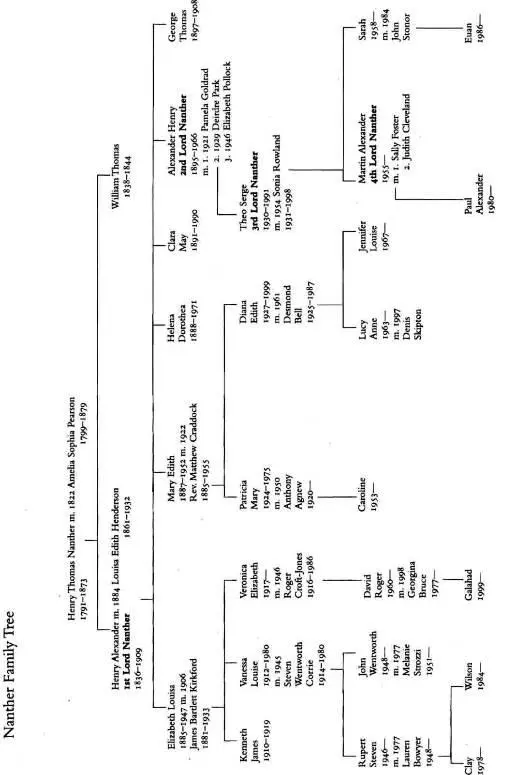
In her tenth novel writing as Barbara Vine, Ruth Rendell offers a novel of suspense based in 19th-century England and centering on deceit, murder, and various other family skeletons. Martin Nanther, the fourth Lord Nanther, has a comfortable life in present-day London as a Hereditary Peer in the House of Lords and as a historical biographer. He chooses as his most recent subject his own great-grandfather, the first Lord Nanther, physician to the royal family (Victoria and Albert) and an early noted researcher into the cause and transmission of hemophilia. The reader is taken through the family history as Martin painstakingly uncovers some not so savory bits of his own family's past. The story is dense with characters, and the author provides family trees of the two principal families, for which any reader will be eternally grateful. The story lacks the usual page-turner suspense of the Rendell/Vine novels but makes up for that with unusually detailed glimpses into Victorian life and the inner workings of the House of Parliament, which American readers will find particularly intriguing. Recommended for all public libraries. Caroline Mann, Univ. of Portland, OR
The Blood Doctor — читать онлайн бесплатно полную книгу (весь текст) целиком
Ниже представлен текст книги, разбитый по страницам. Система сохранения места последней прочитанной страницы, позволяет с удобством читать онлайн бесплатно книгу «The Blood Doctor», без необходимости каждый раз заново искать на чём Вы остановились. Поставьте закладку, и сможете в любой момент перейти на страницу, на которой закончили чтение.
Интервал:
Закладка:
The place has knocked the stuffing out of me and feeling I’ve been lamentably feeble, I assert myself by insisting he stop calling me my Lord. ‘My name’s Martin.’
He’s so delighted that he calls me by my christian name no fewer than five times in the ceremony of saying goodbye. I walk home up Abbey Road and when I let myself into Alma Villa find Jude has company. David and Georgie are there with the Holy Grail and all but he are drinking champagne. Apparently, to quote Georgie, whose comments on her mother-in-law David doesn’t dispute, they’re celebrating the departure of Veronica. She’s finally gone home to Cheltenham. Jude looks enigmatic. She’s been rather mysterious lately, as if she’s harbouring some secret, though not an unpleasant one, and I’ve no idea what it can be as she’s certainly not pregnant again. She made a great point of informing me when her period arrived. Anyway, she’s back on the pill to give herself a six months’ rest. So I’m pleased to see her drinking champagne and enjoying herself, the abstinence and diet regime abandoned for the time being.
Up till now she’s avoided taking much notice of the Holy Grail and I know that’s because it’s sometimes painful for her even to look at him. But now, because he’s whingeing and squeaking in his Moses basket and Georgie has lifted him out, Jude takes him on her knee and cuddles him and talks to him. He stops crying and smiles up into her face. He’s really a very handsome baby, I must admit, with lots of dark shiny hair and dark-blue eyes. They make a beautiful picture, the two of them, a Madonna and child set-piece, for Jude is wearing a flowing blue silk garment, her hair, the same shade as his as if she were his mother and not Georgie, pulled up and knotted on the back of her head. I’m enraptured, I can’t take my eyes off her, and I’m almost persuaded that a baby would be all right, would be bearable, if I could see such a sight as this at my fireside.
However, I pull myself together and regale them with an account of my visit chez Dreadnought. Jude says there’s no way she’s going to dinner at Ainsworth House, aka Horizon View, so she hopes I didn’t make any promises. I tell David about John Corrie, the gene therapy cousin Lachlan met, and to my surprise he looks very cagey. Georgie doesn’t, though. She’s in an ebullient mood and she lets out a crow of laughter.
‘I know who he is,’ she says. ‘He’s the son of my esteemed ma-in-law’s sister who stole her fiancé.’
The most intelligent man in London says, ‘Oh, Georgie, ’ rather feebly.
‘Oh, Georgie, nothing. You told me the story yourself. You never said I wasn’t to talk about it.’
‘There’s such a thing as discretion,’ says David.
Still, discretion isn’t to be allowed to prevail and the story comes out, both of them contributing. Now I know why Veronica didn’t speak of Vanessa and why, according to her dictates, the name is never to be mentioned. It’s a family quarrel that’s been going on for fifty-four years.
Veronica got engaged to an American serviceman called Steven Wentworth Corrie in 1944 when she was twenty-seven. Her sister Vanessa, five years older than she, and also in the WAAF, the Women’s Auxiliary Air Force, was stationed far from where the Kirkfords lived in York. She came home on leave at the same time as Veronica, met Steven Corrie and the two of them fell in love. Instead of confessing to Veronica, Vanessa and Steven were married secretly in London and it wasn’t until Corrie had returned to the United States at the end of the Second World War that the truth came out.
‘My mother was very badly treated indeed,’ says David.
Even Georgie concedes this but adds that it served her right. ‘The amazing thing is not that he’d have been happy to have got shot of Veronica, anyone could understand that, but that he preferred a woman five years older. She was even older than him.’
‘Has age to do with love?’ asks Jude, but only I know she’s quoting Nancy Mitford.
No one answers her. Georgie’s usual attitude when anyone makes a remark or asks a question she doesn’t understand is to ignore it. Still, I’m losing my dislike for her. I suppose it’s because she’s showing herself to be so human and so vulnerable. She must have suffered a lot of humiliation while Veronica spent that month with them. ‘Anyway, it’s time you forgave poor Vanessa,’ she says to her husband. ‘It’s not your quarrel.’
‘She’s probably dead by now,’ David says. ‘She’d be all of eighty-seven.’
Georgie says airily that that’s nothing these days and naming a restaurant in Blenheim Terrace, suggests we all go there for dinner. We can take Galahad because the restaurateur is ‘child-friendly’. She belongs to the school of thought – as Sally and I did with Paul – that when a baby’s small you can take him out with you in the evenings because he must perforce remain in his carrying cot, while once he starts walking you’ve had it for the next fifteen years.
I don’t much want to go but I can see Jude does. On the way we all discuss family quarrels to David’s discomfort; Veronica’s marriage ‘on the rebound’ to his father and speculate as to how many children Vanessa would have had. I decide to write to the University of Vermont at Burlington for help in discovering the whereabouts of John Corrie.
*
We’ve had a water disaster: a pipe suddenly leaking into one of the upstairs ceilings and bringing part of it down. When I phone the plumber we always use I recall that in a debate on House of Lords reform Baroness Kennedy said she wouldn’t employ a hereditary plumber and she suspected that a great many people up and down the country shared that view. The analogy is clear. Why give a man a job to do because his ancestor had that job, was in other words a hereditary peer? When it was my turn to speak I said that was exactly what I would do and did. My father – maybe not my grandfather, who knows what Alexander did? – employed my plumber’s father and that’s why I employ him. The same might well apply to the hereditary peerage. Muffled ‘hear-hears’ greet this and someone says that’s why eldest sons sit on the steps of the throne: to learn the ropes before Dad drops off his perch.
The plumber comes. He’s much more of a scientist than his father was and he says, incredibly, that the cause of the leak was ‘spontaneous mutation’ in the pipe. While he’s working I sit at my dining-table desk and look once more at Edith’s photographs of the rooms of Ainsworth House – the authentic Victorian interiors. The plumber calls me with his usual, ‘Are you there?’ and I have to go upstairs and answer a lot of questions I can’t really answer about replacement of lead pipes with copper ones and where do the electricity cables run.
It’s a quiet sort of day, as the weather forecasters say when it’s not wet or windy, and I poodle through most of the morning, studying photographs, adding Steven Corrie’s name to the tree and John Corrie’s with a question mark after it, and in the late afternoon I go into the House. Apparently, it’s St Crispin’s Day, and Lachlan amazes me by declaiming Henry V’s speech on the eve of Agincourt. Not in the Chamber, I don’t mean that, but in the Bishops’ Bar, where everyone stops talking to listen to him until his voice grows hoarse with the smoke that pervades the place.
‘I always do that,’ he says when the applause dies away and we’ve brought our drinks to a table in the corner. ‘I sort of feel I owe it to them. Harry the King, I mean, Bedford and Exeter, Salisbury and Gloucester. They’d all have been in here. They were . In my flowing cups they’re freshly remembered.’
He has tears in his eyes. I remember he hopes to be elected among the peers chosen by their peers to remain in the interim House, so I ask if he’s got his manifesto with him. He cheers up and produces a sheet of paper rather like a CV. A code of conduct was issued for the hereditary elections and this code states that ‘each candidate may submit to the Clerk of the Parliaments up to seventy-five words in support of his candidacy’. Lachlan’s tells me he’s called Lachlan John Andrew Hamilton, he’s sixty-one and he’s the eighteenth Lord Hamilton of Luloch. He’s only had one wife – a mark of distinction in these degenerate times – Kathleen Rose Hamilton née MacKay, and they’ve six children and fifteen grandchildren. I’d no idea Lachlan was so philoprogenitive. He sits gloomily sipping whisky while I read. The manifesto goes on to state he has two engineering degrees, four honorary degrees, is the patron or chairman or president of eleven organizations, has been something or other at the United Nations and his interests are Robert Burns, Celtic languages and golf. Seventy-four words. If I were a Tory I’d vote for him and I tell him so.
Читать дальшеИнтервал:
Закладка:
Похожие книги на «The Blood Doctor»
Представляем Вашему вниманию похожие книги на «The Blood Doctor» списком для выбора. Мы отобрали схожую по названию и смыслу литературу в надежде предоставить читателям больше вариантов отыскать новые, интересные, ещё непрочитанные произведения.






Обсуждение, отзывы о книге «The Blood Doctor» и просто собственные мнения читателей. Оставьте ваши комментарии, напишите, что Вы думаете о произведении, его смысле или главных героях. Укажите что конкретно понравилось, а что нет, и почему Вы так считаете.