Barbara Vine - The Blood Doctor
Здесь есть возможность читать онлайн «Barbara Vine - The Blood Doctor» весь текст электронной книги совершенно бесплатно (целиком полную версию без сокращений). В некоторых случаях можно слушать аудио, скачать через торрент в формате fb2 и присутствует краткое содержание. Год выпуска: 2003, Издательство: Vintage, Жанр: Современная проза, на английском языке. Описание произведения, (предисловие) а так же отзывы посетителей доступны на портале библиотеки ЛибКат.
- Название:The Blood Doctor
- Автор:
- Издательство:Vintage
- Жанр:
- Год:2003
- ISBN:нет данных
- Рейтинг книги:4 / 5. Голосов: 1
-
Избранное:Добавить в избранное
- Отзывы:
-
Ваша оценка:
The Blood Doctor: краткое содержание, описание и аннотация
Предлагаем к чтению аннотацию, описание, краткое содержание или предисловие (зависит от того, что написал сам автор книги «The Blood Doctor»). Если вы не нашли необходимую информацию о книге — напишите в комментариях, мы постараемся отыскать её.
Barbara Vine (a.k.a. Ruth Rendell) deftly weaves this story of an eminent Victorian with a modern yarn about the embattled biographer, who is watching the House of Lords prepare to annul membership for hereditary peers and thus strip him of his position. Themes of fate and family snake throughout this teasing psychological suspense, a typically chilling tale from a master of the genre.
From Publishers Weekly
This rich, labyrinthine book by Vine (aka Ruth Rendell) concerns a "mystery in history," like her 1998 novel, The Chimney Sweeper's Boy. Martin Nanther-biographer and member of the House of Lords-discovers some blighted roots on his family tree while researching the life of his great-great-grandfather, Henry, an expert on hemophilia and physician to Queen Victoria. Martin contacts long-lost relatives who help him uncover some puzzling events in Henry's life. Was Henry a dour workaholic or something much more sinister? Vine can make century-old tragedy come alive. Still, the decades lapsed between Martin's and Henry's circles create added emotional distance, and, because they are all at least 50 years dead, we never meet Henry or his cohorts except through diaries and letters. Martin's own life-his wife's infertility and troubles with a son from his first marriage-is interesting yet sometimes intrudes on the more intriguing Victorian saga. Vine uses her own experience as a peer to give readers an insider's look into the House of Lords, at the dukes snoozing in the library between votes and eating strawberries on the terrace fronting the Thames. Some minor characters are especially vivid, like Martin's elderly cousin Veronica, who belts back gin while stonewalling about the family skeletons all but dancing through her living room. Readers may guess Henry's game before Vine is ready to reveal it, but this doesn't detract from this novel peopled by characters at once repellant and compelling.
From Library Journal
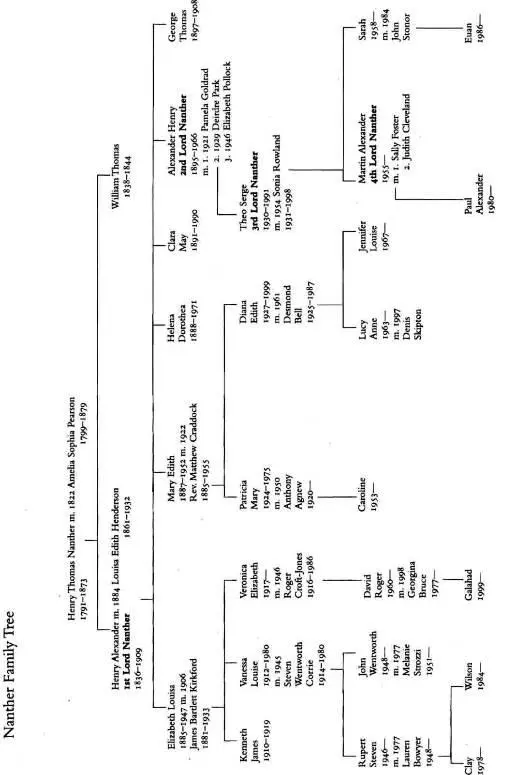
In her tenth novel writing as Barbara Vine, Ruth Rendell offers a novel of suspense based in 19th-century England and centering on deceit, murder, and various other family skeletons. Martin Nanther, the fourth Lord Nanther, has a comfortable life in present-day London as a Hereditary Peer in the House of Lords and as a historical biographer. He chooses as his most recent subject his own great-grandfather, the first Lord Nanther, physician to the royal family (Victoria and Albert) and an early noted researcher into the cause and transmission of hemophilia. The reader is taken through the family history as Martin painstakingly uncovers some not so savory bits of his own family's past. The story is dense with characters, and the author provides family trees of the two principal families, for which any reader will be eternally grateful. The story lacks the usual page-turner suspense of the Rendell/Vine novels but makes up for that with unusually detailed glimpses into Victorian life and the inner workings of the House of Parliament, which American readers will find particularly intriguing. Recommended for all public libraries. Caroline Mann, Univ. of Portland, OR
The Blood Doctor — читать онлайн бесплатно полную книгу (весь текст) целиком
Ниже представлен текст книги, разбитый по страницам. Система сохранения места последней прочитанной страницы, позволяет с удобством читать онлайн бесплатно книгу «The Blood Doctor», без необходимости каждый раз заново искать на чём Вы остановились. Поставьте закладку, и сможете в любой момент перейти на страницу, на которой закончили чтение.
Интервал:
Закладка:
He takes the manifesto back without a word on the subject but says he hasn’t forgotten my interest in ‘that Dr Corrie chap’. He’s asked his wife who’s got a far better memory than he has. Kathleen Hamilton remembers John Corrie perfectly and that he’s the JGP Fellow at the University of Pennsylvania, an MD and a PhD. I make up my mind to write to him as soon as I get home.
But I’m not going home yet. Like Adam and Eve, doubtless, after the fall but before the expulsion, I’m going to make a little tour of my soon-to-be-lost domain. Because, once I’d made up my mind not to stand for election – on the grounds that whatever I may feel I know that no one should play a part in the government of his country because his father and his grandfather played that part – because of this I also decided I shan’t haunt the place once I’ve no legitimate right here. Not for me a seat in the gallery or on the steps of the throne, wistfully waiting for some life peer or one of the precarious ninety-two to offer me a drink. If I come back it must be as someone’s lunch or dinner guest and even those invitations I shall seldom accept.
The Committee Corridor isn’t exactly a place steeped in history, so I don’t bother with going upstairs. Instead, I hang my pass round my neck – necessary when entering ‘the other place’ – and stroll along the marble and between the statuary to the Central Lobby. The Commons are sitting and I think of going in, up into the Peers’ Gallery, where we’re always welcomed. But it’s just gone seven and if they’re going to divide the Commons usually do so at seven, and as I hesitate I hear the division bell and see the green bell-shape come up on the screens. So it’s back to the Peers’ Lobby where everything is slow and quiet now. Dinner guests are coming in and parties are gathering on the red-leather seats in the corners. There’s no one in the Moses Room and its doors are unlocked. I walk in and stand looking at Herbert’s huge paintings. Moses bringing the tablets of the law down the mountain and the ‘Judgement of Daniel’. I’ve always liked these two, especially the animals in them, the gazelle and the lynx on a lead, wearing an embroidered coat like a little dog. Herbert was one of those painters who have a recurring woman in their pictures, a model or wife, I suppose, and his looks a lot like Jude, a slender creature with a beautiful classical face and shiny dark hair. She’s always got a child or children with her as I expect young women did on Mount Sinai or in ancient Babylon.
I walk past the Earl Marshal’s room that’s now a retreat for women peers and the staircase where the public go up into the gallery, and make my way along the Not Content lobby and out on to the blue carpet of the Prince’s Chamber. The blue carpet is sacred, or rather the room it covers is, because it’s the ante-chamber of the Chamber itself. No one may smoke here and the public, passing through, may not linger or speak above a whisper, though peers themselves talk as much and as loudly as they please. On each side there’s a fireplace where once, no doubt, coal fires burned. They’re gas now. A high fender with a leather-padded top guards each fireplace and on a chair nearby on the temporal side (why not the Government side? I don’t know) sits the Labour whip when a two- or three-line whip is on and peers must be prevented, if possible, from going home. High above, all round the walls are portraits of James IV of Scotland and his Tudor Queen, their son James V and Mary Queen of Scots.
Pugin and Barry arranged things so that, if all the doors were open, the Lord Chancellor on the Woolsack could look through and see straight ahead of him the Speaker of the House of Commons on the Speaker’s Chair. I don’t suppose anyone’s ever put this to the test. Certainly it’s true that when you come out of the Robing Room and walk down along the Royal Gallery you come face to face with a huge, grossly flattering statue of Queen Victoria, flanked by figures representing Justice and Mercy, which dominates the Prince’s Chamber. The woman who employed Henry as her doctor didn’t look much like this white marble nymph.
I enter the library where it’s quiet, smoky, gorgeous with gilt and leather and dark glowing colours. Peers are asleep in armchairs, newsprint sheets over their faces, or sitting at tables poring over papers. Outside the windows it’s a wet grey dusk, the river black and glittering, St Thomas’s drowning in mist. The Millennium Wheel that we’re supposed to call the London Eye is still lying on its side above the water level, awaiting its elevation to some monstrous height. If I sat down here between the river and the books I think I might follow Lachlan’s example and the tears in my eyes begin to flow. I didn’t know till now, this moment, how much I mind.
The tour wasn’t, after all, a good idea. I wander down the corridor towards the Salisbury Room with no clear purpose in mind. No one’s using either of the phones on the oval table, so I sit down, pick up the receiver and ask for international directory enquiries. It’s more to distract me, lift me out of this sentimental journey, than for any pressing reason that I ask for the number of the University of Pennsylvania. The time on the eastern seaboard of the United States will be two-fifteen, a very suitable hour to call. I’ll have to pay for the call, we only get free calls from here to places in the United Kingdom. I ask the voice that answers for a fax number. She wants to know which department but of course I don’t know. Genetics? Biochemistry?
‘John Corrie,’ I say. ‘Dr Corrie.’
‘Professor Corrie,’ she corrects me and I write down his fax number, firmly rejecting an e-mail address I’ve no idea how to use.
In the Salisbury Room, sentimentality forgotten, I sit in one of the hideously uncomfortable leather armchairs, glossy as mirrors and slippery as oil, and write on House of Lords headed paper:
Dear Professor Corrie,
I believe you are my second cousin, the son of my father’s cousin, Vanessa Kirkford Corrie. What I know of you comes via my friend Lord Hamilton, whom you met recently in Vermont.
I am currently undertaking research for a biography of my great-grandfather and yours, Henry Alexander, 1st Lord Nanther. I understand you are working on a research project concerned with gene therapy and would be most interested to know more about this. It seems that you are the only descendant of Henry Nanther to follow to any extent in his footsteps. You must forgive me if you don’t see your own work in this light. He was, for his time, an expert in diseases of the blood, as you possibly know, and a royal doctor with a particular brief to attend the haemophiliacs of the royal family.
I would be grateful if you could confirm that you are indeed my second cousin and also furnish me with some details about yourself, your personal and professional history.
Best wishes,
Martin Nanther
I write Jude’s publishing company’s fax number at the foot of the page. I’m a bit ashamed to say I don’t know where the fax machines are in here. One of the doorkeepers soon tells me and the fax goes straight through without a hitch or even a single recall. Considering I want this information only for the last chapter of a biography I haven’t even begun to write, and considering it makes little difference to the final work whether it’s there or not, I’ve been very expeditious about this. Is it because I expect to discover something unlooked-for, surprising? I’ve no reason to. Maybe I’m excited to have found a new cousin. Odd if I am. The last one to turn up, David Croft-Jones, hasn’t exactly illuminated my life. Then what is it?
I go downstairs and pick up my coat, reflecting that my name will be above this peg for only about ten more working days. Yet what else is there in this House to identify me and keep the memory of Nanthers green? A few speeches in Hansard no one will read. It’s quite dark outside now and the pavements are wet and shining. The doorkeeper at the desk says, ‘Goodnight, my Lord.’ I’m going to have a cab home, I can’t face the tube. The policeman at the pavement edge presses the switch that sets the orange lantern flashing at the gate, the signal to taxi drivers that there’s a fare waiting. Richard Coeur de Lion sits astride his stone horse, eyeing the Victoria Tower or maybe the Holy City of Jerusalem. I always tell guests who are coming in for the first time to make for the entrance by the equestrian statue of Richard I. I shan’t do that any more, that’s over.
Читать дальшеИнтервал:
Закладка:
Похожие книги на «The Blood Doctor»
Представляем Вашему вниманию похожие книги на «The Blood Doctor» списком для выбора. Мы отобрали схожую по названию и смыслу литературу в надежде предоставить читателям больше вариантов отыскать новые, интересные, ещё непрочитанные произведения.








Обсуждение, отзывы о книге «The Blood Doctor» и просто собственные мнения читателей. Оставьте ваши комментарии, напишите, что Вы думаете о произведении, его смысле или главных героях. Укажите что конкретно понравилось, а что нет, и почему Вы так считаете.