Barbara Vine - The Blood Doctor
Здесь есть возможность читать онлайн «Barbara Vine - The Blood Doctor» весь текст электронной книги совершенно бесплатно (целиком полную версию без сокращений). В некоторых случаях можно слушать аудио, скачать через торрент в формате fb2 и присутствует краткое содержание. Год выпуска: 2003, Издательство: Vintage, Жанр: Современная проза, на английском языке. Описание произведения, (предисловие) а так же отзывы посетителей доступны на портале библиотеки ЛибКат.
- Название:The Blood Doctor
- Автор:
- Издательство:Vintage
- Жанр:
- Год:2003
- ISBN:нет данных
- Рейтинг книги:4 / 5. Голосов: 1
-
Избранное:Добавить в избранное
- Отзывы:
-
Ваша оценка:
The Blood Doctor: краткое содержание, описание и аннотация
Предлагаем к чтению аннотацию, описание, краткое содержание или предисловие (зависит от того, что написал сам автор книги «The Blood Doctor»). Если вы не нашли необходимую информацию о книге — напишите в комментариях, мы постараемся отыскать её.
Barbara Vine (a.k.a. Ruth Rendell) deftly weaves this story of an eminent Victorian with a modern yarn about the embattled biographer, who is watching the House of Lords prepare to annul membership for hereditary peers and thus strip him of his position. Themes of fate and family snake throughout this teasing psychological suspense, a typically chilling tale from a master of the genre.
From Publishers Weekly
This rich, labyrinthine book by Vine (aka Ruth Rendell) concerns a "mystery in history," like her 1998 novel, The Chimney Sweeper's Boy. Martin Nanther-biographer and member of the House of Lords-discovers some blighted roots on his family tree while researching the life of his great-great-grandfather, Henry, an expert on hemophilia and physician to Queen Victoria. Martin contacts long-lost relatives who help him uncover some puzzling events in Henry's life. Was Henry a dour workaholic or something much more sinister? Vine can make century-old tragedy come alive. Still, the decades lapsed between Martin's and Henry's circles create added emotional distance, and, because they are all at least 50 years dead, we never meet Henry or his cohorts except through diaries and letters. Martin's own life-his wife's infertility and troubles with a son from his first marriage-is interesting yet sometimes intrudes on the more intriguing Victorian saga. Vine uses her own experience as a peer to give readers an insider's look into the House of Lords, at the dukes snoozing in the library between votes and eating strawberries on the terrace fronting the Thames. Some minor characters are especially vivid, like Martin's elderly cousin Veronica, who belts back gin while stonewalling about the family skeletons all but dancing through her living room. Readers may guess Henry's game before Vine is ready to reveal it, but this doesn't detract from this novel peopled by characters at once repellant and compelling.
From Library Journal
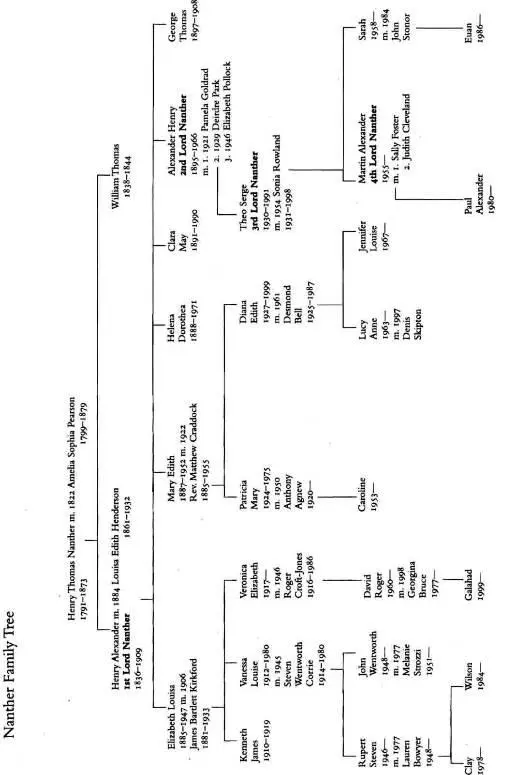
In her tenth novel writing as Barbara Vine, Ruth Rendell offers a novel of suspense based in 19th-century England and centering on deceit, murder, and various other family skeletons. Martin Nanther, the fourth Lord Nanther, has a comfortable life in present-day London as a Hereditary Peer in the House of Lords and as a historical biographer. He chooses as his most recent subject his own great-grandfather, the first Lord Nanther, physician to the royal family (Victoria and Albert) and an early noted researcher into the cause and transmission of hemophilia. The reader is taken through the family history as Martin painstakingly uncovers some not so savory bits of his own family's past. The story is dense with characters, and the author provides family trees of the two principal families, for which any reader will be eternally grateful. The story lacks the usual page-turner suspense of the Rendell/Vine novels but makes up for that with unusually detailed glimpses into Victorian life and the inner workings of the House of Parliament, which American readers will find particularly intriguing. Recommended for all public libraries. Caroline Mann, Univ. of Portland, OR
The Blood Doctor — читать онлайн бесплатно полную книгу (весь текст) целиком
Ниже представлен текст книги, разбитый по страницам. Система сохранения места последней прочитанной страницы, позволяет с удобством читать онлайн бесплатно книгу «The Blood Doctor», без необходимости каждый раз заново искать на чём Вы остановились. Поставьте закладку, и сможете в любой момент перейти на страницу, на которой закончили чтение.
Интервал:
Закладка:
‘He’s a scientist,’ says Lachlan. ‘Something to do with gene therapy, whatever that is.’
We talk a bit more about the twilight of the gods and speculate about what all these bar-proppers will do when they’ve lost their seats in the House and have to go home and live on their estates. If they have estates. It worries me a bit that for some it will mean real financial hardship, me among them. Thoughts of dwindling resources cause me to walk to Charing Cross and take the tube home rather than a taxi. Jude’s in the Alma Villa kitchen, drinking wine and cooking risotto from a recipe in the Evening Standard . Few women realize (and would be furious if they did realize) how sexy men find them wearing an apron and standing at the stove cooking. Knowing one ought not to feel like this, that it’s anti-feminist and actually against one’s principles, a nasty identification of ‘real’ women with domestic tasks, makes no difference. I put my arms round Jude from behind and kiss her neck and she nearly overturns the risotto pan. Of course all this has made John Corrie slip my mind and I don’t remember him again until hours later, after some highly satisfactory lovemaking and while Jude is sleeping the sleep of the just. I creep downstairs and find David’s family tree among the stuff on the dining-table desk.
I know John Corrie isn’t there. I’ve come down here to see who he could possibly be, where he could fit in. I’ve half decided he must be a Rowland from my mother’s side, there are dozens of them, most unknown to me. I unroll the tree and see he could be a son of Vanessa’s. If Vanessa married a man called Corrie and had a son. The last chapter of my biography ought to deal with the lives of Henry’s descendants and if this scientist, this John Corrie, is following in his great-grandfather’s footsteps, he’d make an interesting footnote. After all, gene therapy is just a few logical steps on from what Henry himself was doing when he examined heredity and factors he believed were carried in the blood.
Do I need to meet John Corrie? Probably not. Certainly not if it means travelling to the United States expressly for that purpose. I can’t afford it.
Henry lived for nine years into the new century and they seem to have been years of semi-retirement. All his life he’d been a strong healthy man. At least, no illness more serious than a cold is ever mentioned in the diaries, his letters or letters he received. The single cold that he seems to have had on the day he ‘rescued’ Samuel Henderson may only have been an excuse for leaving early, as may his ‘feeling unwell’ when he was supposed to dine with the Bathos.
Edith took a photograph of him with Alexander and Elizabeth in the garden at Ainsworth House and though it’s not dated it’s possible to guess the approximate date by assessing the ages of his son and daughter. Elizabeth is tall and handsome, dark with her father’s strong features, a grown woman of eighteen or nineteen, while Alexander is about eight, a big healthy-looking boy in a sailor suit. Since she was born in 1885 and he ten years later, this makes the date of the photograph 1903. Henry has aged. He isn’t yet seventy but he seems to have shrunk from his former superior height, his hair is thinning and his face pinched. He still holds his chair of pathological anatomy at University College Hospital but very likely seldom lectures. It is seven years since he published his third book, but there is evidence that he intended to publish again.
Two letters from Barnabus Couch refer to this book. In one, dated May 1901, he asks how Henry is progressing. ‘Knowing your prolificity as I do,’ he writes, ‘I have no doubt that if you are not yet nearing completion, an unlikely event in the light of the magnitude of your task, you have, if you will forgive the slang, “broken the back of it”.’ Couch must have received a denial, and perhaps in sharp terms, for in the following year he’s writing, ‘You may reprimand me again, old fellow, but I cannot resist enquiring as to the progress of the Great Work. Admirers among your readers – and this means all your readers – avidly await its publication and the revelations contained in its scholarly pages.’ Couch certainly knew how to lay it on with a trowel but whether Henry liked flattery or merely bore it we’ll never know.
His admirers waited in vain; the magnum opus was never published. Did Henry begin to write it but gave it up or was it never started? Was this because his health began to fail or from some other cause? There are no manuscripts in the trunks, complete or unfinished, and only one more letter from Couch. He suffered a stroke the following year and remained incapacitated until his death. It was the time in Henry’s life that comes to all men who live long enough, when his friends and acquaintances are sick or dying, first Ernest Vickersley, an occasional dinner guest in Wimpole Street and Hamilton Terrace. Lewis Fetter and Sir Joseph Bazalgette had both died in 1891 and Huxley in 1895. His mother-in-law and his wife’s aunt Dorothea Vincent lived on. They were both of them his contemporaries but Louisa Henderson was younger than he. His brother-in-law Lionel with his growing family flourished, but Caroline Hamilton Seaton, who had perhaps been his first love, was dead of uterine cancer at the age of sixty-two. A letter from her husband informs Henry of her illness and her death, referring to their ‘long friendship’, so apparently the two families sometimes saw each other or at least corresponded. But no other letters from Cameron Seaton survive.
From 1903 onwards Henry’s diary entries grow briefer and more taciturn. Weeks go by without a single entry. Those events which are recorded are social engagements and various royal births, marriages and deaths. Henry never noted his children’s birthdays in the diary, nor, come to that, his wife’s. What he did write were more of those essays in the notebook. I’ve decided I’d better get around to reading them, in spite of having to use a magnifying glass, and that’s what I’m doing now.
It’s been a disappointment. They’re rather dull, typical Victorian (though actually Edwardian by now) disquisitions on the vanity of human wishes, the paths of glory leading but to the grave, the decline of religious faith. The abstract virtues appear often and in capital letters, Courage, Honesty, Determination, Humility. I am reminded of the Dyce frescoes in the Robing Room, which also depict these sort of things, and wonder if Henry was inspired by them. There’s nothing extraordinary about any of it. Or so I think until I’m about to close the notebook, feeling rather miffed. Tedious Henry. Then something strikes me as odd. You don’t, surely, buy yourself a notebook to write essays and reflections in, write until you get to the foot of the last page and then just stop. But that is what Henry seems to have done. The last line in the book comes at the very foot of the last page. It’s ‘A humble heart tends to worldly success more surely than arrogance ever does.’ And that’s it, there it stops.
Now this may be the last line of the Humility essay and it may be that Henry was such a neat orderly-minded man that when he got to the end of his notebook he made an end to this essay and never wrote another. The ‘humble heart’ sentence may be a final rounding off, an exit line. On the other hand, it may not. It’s hard to say. But doesn’t it seem far more likely that Henry continued into a second notebook? That he either wrote more on humility or else began another essay? Why would he have finished when he seems to be in full spate of writing just because he came to the end of a notebook? And in that case, where is the next one?
When I decided to write Henry’s life I emptied all the trunks he left behind him and Edith brought here with her. They weren’t the only contents of the attics, there were boxes and crates and other trunks of things obviously not his, women’s clothes, ornaments, discarded pictures, quantities of photographs. I went through these too but not very assiduously, there seemed no point. I’ve always meant to do so again, sort stuff out and give what’s worth saving to a charity shop.
Читать дальшеИнтервал:
Закладка:
Похожие книги на «The Blood Doctor»
Представляем Вашему вниманию похожие книги на «The Blood Doctor» списком для выбора. Мы отобрали схожую по названию и смыслу литературу в надежде предоставить читателям больше вариантов отыскать новые, интересные, ещё непрочитанные произведения.





Обсуждение, отзывы о книге «The Blood Doctor» и просто собственные мнения читателей. Оставьте ваши комментарии, напишите, что Вы думаете о произведении, его смысле или главных героях. Укажите что конкретно понравилось, а что нет, и почему Вы так считаете.