Barbara Vine - The Blood Doctor
Здесь есть возможность читать онлайн «Barbara Vine - The Blood Doctor» весь текст электронной книги совершенно бесплатно (целиком полную версию без сокращений). В некоторых случаях можно слушать аудио, скачать через торрент в формате fb2 и присутствует краткое содержание. Год выпуска: 2003, Издательство: Vintage, Жанр: Современная проза, на английском языке. Описание произведения, (предисловие) а так же отзывы посетителей доступны на портале библиотеки ЛибКат.
- Название:The Blood Doctor
- Автор:
- Издательство:Vintage
- Жанр:
- Год:2003
- ISBN:нет данных
- Рейтинг книги:4 / 5. Голосов: 1
-
Избранное:Добавить в избранное
- Отзывы:
-
Ваша оценка:
The Blood Doctor: краткое содержание, описание и аннотация
Предлагаем к чтению аннотацию, описание, краткое содержание или предисловие (зависит от того, что написал сам автор книги «The Blood Doctor»). Если вы не нашли необходимую информацию о книге — напишите в комментариях, мы постараемся отыскать её.
Barbara Vine (a.k.a. Ruth Rendell) deftly weaves this story of an eminent Victorian with a modern yarn about the embattled biographer, who is watching the House of Lords prepare to annul membership for hereditary peers and thus strip him of his position. Themes of fate and family snake throughout this teasing psychological suspense, a typically chilling tale from a master of the genre.
From Publishers Weekly
This rich, labyrinthine book by Vine (aka Ruth Rendell) concerns a "mystery in history," like her 1998 novel, The Chimney Sweeper's Boy. Martin Nanther-biographer and member of the House of Lords-discovers some blighted roots on his family tree while researching the life of his great-great-grandfather, Henry, an expert on hemophilia and physician to Queen Victoria. Martin contacts long-lost relatives who help him uncover some puzzling events in Henry's life. Was Henry a dour workaholic or something much more sinister? Vine can make century-old tragedy come alive. Still, the decades lapsed between Martin's and Henry's circles create added emotional distance, and, because they are all at least 50 years dead, we never meet Henry or his cohorts except through diaries and letters. Martin's own life-his wife's infertility and troubles with a son from his first marriage-is interesting yet sometimes intrudes on the more intriguing Victorian saga. Vine uses her own experience as a peer to give readers an insider's look into the House of Lords, at the dukes snoozing in the library between votes and eating strawberries on the terrace fronting the Thames. Some minor characters are especially vivid, like Martin's elderly cousin Veronica, who belts back gin while stonewalling about the family skeletons all but dancing through her living room. Readers may guess Henry's game before Vine is ready to reveal it, but this doesn't detract from this novel peopled by characters at once repellant and compelling.
From Library Journal
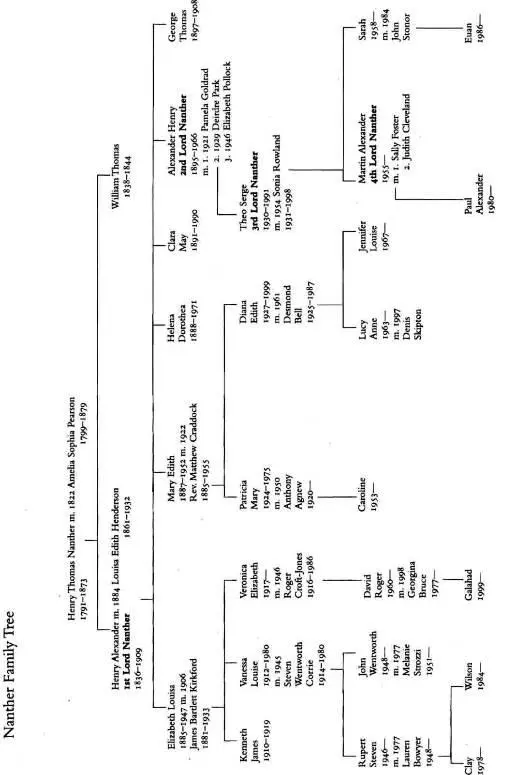
In her tenth novel writing as Barbara Vine, Ruth Rendell offers a novel of suspense based in 19th-century England and centering on deceit, murder, and various other family skeletons. Martin Nanther, the fourth Lord Nanther, has a comfortable life in present-day London as a Hereditary Peer in the House of Lords and as a historical biographer. He chooses as his most recent subject his own great-grandfather, the first Lord Nanther, physician to the royal family (Victoria and Albert) and an early noted researcher into the cause and transmission of hemophilia. The reader is taken through the family history as Martin painstakingly uncovers some not so savory bits of his own family's past. The story is dense with characters, and the author provides family trees of the two principal families, for which any reader will be eternally grateful. The story lacks the usual page-turner suspense of the Rendell/Vine novels but makes up for that with unusually detailed glimpses into Victorian life and the inner workings of the House of Parliament, which American readers will find particularly intriguing. Recommended for all public libraries. Caroline Mann, Univ. of Portland, OR
The Blood Doctor — читать онлайн бесплатно полную книгу (весь текст) целиком
Ниже представлен текст книги, разбитый по страницам. Система сохранения места последней прочитанной страницы, позволяет с удобством читать онлайн бесплатно книгу «The Blood Doctor», без необходимости каждый раз заново искать на чём Вы остановились. Поставьте закладку, и сможете в любой момент перейти на страницу, на которой закончили чтение.
Интервал:
Закладка:
‘Yes, but that was dynastic,’ I say. ‘She was probably told it was her destiny not to marry the individual man but to marry the future king. It was her duty.’
‘It certainly wasn’t Henry’s duty,’ says Jude. For one so slim, she has an inordinate passion for pizza and has enthusiastically begun on a margarita. I’m more austerely getting to work on a Caesar salad. ‘It was his choice,’ she says. ‘He had to have a Henderson just like Princess May had to have a future king. I bet it was her choice too. Imagine ifyou’re the daughter of the Duke of a little German duchy, even if your great-grandfather was a king, and your fiancé who’s going to be King of England dies of pneumonia – think of the disappointment even if you didn’t love him. You’d jump at the chance of marrying the next one in line.’
I tell her she’s losing her parallel, it’s getting less and less like Henry’s case every minute. George the Fifth was a great catch for anyone. Edith wasn’t. All she seems to have had going for her was that she was slightly prettier than her sister. Jude says she doesn’t know, she can’t fathom Henry but she’s willing to bet he was up to no good. We sit about in the sunshine, drinking rather a lot of wine, and feeling as if we’re in some Mediterranean place. Jude says she knows it’s not considered the thing to say but if this is global warming, she’s all for it. At home, in a somewhat fuddled state, I take another look at Henry’s diary for the year 1883, specifically at those entries for the late summer when he became engaged to Eleanor, and for the autumn, made after her death.
There’s no mystery about any of them. All they show is a callous and relentless nature as well as a determination to reveal nothing in a diary someone else might find and read. On Thursday 14 June he breaks with the Bathos. ‘Feeling unwell, I cancelled my evening engagement.’ Two days later comes, ‘Called to enquire after Mr Henderson’s health,’ and on the 20th, ‘Dined with Mr and Mrs Henderson.’ Then come more visits to Keppel Street but the only entry that arouses the slightest curiosity is for 27 July, ‘Consultation with Mrs Henderson.’ What was she consulting him about? All the family seem to have been healthy. I suppose it must have been about Samuel Henderson, who perhaps suffered headaches and dizziness as a result of Joseph Brewer’s attack on him, and Louisa Henderson, like a good wife, was worried about him. I seem to have answered all my own questions and I ought to be satisfied, but somehow I’m not.
Later on, Jude asks the question I was afraid Georgie Croft-Jones would ask that evening we had dinner together in the House. ‘Now you’ve found Henry was capable of criminal conspiracy and fixed up the assault on poor old Samuel, has it occurred to you he might also have engineered Eleanor’s murder?’
‘You mean, paid Bightford to do it and later on let Bightford be hanged?’
‘Well, yes. Bightford would have been hanged anyway, he did the deed, but I suppose Henry would have been hanged along with him.’
I say that if our theory that Henry fell in love with Eleanor after seeing her in the street is correct, he’d have wanted to marry her, he wouldn’t want her dead. Besides, there’s no discernible connection between Bightford and Henry.
‘There was no discernible connection between Brewer and Henry until you discovered it.’
Bightford would have told the police, I tell her. He’d nothing to lose. While in police custody at Exeter he’d have come out with the whole story, if story there was. I can’t believe it, it doesn’t ring true. Henry wasn’t married to Eleanor, he wasn’t irrevocably bound to her. If he wanted to be rid of her he could have jilted her. After all, he’d more or less done it before with Olivia.
‘It was just an idea,’ she says.
While she watches her favourite Sunday night television serial I give her theory a bit more thought. Suppose the mysterious ‘consultation’ wasn’t about Samuel and his headaches at all. Suppose Louisa Henderson had confided in Henry that her daughter Eleanor had some disease or disability. She’d been injured as a child, for instance, and would never have children. But that won’t work because Henry wasn’t engaged to Eleanor on 27 July when the consultation took place, he didn’t propose until quite late on in August. If Louisa Henderson had told him Eleanor was incapable of having children or was malformed in some way – for instance, lacking a vagina, which happens sometimes though very rarely – Henry would surely just have abandoned her, as was his habit. He’d dumped two women so why not a third? In any case, why would Louisa say such a thing to an eminent medical expert she’d only known for about six weeks? She’d have had no reason then to believe Henry was contemplating marriage.
Or would she? Mightn’t it be the case that, even so early on, Henry had asked both parents for consent to pay his addresses (or however those Victorians put it) to their daughter? It was only afterwards that Mrs Henderson asked to speak to him in private and to lay the unpalatable truth before him. Even if that were the case he could still get out of it. That would have been the point of telling him . So I don’t know and it may be that I’ll never know.
Veronica Croft-Jones is the kind of woman of whom people say that she’s wonderful for her age. She’s tall and upright and her trimly cut hair is tinted a uniform pale blonde, fitting round her head like a golden velvet cloche hat. Her skin is like crumpled tissue paper and she wears very dark red lipstick which has ‘bled’ into the lines round her mouth. She’s evidently proud of her legs, which are very good still, and she sits at angles to show them off, crossing her legs and letting her foot, in an absurdly high-heeled shoe, swing provocatively. Her voice is very upper class, plummy yet fluting.
None of those directives for mothers-in-law, specifically those about not interfering or criticizing, have reached her. She tells Georgie she hopes she’s feeding David the food he likes and not neglecting him now she’s got Galahad. Then she wants to know why the vegetables in this household are boiled and not steamed. What has become of the Chinese steamer she gave Georgie last Christmas? Galahad’s name, and no wonder, has evidently never gone down well and when she pronounces it you can detect the quotation marks hanging in the air. He’s too fat, something Veronica can’t understand because breast-fed babies don’t get overweight. Georgie must be supplementing his feeds with something.
To my surprise, Georgie takes all this very well, answering enquiries either with a ‘I suppose you’re right’ or ‘I shall have to do something about that’. David is an only child, born late and fourteen years after his parents’ marriage, and plainly, as Veronica points out to me, as if I couldn’t see it for myself, they ‘adore’ each other. From time to time they exchange conspiratorial smiles. And if David doesn’t exactly side with his mother he doesn’t stick up for Georgie either. Jude and I watch it all avidly, knowing what fun we’ll have dissecting it later.
Veronica dampens my spirits somewhat by telling me that when we have our tête-à-tête she hopes I’m not expecting any family secrets because there aren’t any. However, I can think of one and shall confront her with Patricia Agnew’s letter when the time comes. We eat. Georgie’s a good cook and the food is delicious. The meal is marred only by Veronica asking if her daughter-in-law has forgotten she’s allergic to asparagus and never touches butter anyway. She drinks a great deal. Not just for a woman of her age, but for anyone. Lots of gin and tonic before the meal, wine all the way through, liqueur brandy afterwards and whisky and water just for passing the evening.
Читать дальшеИнтервал:
Закладка:
Похожие книги на «The Blood Doctor»
Представляем Вашему вниманию похожие книги на «The Blood Doctor» списком для выбора. Мы отобрали схожую по названию и смыслу литературу в надежде предоставить читателям больше вариантов отыскать новые, интересные, ещё непрочитанные произведения.






Обсуждение, отзывы о книге «The Blood Doctor» и просто собственные мнения читателей. Оставьте ваши комментарии, напишите, что Вы думаете о произведении, его смысле или главных героях. Укажите что конкретно понравилось, а что нет, и почему Вы так считаете.