Barbara Vine - The Blood Doctor
Здесь есть возможность читать онлайн «Barbara Vine - The Blood Doctor» весь текст электронной книги совершенно бесплатно (целиком полную версию без сокращений). В некоторых случаях можно слушать аудио, скачать через торрент в формате fb2 и присутствует краткое содержание. Год выпуска: 2003, Издательство: Vintage, Жанр: Современная проза, на английском языке. Описание произведения, (предисловие) а так же отзывы посетителей доступны на портале библиотеки ЛибКат.
- Название:The Blood Doctor
- Автор:
- Издательство:Vintage
- Жанр:
- Год:2003
- ISBN:нет данных
- Рейтинг книги:4 / 5. Голосов: 1
-
Избранное:Добавить в избранное
- Отзывы:
-
Ваша оценка:
The Blood Doctor: краткое содержание, описание и аннотация
Предлагаем к чтению аннотацию, описание, краткое содержание или предисловие (зависит от того, что написал сам автор книги «The Blood Doctor»). Если вы не нашли необходимую информацию о книге — напишите в комментариях, мы постараемся отыскать её.
Barbara Vine (a.k.a. Ruth Rendell) deftly weaves this story of an eminent Victorian with a modern yarn about the embattled biographer, who is watching the House of Lords prepare to annul membership for hereditary peers and thus strip him of his position. Themes of fate and family snake throughout this teasing psychological suspense, a typically chilling tale from a master of the genre.
From Publishers Weekly
This rich, labyrinthine book by Vine (aka Ruth Rendell) concerns a "mystery in history," like her 1998 novel, The Chimney Sweeper's Boy. Martin Nanther-biographer and member of the House of Lords-discovers some blighted roots on his family tree while researching the life of his great-great-grandfather, Henry, an expert on hemophilia and physician to Queen Victoria. Martin contacts long-lost relatives who help him uncover some puzzling events in Henry's life. Was Henry a dour workaholic or something much more sinister? Vine can make century-old tragedy come alive. Still, the decades lapsed between Martin's and Henry's circles create added emotional distance, and, because they are all at least 50 years dead, we never meet Henry or his cohorts except through diaries and letters. Martin's own life-his wife's infertility and troubles with a son from his first marriage-is interesting yet sometimes intrudes on the more intriguing Victorian saga. Vine uses her own experience as a peer to give readers an insider's look into the House of Lords, at the dukes snoozing in the library between votes and eating strawberries on the terrace fronting the Thames. Some minor characters are especially vivid, like Martin's elderly cousin Veronica, who belts back gin while stonewalling about the family skeletons all but dancing through her living room. Readers may guess Henry's game before Vine is ready to reveal it, but this doesn't detract from this novel peopled by characters at once repellant and compelling.
From Library Journal
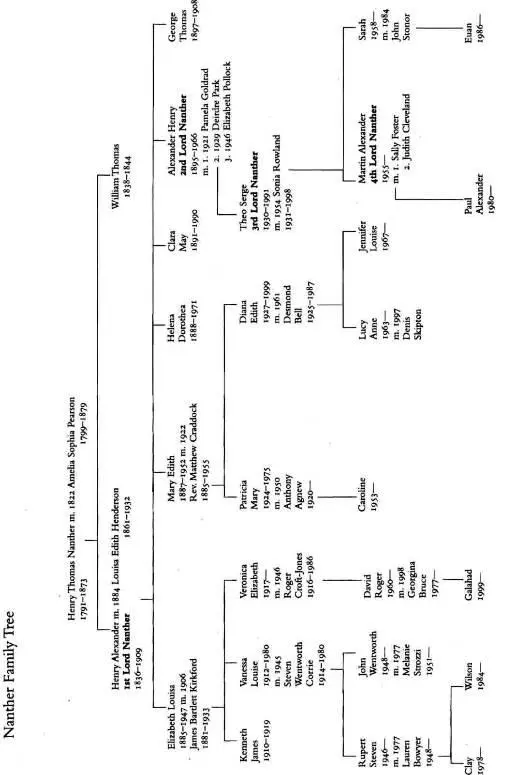
In her tenth novel writing as Barbara Vine, Ruth Rendell offers a novel of suspense based in 19th-century England and centering on deceit, murder, and various other family skeletons. Martin Nanther, the fourth Lord Nanther, has a comfortable life in present-day London as a Hereditary Peer in the House of Lords and as a historical biographer. He chooses as his most recent subject his own great-grandfather, the first Lord Nanther, physician to the royal family (Victoria and Albert) and an early noted researcher into the cause and transmission of hemophilia. The reader is taken through the family history as Martin painstakingly uncovers some not so savory bits of his own family's past. The story is dense with characters, and the author provides family trees of the two principal families, for which any reader will be eternally grateful. The story lacks the usual page-turner suspense of the Rendell/Vine novels but makes up for that with unusually detailed glimpses into Victorian life and the inner workings of the House of Parliament, which American readers will find particularly intriguing. Recommended for all public libraries. Caroline Mann, Univ. of Portland, OR
The Blood Doctor — читать онлайн бесплатно полную книгу (весь текст) целиком
Ниже представлен текст книги, разбитый по страницам. Система сохранения места последней прочитанной страницы, позволяет с удобством читать онлайн бесплатно книгу «The Blood Doctor», без необходимости каждый раз заново искать на чём Вы остановились. Поставьте закладку, и сможете в любой момент перейти на страницу, на которой закончили чтение.
Интервал:
Закладка:
But do I want that distress? Do I want someone to enter my life and bring me pain? Suddenly I remember Paul having croup at a year old and rushing him to hospital and the touch-and-go tracheotomy the surgeon carried out. That agony will be mine again, or something very like it, if Jude gets what she wants and I must teach myself to want. Because I shall love the child. I shall adore it and there’s the pity of it all. But if she doesn’t get what she wants, it will be worse.
*
It’s September now, a Sunday morning, and David and Georgie have called. They’ve brought the Holy Grail with them, having apparently decided tact can only be maintained so long. He’s the biggest ten-week-old I’ve ever seen, not that I’ve much experience in these matters, he’s the sort of baby Renaissance painters used as models for their putti , presumably because this was the ideal and few fifteenth-century Florentine infants actually packed this amount of fat on to their bones. I admire him so extravagantly that Jude, whom my transports are designed to. impress, gives me a suspicious look. While she and Georgie talk babies, feeding routines and the ever-absorbing subject of Georgie’s superabundance of milk, David tells me his mother is coming on the twentieth to stay for a week. Will we come to dinner while she’s with them? I can’t really turn this down, though I’d like to, but I stipulate that I also need to have the private interview with Veronica she suggested in her letter. I want to tape our conversation as I’ve a feeling it may be very useful. I consult Jude, interrupting a mini-lecture from Georgie on efficient methods of expressing milk, breast pumps, et cetera, and we fix on Saturday 25 September for the dinner. The Croft-Joneses are now established as our friends.
‘Our cousins who are also our friends,’ as David alarmingly puts it.
I’m tempted to put to him my problem about Henry’s motivation in introducing himself to the Hendersons. After all, he’s just as much his great-grandson as I am. But something stops me and I almost laugh out loud when I realize what it is. I’ve the same sort of inhibition as Laura Kimball has about Jimmy Ashworth. I don’t want it to get around that my celebrated and distinguished great-grandfather was party to a criminal conspiracy, that he paid a villain to attack an innocent and harmless man. It may have been a hundred and sixteen years ago, it was still my ancestor and a disgraceful thing to do. After the Croft-Joneses have gone Jude wants to know what I was ‘grinning about’. I tell her and she too laughs.
‘It’s called empathy,’ she says.
But what does it bode for my Henry biography? If I don’t want to tell my second or third cousin or whatever he is, I’m certainly not going to want to tell the world. Or those inhabitants of it that constitute my readership. It’s something I’ve never thought of before. I suppose I simply assumed Henry’s life would be blameless. In a way, of course, I’m presented with a choice: a dull (and untruthful) biography that few will want to read or an exciting truthful one that will sell. There isn’t really a choice, it has to be the latter – or not happen at all.
I’ve made a table for myself, rather like the details of evidence compiled by investigating officers in old-fashioned detective stories. On one side I’ve listed everything I knew about the Hendersons as they were in 1883 and on the other the known facts about Henry’s involvement with the Dawson-Brewer family. I’ve been looking at it every day since we got back from Greece and still I can’t see why Henry wanted to know the Hendersons and what they had that he couldn’t find elsewhere. I’ve concentrated on the son Lionel and even wondered if Henry was homosexual, if that was what his friendship with Richard Hamilton was really about, and having seen Lionel he’d fallen in love. But considering the broods of children both he and Lionel later had and the lack of any evidence for homosexuality in either of them, not to mention Jimmy Ashworth, I’ve abandoned that. I’ve even asked myself if there could have been something in the house in Keppel Street Henry wanted, if there was something hidden there known to him but not them. This again is the stuff of old-fashioned (very old-fashioned) detective stories. Was the old man William Quendon in possession of some information Henry needed? That really comes into the same category as the last supposition.
I’m looking at the two detective story columns again today. We’re going out for lunch, to find somewhere we can eat outside, and I’m sitting at my desk staring at the table while Jude gets ready. And suddenly I see. It’s so simple and so obvious when you know that I’m ashamed of myself for not cottoning on before. He’d seen Eleanor somewhere, fallen in love and decided he wanted to marry her.
‘At his age?’ says Jude as we’re walking up to Blenheim Terrace.
‘I fell in love with you at first sight,’ I say, and it’s true. I saw her across the room at a publisher’s party.
‘You weren’t forty-seven,’ she says.
‘No, I was ten years younger. But old enough to know better, only it wouldn’t have been better any more than it would have been for Henry.’
This muddled thinking and confused phrasing she rightly receives in silence. But when I take her hand she gives mine a squeeze. ‘I can’t see you getting a hit man to bang my father over the head in order to meet me.’
I say we don’t have to do things like that these days. I went up to Jude at that party, I didn’t even find anyone to introduce us, I just asked if I could fetch her another drink and we talked and when it got to eight I asked her if she’d have dinner with me. ‘You couldn’t do that in 1883,’ I tell her. ‘Girls didn’t go to parties on their own, they had chaperones, and, anyway, she and Henry wouldn’t have gone to the same parties. He couldn’t have gone up to her in the street. He couldn’t have knocked on the front door and asked to talk to her. I can see he’d have thought this the only way.’
She nods, but abstractedly. I know I haven’t gone far enough to convince her. But I’ve almost convinced myself. Henry was tired of Jimmy Ashworth and bored with Olivia. Why not? One day, making his way to the hospital in Gower Street, he sees a pretty girl with a mass of beautiful blonde hair, a girl with a fine figure and the air of a lady. He can’t get her out of his mind and he employs a private detective – he may even have employed Brewer – to find out who she is and where she comes from.
‘If what you say is true,’ says Jude as we go up the steps of the restaurant, ‘how did it happen that once Eleanor was dead he transferred his affections to Edith?’
‘For the reasons we’ve been into before. They had their love of the dead in common, they talked, they were often alone together. Besides, by this time Henry was set on marriage. He was forty-seven going on forty-eight, he’d no time to waste and I don’t suppose he met many young women.’
‘No, and he couldn’t keep on knocking old men down in the street in order to meet them.’
We’re shown to our table, outside, as we’d requested, and the waitress has brought us each a glass of unexpectedly well-chilled white wine. It pleases me to see Jude drinking it, not adhering to this dreary healthy eating regime she started on before we went away. ‘Why not go back to Olivia?’ she says. ‘If he wanted a wife, that is. According to her sister, she’d have had him. Why did. he have to have a Henderson?’
I say that this is a strange way of putting it.
‘Is it? It seems reasonable to me. I’ve been reading these memoirs – in manuscript I mean, at work – they’re about a bunch of aristocrats who were all friends of Edward the Seventh. His eldest son, he was called Albert Victor – there was a tale went the rounds that he was actually Jack the Ripper, but that’s another story. Anyway, he was engaged to Princess Mary of Teck, always called May, but he died and Princess May transferred her affections to his brother. They married and turned into King George the Fifth and Queen Mary.’
Читать дальшеИнтервал:
Закладка:
Похожие книги на «The Blood Doctor»
Представляем Вашему вниманию похожие книги на «The Blood Doctor» списком для выбора. Мы отобрали схожую по названию и смыслу литературу в надежде предоставить читателям больше вариантов отыскать новые, интересные, ещё непрочитанные произведения.





Обсуждение, отзывы о книге «The Blood Doctor» и просто собственные мнения читателей. Оставьте ваши комментарии, напишите, что Вы думаете о произведении, его смысле или главных героях. Укажите что конкретно понравилось, а что нет, и почему Вы так считаете.