Barbara Vine - The Blood Doctor
Здесь есть возможность читать онлайн «Barbara Vine - The Blood Doctor» весь текст электронной книги совершенно бесплатно (целиком полную версию без сокращений). В некоторых случаях можно слушать аудио, скачать через торрент в формате fb2 и присутствует краткое содержание. Год выпуска: 2003, Издательство: Vintage, Жанр: Современная проза, на английском языке. Описание произведения, (предисловие) а так же отзывы посетителей доступны на портале библиотеки ЛибКат.
- Название:The Blood Doctor
- Автор:
- Издательство:Vintage
- Жанр:
- Год:2003
- ISBN:нет данных
- Рейтинг книги:4 / 5. Голосов: 1
-
Избранное:Добавить в избранное
- Отзывы:
-
Ваша оценка:
The Blood Doctor: краткое содержание, описание и аннотация
Предлагаем к чтению аннотацию, описание, краткое содержание или предисловие (зависит от того, что написал сам автор книги «The Blood Doctor»). Если вы не нашли необходимую информацию о книге — напишите в комментариях, мы постараемся отыскать её.
Barbara Vine (a.k.a. Ruth Rendell) deftly weaves this story of an eminent Victorian with a modern yarn about the embattled biographer, who is watching the House of Lords prepare to annul membership for hereditary peers and thus strip him of his position. Themes of fate and family snake throughout this teasing psychological suspense, a typically chilling tale from a master of the genre.
From Publishers Weekly
This rich, labyrinthine book by Vine (aka Ruth Rendell) concerns a "mystery in history," like her 1998 novel, The Chimney Sweeper's Boy. Martin Nanther-biographer and member of the House of Lords-discovers some blighted roots on his family tree while researching the life of his great-great-grandfather, Henry, an expert on hemophilia and physician to Queen Victoria. Martin contacts long-lost relatives who help him uncover some puzzling events in Henry's life. Was Henry a dour workaholic or something much more sinister? Vine can make century-old tragedy come alive. Still, the decades lapsed between Martin's and Henry's circles create added emotional distance, and, because they are all at least 50 years dead, we never meet Henry or his cohorts except through diaries and letters. Martin's own life-his wife's infertility and troubles with a son from his first marriage-is interesting yet sometimes intrudes on the more intriguing Victorian saga. Vine uses her own experience as a peer to give readers an insider's look into the House of Lords, at the dukes snoozing in the library between votes and eating strawberries on the terrace fronting the Thames. Some minor characters are especially vivid, like Martin's elderly cousin Veronica, who belts back gin while stonewalling about the family skeletons all but dancing through her living room. Readers may guess Henry's game before Vine is ready to reveal it, but this doesn't detract from this novel peopled by characters at once repellant and compelling.
From Library Journal
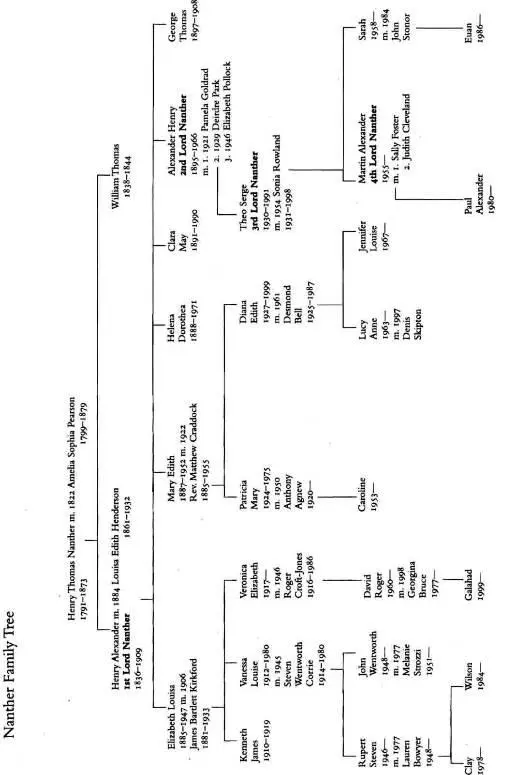
In her tenth novel writing as Barbara Vine, Ruth Rendell offers a novel of suspense based in 19th-century England and centering on deceit, murder, and various other family skeletons. Martin Nanther, the fourth Lord Nanther, has a comfortable life in present-day London as a Hereditary Peer in the House of Lords and as a historical biographer. He chooses as his most recent subject his own great-grandfather, the first Lord Nanther, physician to the royal family (Victoria and Albert) and an early noted researcher into the cause and transmission of hemophilia. The reader is taken through the family history as Martin painstakingly uncovers some not so savory bits of his own family's past. The story is dense with characters, and the author provides family trees of the two principal families, for which any reader will be eternally grateful. The story lacks the usual page-turner suspense of the Rendell/Vine novels but makes up for that with unusually detailed glimpses into Victorian life and the inner workings of the House of Parliament, which American readers will find particularly intriguing. Recommended for all public libraries. Caroline Mann, Univ. of Portland, OR
The Blood Doctor — читать онлайн бесплатно полную книгу (весь текст) целиком
Ниже представлен текст книги, разбитый по страницам. Система сохранения места последней прочитанной страницы, позволяет с удобством читать онлайн бесплатно книгу «The Blood Doctor», без необходимости каждый раз заново искать на чём Вы остановились. Поставьте закладку, и сможете в любой момент перейти на страницу, на которой закончили чтение.
Интервал:
Закладка:
A package has come from Janet Forsythe, containing a wad of smudged photocopies, a photograph and a covering letter. I’ve forgotten who she is and the address at the top of the letter means nothing. But the first sentence tells me how much she and her mother enjoyed tea in the House of Lords and she apologizes for not having thanked me before. And of course I remember she’s Laura Kimball’s daughter and Jimmy Ashworth was her great-grandmother. She’s a sort of cousin of mine, a fact she’s unaware of, or so I think. But when I read the letter I find this isn’t so. She says she’s always suspected Henry was her great-grandfather but she’s never liked to mention this to her mother who has an ‘exalted idea’ of Jimmy. For her part, she’d be proud to be descended from ‘the distinguished doctor’. The photocopies, she writes, are from The Times of various dates in 1883 and she goes into a long explanation of being interested in some other aspect of family history – she is another of these amateur genealogists, apparently – of investigating newspaper accounts and of coming on pieces I might ‘find fascinating’. In due course she’ll send me a draft copy of the family tree she’s making because she’s sure I’ll be interested.
Before I go through these copies I look at the photograph. It’s of Janet when young – or is it of her mother? For a moment I can’t tell but I think it’s Laura by the clothes which are unmistakably 1930s. But what grabs my attention is the brooch this woman, mother or daughter, is wearing on her dark dress. It’s a five-pointed star in brilliants, almost certainly not diamonds, and Janet has written on the back: ‘This is Jimmy’s brooch Sir Henry gave her and which came to my mother when her mother died.’ So now I know where the idea of marking his dates with Jimmy came from, a brooch he gave her. Or did the pentagrams come first and he chose the brooch to match them? Perhaps it was a joke between him and her. And it opens up the idea of tenderness and affection in Henry’s attitude to Jimmy. Jokes, a pretty gift, drawing the five-pointed star in his diary at appropriate times, maybe even a secret sign between them, the present bestowed and Henry saying: ‘I bought this for you because it reminded me of our special sign and now when you wear it you can think of me making the sign of love in my diary…’ All imagination on my part, of course, all a romancing worthy of Laura herself.
I go through the copies, finding it necessary once more to use a magnifying glass. Many of the paragraphs are concerned with Henry, lectures he’s given, announcements of new books he’s published, the notice in the Court Circular of his knighthood. There’s nothing new for me in any of this. The last cutting is about the appearance in the magistrates’ court of a man called Joseph Edward Heyford Brewer, aged twenty-six, of Palmerston Buildings, Euston, on a charge of assaulting Mr Samuel Henderson in Gower Street. Brewer was found guilty and sent to prison, but not for long. No doubt he’d have got years if he’d committed robbery at the same time, the English always valuing property above human life and wellbeing.
This is quite useful to me, I’d have had to find it for myself sooner or later, and I write back to Janet Forsythe immediately, thanking her for the cuttings, agreeing with her about her grandmother’s paternity but saying nothing about the pentagram brooch or how thrilled I’d be to see her family tree. I put her photocopies in one of the Henry box files. These are five now, variously labelled Work, Royal Family, Personal History, Children and Descendants, and Miscellaneous and Marriage. Janet’s stuff goes into Personal History, though I hesitate as to whether the last wouldn’t be a better home for it, the heroic rescue of poor Samuel being the trigger which set off Henry’s marriage.
I take the letter to the post and Jude comes with me. A hundred-yard trip becomes a walk. She’s looking well again, though she’s very thin, her waist a narrow stem like Olivia’s in the portrait, but Olivia’s was like that because she wore a corset. Of course the streets are full of women with babies, black women and white women and Asian women, all pushing their infants in buggies or carrying them in baby-carriers on their chests. There’s even one with an old-fashioned pram, the child’s face round and pink amid lacy froth and flounces. I feel like telling Jude what a nuisance Henry found his kids, how they get in the way of great enterprises (as Bacon or someone says). I feel like it and that’s as far as it goes.
We go into a health food shop and Jude buys folic acid and multi-vitamins and gingko biloba and echinacea and St John’s Wort. She used to have a getting-fit-for-the-birth regime and now she has a getting-fit-for-the-conception one. Twice a week she does the Alexander Technique and she’s visiting a herbalist. We come back across Abercorn Place into Hamilton Terrace, talking about how there are certain plant substances which are claimed to prevent miscarriage, or Jude is talking and I’m listening. I tell her it can’t do any harm but maybe to check with her doctor, and we turn aside and stop outside Ainsworth House, now renamed (absurdly) Horizon View, and look up at the millionaire’s windows and at the millionaire’s covered way in which the stained glass has been replaced with clearer and brighter colours.
The front garden is chock-a-block with the kind of flowers in tubs you plant when they’re already in bloom. Their colours match those in the roof of the covered way, something that must be intentional. None of the windows is open, though it’s a hot day, but no doubt the millionaire has air conditioning. The curtains inside are festoons of silk and velvet and lace. You can’t see much inside. Last time I looked at this house I saw a dispirited young Asian woman at the window of the room that was Henry’s study, but there’s no one today.
I desperately want Jude to say something. I want her to make some comment on the house or Henry or the changes that have been made. I want her to ask a question about what this room was or that and who slept where, anything but babies and her prospects of having a baby. But she says nothing, only takes my arm and draws me close to her, and I bend and kiss her, there in the street outside my great-grandfather’s house.
15
There’s been more discussion in the House today of the Lords Bill, as amended on Report. Lord Mayhew, a former attorney general, rose to move whether questions of hereditary peers’ rights should be referred to the Committee for Privileges.
I spoke, briefly, more or less echoing the words of Lord Goodhart that what the motion proposed was a waste of time. Everyone knows the Bill’s intention and what its effect will be – to get rid of us as anachronisms and white elephants. Cries of ‘Oh!’ greeted this, especially the white elephants bit.
But Lord Mayhew presses it to a division and wins. We go on after that, this time about the Treaty of Union and a fundamental principle (apparently) in it guarantees Scotland specific representation in this House. The idea now is that the Committee for Privileges should look into this as well, a ploy which tries the patience of Baroness Jay, the Leader of the House. Another vote is inevitable and the pro-Committee for Privileges faction win yet again. But that’s the end of the Bill until after the long summer recess. We’ll resume sometime in October, and meanwhile we hereditaries are still here. Henry’s line carries on.
It’s 27 July and the House gets up on Thursday. The Labour Working Peers, always heavily whipped and roster-driven, are panting for their holidays – and so am I. Jude and I are going walking in the mountains of the Tyrol and then for a week on a Greek island. It was fixed up long before the miscarriage and she pretends she wants to go but I know she doesn’t. I can tell.
Читать дальшеИнтервал:
Закладка:
Похожие книги на «The Blood Doctor»
Представляем Вашему вниманию похожие книги на «The Blood Doctor» списком для выбора. Мы отобрали схожую по названию и смыслу литературу в надежде предоставить читателям больше вариантов отыскать новые, интересные, ещё непрочитанные произведения.






Обсуждение, отзывы о книге «The Blood Doctor» и просто собственные мнения читателей. Оставьте ваши комментарии, напишите, что Вы думаете о произведении, его смысле или главных героях. Укажите что конкретно понравилось, а что нет, и почему Вы так считаете.