Barbara Vine - The Blood Doctor
Здесь есть возможность читать онлайн «Barbara Vine - The Blood Doctor» весь текст электронной книги совершенно бесплатно (целиком полную версию без сокращений). В некоторых случаях можно слушать аудио, скачать через торрент в формате fb2 и присутствует краткое содержание. Год выпуска: 2003, Издательство: Vintage, Жанр: Современная проза, на английском языке. Описание произведения, (предисловие) а так же отзывы посетителей доступны на портале библиотеки ЛибКат.
- Название:The Blood Doctor
- Автор:
- Издательство:Vintage
- Жанр:
- Год:2003
- ISBN:нет данных
- Рейтинг книги:4 / 5. Голосов: 1
-
Избранное:Добавить в избранное
- Отзывы:
-
Ваша оценка:
The Blood Doctor: краткое содержание, описание и аннотация
Предлагаем к чтению аннотацию, описание, краткое содержание или предисловие (зависит от того, что написал сам автор книги «The Blood Doctor»). Если вы не нашли необходимую информацию о книге — напишите в комментариях, мы постараемся отыскать её.
Barbara Vine (a.k.a. Ruth Rendell) deftly weaves this story of an eminent Victorian with a modern yarn about the embattled biographer, who is watching the House of Lords prepare to annul membership for hereditary peers and thus strip him of his position. Themes of fate and family snake throughout this teasing psychological suspense, a typically chilling tale from a master of the genre.
From Publishers Weekly
This rich, labyrinthine book by Vine (aka Ruth Rendell) concerns a "mystery in history," like her 1998 novel, The Chimney Sweeper's Boy. Martin Nanther-biographer and member of the House of Lords-discovers some blighted roots on his family tree while researching the life of his great-great-grandfather, Henry, an expert on hemophilia and physician to Queen Victoria. Martin contacts long-lost relatives who help him uncover some puzzling events in Henry's life. Was Henry a dour workaholic or something much more sinister? Vine can make century-old tragedy come alive. Still, the decades lapsed between Martin's and Henry's circles create added emotional distance, and, because they are all at least 50 years dead, we never meet Henry or his cohorts except through diaries and letters. Martin's own life-his wife's infertility and troubles with a son from his first marriage-is interesting yet sometimes intrudes on the more intriguing Victorian saga. Vine uses her own experience as a peer to give readers an insider's look into the House of Lords, at the dukes snoozing in the library between votes and eating strawberries on the terrace fronting the Thames. Some minor characters are especially vivid, like Martin's elderly cousin Veronica, who belts back gin while stonewalling about the family skeletons all but dancing through her living room. Readers may guess Henry's game before Vine is ready to reveal it, but this doesn't detract from this novel peopled by characters at once repellant and compelling.
From Library Journal
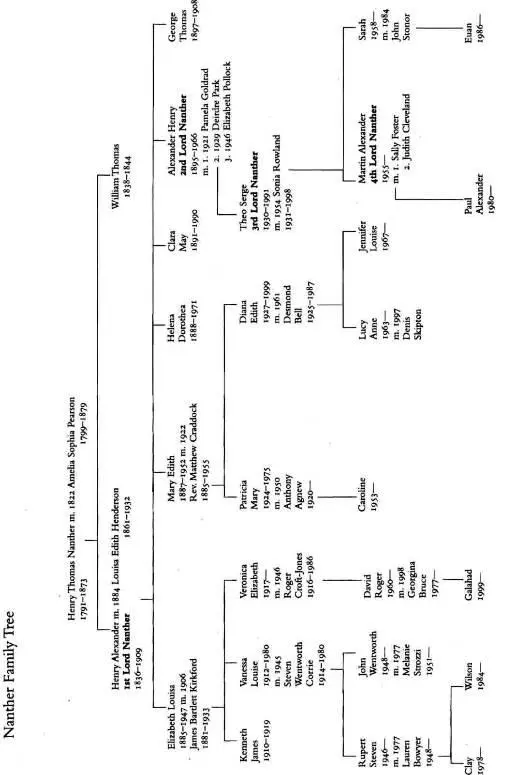
In her tenth novel writing as Barbara Vine, Ruth Rendell offers a novel of suspense based in 19th-century England and centering on deceit, murder, and various other family skeletons. Martin Nanther, the fourth Lord Nanther, has a comfortable life in present-day London as a Hereditary Peer in the House of Lords and as a historical biographer. He chooses as his most recent subject his own great-grandfather, the first Lord Nanther, physician to the royal family (Victoria and Albert) and an early noted researcher into the cause and transmission of hemophilia. The reader is taken through the family history as Martin painstakingly uncovers some not so savory bits of his own family's past. The story is dense with characters, and the author provides family trees of the two principal families, for which any reader will be eternally grateful. The story lacks the usual page-turner suspense of the Rendell/Vine novels but makes up for that with unusually detailed glimpses into Victorian life and the inner workings of the House of Parliament, which American readers will find particularly intriguing. Recommended for all public libraries. Caroline Mann, Univ. of Portland, OR
The Blood Doctor — читать онлайн бесплатно полную книгу (весь текст) целиком
Ниже представлен текст книги, разбитый по страницам. Система сохранения места последней прочитанной страницы, позволяет с удобством читать онлайн бесплатно книгу «The Blood Doctor», без необходимости каждый раз заново искать на чём Вы остановились. Поставьте закладку, и сможете в любой момент перейти на страницу, на которой закончили чтение.
Интервал:
Закладка:
It’s a curious thing how often, throughout my family, an only or younger son has died in childhood. There’s no inheritance connection. It has to be coincidence. First there was Billy, dead of tuberculosis at six, and contemporaneous with him, Louisa Henderson’s little brother, the cause of whose death isn’t known, though it may have been scarlet fever. Henry’s son George was destined to die at the age of eleven and his daughter Elizabeth’s son, brother of Vanessa and Veronica, of diphtheria at nine. It suddenly occurs to me that this could account for Patricia Agnew’s nervousness about Veronica’s son, a superstitious dread that boys in the family were fated to die young. The objection there is that they obviously weren’t. How about Henry himself and Lionel Henderson and Alexander and my father?
Lionel had been married for ten years in 1898 and had three sons, all of whom grew up healthy, married and had children. They are vigorously present in David’s tree. His second son, born in 1890, lived into his nineties and died leaving behind him a quiverful of healthy descendants.
Samuel Henderson died a few days after his daughter took a photograph of him with his wife and Elizabeth, Mary and Helena in 1892. His death certificate gives stroke as the cause. He was just sixty, four years older than his son-in-law, Henry. The Providence she so often talked of preserved his widow for another seven years, but she died of ovarian cancer in the last month of the old century.
Queen Victoria had another year to live. She continued to keep Henry at her beck and call. Her health was failing, her eyesight worsening. On 12 January 1901 she wrote in her journal for the last time. It was not Henry but Sir James Reid who took the responsibility of telling Ponsonby’s office that the Queen was ill. She died ten days later, all her surviving children at her bedside.
Princess Beatrice’s husband Henry of Battenberg was also dead. He had succumbed to fever off West Africa in the year Henry got his peerage. After the Queen’s death Henry ceased to be Physician-in-Ordinary to the widowed Princess and her children, only one of whom, the eldest, Drino, Marquess of Carisbrooke, was free of haemophilia. The other two boys, Leopold aged twelve, and Maurice aged ten, both had the disease, the elder being the worse afflicted. In the daughter Ena it was of course concealed. No one could tell whether or not she was a carrier. When she was eighteen, in 1905, Alfonso XIII, King of Spain, came to Britain looking for a bride and his eye first lighted on Princess Patricia, daughter of Queen Victoria’s son Arthur, Duke of Connaught. But, although the chances of her inheriting the throne were remote – dozens of claimants would have got there before her – Princess Patricia was considered too close to the crown to be suitable. Undeterred by the rebuff, Alfonso had another go. This time his choice was Ena.
Henry wrote in his diary in the autumn of 1905, Audience with His Majesty, King Alfonso of Spain . No more than that, no details, no hint at his purpose in meeting the King and no mention in Alternative Henry that he was no longer Ena’s doctor. But in an essay he wrote,
I considered it my bounden duty to warn HM of the risks involved if he persisted with his suit to her Royal Highness the Princess Ena, and did so. I felt from the first he was a young gentleman who would not take advice or listen to counsel even from one speaking on a subject on which he was an acknowledged authority and old enough to be his grandfather. The facts were laid before him. I pointed out to him the cause of the death of HRH Prince Leopold, Princess Ena’s uncle, and the sufferings he endured in his lifetime; I enlightened him as to the delicate health of her two brothers, telling him that they had inherited haemophilia through their mother, who was a conductor and, finally, that though it was not certain the Princess he wished to marry carried the disease, in my opinion the chances of her doing so were very great. Of any children they might have, half the boys were likely to be haemophiliacs and half the girls conductors.
He listened to me but gave no indication he had heard, still less that what I said had any effect on him. I was not thanked. He merely nodded his head to an equerry and indicated that I should leave.
Good God, that any man should knowingly and willingly bring this grief upon himself! Should bring into the world a poor child whose daily lot is pain and incapacity, whose very innocent play may be the cause of torment and disablement, whose tumbles swell and distort his limbs and whose cuts and bruises, the simple hazards of childhood, result in the copious and unstaunchable gushes of blood comparable to those from wounds on the battlefield. I, who have seen it, know. And to consider that this poor fool, this Majesty , will rush headlong into a doom, not for himself but for those who come after him, for no more than a whim, a sudden passion for a girl he scarcely knows, makes me despair of humanity and this world and long, yes, long, to depart.
Very strong words for Henry, weren’t they? Passionate words for once, full of real feeling. Blood is no longer the ichor that once fascinated him to a degree of unhealthy obsession. Throughout a lifetime he had seen haemophilia and what it did, he continues to see it, in his work both in and out of royal households. He has had enough of it and is ready to die. But he has another four years to go, another four years before the heart attack takes him.
As for King Alfonso, he married Ena, in spite of Henry’s warning. Their first son had haemophilia, their second was a deaf mute, the third, probably also a haemophiliac, died at birth, the fifth was a haemophiliac. Only the fourth, father of the present King of Spain, was healthy. Unfortunately for Ena, Spaniards placed great importance on ‘blue blood’ and purity of descent and Queen Ena was blamed for bringing what we should now call defective genes into the Spanish Royal House. A gruesome story, almost certainly apocryphal, went about at the time that a Spanish soldier was sacrificed every day to infuse healthy blood into the King’s haemophiliac sons.
Henry, who would have known about the eldest prince’s inheritance, if not about the subsequent children, may well have remarked that Alfonso had only himself to blame.
14
It’s the House of Lords Bill again, first day of Report Stage, and we’re debating – what? It’s hard to say because what is really happening is that the Opposition is using every chance to delay the passage of the Bill. As the Leader of the House has just said, we seem today to be quoting previous remarks. Not that that’s unusual in any debate in here. Many peers have no compunction about saying the same thing at Third Reading as they said at Second Reading, Committee and Report Stages.
Lord Campbell of Alloway wants the Act not to come into force until the people have approved it in a referendum. This makes me wonder if things will drift off into a discussion, which once happened before, of whether the plural of this increasingly popular word should be ‘referendums’ or ‘referenda’. I remember a bunch of elderly noble lords who ought to have known better hissing ‘Da, da, da!’ when the first construct was used, though Fowler unequivocally recommends it.
We vote on Lord Campbell’s motion and the Not Contents, who are most of us, win. The amendment is accordingly disagreed to. It’s too late for tea, so Lachlan Hamilton and I go to the Peers’ Guest Room for a drink. I tell him about my progress with Henry and mention that sudden unexpected gush of emotion over Alfonso XIII’s refusal to listen to his advice. Lachlan says he’s not surprised, but he means over the refusal not the emotion.
‘Royalty never take advice,’ he says in a voice more gloomy even than usual. ‘They’re taught not to at their mother’s knee. It’s about the only thing their mothers do teach ’em.’
Читать дальшеИнтервал:
Закладка:
Похожие книги на «The Blood Doctor»
Представляем Вашему вниманию похожие книги на «The Blood Doctor» списком для выбора. Мы отобрали схожую по названию и смыслу литературу в надежде предоставить читателям больше вариантов отыскать новые, интересные, ещё непрочитанные произведения.





Обсуждение, отзывы о книге «The Blood Doctor» и просто собственные мнения читателей. Оставьте ваши комментарии, напишите, что Вы думаете о произведении, его смысле или главных героях. Укажите что конкретно понравилось, а что нет, и почему Вы так считаете.