Barbara Vine - The Blood Doctor
Здесь есть возможность читать онлайн «Barbara Vine - The Blood Doctor» весь текст электронной книги совершенно бесплатно (целиком полную версию без сокращений). В некоторых случаях можно слушать аудио, скачать через торрент в формате fb2 и присутствует краткое содержание. Год выпуска: 2003, Издательство: Vintage, Жанр: Современная проза, на английском языке. Описание произведения, (предисловие) а так же отзывы посетителей доступны на портале библиотеки ЛибКат.
- Название:The Blood Doctor
- Автор:
- Издательство:Vintage
- Жанр:
- Год:2003
- ISBN:нет данных
- Рейтинг книги:4 / 5. Голосов: 1
-
Избранное:Добавить в избранное
- Отзывы:
-
Ваша оценка:
The Blood Doctor: краткое содержание, описание и аннотация
Предлагаем к чтению аннотацию, описание, краткое содержание или предисловие (зависит от того, что написал сам автор книги «The Blood Doctor»). Если вы не нашли необходимую информацию о книге — напишите в комментариях, мы постараемся отыскать её.
Barbara Vine (a.k.a. Ruth Rendell) deftly weaves this story of an eminent Victorian with a modern yarn about the embattled biographer, who is watching the House of Lords prepare to annul membership for hereditary peers and thus strip him of his position. Themes of fate and family snake throughout this teasing psychological suspense, a typically chilling tale from a master of the genre.
From Publishers Weekly
This rich, labyrinthine book by Vine (aka Ruth Rendell) concerns a "mystery in history," like her 1998 novel, The Chimney Sweeper's Boy. Martin Nanther-biographer and member of the House of Lords-discovers some blighted roots on his family tree while researching the life of his great-great-grandfather, Henry, an expert on hemophilia and physician to Queen Victoria. Martin contacts long-lost relatives who help him uncover some puzzling events in Henry's life. Was Henry a dour workaholic or something much more sinister? Vine can make century-old tragedy come alive. Still, the decades lapsed between Martin's and Henry's circles create added emotional distance, and, because they are all at least 50 years dead, we never meet Henry or his cohorts except through diaries and letters. Martin's own life-his wife's infertility and troubles with a son from his first marriage-is interesting yet sometimes intrudes on the more intriguing Victorian saga. Vine uses her own experience as a peer to give readers an insider's look into the House of Lords, at the dukes snoozing in the library between votes and eating strawberries on the terrace fronting the Thames. Some minor characters are especially vivid, like Martin's elderly cousin Veronica, who belts back gin while stonewalling about the family skeletons all but dancing through her living room. Readers may guess Henry's game before Vine is ready to reveal it, but this doesn't detract from this novel peopled by characters at once repellant and compelling.
From Library Journal
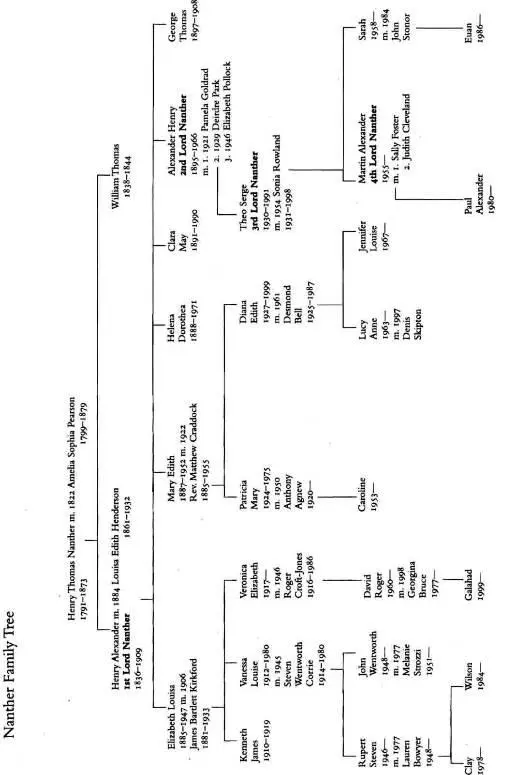
In her tenth novel writing as Barbara Vine, Ruth Rendell offers a novel of suspense based in 19th-century England and centering on deceit, murder, and various other family skeletons. Martin Nanther, the fourth Lord Nanther, has a comfortable life in present-day London as a Hereditary Peer in the House of Lords and as a historical biographer. He chooses as his most recent subject his own great-grandfather, the first Lord Nanther, physician to the royal family (Victoria and Albert) and an early noted researcher into the cause and transmission of hemophilia. The reader is taken through the family history as Martin painstakingly uncovers some not so savory bits of his own family's past. The story is dense with characters, and the author provides family trees of the two principal families, for which any reader will be eternally grateful. The story lacks the usual page-turner suspense of the Rendell/Vine novels but makes up for that with unusually detailed glimpses into Victorian life and the inner workings of the House of Parliament, which American readers will find particularly intriguing. Recommended for all public libraries. Caroline Mann, Univ. of Portland, OR
The Blood Doctor — читать онлайн бесплатно полную книгу (весь текст) целиком
Ниже представлен текст книги, разбитый по страницам. Система сохранения места последней прочитанной страницы, позволяет с удобством читать онлайн бесплатно книгу «The Blood Doctor», без необходимости каждый раз заново искать на чём Вы остановились. Поставьте закладку, и сможете в любой момент перейти на страницу, на которой закончили чтение.
Интервал:
Закладка:
Henry would have brought his Writ of Summons with him to his Introduction and worn his own robe. The one he had made, trimmed in those days with real ermine, not rabbit which is used today, is the robe I still wear at State Openings of Parliament, though of course will wear no longer. He was introduced ‘between’, as it’s still put, a junior and a senior supporter, two of his soon-to-be fellow Peers. How did he come to choose them? Did they offer their services? Did he know them previously? Were they perhaps his patients?
The procession, as it enters the Chamber after prayers have been said, consists of the Gentleman Usher of the Black Rod in black tail coat and knee breeches, Garter King of Arms dressed like the Knave of Hearts, then should come the Earl Marshal and the Lord Great Chamberlain, but mostly they don’t come, the Junior Supporter, the new peer carrying his Writ of Summons, and the Senior Supporter, the last three all in their robes and carrying black cocked hats. At the Bar each member of the procession makes a court bow – that’s a nod of the head – to the Cloth of Estate. Henry and company would have proceeded up the Temporal side of the House and gone towards the Woolsack, bowing again and again – but I can’t go on with this, it’s really a bit tedious and can be ludicrous if anyone makes a mistake or loses his voice or stumbles. In Henry’s day, and up to a couple of years ago, new peers had to kneel before the Lord Chancellor to present their Writs of Summons. But many of them were too old for this and too stiff in the joints. They could kneel but they couldn’t always get up again.
Henry would have knelt. Slender Henry. Agile Henry. He’d have taken the Oath of Allegiance. Whether the watching peers in those days graded new ones according to their performance I don’t know but I’ve no doubt it was in a ringing voice that Henry uttered, ‘I, Henry Alexander, Baron Nanther, do swear by Almighty God that I will be faithful and bear true Allegiance to Her Majesty Queen Victoria, her Heirs and Successors, according to law, so help me God.’
After a lot more bowing and cap-doffing, as much as fifteen minutes for the whole thing, Henry had become Lord Nanther amid the congratulations of his peers. In the following year, he records in his diary for the end of June and early July how he took part in some of the celebrations of Queen Victoria’s Diamond Jubilee. These entries, perhaps needless to say, are more fulsome than anything he wrote about his wife and children.
On 23 June he joined the procession out of the House of Lords’ Chamber to the Peers’ Entrance in Old Palace Yard where the Lord Chancellor entered his state carriage and the peers followed in their private carriages. Henry mentions the gold lace and cocked hats, the Levee dress worn by Privy Counsellors, and I detect a wistful note as if he wished he too might have been privileged to wear it. They proceeded to Buckingham Palace, hardly a novelty to Henry, to present an Address to the Queen. Nothing is said by him as to the weather but according to Her Majesty in her journal, ‘the heat was dreadful’.
The Houses of Parliament must be almost alone today in still giving the name Whitsun to the Sunday and Monday seven weeks after Easter. The Church calls it Pentecost and the country the Spring Bank Holiday but we still call it Whitsun. Parliament has a week off and after that, when we go back, tea is served on the terrace. Not before, no matter how warm it may be, but always after Whitsun. Visitors usually ask if they can ‘have tea on the terrace’, a request that puzzles me because this embankment above the Thames is set about with grimly functional tables and hard chairs, is complicated of access and when you get there by a cold winding staircase and through kitchen regions, has one of the least attractive views on the river. Facing you is St Thomas’s Hospital, the old part and the new, reminding MPs and peers that this is where they’ll take you if you have a heart attack climbing the stairs. I much prefer the Peers’ Guest Dining Room, Puginesque red and gold, carpet on the floor and a lofty ceiling. But the food at teatime is delicious wherever you have it, smoked salmon sandwiches and strawberries with the largest portions of thick golden clotted cream, positively slabs of it, you’ll get anywhere.
Coming out of the Chamber I encounter Lachlan Hamilton in the Peers’ Lobby and he suggests tea on the terrace. We make our way down the staircase that probably has a name but I don’t know what it is. Bright hot sunshine meets us and blazing light coming off the river. Lachlan is humming a tune. I don’t recognize it but a Viscount sitting at the nearest table to the door does. He says, ‘You need not be quite so sickeningly appropriate, Lachlan,’ and manages a hollow sort of laugh. The woman with him, probably the Viscountess, is as puzzled as I am. She looks up from her strawberries and gives us the sort of long-nosed icy look you only get from a certain kind of peeress.
‘The Götterdämmerung ,’ says Lachlan as we sit down.
Are we gods? I’m sure they didn’t have glorious summer days like this in Valhalla but a kind of perpetual twilight. I order strawberries and sugar and cream and therefore, according to Lachlan, am like the young lady who sewed a fine seam.
‘Must have been a bloody good doctor, your great-grandpapa,’ he says, ‘to get a peerage out of Victoria.’
‘He was a courtier.’
‘Must have been. Did he cure any of that lot of anything?’
I say that I believe the Queen thought he could cure her grandsons’ haemophilia. Of course he couldn’t, no one could. ‘Perhaps today they can do it by transplanting a gene but this was over a hundred years ago.’
‘Who were these grandsons? The Tsarevich would be one, right?’
‘He was a great-grandson. His mother was the Tsarina, Princess Alice’s daughter. Her sister Irene was a carrier, one of her sons bled to death aged four and another, Waldemar, was also a haemophiliac. There were two Battenberg grandsons. Princess Beatrice’s sons. They both lived into their twenties. Leopold died in a car crash and Maurice in the retreat from Mons. Beatrice’s daughter Ena married the King of Spain, Alfonso the XIIIth. Two of her sons had it.’
Lachlan looks thoughtful and even gloomier than usual. ‘And now it’s just died out? Of the royal family, I mean.’
I say that considering Queen Victoria had five daughters and all but one of them had a daughter or daughters, it was astonishing how few males of the family had haemophilia and how relatively quickly it-had simply disappeared. ‘One or more of the Russian grand duchesses would almost certainly have been a carrier but we’ll never know because they died in the cellar in Ekaterinburg. Princess Helena’s sons were free of it. Of her daughters, one had her marriage annulled because her husband was homosexual and the other never married. They may have been carriers. By the end of the nineteen forties all the haemophiliacs were dead and all the carriers either childless or daughterless or dead or past childbearing. Queen Victoria brought it in or a mutation in her genes or her mother’s did and within forty-five years of her death it had gone.’
‘Your great-grandpapa,’ says Lachlan, ‘did he do anything to make those Battenberg boys live long enough to be cannon fodder or drive cars?’
‘I don’t see what he could have done apart from telling the parents to be careful they didn’t fall or cut themselves.’
‘What happened if haemophiliacs had to have their appendixes out?’
‘They died.’
He gives his dry laugh that has no hint of humour in it. It’s a signal with him that the subject is to be changed. His walrus face settles into bags and pouches. ‘You realize, do you, that if you and I want to come here next year we’ll have to come as Lord or Lady Life Peer’s guests?’
Читать дальшеИнтервал:
Закладка:
Похожие книги на «The Blood Doctor»
Представляем Вашему вниманию похожие книги на «The Blood Doctor» списком для выбора. Мы отобрали схожую по названию и смыслу литературу в надежде предоставить читателям больше вариантов отыскать новые, интересные, ещё непрочитанные произведения.





Обсуждение, отзывы о книге «The Blood Doctor» и просто собственные мнения читателей. Оставьте ваши комментарии, напишите, что Вы думаете о произведении, его смысле или главных героях. Укажите что конкретно понравилось, а что нет, и почему Вы так считаете.