Barbara Vine - The Blood Doctor
Здесь есть возможность читать онлайн «Barbara Vine - The Blood Doctor» весь текст электронной книги совершенно бесплатно (целиком полную версию без сокращений). В некоторых случаях можно слушать аудио, скачать через торрент в формате fb2 и присутствует краткое содержание. Год выпуска: 2003, Издательство: Vintage, Жанр: Современная проза, на английском языке. Описание произведения, (предисловие) а так же отзывы посетителей доступны на портале библиотеки ЛибКат.
- Название:The Blood Doctor
- Автор:
- Издательство:Vintage
- Жанр:
- Год:2003
- ISBN:нет данных
- Рейтинг книги:4 / 5. Голосов: 1
-
Избранное:Добавить в избранное
- Отзывы:
-
Ваша оценка:
The Blood Doctor: краткое содержание, описание и аннотация
Предлагаем к чтению аннотацию, описание, краткое содержание или предисловие (зависит от того, что написал сам автор книги «The Blood Doctor»). Если вы не нашли необходимую информацию о книге — напишите в комментариях, мы постараемся отыскать её.
Barbara Vine (a.k.a. Ruth Rendell) deftly weaves this story of an eminent Victorian with a modern yarn about the embattled biographer, who is watching the House of Lords prepare to annul membership for hereditary peers and thus strip him of his position. Themes of fate and family snake throughout this teasing psychological suspense, a typically chilling tale from a master of the genre.
From Publishers Weekly
This rich, labyrinthine book by Vine (aka Ruth Rendell) concerns a "mystery in history," like her 1998 novel, The Chimney Sweeper's Boy. Martin Nanther-biographer and member of the House of Lords-discovers some blighted roots on his family tree while researching the life of his great-great-grandfather, Henry, an expert on hemophilia and physician to Queen Victoria. Martin contacts long-lost relatives who help him uncover some puzzling events in Henry's life. Was Henry a dour workaholic or something much more sinister? Vine can make century-old tragedy come alive. Still, the decades lapsed between Martin's and Henry's circles create added emotional distance, and, because they are all at least 50 years dead, we never meet Henry or his cohorts except through diaries and letters. Martin's own life-his wife's infertility and troubles with a son from his first marriage-is interesting yet sometimes intrudes on the more intriguing Victorian saga. Vine uses her own experience as a peer to give readers an insider's look into the House of Lords, at the dukes snoozing in the library between votes and eating strawberries on the terrace fronting the Thames. Some minor characters are especially vivid, like Martin's elderly cousin Veronica, who belts back gin while stonewalling about the family skeletons all but dancing through her living room. Readers may guess Henry's game before Vine is ready to reveal it, but this doesn't detract from this novel peopled by characters at once repellant and compelling.
From Library Journal
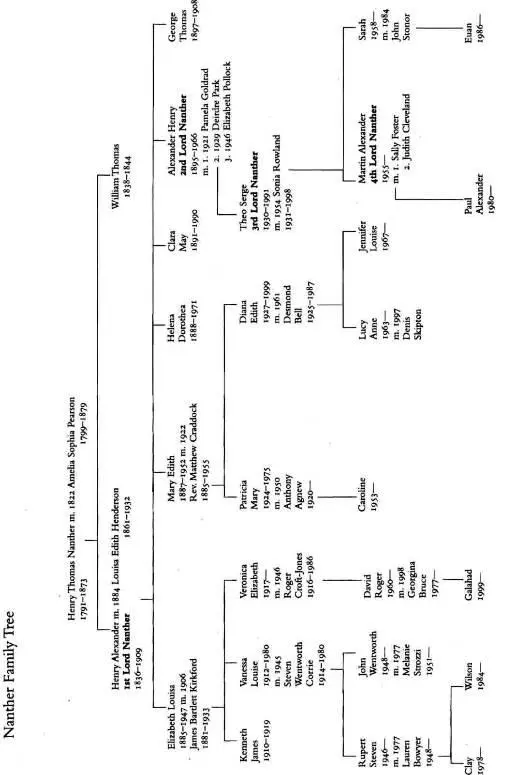
In her tenth novel writing as Barbara Vine, Ruth Rendell offers a novel of suspense based in 19th-century England and centering on deceit, murder, and various other family skeletons. Martin Nanther, the fourth Lord Nanther, has a comfortable life in present-day London as a Hereditary Peer in the House of Lords and as a historical biographer. He chooses as his most recent subject his own great-grandfather, the first Lord Nanther, physician to the royal family (Victoria and Albert) and an early noted researcher into the cause and transmission of hemophilia. The reader is taken through the family history as Martin painstakingly uncovers some not so savory bits of his own family's past. The story is dense with characters, and the author provides family trees of the two principal families, for which any reader will be eternally grateful. The story lacks the usual page-turner suspense of the Rendell/Vine novels but makes up for that with unusually detailed glimpses into Victorian life and the inner workings of the House of Parliament, which American readers will find particularly intriguing. Recommended for all public libraries. Caroline Mann, Univ. of Portland, OR
The Blood Doctor — читать онлайн бесплатно полную книгу (весь текст) целиком
Ниже представлен текст книги, разбитый по страницам. Система сохранения места последней прочитанной страницы, позволяет с удобством читать онлайн бесплатно книгу «The Blood Doctor», без необходимости каждый раз заново искать на чём Вы остановились. Поставьте закладку, и сможете в любой момент перейти на страницу, на которой закончили чтение.
Интервал:
Закладка:
His own second child came along in the same month and within two weeks of Drino. ‘Another daughter’ is how he records the event in his diary. Mary Edith was born in November 1887 and merits a brief mention in Henry’s Christmas letter to Couch.
Jude comes in while I’m mulling over all this to say she’s going to the doctor to have her pregnancy confirmed and then on to work. She reads the line in the diary and asks if I want a boy or a girl.
Neither, though I’m desperately hoping that will change as the birth approaches. ‘I’ve got a boy.’ I can say things like that now. ‘I’d like a girl.’
‘Didn’t Victorian people ever want children just for the sake of children? Why did this heir business always have to come into it?’
I tell her that I expect there were some who preferred girls to boys. It’s just that Henry wasn’t one of them. And what Edith thought we don’t know.
‘But he wasn’t a lord then. He didn’t have any land or a big country house or anything.’
‘He had Godby Hall, for what that was worth. Men used to want a son. There are a good many people now who’d rather have a son first and a daughter second.’
Jude starts speculating about that so that I wish I hadn’t said it. Maybe, now she’s managed to get pregnant, she has time to have two children. I don’t answer, I’ve nothing to say, and at the moment I feel I couldn’t speak on that subject if I tried. Instead I tell her to give me a ring when she’s seen the doctor – or would she like me to come with her?
No, darling, she says, kissing the top of my head and promising to phone. After she’s gone I get out a book I’ve got on Queen Victoria and haemophilia, published ten years ago, and browse through it. Henry would probably have loved to write such a book himself but it was impossible. Even if any company had been prepared to publish it, it was more than his job was worth. I don’t suppose he even stuck his neck out so far as to tell Princess Beatrice of the risks she ran in having children, though he’d have been quite justified in telling her and Prince Henry to stop now they had their son and daughter, for the next Battenberg children were both boys and both haemophiliacs.
Jude phones at midday and tells me the pregnancy’s been confirmed. The baby’s quite likely to be born on Christmas Day. At any rate that’s the due date. The doctor has told her of the importance of pre-natal screening. She can have chorionic villus sampling, whatever that is, or an amniocentesis and something called an alpha-fetoprotein test. A Bart’s test will also be done but I’ve already forgotten what that’s for. The risk to the pregnancy of the chorionic thing is greater than amniocentesis, so she’s opting for the latter. Oh, and there’ll be an ultrasound too. I can’t think of anything to say so I tell her I’ll take her somewhere nice for dinner. I’ll call for her as I’m not going into the House today.
Victorian women had nothing of that. They concealed their pregnancies from almost everyone, even to the extent of not going out of doors in the final months. I start thinking about Princess Beatrice, wondering if she ever averted to her brother Leopold’s sickness and death when she was pregnant for the third time? Or thought of her nephew Frittie, Prince Frederick of Hesse? The pattern of transmission of haemophilia was known. Although there were a good many fallacies and old wives’ tales about, that a haemophiliac’s son could inherit his father’s condition, that haemophilia and scurvy were identical, for instance, there was also sound medical knowledge, much of it still accepted today. And the widely held view that women can be haemophiliacs, denied for decades, is now known to be true. Perhaps Henry’s books were too abstruse for Beatrice or else her mother stopped her reading anything of that nature. And the babies just came, there being no reliable contraception till well into the twentieth century.
Henry’s babies went on coming too. And they went on being girls. The two my father referred to as his ‘maiden aunts’ arrived in 1888 and 1891, Helena Dorothea first, then Clara. Helena may have been named after the Princess Helena, Victoria’s third daughter, whom Henry seems to have liked, and also after her great-aunt Dorothea Vincent. Clara was given the second name of May. Henry’s choice probably, for the future Queen Mary was known as Princess May. After that fourth birth comes a gap of four years. Because Henry and Edith, after the births of four children, no longer slept together, the surest form of contraception there is? Or Edith did conceive but miscarried? Or children just failed to come, always one of the possibilities in this mystifying area.
Queen Victoria, long mourning the Prince Consort, lived mostly at Osborne in the Isle of Wight at this period of her reign. Henry was often there, though not as chief physician. James Reid had succeeded Sir William Jenner to that post in 1889. The Queen particularly liked Henry. In letters to the Princess Frederick, by now the Empress Frederick, she refers to him as ‘my dear Sir Henry’ and even as ‘my favourite among my doctors’. Is it too much to infer that, although she would never admit to haemophilia being in the royal family, still less that it came in through her, she valued Henry’s expertise in this particular field? That, notwithstanding Prince Leopold’s death, she trusted him to be able to deal with it if it occurred again? Henry, as we know, could be charming to women when he chose, and in the case of his sovereign and golden goose he certainly would have chosen.
I’ve turned my attention back to Alternative Henry, the notebook with its essays in tiny handwriting. This one, from which I quote, is the third and of course undated. It touches on frustrated ambition and on the last thing one would expect from its author, sex.
The other day I heard a man describe another as being ‘on the wrong side of fifty’ so I may say of myself that I am on the right side of sixty. Men say I have achieved much and it is true that, like the unhappy Macbeth, I receive ‘golden opinions from all sorts of people’, but I ask myself what I have truly achieved. Success, elevation to the top of my profession, which it cannot be denied is a noble one, a substantial body of work, the valued favour of Her Majesty, a satisfactory domestic situation and a family of four children. Notwithstanding all this, I have scarcely made any new discovery, have merely recorded, albeit meticulously and in scholarly fashion, discoveries made by others. To use a metaphor that, I suppose, derives from the peasant at the plough, I have broken no new ground. There have been anomalies and phenomena of disease I have guessed at but been unable to verify scientifically. Providence has denied me the opportunity I hoped for. It has been the fault of no one but I feel it as a chronically bitter blow.
When I was young I was already irresistibly drawn to blood. For me it possessed mysterious connotations with the act of generation. I believed with the ignorance of youth and lacking any experience de sexu that the generative fluid which passed from male to female in the act was none other than blood itself, that it was the crimson ichor which flowed from the male member in uterum and that if conception failed to occur, it was this male blood which was shed in menstruation. A more logical procedure, is it not, than that which in truth occurs?
This belief I held until my medical studies commenced. I look back on it now with the weary amusement of age. Many years have passed since then. Others have made the discoveries: evolution, the source of embryonic eggs, types of parthenogenesis, Lister’s revolutionary advances in surgery. It sometimes seems to me that only I have lagged behind, yet few could do more than I have done to make some momentous advance possible. Age has brought to me no diminution of ambition, but I am aware of a weakening of my vitality.
Читать дальшеИнтервал:
Закладка:
Похожие книги на «The Blood Doctor»
Представляем Вашему вниманию похожие книги на «The Blood Doctor» списком для выбора. Мы отобрали схожую по названию и смыслу литературу в надежде предоставить читателям больше вариантов отыскать новые, интересные, ещё непрочитанные произведения.





Обсуждение, отзывы о книге «The Blood Doctor» и просто собственные мнения читателей. Оставьте ваши комментарии, напишите, что Вы думаете о произведении, его смысле или главных героях. Укажите что конкретно понравилось, а что нет, и почему Вы так считаете.