Barbara Vine - The Blood Doctor
Здесь есть возможность читать онлайн «Barbara Vine - The Blood Doctor» весь текст электронной книги совершенно бесплатно (целиком полную версию без сокращений). В некоторых случаях можно слушать аудио, скачать через торрент в формате fb2 и присутствует краткое содержание. Год выпуска: 2003, Издательство: Vintage, Жанр: Современная проза, на английском языке. Описание произведения, (предисловие) а так же отзывы посетителей доступны на портале библиотеки ЛибКат.
- Название:The Blood Doctor
- Автор:
- Издательство:Vintage
- Жанр:
- Год:2003
- ISBN:нет данных
- Рейтинг книги:4 / 5. Голосов: 1
-
Избранное:Добавить в избранное
- Отзывы:
-
Ваша оценка:
The Blood Doctor: краткое содержание, описание и аннотация
Предлагаем к чтению аннотацию, описание, краткое содержание или предисловие (зависит от того, что написал сам автор книги «The Blood Doctor»). Если вы не нашли необходимую информацию о книге — напишите в комментариях, мы постараемся отыскать её.
Barbara Vine (a.k.a. Ruth Rendell) deftly weaves this story of an eminent Victorian with a modern yarn about the embattled biographer, who is watching the House of Lords prepare to annul membership for hereditary peers and thus strip him of his position. Themes of fate and family snake throughout this teasing psychological suspense, a typically chilling tale from a master of the genre.
From Publishers Weekly
This rich, labyrinthine book by Vine (aka Ruth Rendell) concerns a "mystery in history," like her 1998 novel, The Chimney Sweeper's Boy. Martin Nanther-biographer and member of the House of Lords-discovers some blighted roots on his family tree while researching the life of his great-great-grandfather, Henry, an expert on hemophilia and physician to Queen Victoria. Martin contacts long-lost relatives who help him uncover some puzzling events in Henry's life. Was Henry a dour workaholic or something much more sinister? Vine can make century-old tragedy come alive. Still, the decades lapsed between Martin's and Henry's circles create added emotional distance, and, because they are all at least 50 years dead, we never meet Henry or his cohorts except through diaries and letters. Martin's own life-his wife's infertility and troubles with a son from his first marriage-is interesting yet sometimes intrudes on the more intriguing Victorian saga. Vine uses her own experience as a peer to give readers an insider's look into the House of Lords, at the dukes snoozing in the library between votes and eating strawberries on the terrace fronting the Thames. Some minor characters are especially vivid, like Martin's elderly cousin Veronica, who belts back gin while stonewalling about the family skeletons all but dancing through her living room. Readers may guess Henry's game before Vine is ready to reveal it, but this doesn't detract from this novel peopled by characters at once repellant and compelling.
From Library Journal
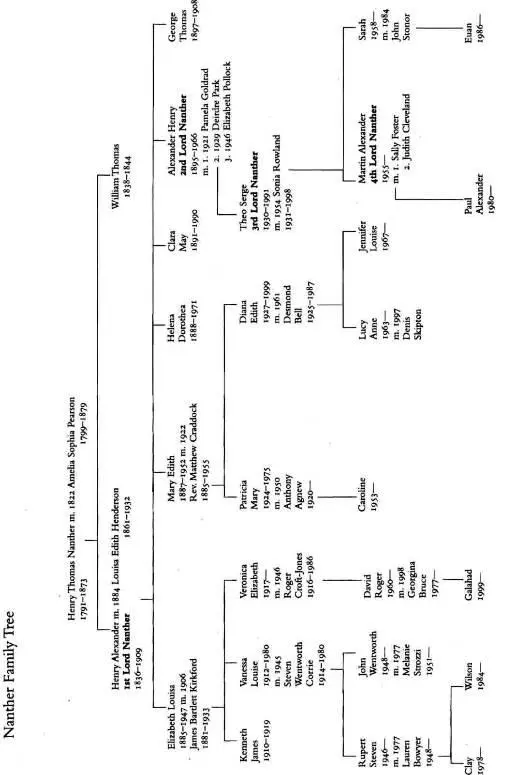
In her tenth novel writing as Barbara Vine, Ruth Rendell offers a novel of suspense based in 19th-century England and centering on deceit, murder, and various other family skeletons. Martin Nanther, the fourth Lord Nanther, has a comfortable life in present-day London as a Hereditary Peer in the House of Lords and as a historical biographer. He chooses as his most recent subject his own great-grandfather, the first Lord Nanther, physician to the royal family (Victoria and Albert) and an early noted researcher into the cause and transmission of hemophilia. The reader is taken through the family history as Martin painstakingly uncovers some not so savory bits of his own family's past. The story is dense with characters, and the author provides family trees of the two principal families, for which any reader will be eternally grateful. The story lacks the usual page-turner suspense of the Rendell/Vine novels but makes up for that with unusually detailed glimpses into Victorian life and the inner workings of the House of Parliament, which American readers will find particularly intriguing. Recommended for all public libraries. Caroline Mann, Univ. of Portland, OR
The Blood Doctor — читать онлайн бесплатно полную книгу (весь текст) целиком
Ниже представлен текст книги, разбитый по страницам. Система сохранения места последней прочитанной страницы, позволяет с удобством читать онлайн бесплатно книгу «The Blood Doctor», без необходимости каждый раз заново искать на чём Вы остановились. Поставьте закладку, и сможете в любой момент перейти на страницу, на которой закончили чтение.
Интервал:
Закладка:
Will Jude have an amniocentesis? She’s thirty-seven now, so I suppose they’ll advise it. The trouble is that in women inclined to miscarry it’s not a very safe procedure. That woman’s letter has reminded me of Jude’s miscarriages, the first one at eight weeks, the second at three months. I’d so much rather not think about this and wipe it from my memory but the pictures come unbidden: the rush to hospital the second time, the first and somehow worse occasion, when Jude came back into our bedroom wrapped in bloody towels, holding in her hands, carrying it in her open hands, the little foetus, bird’s egg-sized in its net of white membrane. No. Stop. Take that image away.
At dinner in the House I find myself sitting at the long table next to Lord Hamilton of Luloch. We’ve never really met before, never spoken at any rate. He’ll lose his seat here just as I will, though his family have had their title for centuries longer, and now, holding out his hand across the soup and dreadful House of Lords bread, he says in a gloomy depressed voice, ‘Hamilton. How do you do? I know who you are.’
We talk for a bit about the reform bill. If everyone abides by Weatherill, and we get ninety-two hereditaries left in the interim house, he says he’ll stand for election and he’s thinking of writing a personal manifesto. All this positive forward thinking is delivered in the same low dismal tone, which is maybe habitual with him even when he’s happy. I tell him I’m not going to stand and he nods as if this is perfectly understandable. He’s about twenty years older than I am, short and stocky, with one of those walrus faces, big drooping moustache and bunchy jowls, a lot of white hair over his ears and down the back of his cranium but none on the top of his head. To my surprise he says he knows all about my writing a biography of my great-grandfather and am I going to put anything in it about Richard Hamilton?
Certainly, I say, he was an important influence in Henry’s life.
‘Queer as a coot,’ he says. ‘But of course you know that.’
I tell him I didn’t know it. How does he know? I’m sure Henry had no homosexual tendencies.
‘We all have ’em,’ says Hamilton in his gloomy voice. He asks me to call him Lachlan. Apparently all eldest sons of Hamilton of Luloch are called Lachlan. ‘We all have ’em if we’re honest. Most folk aren’t honest, I grant you that. My grandfather’s cousin Richard, your chap, he was engaged but he never married the girl, couldn’t face it, you see. That’s par for the course. Maybe it was as well he went down with that train. It was no joke being a queer in the 1870s. How old is this bread?’ This last to the waitress who says she’s sure it was fresh in the morning, my Lord. ‘It’s been submitted to an ageing process then,’ he says, and manages a laugh as dry as the bread.
I ask him if he has any evidence for Richard Hamilton’s alleged homosexuality and he says no, but it was common knowledge. He hasn’t got a diary either or any letters, and from the biographer’s point of view he’s a dead loss, but I like him. I like his dry rather hopeless manner and his occasional bursts of laughter. We finish our dinner, and Lachlan tells me about his grandfather being in here when the Liberals threatened that if the lords rejected a bill to reform their power they’d swamp the House with five hundred new peers. Herbert Asquith called the Lords ‘this ancient and picturesque structure’ and said it had been condemned to demolition by its own inmates.
‘However, we’re still here,’ he says in his lugubrious way, and we both go back into the Chamber, he to the Tory back benches, I to the cross-benches and my place behind the Labour Privy Counsellors. I go outside once to phone Jude but come back again and finally leave for home when the House rises at a quarter past midnight.
Edith Nanther, my great-grandmother, was a woman of mystery. She kept no diary, wrote no letters, and succeeded, though hardly deliberately, in keeping herself out of other people’s letters, diaries, memoirs. What records she kept were through photography and these of the most mundane kind. From them and from her silence we can infer that she was completely wrapped up in her husband and family, but there may be other explanations. For instance, I’ve no idea if she wanted to marry Henry or was coerced into this ‘good’ marriage by her parents. He wasn’t, as far as I can tell, a lovable man, but he was good looking and, for all I know, may have been sexy. We always think of Victorians as having undeveloped sexuality or none at all, but I’m sure we’re wrong there. Perhaps Edith married Henry because she longed to go to bed with him or for money and position and to be called Lady Nanther. Or because she thought life at home would be unbearable if she didn’t. As for the family, women in the 1880s had children because they came, not because they wanted them.
The first of these arrived in August 1885 and was born, like all babies at the time, at home. No doubt Edith was delivered of the child in the principal bedroom, its handsome window just above the pediment of the covered way whose etched-glass roof protected visitors arriving in a carriage from the weather. One of the first of these would have been Edith’s mother Louisa Henderson who, unless she came in a cab, may have used the newly built Metropolitan Railway from Baker Street, and walked from Lords station or Marlborough Road. It’s possible, of course, that she was staying at Ainsworth House for the birth.
The child was a girl. If he was characteristic of his time, Henry would have preferred his first child to be a son. In his diary he records the event: ‘E. delivered of a daughter.’ That’s all. No further comment. Nothing about Edith’s health, his delight, if he felt any, or his disappointment if he didn’t. The baby was baptized in October with the names Elizabeth Louisa but Henry has nothing to say about that either. In the letter he wrote to Barnabus Couch in December, a routine Christmas good wishes letter, it seems, he had more to say about the royal family than his own, and there everything he wrote was in the most discreet of terms. Princess Beatrice had been married in the past summer to Prince Henry of Battenberg. Henry writes of the Queen’s pleasure at the match to a man many thought unsatisfactory because he was aristocratic but not truly royal, the child of a morganatic marriage. The Queen believed in the infusion of new blood into her family, a subject that Henry with his fondness for anything to do with blood, dwells on. As to his own affairs, he describes Elizabeth as his wife’s child, following the fashion of the time, as if there was something not quite manly, something of the milksop or the effeminate, in acknowledging the presence of a baby in the house. ‘My wife and her daughter are well.’
The Princess and her husband lived at Court. It seems to have been a condition Queen Victoria imposed in consenting to the marriage. She couldn’t do without ‘Baby’ or ‘Benjamina’ as she called the Princess, and Henry, as Victoria’s Physician-in-Ordinary, was in attendance on Beatrice as well. Although he never says so, he must have been on the alert when a son was born to the Battenbergs in November 1886, for he knew of the gene – though not to call it that – which Victoria and her second daughter Alice carried, which her daughters the Crown Princess Frederick of Prussia and the Princess Helena did not, but which Beatrice, the youngest, well might. A phenomenon of haemophilia, according to Henry and other authorities, is that only rarely do boy babies who have it suffer abnormal bleeding from the umbilicus at birth. So he may have had to wait some time before he knew whether the little boy was affected or not. But ‘Drino’ as the baby Alexander was called – he later became the Marquess of Carisbrooke with a seat in the Lords – was not a haemophiliac, and since the Princess’s next child, born a year later, was a girl, he was still as far off knowing.
Читать дальшеИнтервал:
Закладка:
Похожие книги на «The Blood Doctor»
Представляем Вашему вниманию похожие книги на «The Blood Doctor» списком для выбора. Мы отобрали схожую по названию и смыслу литературу в надежде предоставить читателям больше вариантов отыскать новые, интересные, ещё непрочитанные произведения.





Обсуждение, отзывы о книге «The Blood Doctor» и просто собственные мнения читателей. Оставьте ваши комментарии, напишите, что Вы думаете о произведении, его смысле или главных героях. Укажите что конкретно понравилось, а что нет, и почему Вы так считаете.