Barbara Vine - The Blood Doctor
Здесь есть возможность читать онлайн «Barbara Vine - The Blood Doctor» весь текст электронной книги совершенно бесплатно (целиком полную версию без сокращений). В некоторых случаях можно слушать аудио, скачать через торрент в формате fb2 и присутствует краткое содержание. Год выпуска: 2003, Издательство: Vintage, Жанр: Современная проза, на английском языке. Описание произведения, (предисловие) а так же отзывы посетителей доступны на портале библиотеки ЛибКат.
- Название:The Blood Doctor
- Автор:
- Издательство:Vintage
- Жанр:
- Год:2003
- ISBN:нет данных
- Рейтинг книги:4 / 5. Голосов: 1
-
Избранное:Добавить в избранное
- Отзывы:
-
Ваша оценка:
The Blood Doctor: краткое содержание, описание и аннотация
Предлагаем к чтению аннотацию, описание, краткое содержание или предисловие (зависит от того, что написал сам автор книги «The Blood Doctor»). Если вы не нашли необходимую информацию о книге — напишите в комментариях, мы постараемся отыскать её.
Barbara Vine (a.k.a. Ruth Rendell) deftly weaves this story of an eminent Victorian with a modern yarn about the embattled biographer, who is watching the House of Lords prepare to annul membership for hereditary peers and thus strip him of his position. Themes of fate and family snake throughout this teasing psychological suspense, a typically chilling tale from a master of the genre.
From Publishers Weekly
This rich, labyrinthine book by Vine (aka Ruth Rendell) concerns a "mystery in history," like her 1998 novel, The Chimney Sweeper's Boy. Martin Nanther-biographer and member of the House of Lords-discovers some blighted roots on his family tree while researching the life of his great-great-grandfather, Henry, an expert on hemophilia and physician to Queen Victoria. Martin contacts long-lost relatives who help him uncover some puzzling events in Henry's life. Was Henry a dour workaholic or something much more sinister? Vine can make century-old tragedy come alive. Still, the decades lapsed between Martin's and Henry's circles create added emotional distance, and, because they are all at least 50 years dead, we never meet Henry or his cohorts except through diaries and letters. Martin's own life-his wife's infertility and troubles with a son from his first marriage-is interesting yet sometimes intrudes on the more intriguing Victorian saga. Vine uses her own experience as a peer to give readers an insider's look into the House of Lords, at the dukes snoozing in the library between votes and eating strawberries on the terrace fronting the Thames. Some minor characters are especially vivid, like Martin's elderly cousin Veronica, who belts back gin while stonewalling about the family skeletons all but dancing through her living room. Readers may guess Henry's game before Vine is ready to reveal it, but this doesn't detract from this novel peopled by characters at once repellant and compelling.
From Library Journal
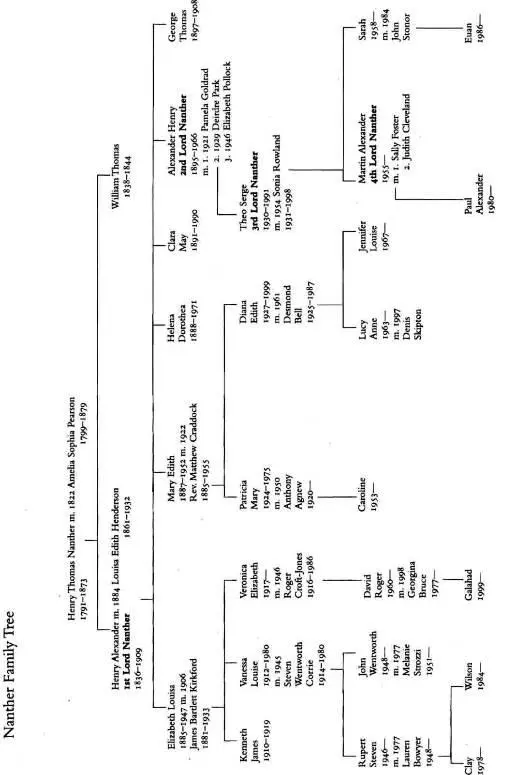
In her tenth novel writing as Barbara Vine, Ruth Rendell offers a novel of suspense based in 19th-century England and centering on deceit, murder, and various other family skeletons. Martin Nanther, the fourth Lord Nanther, has a comfortable life in present-day London as a Hereditary Peer in the House of Lords and as a historical biographer. He chooses as his most recent subject his own great-grandfather, the first Lord Nanther, physician to the royal family (Victoria and Albert) and an early noted researcher into the cause and transmission of hemophilia. The reader is taken through the family history as Martin painstakingly uncovers some not so savory bits of his own family's past. The story is dense with characters, and the author provides family trees of the two principal families, for which any reader will be eternally grateful. The story lacks the usual page-turner suspense of the Rendell/Vine novels but makes up for that with unusually detailed glimpses into Victorian life and the inner workings of the House of Parliament, which American readers will find particularly intriguing. Recommended for all public libraries. Caroline Mann, Univ. of Portland, OR
The Blood Doctor — читать онлайн бесплатно полную книгу (весь текст) целиком
Ниже представлен текст книги, разбитый по страницам. Система сохранения места последней прочитанной страницы, позволяет с удобством читать онлайн бесплатно книгу «The Blood Doctor», без необходимости каждый раз заново искать на чём Вы остановились. Поставьте закладку, и сможете в любой момент перейти на страницу, на которой закончили чтение.
Интервал:
Закладка:
On the morning of Saturday 20 October, her aunt drove her to Bovey station to catch the local train for Newton Abbot. They must have set off quite early for Eleanor to make the connection at that little Devon junction on to the Great Western express. Once again she travelled first class. The train came into Paddington on time and Samuel Henderson was there to meet it, in spite of Eleanor’s injunction to her sister that this wouldn’t be necessary. She wasn’t on the train and Samuel went home. There would be one more train arriving but not until 10.20 in the evening. After some sort of consultation with his wife and other children, he telegraphed to his sister to find out if Eleanor would be on that train instead. Telegrams, which were still used but lost their novelty with the coming of phones, were an efficient form of communication in the late nineteenth century, yet it was not until the Sunday morning that Dorothea’s answer reached Keppel Street. Long before that Samuel Henderson had been back to Paddington in the hope his daughter would be on the 10.20 train.
By Sunday morning the police had been called in. Before they had done much, a farm worker in east Devon had spotted a woman’s body lying on the railway embankment somewhere between Alphington and Exeter. It was identified by Samuel Henderson on the following day, the Monday, as that of his daughter. Here is a rather sensational account of the inquest from a national daily paper, though not so sensational as my father’s:
The inquest took place in Exeter yesterday on Miss Eleanor Mary Henderson, aged twenty-four years, of Keppel Street, London, whose dead body was discovered on the railway embankment at Alphington on Sunday last. The coroner’s jury brought in a verdict of murder by person or persons unknown.
William Newcombe, a cowman of Alphington, said he saw a dark-blue object like a bolt of cloth on the grass of the embankment and supposing it was a portmanteau or other piece of luggage fallen from a train, negotiated the fence which divides the embankment from the meadow and went to investigate. To his horror he perceived it to be the body of a young woman clothed in a dark-blue costume and cape of similar colour. Wisely refraining from touching the tragic cadaver, Mr Newcombe went for help to the nearest police station which, unfortunately, was some miles away.
Heavily veiled and speaking in a low, often scarcely audible voice, Mrs Dorothea Jane Vincent, the dead woman’s aunt, told the court her niece had been staying with her for the past fortnight.
She personally drove Miss Henderson to the station at Bovey to catch the 11.14 train. She cautioned her to enter a first-class compartment of the Great Western express, departing from Newton Abbot at 11.50, and Miss Henderson undertook to do so. She saw her niece board the local train and then she drove back to her residence in Manaton.
Dr Charles Warren said he had examined the body. It was that of a well-nourished and formerly healthy young woman in her early twenties. He had no doubt that death was by strangulation. It was his belief that Miss Henderson was dead before she was thrown from the train. No marks on the body, apart from the disfigurement of her face and neck, had been made prior to death. There was bruising, but the physician’s opinion was that this occurred several days earlier. When asked by the coroner, Mr Swithun Miles, to give a time of death, Dr Warren said that officials of the Great Western Railway would be more accurate arbiters of that than he. No doubt, Miss Henderson’s assassin, having committed the dreadful deed, wasted no time in ridding himself of her body. Estimating the time of death should merely be a matter of ascertaining at what time the express passed through Alphington. For his part, he would suppose death to have occurred during the late morning of Saturday, the twentieth of October, say between noon and twelve-thirty.
(No doubt the doctor had done some detective work of his own, for it turned out that the train had passed through Alphington at twelve twenty-five.)
Only one witness came forward to say he had seen Miss Henderson on the train. Mr Christopher Morris, a solicitor’s clerk of Heavitree Road, Exeter, travelling from Plymouth to Exeter St David’s, said he saw a young woman in dark-blue garments board the Great Western express at Newton Abbot. She was carrying a small black portmanteau and he believed a porter was beside her, holding a larger suitcase, but of this he could not be sure. He noticed her because, although some two dozen persons were among those waiting on the platform, she was the only woman travelling unaccompanied. In answer to the coroner’s question, he said he did not observe what carriage she entered, whether it was an ordinary third-class compartment or a first-class compartment. He never saw her again.
Mr Frederick Formby, a guard on the Great Western express, said that a small portmanteau and a large leather suitcase were among the four pieces of unclaimed property found on the train at Paddington station after the passengers had departed.
The coroner said that this was the most dreadful and shocking case that had come to his attention for many years. There could be no question of accident or felo de se for it was as impossible for Miss Henderson to have inflicted such injuries upon herself as it was that she was somehow strangled by chance while falling from the train. At some point in the short journey from Newton Abbot to within a few miles of Exeter an individual entered the compartment, where no doubt she was alone, bent on carrying out his nefarious work. The jury must draw their own conclusions as to what happened at this encounter.
The jury was out for no more than five minutes before returning a verdict of murder.
It’s not possible to know for sure what were the reactions of the Hendersons and Henry to Eleanor’s death. Imagination will have to do what knowledge can’t.
That Samuel was a devoted father is shown by his insistence on meeting the train his daughter was due to return on, in spite of Eleanor’s telling him not to do so. The sisters were close. We know virtually nothing about Samuel’s wife Louisa except that she was pious and fond of referring to ‘Providence’, but there’s no reason to think she was a less than loving mother. They must all have been, to use the current popular word, devastated. But it’s a word that sometimes means exactly what the dictionary defines it as: ‘laid waste’. These parents, this brother and sister, would have been laid waste, ruined, broken. But even in extreme grief, people retain their prideful feelings, their snobbery, their vanity. For the Hendersons Eleanor wasn’t just a beloved daughter and sister, she was the promised bride of a distinguished physician and professor, a royal doctor, a knight and (to them) a wealthy man. With her death all that hope went too. Samuel would never now hear his daughter called ‘Your Ladyship’. There would be no visits to the grand house in St John’s Wood and no visits to Bloomsbury by Eleanor in her own carriage. Her chances of finding a husband for her sister Edith and promotion for her brother were lost. Edith herself would probably have cared least about that aspect of things. For her it would have been a matter of simple grief at the loss of a beloved sister.
What, then, of Henry? How did he react to the death of the girl he was engaged to? His diary ought to give us something to go on but it doesn’t, or not much. By Sunday 21 October everyone was seriously worried at Eleanor’s disappearance, Dorothea Vincent’s telegram having arrived with the news that Eleanor had boarded the 11.14 train. Later that day a body was found. But it wasn’t till Monday the twenty-second that the body had been positively identified by Samuel. Henry’s diary entry for 21 October reads: ‘I was at home in Wimpole Street at seven in the evening when Mr Lionel Henderson brought me the alarming news [of the discovery of a body]. I, of course, accompanied him back to Keppel Street.’ One wonders why Henry didn’t accompany the man who was to have been his father-in-law to Exeter. Perhaps he had pressing business at Buckingham Palace or at University College Hospital, but what audience or lecture could more profoundly affect his life than the murder of his fiancée?
Читать дальшеИнтервал:
Закладка:
Похожие книги на «The Blood Doctor»
Представляем Вашему вниманию похожие книги на «The Blood Doctor» списком для выбора. Мы отобрали схожую по названию и смыслу литературу в надежде предоставить читателям больше вариантов отыскать новые, интересные, ещё непрочитанные произведения.







Обсуждение, отзывы о книге «The Blood Doctor» и просто собственные мнения читателей. Оставьте ваши комментарии, напишите, что Вы думаете о произведении, его смысле или главных героях. Укажите что конкретно понравилось, а что нет, и почему Вы так считаете.