Barbara Vine - The Blood Doctor
Здесь есть возможность читать онлайн «Barbara Vine - The Blood Doctor» весь текст электронной книги совершенно бесплатно (целиком полную версию без сокращений). В некоторых случаях можно слушать аудио, скачать через торрент в формате fb2 и присутствует краткое содержание. Год выпуска: 2003, Издательство: Vintage, Жанр: Современная проза, на английском языке. Описание произведения, (предисловие) а так же отзывы посетителей доступны на портале библиотеки ЛибКат.
- Название:The Blood Doctor
- Автор:
- Издательство:Vintage
- Жанр:
- Год:2003
- ISBN:нет данных
- Рейтинг книги:4 / 5. Голосов: 1
-
Избранное:Добавить в избранное
- Отзывы:
-
Ваша оценка:
The Blood Doctor: краткое содержание, описание и аннотация
Предлагаем к чтению аннотацию, описание, краткое содержание или предисловие (зависит от того, что написал сам автор книги «The Blood Doctor»). Если вы не нашли необходимую информацию о книге — напишите в комментариях, мы постараемся отыскать её.
Barbara Vine (a.k.a. Ruth Rendell) deftly weaves this story of an eminent Victorian with a modern yarn about the embattled biographer, who is watching the House of Lords prepare to annul membership for hereditary peers and thus strip him of his position. Themes of fate and family snake throughout this teasing psychological suspense, a typically chilling tale from a master of the genre.
From Publishers Weekly
This rich, labyrinthine book by Vine (aka Ruth Rendell) concerns a "mystery in history," like her 1998 novel, The Chimney Sweeper's Boy. Martin Nanther-biographer and member of the House of Lords-discovers some blighted roots on his family tree while researching the life of his great-great-grandfather, Henry, an expert on hemophilia and physician to Queen Victoria. Martin contacts long-lost relatives who help him uncover some puzzling events in Henry's life. Was Henry a dour workaholic or something much more sinister? Vine can make century-old tragedy come alive. Still, the decades lapsed between Martin's and Henry's circles create added emotional distance, and, because they are all at least 50 years dead, we never meet Henry or his cohorts except through diaries and letters. Martin's own life-his wife's infertility and troubles with a son from his first marriage-is interesting yet sometimes intrudes on the more intriguing Victorian saga. Vine uses her own experience as a peer to give readers an insider's look into the House of Lords, at the dukes snoozing in the library between votes and eating strawberries on the terrace fronting the Thames. Some minor characters are especially vivid, like Martin's elderly cousin Veronica, who belts back gin while stonewalling about the family skeletons all but dancing through her living room. Readers may guess Henry's game before Vine is ready to reveal it, but this doesn't detract from this novel peopled by characters at once repellant and compelling.
From Library Journal
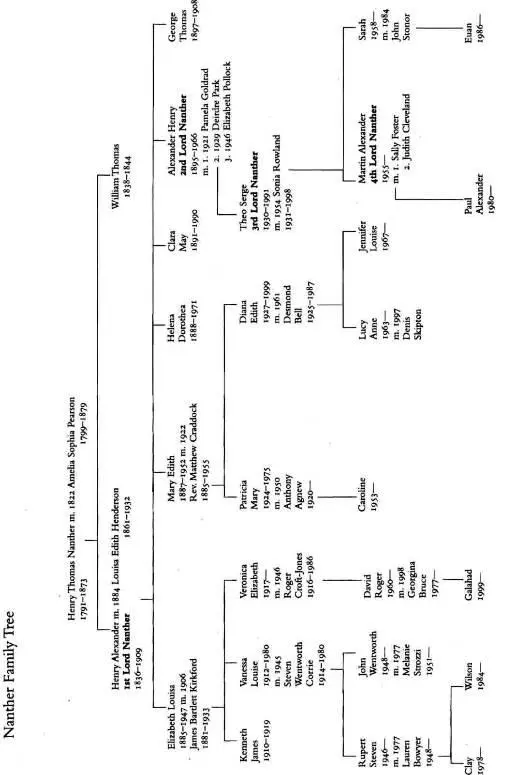
In her tenth novel writing as Barbara Vine, Ruth Rendell offers a novel of suspense based in 19th-century England and centering on deceit, murder, and various other family skeletons. Martin Nanther, the fourth Lord Nanther, has a comfortable life in present-day London as a Hereditary Peer in the House of Lords and as a historical biographer. He chooses as his most recent subject his own great-grandfather, the first Lord Nanther, physician to the royal family (Victoria and Albert) and an early noted researcher into the cause and transmission of hemophilia. The reader is taken through the family history as Martin painstakingly uncovers some not so savory bits of his own family's past. The story is dense with characters, and the author provides family trees of the two principal families, for which any reader will be eternally grateful. The story lacks the usual page-turner suspense of the Rendell/Vine novels but makes up for that with unusually detailed glimpses into Victorian life and the inner workings of the House of Parliament, which American readers will find particularly intriguing. Recommended for all public libraries. Caroline Mann, Univ. of Portland, OR
The Blood Doctor — читать онлайн бесплатно полную книгу (весь текст) целиком
Ниже представлен текст книги, разбитый по страницам. Система сохранения места последней прочитанной страницы, позволяет с удобством читать онлайн бесплатно книгу «The Blood Doctor», без необходимости каждый раз заново искать на чём Вы остановились. Поставьте закладку, и сможете в любой момент перейти на страницу, на которой закончили чтение.
Интервал:
Закладка:
However, from this day forward, as they say in the marriage service, Henry’s character seems to have undergone another change. Hamilton’s death in the Tay Bridge disaster had made him colder and harder than he was before. Now the diary entries changed to being chill and laconic. He became relentless, single-minded, ambitious, a man apparently without much family feeling, having a large acquaintance that included Huxley, Darwin and the painter Lawrence Alma Tadema as well as Canon Duckworth and Sir Joseph Bazalgette, but if not friendless, numbering only Barnabus Couch, Lewis Fetter and perhaps the Henderson family among his friends. He had courted and danced attendance on Sir John Batho and his family but dropped them cold for no apparent reason. The woman who had been his mistress for nine years he rid himself of once she became pregnant with his child. A general practitioner in Stamford, Wilfrid Thorpe, one of his students at University College Hospital in the eighties, wrote in a letter to his future wife of Henry as ‘alarmingly cold, repellently austere, and without a vestige of that wit and humour which can so enliven instruction and make learning less a labour than a delight’. Unpleasant Henry, then. Chilly Henry. On the other hand, Lady Bazalgette wrote to her daughter that she and Sir Joseph had dined with Henry and found him, ‘Such a charming man with so much conversation and a model of courtesy to us ladies.’ Many-sided Henry.
Still, it could have confidently been expected of him that once Eleanor was dead and he’d correctly attended the funeral he’d turn his back on the Hendersons and never see any of them again. The reverse was true. Two or three times a week from 21 October onwards Henry’s diary entries read, ‘Called in the evening upon Mrs Henderson’ and ‘To Keppel Street where I sat for two hours with Mr and Mrs Henderson.’ Plainly, he went there to comfort them, to show perhaps that in losing their daughter they hadn’t lost what their daughter had brought them, his friendship. It’s out of character, it isn’t Henry. Good conversationalist he may have been, but he wasn’t the sort of man who cared about other people’s feelings, especially when those other people were a shabby solicitor making ends meet in an overcrowded house near the British Museum. But it is Henry, it happened. The diary entries alone mightn’t constitute sound evidence but future developments in his emotional life do, and so does a letter Louisa Henderson wrote to her sister-in-law Dorothea Vincent in December 1883. Only the second page of it has survived. Mrs Henderson has evidently been saying that Christmas will be a sad season for the family this year.
... only to dread. There can be no festivities in this house of mourning. If we have any comfort – for I cannot regard the arrest and appearance in the police court of Bightford as comfort – it is in the continued kindness and attention of Dr Nanther. Henry, as I have learned to call him and as he insists I continue to do, is a constant visitor to our house and never appears without some little gift. We are so spoilt by him that we have almost come to take flowers and sweetmeats for granted but yesterday he appeared with books, new novels I am glad to say, not his own learned volumes, though it is ungrateful in me to say so. If anyone could have persuaded me that we must not question the works of Providence but accept what He sends with a humble heart, it is Henry, who has talked so beautifully and eloquently to us of God’s mysterious ways and the working out of His purpose to a final glorious end. Samuel has sometimes said to me that he would not have summoned the strength to go about his daily work without constantly reminding himself of the words of comfort and true religion from Henry the evening before. It is true that we cannot see the end in the means, Henry says, but must only have faith and in the inner…
Henry had been brought up as a Wesleyan Methodist. In his letters to Couch and in his homilies to the Hendersons he presented himself as a religious man. He makes references to God in the notebook and occasionally in the diaries. Strange then, that in a letter to T. H. Huxley, written within a few months of Eleanor’s death, he expresses his own position as ‘agnostic’, the term Huxley himself coined a few years earlier. Two men again, I suppose, or several.
My great-great-grandmother Henderson mentions someone called Bightford as having been arrested and awaiting trial. This was Albert George Bightford, an unemployed railway porter, whom the police had discovered a few days after the inquest living rough on Dartmoor. He’d gone home to his parents where he’d confessed to strangling Eleanor Henderson and throwing her body out of the train. His father was resolved against protecting him and told the police. By that time Bightford was missing but was found when he attacked and threatened a shepherd who refused him food.
At his trial in Exeter, the test was applied to Bightford that if he knew what he was doing when he killed Eleanor, did he know it was wrong? The prosecution successfully contended that the answer was yes to both. Bightford himself was not permitted to give evidence. His counsel said that his dismissal from his post with the Great Western Railway, for insolence to a superior, preyed heavily on his mind. He’d boarded the train at Plymouth and gone into several carriages, speaking to passengers and trying to enlist their sympathy, contending that a great injustice had been done him. Several witnesses told how they’d been alarmed by his wild looks and aggressive manner. Counsel said Bightford entered Miss Henderson’s compartment, sat down opposite her and began on his tale of woe. Miss Henderson was seriously alarmed and threatened to pull the communication cord. To silence her Bightford, by this time no doubt in a panic, strangled her with her own scarf. Somewhere between Alphington and Exeter, when the train slowed a little, he opened the door and threw her body out on to the embankment.
The jury found Bightford guilty. There was really no other choice about it. He was hanged for the murder of Eleanor Henderson in January 1884.
Meanwhile, Henry was in attendance at Windsor and at Osborne. In April the Queen went to Darmstadt for the marriage of Princess Victoria of Hesse to Prince Louis of Battenberg. At that wedding Queen Victoria’s youngest daughter, Princess Beatrice, was to meet the bridegroom’s brother, Prince Henry, and fall in love with him. If my great-grandfather foresaw that the Queen’s favourite child and companion was to do the unthinkable and marry, he must have looked forward with great interest to Princess Beatrice’s future offspring. The Queen was a haemophilia carrier, her daughter Alice had been a carrier, one of her sons and two of her grandsons had been ‘bleeders’. Was Princess Beatrice also a carrier and, if she had sons, would they too inherit the haemorrhagic disease?
Henry wrote a paper entitled ‘Inherited Epistaxis’. He was regularly contributing to medical journals, he gave a lecture to the Royal Society that was attended by Herbert Spencer and Charles Bradlaugh, and another to the Royal Society of Physicians. He was attentive to the Hendersons. Once the period of mourning was past, he organized a picnic on Hampstead Heath to which they, along with Dorothea Vincent who was in London for the ‘Season’ with her daughter Isobel (she who married the American and may have given Edith a Kodak camera), were transported in carriages. He notes in his diary that he gave a dinner party in July at which the guests were, ‘Mr and Mrs Henderson, Miss Henderson and Mr Lionel Henderson, Dr and Mrs Fetter and Miss Fetter’. Far from abandoning his house-hunting on Eleanor’s death, he had been busily continuing with it. At the end of July he notes in the diary: ‘Took possession of a house in Hamilton Terrace, St John’s Wood today. Mrs Henderson has undertaken to engage a cook and two maids for me, who, with my manservant and coachman, will constitute my little household.’
Читать дальшеИнтервал:
Закладка:
Похожие книги на «The Blood Doctor»
Представляем Вашему вниманию похожие книги на «The Blood Doctor» списком для выбора. Мы отобрали схожую по названию и смыслу литературу в надежде предоставить читателям больше вариантов отыскать новые, интересные, ещё непрочитанные произведения.







Обсуждение, отзывы о книге «The Blood Doctor» и просто собственные мнения читателей. Оставьте ваши комментарии, напишите, что Вы думаете о произведении, его смысле или главных героях. Укажите что конкретно понравилось, а что нет, и почему Вы так считаете.