Barbara Vine - The Blood Doctor
Здесь есть возможность читать онлайн «Barbara Vine - The Blood Doctor» весь текст электронной книги совершенно бесплатно (целиком полную версию без сокращений). В некоторых случаях можно слушать аудио, скачать через торрент в формате fb2 и присутствует краткое содержание. Год выпуска: 2003, Издательство: Vintage, Жанр: Современная проза, на английском языке. Описание произведения, (предисловие) а так же отзывы посетителей доступны на портале библиотеки ЛибКат.
- Название:The Blood Doctor
- Автор:
- Издательство:Vintage
- Жанр:
- Год:2003
- ISBN:нет данных
- Рейтинг книги:4 / 5. Голосов: 1
-
Избранное:Добавить в избранное
- Отзывы:
-
Ваша оценка:
The Blood Doctor: краткое содержание, описание и аннотация
Предлагаем к чтению аннотацию, описание, краткое содержание или предисловие (зависит от того, что написал сам автор книги «The Blood Doctor»). Если вы не нашли необходимую информацию о книге — напишите в комментариях, мы постараемся отыскать её.
Barbara Vine (a.k.a. Ruth Rendell) deftly weaves this story of an eminent Victorian with a modern yarn about the embattled biographer, who is watching the House of Lords prepare to annul membership for hereditary peers and thus strip him of his position. Themes of fate and family snake throughout this teasing psychological suspense, a typically chilling tale from a master of the genre.
From Publishers Weekly
This rich, labyrinthine book by Vine (aka Ruth Rendell) concerns a "mystery in history," like her 1998 novel, The Chimney Sweeper's Boy. Martin Nanther-biographer and member of the House of Lords-discovers some blighted roots on his family tree while researching the life of his great-great-grandfather, Henry, an expert on hemophilia and physician to Queen Victoria. Martin contacts long-lost relatives who help him uncover some puzzling events in Henry's life. Was Henry a dour workaholic or something much more sinister? Vine can make century-old tragedy come alive. Still, the decades lapsed between Martin's and Henry's circles create added emotional distance, and, because they are all at least 50 years dead, we never meet Henry or his cohorts except through diaries and letters. Martin's own life-his wife's infertility and troubles with a son from his first marriage-is interesting yet sometimes intrudes on the more intriguing Victorian saga. Vine uses her own experience as a peer to give readers an insider's look into the House of Lords, at the dukes snoozing in the library between votes and eating strawberries on the terrace fronting the Thames. Some minor characters are especially vivid, like Martin's elderly cousin Veronica, who belts back gin while stonewalling about the family skeletons all but dancing through her living room. Readers may guess Henry's game before Vine is ready to reveal it, but this doesn't detract from this novel peopled by characters at once repellant and compelling.
From Library Journal
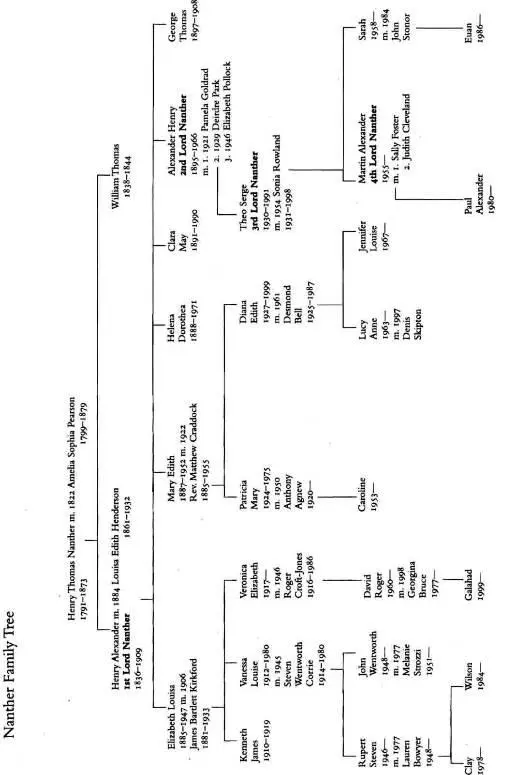
In her tenth novel writing as Barbara Vine, Ruth Rendell offers a novel of suspense based in 19th-century England and centering on deceit, murder, and various other family skeletons. Martin Nanther, the fourth Lord Nanther, has a comfortable life in present-day London as a Hereditary Peer in the House of Lords and as a historical biographer. He chooses as his most recent subject his own great-grandfather, the first Lord Nanther, physician to the royal family (Victoria and Albert) and an early noted researcher into the cause and transmission of hemophilia. The reader is taken through the family history as Martin painstakingly uncovers some not so savory bits of his own family's past. The story is dense with characters, and the author provides family trees of the two principal families, for which any reader will be eternally grateful. The story lacks the usual page-turner suspense of the Rendell/Vine novels but makes up for that with unusually detailed glimpses into Victorian life and the inner workings of the House of Parliament, which American readers will find particularly intriguing. Recommended for all public libraries. Caroline Mann, Univ. of Portland, OR
The Blood Doctor — читать онлайн бесплатно полную книгу (весь текст) целиком
Ниже представлен текст книги, разбитый по страницам. Система сохранения места последней прочитанной страницы, позволяет с удобством читать онлайн бесплатно книгу «The Blood Doctor», без необходимости каждый раз заново искать на чём Вы остановились. Поставьте закладку, и сможете в любой момент перейти на страницу, на которой закончили чтение.
Интервал:
Закладка:
‘It happens just as much now as it did then, women having children by men they’re not married to or living with. Probably more. And as for Henry, I don’t suppose he made the connection between the expected birth and the wedding day. He wouldn’t have thought about the two events on the – well, the same plane.’
‘Hateful Henry,’ says Jude. ‘Must you write his life? He’s so dreadful.’
I tell her I must and that Henry wasn’t any worse than other professional men of his time. As for guilt and shame, I feel plenty of that myself over my feigned enthusiasm for our coming child, but at the same time I’m revelling in being able to talk to my wife again, to say anything I like about anything, not to keep breaking off in mid-sentence and blushing the way no man of my age ever should.
If Eleanor wrote to Henry from Manaton her letters haven’t survived. I wonder how many times I’m going to write that sentence, changing only the names and the place? Biographers get to feel that letter writing should be compulsory on everyone’s part and letter preserving even more important. Still, she wrote one letter home and that single one to her sister Edith. It exists only because, probably, its date is just before the murder, and for this reason Edith kept it.
We don’t know how Eleanor passed the time in Manaton. Jude says, and I agree with her, that it’s hard to know how any middle-class Victorian woman passed the time. If you have servants and no job, what do you do all day? Read, sew, write letters, read, walk, talk, sew, I suppose. Eleanor mentions none of this in her letter to her sister. Its main purpose seems to be to tell the family she’ll get a cab home from Paddington station. It is as follows:
Moor House,
Manaton,
Devon
St Luke’s Day
Dearest Edith,
The weather is beautiful. Aunt says the fine weather in mid October is called St Luke’s Little Summer. That is why I have put St Luke’s Day instead of October the eighteenth at the top of this letter. You have been here so you know how lovely the countryside is. I should really like to live in this neighbourhood once I am married but Henry cannot be away from London where his work is. Perhaps one day we could have a house here, though I think he would call that no more than a romantic dream.
Isobel and Laetitia have consented to be my bridesmaids, indeed they were very happy to accept the invitation. You, of course, will be the third, my dearest sister. You have already said you will, so I do not think I am being presumptuous in taking it for granted! Henry talks of Italy for our honeymoon and I dare not suggest we come down here. Of course, it would not be nearly so nice in February.
I have had one of ‘my falls’. It happened out walking with I and L. I stumbled in the middle of a field, caught my foot in a rabbit hole, and fell headlong. Mud all over my blue serge frock but the worst was (of course!) the bruising. I am black and blue. The bruises on my left side and leg are a sight to behold, but luckily no one but me does behold them!
I shall return on Saturday by the 11.14 train from Bovey. The journey takes hours and hours, as you know, but it is due to reach Paddington at five minutes past five. There is no need at all for Father to meet the train. I shall be quite safe on my own and will take a cab. My dear love to Father and Mother, Grandpapa, Lionel and your dear self.
Your affectionate sister,
Eleanor
She mentions Henry as a Victorian wife-to-be should. His work was paramount, he made the decisions. When she says she ‘dare not’ suggest they come to Devon for their honeymoon she doesn’t sound seriously fearful. She says it much as a present-day wife would say she daren’t ask what’s-his-name to go out to dinner again this week. From the sound of it, she and Henry had a simple and cheerful relationship. Perhaps the passion was all on his side. There is nothing in her letter to betray her love or even her pride in landing such a prize. Perhaps she’d said all that to her sister beforehand. Still, I find it hard to believe that the Henderson family as a whole weren’t ecstatic that one of their number was making this amazing match. A knight! A royal doctor! A rich man – at least, in their estimation. The daughter who was already twenty-four, on the shelf, dowry-less, a burden for ever on her parents, was about to become Lady Nanther and in the following year would be living in a house fine beyond their dreams.
For Henry was house-hunting once more. His friend Barnabus Couch had a post as Visiting Professor of Anatomy at the Owens College in Manchester once attended by Henry himself. To him he wrote as follows on 18 October 1883:
My dear Couch,
I have to thank you for your kind letter of congratulation on my engagement to Miss Henderson. You will like her. She is gentle, charming and quiet, very far from the ‘New Woman’ we hear so much about these days. I doubt if she knows what the franchise is, still less would she wish to play a part in choosing a member to send to Parliament. I am confident she will do her duty by me as my wife and will never exhibit the restlessness and, worse, neurasthenia, you and I see so much of in those female patients whom modern notions of ‘freedom’ and emancipation have so adversely affected. At present she is staying with her aunt in Devon where plans are afoot for the coming nuptials, but will return on Saturday.
I have been looking out for a suitable residence for us and would like to have settled on a property by the end of January. Then, if we spend six weeks away on our wedding journey – I have Rome and Naples in mind – all transactions could be complete by the time we return. However, I shall take a house somewhere until midsummer by which time my wife will have purchased furniture, carpets and whatever else may be necessary for our future home. Our permanent residence will, I think, be somewhere in that district I consider the most salubrious of anywhere in North London – St John’s Wood. I had thought of the Eyre Estate or the almost rustic Loudoun Road but tomorrow I am to be taken on a conducted tour of a very fine place in Carlton Hill, at present the property of Mr Hapgood, the brother of a colleague of mine.
You will remind me, my dear Couch, of St John’s Wood’s reputation as the hiding place for a gentleman’s belle amie . On being told that the philosopher Herbert Spencer had taken up residence there, a bishop is said to have asked, ‘And who is the lady?’ But I believe its disreputability, if such it has been, is passing. After all, the great T. H. Huxley, with whom I am proud to have some acquaintance, has been living there at various addresses for the past thirty years. My wife and I will no doubt attend St Mark’s Church, Hamilton Terrace, that place of worship made distinguished by the incumbency of Canon Duckworth, who also resides in the neighbourhood and whom I had the honour of knowing while he was tutor to His Royal Highness, the Prince Leopold. So I believe we may take up residence without danger to our morals!
I trust you are well and that Mrs Couch’s health is keeping up. Bear February the fourteenth in mind! You will receive Mr and Mrs Henderson’s invitation in due course.
Yours most sincerely,
Henry Nanther
Jude’s comment on that is, ‘I don’t know how he had the nerve,’ referring, of course, to Jimmy Ashworth whom Henry had only recently pensioned off. The answer is that he was not necessarily a hypocrite; he was not one person but many people who lived alongside one another inside his lanky frame and noble head.
‘Very fine’ the house may have been, but Carlton Hill was scarcely Park Lane. In 1883 St John’s Wood wasn’t considered part of London as it is now, but a suburb, and much of it, especially on the western side of Maida Vale, a building site. In the event, Henry didn’t buy Mr Hapgood’s house. The woman who was to choose its furniture and carpets met her death the day after her fiancé went to look at it.
Читать дальшеИнтервал:
Закладка:
Похожие книги на «The Blood Doctor»
Представляем Вашему вниманию похожие книги на «The Blood Doctor» списком для выбора. Мы отобрали схожую по названию и смыслу литературу в надежде предоставить читателям больше вариантов отыскать новые, интересные, ещё непрочитанные произведения.







Обсуждение, отзывы о книге «The Blood Doctor» и просто собственные мнения читателей. Оставьте ваши комментарии, напишите, что Вы думаете о произведении, его смысле или главных героях. Укажите что конкретно понравилось, а что нет, и почему Вы так считаете.