Barbara Vine - The Blood Doctor
Здесь есть возможность читать онлайн «Barbara Vine - The Blood Doctor» весь текст электронной книги совершенно бесплатно (целиком полную версию без сокращений). В некоторых случаях можно слушать аудио, скачать через торрент в формате fb2 и присутствует краткое содержание. Год выпуска: 2003, Издательство: Vintage, Жанр: Современная проза, на английском языке. Описание произведения, (предисловие) а так же отзывы посетителей доступны на портале библиотеки ЛибКат.
- Название:The Blood Doctor
- Автор:
- Издательство:Vintage
- Жанр:
- Год:2003
- ISBN:нет данных
- Рейтинг книги:4 / 5. Голосов: 1
-
Избранное:Добавить в избранное
- Отзывы:
-
Ваша оценка:
The Blood Doctor: краткое содержание, описание и аннотация
Предлагаем к чтению аннотацию, описание, краткое содержание или предисловие (зависит от того, что написал сам автор книги «The Blood Doctor»). Если вы не нашли необходимую информацию о книге — напишите в комментариях, мы постараемся отыскать её.
Barbara Vine (a.k.a. Ruth Rendell) deftly weaves this story of an eminent Victorian with a modern yarn about the embattled biographer, who is watching the House of Lords prepare to annul membership for hereditary peers and thus strip him of his position. Themes of fate and family snake throughout this teasing psychological suspense, a typically chilling tale from a master of the genre.
From Publishers Weekly
This rich, labyrinthine book by Vine (aka Ruth Rendell) concerns a "mystery in history," like her 1998 novel, The Chimney Sweeper's Boy. Martin Nanther-biographer and member of the House of Lords-discovers some blighted roots on his family tree while researching the life of his great-great-grandfather, Henry, an expert on hemophilia and physician to Queen Victoria. Martin contacts long-lost relatives who help him uncover some puzzling events in Henry's life. Was Henry a dour workaholic or something much more sinister? Vine can make century-old tragedy come alive. Still, the decades lapsed between Martin's and Henry's circles create added emotional distance, and, because they are all at least 50 years dead, we never meet Henry or his cohorts except through diaries and letters. Martin's own life-his wife's infertility and troubles with a son from his first marriage-is interesting yet sometimes intrudes on the more intriguing Victorian saga. Vine uses her own experience as a peer to give readers an insider's look into the House of Lords, at the dukes snoozing in the library between votes and eating strawberries on the terrace fronting the Thames. Some minor characters are especially vivid, like Martin's elderly cousin Veronica, who belts back gin while stonewalling about the family skeletons all but dancing through her living room. Readers may guess Henry's game before Vine is ready to reveal it, but this doesn't detract from this novel peopled by characters at once repellant and compelling.
From Library Journal
In her tenth novel writing as Barbara Vine, Ruth Rendell offers a novel of suspense based in 19th-century England and centering on deceit, murder, and various other family skeletons. Martin Nanther, the fourth Lord Nanther, has a comfortable life in present-day London as a Hereditary Peer in the House of Lords and as a historical biographer. He chooses as his most recent subject his own great-grandfather, the first Lord Nanther, physician to the royal family (Victoria and Albert) and an early noted researcher into the cause and transmission of hemophilia. The reader is taken through the family history as Martin painstakingly uncovers some not so savory bits of his own family's past. The story is dense with characters, and the author provides family trees of the two principal families, for which any reader will be eternally grateful. The story lacks the usual page-turner suspense of the Rendell/Vine novels but makes up for that with unusually detailed glimpses into Victorian life and the inner workings of the House of Parliament, which American readers will find particularly intriguing. Recommended for all public libraries. Caroline Mann, Univ. of Portland, OR
The Blood Doctor — читать онлайн бесплатно полную книгу (весь текст) целиком
Ниже представлен текст книги, разбитый по страницам. Система сохранения места последней прочитанной страницы, позволяет с удобством читать онлайн бесплатно книгу «The Blood Doctor», без необходимости каждый раз заново искать на чём Вы остановились. Поставьте закладку, и сможете в любой момент перейти на страницу, на которой закончили чтение.
Интервал:
Закладка:
The question remains, though, and I need to find an answer to it. Why on earth did he want to marry the daughter of a not very prosperous solicitor, with no ‘real’ money and no prospects, when he could have had Olivia Batho? Olivia, who apparently loved him. Olivia, who was beautiful and rich and more his type ? Whose father was a baronet with a country mansion and seven hundred acres and could give his daughter thirty thousand pounds on her marriage. It’s not enough to say he fell in love and there’s no accounting for love. Suggestions that Eleanor might have been charming or clever or funny as well as pretty – fairly pretty but ‘not a patch on’ her sister – won’t solve it, nor will saying that he fancied her and couldn’t have her any other way than by marriage. He was a middle-aged man, an experienced man who for nine years had kept a mistress. Yet his head was turned by a pretty little thing no man had wanted before ?
And why did he, otherwise so reticent, mark his occasions of sexual intercourse with Jimmy Ashworth by a five-pointed star?
9
Jude is pregnant. She told me this morning, at ten.
She’s working at home today, the second Monday in May. This usually means she gets up a bit later in the morning but she didn’t. She was in the shower at seven-thirty, brought me a cup of tea before eight and said she had to go to the chemist.
‘You won’t find one open before nine-thirty,’ I said, and I asked her what she needed so urgently.
She didn’t answer but pretended to be looking for something in the bathroom. I know my wife so well, I know what she’s up to. If I ask her a question she doesn’t want to answer, rather than lie she’ll walk off quickly as if she’s just remembered something she’s got to do. But why should she want to lie? I was clearing away the breakfast things, hers and mine, when I heard her come back and go straight upstairs. It was about half an hour afterwards. David has sent me a bunch of letters from my great-aunt Elizabeth Kirkford that his mother found and I was in the study, arranging them in some sort of order, when Jude came in. Her face was brightly flushed. She looked enormously well. She said it.
‘I’m pregnant.’
The trip to the chemist was to buy a pregnancy testing kit. She was ten days’ overdue and she couldn’t bear to wait another day. I jumped up and threw my arms round her and we kissed and kissed. I was going to say I’ve never seen her so happy but I have – last time and the time before. Nothing was said of that, though, no caution, no dampening of joy. I forgot about work and so did she. We went back to bed, to make love and then to lie side by side, our arms loosely round each other, and I let her pour out her excitement while I listened and said it was wonderful and the best thing that’s ever happened, and we laughed for joy, and then we got up and I took her out for a celebratory lunch.
It’s not really like that for me, but I know the only hope for our marriage is that we have a child. And I know that if she doesn’t have one her whole life will be blighted, she’ll be embittered and unhappy, yearning for ever after for children and always feeling that if she’s not a mother she’s not a real woman. But in my heart I don’t want a child. My selfishness is enormous, though harmless if I keep it to myself, and that’s what I’m striving to do. I’m base. I don’t want a baby that cries in the night and demands attention in the day. I know all about that (and she doesn’t), I’ve been through it with Paul. Because I’m the one of us that’s at home I’ll be saddled with looking after it, or if we have a nanny and we’ll have to have one, I’ll be responsible. I don’t want the napkins and the bottles and the sick and the sleepless nights and the awful mysterious illnesses small children get so that you’re out of your mind with worry, tearing about in the night to Accident and Emergency. Because you love it, of course you do, you can’t help it. It will put its fingers in the electricity sockets and pull pans of hot water off the stove and fall out of its high chair. It will have to be taken to school and fetched back for thirteen years. By the time it’s sixteen. I’ll be past sixty, wanting a rest and a bit of hush.
But while I was pretending to rejoice – and I was rejoicing, I was, for my dear wife’s sake – I was also resolving that she shall never know, never be given the slightest tiny adumbration, that I am not as exultant as she is. I will be happy, I will be triumphant, I will play the foolish expectant father who boasts to his friends of his coming child. I will be as anxious as she that she carry it to full term, as watchful that she takes her folic acid, abstains from alcohol, takes exercise, rests, has the right diet. And I will instigate, even at the risk of being boring or when she’s tired of the subject, conversations about names, decorating the nursery, christening robes, to pram or not to pram, and the inadvisability of ever allowing a small baby to sleep face downwards. I’ll be even sillier than she is about all these things and when the time comes, like Jemima Puddleduck, I’ll be an anxious parent. And maybe, as the months pass, the power of thought and determination will change me and make me look forward to our son or our daughter as much as she does.
I wish.
Today, 11 May, is the fourth day of the Committee Stage of the House of Lords Bill and we are due to debate the Weatherill Amendment. That’s the one that seeks to keep 92 of the 750 hereditary peers in the House. The suggestion is that the Labour Party elect 2, the Conservative Party 42, the Liberal Democrats 3 and the Cross-benchers 28. It is also proposed to elect 15 hereditary peers ready to serve as deputy speakers – that is, to deputize for the Lord Chancellor on the Woolsack. With the Earl Marshal and the Lord Great Chamberlain the number comes to 92.
No doubt I shall be stuck in here all evening so it’s as well I’ve got the Croft-Joneses coming in for dinner. Georgina Croft-Jones is in the seventh month of her pregnancy. I tell myself I’ve had a lucky escape and reflect on how I’d feel if Jude hadn’t told me her news yesterday. Both women make a point of not drinking alcohol but Georgina has the House’s peculiar homemade tomato juice mixed with horseradish and Jude has austere sparkling water. Jude looks well and years younger and altogether a great beauty, very like in fact Sargent’s version of Olivia Batho Raven, her skin glowing with the same luminosity, only with more rosy pink about it, and her dark eyes shining. An elderly peer – one, incidentally, who forty-two years ago voted against admitting women to the House – lays his hand on her shoulder and tells her the sight of her does his old eyes good.
David isn’t, in looks at any rate, a Nanther. He is small and neat and fair, with very blue eyes. Georgie, as we’re to call her, is a bit taller than her husband, dark and very slim apart from the bump. Only on her it’s not a bump, it’s more like a sack of flour she’s chosen to hang across her thin hips and cover up with a diaphanous clingy dark-green dress. Jude tells me afterwards that it’s by a designer called Ghost. Her face is white and sharp-featured, her mouth wide and very nice when she smiles, as she does a lot. Jude looks like a famous painter’s portrait and Georgie looks like a film actress, like Julia Roberts.
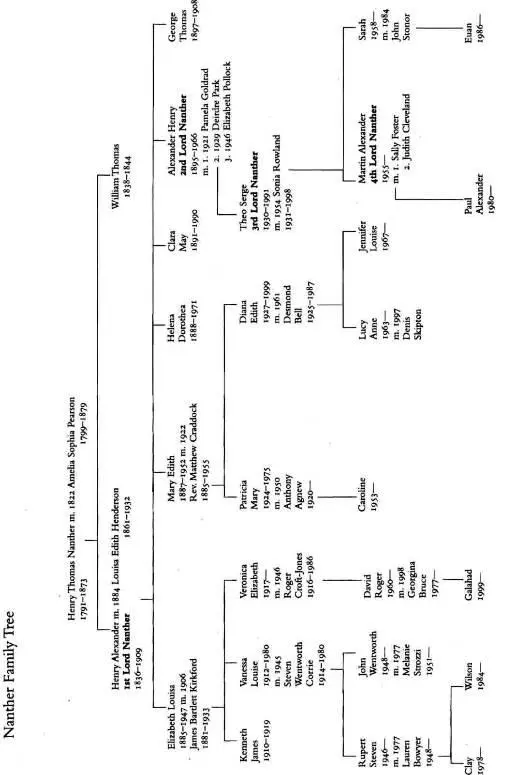
She holds one end of the now very lengthy family tree as David spreads it out and holds the other. Being insatiably inquisitive, as always, everyone else in the Peers’ Guest Room turns to stare at us. I take Georgie’s end from her and David and I study the Quendon-Henderson section of it. The women seem relieved we’re occupied and turn to discussing pregnancy and babies. I’ve quickly shifted from dismay at this baby to straight horror but I’m happy for Jude just the same, filled with joy for her and very nearly moved to tears by the look on her face. I give a sort of gasp and gulp and expect David to look at me in wonder but he doesn’t. No doubt he’s been through it himself – but with somewhat different feelings, I hope.
Читать дальшеИнтервал:
Закладка:
Похожие книги на «The Blood Doctor»
Представляем Вашему вниманию похожие книги на «The Blood Doctor» списком для выбора. Мы отобрали схожую по названию и смыслу литературу в надежде предоставить читателям больше вариантов отыскать новые, интересные, ещё непрочитанные произведения.





Обсуждение, отзывы о книге «The Blood Doctor» и просто собственные мнения читателей. Оставьте ваши комментарии, напишите, что Вы думаете о произведении, его смысле или главных героях. Укажите что конкретно понравилось, а что нет, и почему Вы так считаете.