Barbara Vine - The Blood Doctor
Здесь есть возможность читать онлайн «Barbara Vine - The Blood Doctor» весь текст электронной книги совершенно бесплатно (целиком полную версию без сокращений). В некоторых случаях можно слушать аудио, скачать через торрент в формате fb2 и присутствует краткое содержание. Год выпуска: 2003, Издательство: Vintage, Жанр: Современная проза, на английском языке. Описание произведения, (предисловие) а так же отзывы посетителей доступны на портале библиотеки ЛибКат.
- Название:The Blood Doctor
- Автор:
- Издательство:Vintage
- Жанр:
- Год:2003
- ISBN:нет данных
- Рейтинг книги:4 / 5. Голосов: 1
-
Избранное:Добавить в избранное
- Отзывы:
-
Ваша оценка:
The Blood Doctor: краткое содержание, описание и аннотация
Предлагаем к чтению аннотацию, описание, краткое содержание или предисловие (зависит от того, что написал сам автор книги «The Blood Doctor»). Если вы не нашли необходимую информацию о книге — напишите в комментариях, мы постараемся отыскать её.
Barbara Vine (a.k.a. Ruth Rendell) deftly weaves this story of an eminent Victorian with a modern yarn about the embattled biographer, who is watching the House of Lords prepare to annul membership for hereditary peers and thus strip him of his position. Themes of fate and family snake throughout this teasing psychological suspense, a typically chilling tale from a master of the genre.
From Publishers Weekly
This rich, labyrinthine book by Vine (aka Ruth Rendell) concerns a "mystery in history," like her 1998 novel, The Chimney Sweeper's Boy. Martin Nanther-biographer and member of the House of Lords-discovers some blighted roots on his family tree while researching the life of his great-great-grandfather, Henry, an expert on hemophilia and physician to Queen Victoria. Martin contacts long-lost relatives who help him uncover some puzzling events in Henry's life. Was Henry a dour workaholic or something much more sinister? Vine can make century-old tragedy come alive. Still, the decades lapsed between Martin's and Henry's circles create added emotional distance, and, because they are all at least 50 years dead, we never meet Henry or his cohorts except through diaries and letters. Martin's own life-his wife's infertility and troubles with a son from his first marriage-is interesting yet sometimes intrudes on the more intriguing Victorian saga. Vine uses her own experience as a peer to give readers an insider's look into the House of Lords, at the dukes snoozing in the library between votes and eating strawberries on the terrace fronting the Thames. Some minor characters are especially vivid, like Martin's elderly cousin Veronica, who belts back gin while stonewalling about the family skeletons all but dancing through her living room. Readers may guess Henry's game before Vine is ready to reveal it, but this doesn't detract from this novel peopled by characters at once repellant and compelling.
From Library Journal
In her tenth novel writing as Barbara Vine, Ruth Rendell offers a novel of suspense based in 19th-century England and centering on deceit, murder, and various other family skeletons. Martin Nanther, the fourth Lord Nanther, has a comfortable life in present-day London as a Hereditary Peer in the House of Lords and as a historical biographer. He chooses as his most recent subject his own great-grandfather, the first Lord Nanther, physician to the royal family (Victoria and Albert) and an early noted researcher into the cause and transmission of hemophilia. The reader is taken through the family history as Martin painstakingly uncovers some not so savory bits of his own family's past. The story is dense with characters, and the author provides family trees of the two principal families, for which any reader will be eternally grateful. The story lacks the usual page-turner suspense of the Rendell/Vine novels but makes up for that with unusually detailed glimpses into Victorian life and the inner workings of the House of Parliament, which American readers will find particularly intriguing. Recommended for all public libraries. Caroline Mann, Univ. of Portland, OR
The Blood Doctor — читать онлайн бесплатно полную книгу (весь текст) целиком
Ниже представлен текст книги, разбитый по страницам. Система сохранения места последней прочитанной страницы, позволяет с удобством читать онлайн бесплатно книгу «The Blood Doctor», без необходимости каждый раз заново искать на чём Вы остановились. Поставьте закладку, и сможете в любой момент перейти на страницу, на которой закончили чтение.
Интервал:
Закладка:
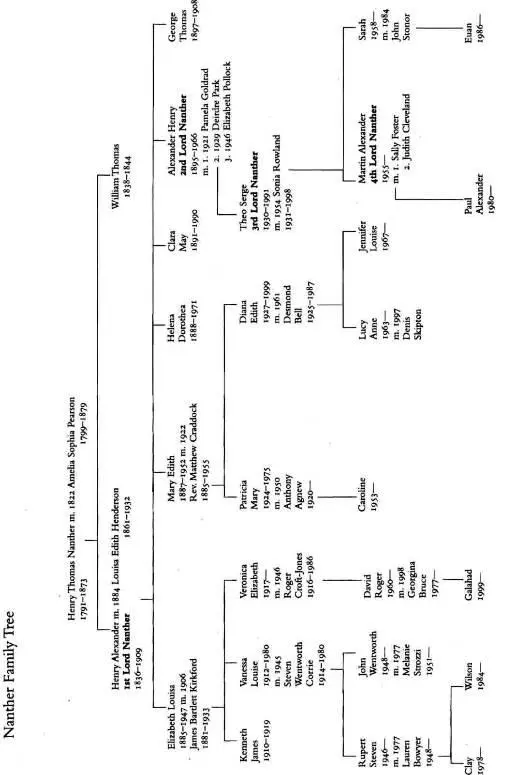
From his tree I found his aunt Vanessa and some second cousins of mine, Craddocks, Bells and an Agnew, descended from Henry through his second daughter Mary Craddock. In due course I shall be in touch with all these people in my quest for family letters. David Croft-Jones says that great-grandmother Edith seems not to have written a single letter in her entire life or, if she did, none has survived. If any of Henry’s four daughters kept a diary it’s been lost. David has lent me a bunch of letters from Mary to her married sister, his grandmother Elizabeth, given to him by his mother when he started the tree, but they are much more to my purpose than his. They have survived largely, I think, because Elizabeth and her daughters were the kind of people who never threw anything away. These hoarders are the biographer’s friends, but only if what they haven’t thrown away is worth keeping.
The summer of 1883, when Henry made the acquaintance of the Hendersons, was long before Edith, the second daughter, discovered her passion for photography. But among her ‘accomplishments’ was a small skill at drawing. She was the daughter who drew and painted, Eleanor the musical one. Thanks to Elizabeth Kirkford’s hoarding everything and her daughter Veronica following in her footsteps, the drawing Edith made of her sister has survived. Apparently, Veronica wants it back but I shall only keep it long enough to photocopy it. It isn’t dated but Eleanor is a grown woman, not a child; she’s somewhere between seventeen and the age she was when her life was brought to a violent end.
My great-grandmother Edith used a soft smudgy pencil on thick paper which must once have been white and now is ochre yellow. Her subject is a pretty girl. Of course Edith may have beautified her sister and drawn a flattering portrait, but I’ll credit her with sticking to Eleanor’s regular features and copious hair. Blonde hair, as it happens. For, although Eleanor Henderson had a face not too unlike Olivia Batho’s, her hair was light-coloured and her eyes too. Yet if I compare her with her sister in her wedding photograph, Edith has the advantage in looks in almost every respect. Her forehead is higher, her nose tip-tilted and her chin recedes less than Eleanor’s.
‘She’s pretty but nothing out of the way,’ Jude says, looking over my shoulder. ‘Not a patch on her sister. What did your Henry see in her?’
‘Charm, perhaps. Or she had a beautiful speaking voice or she made him laugh.’
‘It’s women who like men that make them laugh,’ says Jude, ‘not the other way about.’
She’s looking very well, better than she usually does when she’s got her period. If she’s got it, I can’t ask, but she will have. It comes as regularly as the sun rises. Instead I ask her if it’s all right to ask David Croft-Jones and his wife to have dinner with us in the House, it’s time I did that, he sent me the second draft of the family tree this morning, and she smiles and says of course.
‘How old was she?’
I ask her if she means in the picture or when she died.
‘When she died.’
‘Twenty-four.’
‘Poor thing,’ Jude says. ‘What was she like?’
I don’t know. I know what she looked like but nothing much else about her. Only one letter from her to Edith has survived and there are none from Edith to her or from their mother or father. There’s a difficulty of identification, or perhaps I should say specification, when writing about middle- and upper-class women of the nineteenth century. Most of them had a very limited education, no professions, they led sheltered lives, were kept ignorant, lived under the protection first of a father, then of a husband. They can’t be differentiated as women could later, by their tastes, their travels, their activities outside the home, even their politics. They weren’t ‘all the same’ as it’s tempting to categorize them, but it’s much harder to make a picture of an individual woman, to bring her out of the shadows into a hard outline and a clear light.
The diary entries don’t help. Henry writes, ‘Dined with Mr and Mrs Henderson’ and ‘Escorted Mrs Henderson and the two Misses Henderson to the theatre.’ On one occasion, in July, the entry reads, ‘Consultation with Mrs Henderson.’ So, apparently, his new-found friends were availing themselves of his medical skills as well. Eleanor is never mentioned by name at this time. From her mother’s letters to Dorothea Vincent, her sister-in-law, we know she was ‘musical’, whatever that meant, probably that she played the piano. She lived at home with her parents like most unmarried girls. No doubt she sewed, helped with domestic tasks, for the Hendersons were comfortable but not well-off, went shopping with her mother or her sister, occasionally attended a concert and performed at a ‘musical evening’. She may sometimes have gone to meetings for the promoting of women’s rights but if she did there is no evidence of it I’ve so far found. There is no evidence either that any man courted her before Henry.
There was a son too, the eldest of the three. Lionel Henderson was twenty-seven and a clerk in his father’s practice. He too lived at home. According to David Croft-Jone’s mother, the family was happy, the parents easy-going and tolerant for the age they lived in, the grown-up children very attached to one another. With them, also, lived William Quendon, Samuel’s father-in-law, aged eighty-three, who had made his home in Keppel Street since the death of his wife some years before. The house is still there, four floors high with a basement, the rooms rather small and poky, the kitchen regions and servants’ bedrooms below ground. The present occupants or perhaps those before them had the two ground-floor reception rooms turned into one and even so the resulting room isn’t large. It’s all bedrooms above now but probably, in the Hendersons’ day, the entire first floor was given over to the drawing room. Old William Quendon, my great-great-great-grandfather, must have had a weary climb of it to his bedroom unless they managed to accommodate him in the basement.
This, then, was the household, grandfather, father and mother, son and two daughters, who no doubt welcomed Henry with open arms when he first began calling in June 1883.
In July, Jimmy Ashworth was two months pregnant. If Henry hadn’t known before he would know by then. Did he see this coming event as a joy, a gratification, a nuisance, a threat, or was he not much affected by it? The last, I believe. There’s no reason to think Jimmy was anything but compliant, subservient, grateful. An assertive woman wouldn’t have held Henry for nine years. She was a convenience to him. No doubt he found her very attractive and still did. No doubt she brought him solace, comfort, relaxation and a total contrast to the rest of his life, the Palace, the hospital, his work. But in love with her he never would have been. By then, presumably, he was in love with Eleanor Henderson. Now he had to pension Jimmy off and find a father for her child. While he had Olivia he could keep Jimmy on. Eleanor was different and his relationship with her serious.
The final pentagram in the diary appears on 15 August 1883. That may be the last time Henry ever saw Jimmy Ashworth, but probably it wasn’t. It’s most likely he went back to Chalcot Road on several occasions: to present Len Dawson, to make arrangements for the wedding, to pay the lump sum. The date of his engagement to Eleanor, according to The Times in which the announcement appeared, was Thursday 23 August. I imagine prudent Henry, correct Henry, enjoying his final sexual relations with Jimmy Ashworth on a Wednesday, calling in at Keppel Street to continue his courtship on the Friday, returning to propose on the following Monday and receiving a favourable answer, asking Samuel Henderson for formal permission to marry his daughter on the Tuesday, and the announcement appearing on the Thursday. Not that there is any record of this in the diary up until then. On Friday 24 August the entry reads: ‘My forthcoming marriage to Miss Henderson noted in The Times yesterday.’ Cool Henry. On one hand he is organizing the future life and nuptials of the mother of his child to a hospital porter, on the other participating in arrangements for his own, not to mention doctoring the Queen and instructing his students. Busy Henry.
Читать дальшеИнтервал:
Закладка:
Похожие книги на «The Blood Doctor»
Представляем Вашему вниманию похожие книги на «The Blood Doctor» списком для выбора. Мы отобрали схожую по названию и смыслу литературу в надежде предоставить читателям больше вариантов отыскать новые, интересные, ещё непрочитанные произведения.






Обсуждение, отзывы о книге «The Blood Doctor» и просто собственные мнения читателей. Оставьте ваши комментарии, напишите, что Вы думаете о произведении, его смысле или главных героях. Укажите что конкретно понравилось, а что нет, и почему Вы так считаете.