Barbara Vine - The Blood Doctor
Здесь есть возможность читать онлайн «Barbara Vine - The Blood Doctor» весь текст электронной книги совершенно бесплатно (целиком полную версию без сокращений). В некоторых случаях можно слушать аудио, скачать через торрент в формате fb2 и присутствует краткое содержание. Год выпуска: 2003, Издательство: Vintage, Жанр: Современная проза, на английском языке. Описание произведения, (предисловие) а так же отзывы посетителей доступны на портале библиотеки ЛибКат.
- Название:The Blood Doctor
- Автор:
- Издательство:Vintage
- Жанр:
- Год:2003
- ISBN:нет данных
- Рейтинг книги:4 / 5. Голосов: 1
-
Избранное:Добавить в избранное
- Отзывы:
-
Ваша оценка:
The Blood Doctor: краткое содержание, описание и аннотация
Предлагаем к чтению аннотацию, описание, краткое содержание или предисловие (зависит от того, что написал сам автор книги «The Blood Doctor»). Если вы не нашли необходимую информацию о книге — напишите в комментариях, мы постараемся отыскать её.
Barbara Vine (a.k.a. Ruth Rendell) deftly weaves this story of an eminent Victorian with a modern yarn about the embattled biographer, who is watching the House of Lords prepare to annul membership for hereditary peers and thus strip him of his position. Themes of fate and family snake throughout this teasing psychological suspense, a typically chilling tale from a master of the genre.
From Publishers Weekly
This rich, labyrinthine book by Vine (aka Ruth Rendell) concerns a "mystery in history," like her 1998 novel, The Chimney Sweeper's Boy. Martin Nanther-biographer and member of the House of Lords-discovers some blighted roots on his family tree while researching the life of his great-great-grandfather, Henry, an expert on hemophilia and physician to Queen Victoria. Martin contacts long-lost relatives who help him uncover some puzzling events in Henry's life. Was Henry a dour workaholic or something much more sinister? Vine can make century-old tragedy come alive. Still, the decades lapsed between Martin's and Henry's circles create added emotional distance, and, because they are all at least 50 years dead, we never meet Henry or his cohorts except through diaries and letters. Martin's own life-his wife's infertility and troubles with a son from his first marriage-is interesting yet sometimes intrudes on the more intriguing Victorian saga. Vine uses her own experience as a peer to give readers an insider's look into the House of Lords, at the dukes snoozing in the library between votes and eating strawberries on the terrace fronting the Thames. Some minor characters are especially vivid, like Martin's elderly cousin Veronica, who belts back gin while stonewalling about the family skeletons all but dancing through her living room. Readers may guess Henry's game before Vine is ready to reveal it, but this doesn't detract from this novel peopled by characters at once repellant and compelling.
From Library Journal
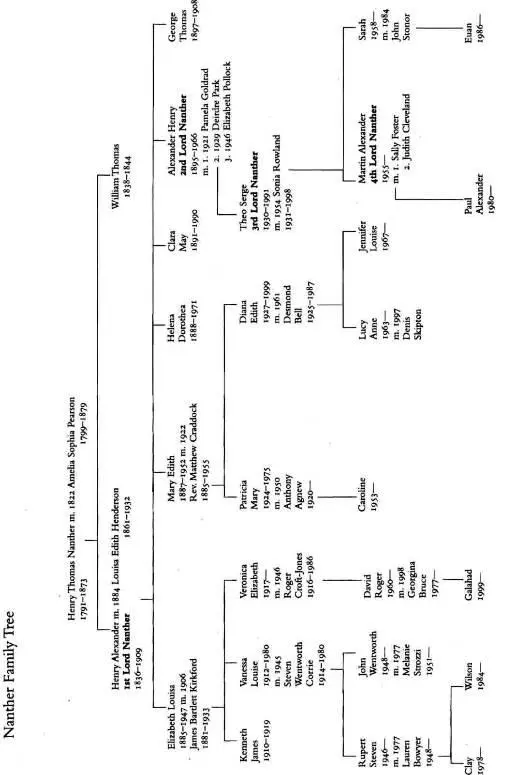
In her tenth novel writing as Barbara Vine, Ruth Rendell offers a novel of suspense based in 19th-century England and centering on deceit, murder, and various other family skeletons. Martin Nanther, the fourth Lord Nanther, has a comfortable life in present-day London as a Hereditary Peer in the House of Lords and as a historical biographer. He chooses as his most recent subject his own great-grandfather, the first Lord Nanther, physician to the royal family (Victoria and Albert) and an early noted researcher into the cause and transmission of hemophilia. The reader is taken through the family history as Martin painstakingly uncovers some not so savory bits of his own family's past. The story is dense with characters, and the author provides family trees of the two principal families, for which any reader will be eternally grateful. The story lacks the usual page-turner suspense of the Rendell/Vine novels but makes up for that with unusually detailed glimpses into Victorian life and the inner workings of the House of Parliament, which American readers will find particularly intriguing. Recommended for all public libraries. Caroline Mann, Univ. of Portland, OR
The Blood Doctor — читать онлайн бесплатно полную книгу (весь текст) целиком
Ниже представлен текст книги, разбитый по страницам. Система сохранения места последней прочитанной страницы, позволяет с удобством читать онлайн бесплатно книгу «The Blood Doctor», без необходимости каждый раз заново искать на чём Вы остановились. Поставьте закладку, и сможете в любой момент перейти на страницу, на которой закончили чтение.
Интервал:
Закладка:
I took the oath on a day when two life peers had already been introduced and ministers and whips, banished to the back to make room for the procession, were scurrying on to the front benches. I doubt if anyone would have noticed I’d come in at all if it hadn’t been in Hansard next day: ‘Lord Nanther sat first in Parliament after the death of his father and took the Oath.’ I must check up on what Hansard said when Henry came in on 19 June 1896. Or was there a special ceremony in those days before the Life Peerages Act? I must find out.
When I sit in here, two benches behind Labour Party veterans, I try to look with fresh eyes at the adornment of this chamber, attempting to recollect how it was for me when I first came in and how it must have been for Henry. The paintings don’t impress me and never did. We do have one Dyce in here, above the throne, but it’s not so striking as his frescoes, representations of generosity, mercy, religion, that make the royal Robing Room so beautiful. Standing high up in gilded niches are black figures in chain mail with dust lying on their shoulders – can no cleaning device reach so high? – but they look more like characters from The Lord of the Rings than the archbishops, earls and barons they are, all of them present at Runnymede when King John issued Magna Carta in 1215. Below them and all round the Chamber, under the filigree railing of the gallery, are the armorial bearings of the sovereigns since Edward III and of the Lord Chancellors of England from 1377. Concealed lighting touches them and makes them glow as if they are lit from within. Sometimes I count the colours in the stained-glass windows. Once I thought only red, blue and yellow were there but since then I’ve discovered emerald green and dove grey and brown and gold.
I go out for tea at four and come back in again to hear the discussion on the position of Scottish peers in the House. I am speaking on an amendment whose effect will be to put off the date at which the Bill becomes law until the report of the Royal Commission has been considered by the House and I stand up when Baroness Blatch sits down. My speech lasts no more than three minutes. All I’m saying is that it seems wrong to abolish the voting rights of hereditary peers before we know what kind of chamber will replace them.
Before I go to the Home Room for dinner I phone Jude to tell her I don’t know when I’ll be back. The debate may go on through the night. I have to leave a message on our answering machine because she’s not in. I sit for a while at the table where the phone is at the end of the Not Content lobby and think about Jude, my wife, who has become distant from me these past weeks. I know why it is but don’t know what to do about it. So many things now I feel I can’t say to her, so many subjects have to be avoided, or I feel they do, and this embarrasses both of us because she knows very well how I try and fail.
If Lord Weatherill’s amendment comes to anything, will I be allowed to stay? Will I want to? Perhaps. No one knows yet – or, if they do, I’ve heard nothing – how the hereditaries who are to stay will be chosen. Voted for by their own peers would be the best way. But where and how? I suppose there’s no reason why a polling station shouldn’t be set up in the House. If that happens there will be many hereditary peers who have never been in one before. Being a peer and doing one’s duty means a lot of work. I think now that if I wasn’t who and what I am and if I had the choice no one ever does have of becoming a life peer or a knight, I’d choose the knighthood. And if I were a woman I’d choose a DBE. No work outside their jobs for knights and dames. The minimum of vilification in the media. And very little wrestling with nagging consciences, I suppose.
Henry was knighted by Queen Victoria in the spring of 1883 in what I imagine were the Birthday Honours. If they had them then. That’s something else I must check. He was forty-seven years old, Physician-in-Ordinary to the Queen, Professor of Pathological Anatomy at University College Hospital and due to publish another book. I’ve tried to read Haemorrhagic Disposition in Families but its complex tables of inheritance and lists of family relationships are almost too much for me. Still, I haven’t given up, only paused. I’m going to make myself read, say, five pages a day till I finish it. One item I have managed to digest and that’s Henry’s conclusion that claims of males being carriers of haemophilia are invalid. Where there seemed to be cases, for instance, where a haemophiliac man fathers a haemophiliac son, this is not a direct transmission from the father but comes through the mother who was herself a carrier. It’s something that used to happen occasionally in communities where access and egress are difficult and inbreeding is common. This seems to be the first and perhaps the only new discovery Henry made in his chosen field. Still, it’s rather a negative conclusion to reach and unlikely to lead to fame or further honours.
By the time he was Sir Henry he was on the point of parting from Olivia Batho, but not yet from Jimmy Ashworth. After the three pentagrams in May there are three more in June but before that, he had had a heroic encounter. That is, Henry’s behaviour was heroic. The whole affair reminds me of a passage from one of Trollope’s novels. Someone (not Trollope) says somewhere that nothing ever happens to a man except that which is like him and this doesn’t seem to me much like Henry. But what do I know? With all my researches, I know so little of his true nature or his inner life.
A short while before these events he had returned from his walking holiday in the Lake District, where he seems to have caught a cold. His diary entry for 23 May, a Wednesday, is brief. Not so The Times for that day. Henry wrote: ‘Suffering from a cold in the head. Was able to give some assistance to a Mr Henderson who had been set upon by a ruffian in Gower Street.’ Modest Henry. The Times ’ report is much fuller.
Mr Samuel Henderson, attorney-at-law, of Keppel Street, had a providential escape from injury or even death last night when he was set upon by a desperate villain in the neighbourhood of Gower Street, not far from the British Museum. We understand that Mr Henderson had just come from his business premises and was beginning the short walk to his home. Possibly in the belief that he was proceeding from the bank nearby and that he was in possession of a large sum of money, the miscreant attacked him, taking him unawares from behind and striking him with a cudgel.
Fortunately for him, help was at hand in the shape of none other than the distinguished Physician-in-Ordinary to Her Majesty the Queen, Sir Henry Nanther, KCB, FRCP. Sir Henry, who was coming away from University College Hospital where he is Professor of Pathological Anatomy, witnessed the entire scene. A powerful and vigorous man in the prime of life, Sir Henry immediately set upon the ruffian with his stick and made short work of routing him. Next he turned his attention to the unfortunate victim of the attack and ascertained that Mr Henderson had sustained no worse effects than bruising and a severe abrasion to the right shoulder. An errand boy who happened to be passing was dispatched for help and Mr Henderson was later removed to University College Hospital where he is happily recovering.
On his way home after perhaps delivering a lecture to a class of medical students, Henry can hardly have foreseen what a life-changing encounter this would prove to be. I’m tempted to dwell on the operations of fate and chance. Remember the Tay Bridge and the train he nearly boarded? Suppose, in Gower Street, he’d been detained for five minutes by a student who dared put a private question to the great man. Or his voice had grown hoarse through this ‘cold in the head’ and he terminated the lecture five minutes early. Poor Mr Henderson (my great-great-grandfather) would perhaps have been killed or at any rate left bleeding on the pavement. Help, if help there was to be, would have come from some other source. In any case, Henry would never have met the Henderson family and I and my forebears never been born.
Читать дальшеИнтервал:
Закладка:
Похожие книги на «The Blood Doctor»
Представляем Вашему вниманию похожие книги на «The Blood Doctor» списком для выбора. Мы отобрали схожую по названию и смыслу литературу в надежде предоставить читателям больше вариантов отыскать новые, интересные, ещё непрочитанные произведения.







Обсуждение, отзывы о книге «The Blood Doctor» и просто собственные мнения читателей. Оставьте ваши комментарии, напишите, что Вы думаете о произведении, его смысле или главных героях. Укажите что конкретно понравилось, а что нет, и почему Вы так считаете.